
Show summary Hide summary
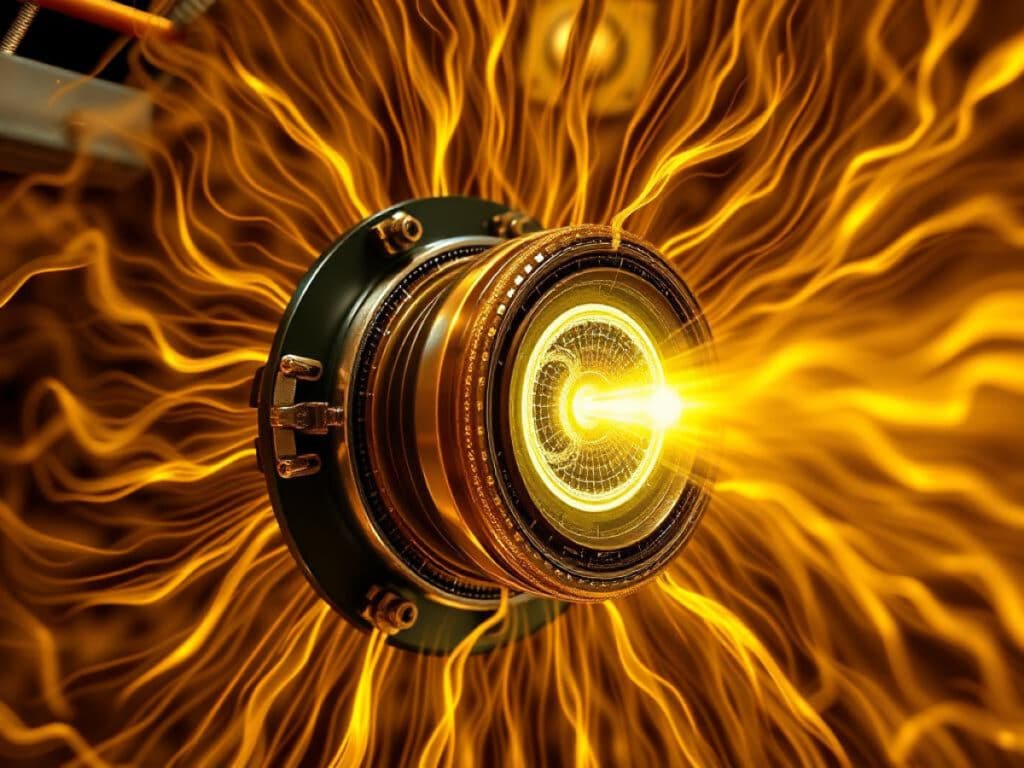
In a world where the quest for clean energy becomes more urgent by the day, a groundbreaking development emerges from China, redefining the limits of material science and paving the way for the future of nuclear fusion. Chinese scientists have created a new type of steel, one that could endure the extreme conditions inside nuclear fusion reactors—conditions so severe that the material’s creation was once deemed impossible. This new steel stands up to the dual challenges of unfathomably low temperatures and high magnetic fields, essential for sustaining nuclear fusion reactions, the same process that powers the sun.
At the Chinese Academy of Sciences’ Technical Institute of Physics and Chemistry, Li Laifeng spearheaded this revolutionary project. Over a decade-long journey, Li and his team have crafted what might just be a cornerstone in achieving sustainable, large-scale fusion energy production. This isn’t just about scientific curiosity; it’s a potential game-changer in the global energy landscape.
The Fusion Dream and the ITER Challenge
The Growing Demand for Data-Driven Decision Making in Silicon Valley
He quit, ran out of money, and begged to come back — here’s how his boss reacted
Nuclear fusion, long considered the holy grail of clean energy, promises to replicate the sun’s energy production method on Earth. Unlike nuclear fission, which splits atoms to release energy and creates long-lasting radioactive waste, fusion combines atoms at extremely high temperatures, generating vast amounts of energy without the hazardous byproducts.
The International Thermonuclear Experimental Reactor (ITER) in southern France represents a significant international effort in this arena. Here, scientists and engineers from 35 countries collaborate to build the world’s largest tokamak, a magnetic fusion device. The project aims to demonstrate the feasibility of fusion as a large-scale and carbon-free source of energy.
The Role of Specialized Steel in Fusion Reactors
Central to the operation of these fusion reactors are superconducting magnets, which must be kept at cryogenic temperatures (as low as -516°F) while being subjected to enormous magnetic fields generated during the fusion process. Traditionally, a type of steel known as 316LN austenitic stainless steel has been used to clad these magnets, providing them with the necessary protection against both the cold and the magnetic forces.
However, Li Laifeng observed that the existing steel might not suffice for the next generation of more compact, more powerful reactors. This led to the pursuit of a new alloy, capable of withstanding even greater stresses and colder temperatures.
China’s Leap in Material Science
In 2021, the breakthrough came when Li’s team at the CAS Institute of Plasma Physics in Hefei developed a steel that not only met but exceeded international standards. This new steel, dubbed CHSN01, showed remarkable resilience against magnetic fields up to 20 Tesla and pressures up to 1,300 megapascals, all while operating at cryogenic temperatures.
This innovation is not just a testament to advancing in material science but also aligns with China’s ambitious plans for its own national fusion program. The new steel is now being produced in large quantities, anticipating its use in China’s upcoming Burning Plasma Experimental Superconducting Tokamak, set to be operational by 2027.
Global Impact and Future Prospects
The development of CHSN01 steel is part of a broader trend in nuclear fusion research, which has seen significant milestones across multiple countries in recent years. These advancements are not isolated but contribute collectively towards making fusion energy a viable alternative to fossil fuels. As countries like Japan, China, the EU, and the US continue their efforts, the dream of a clean, sustainable energy future becomes increasingly tangible.
Moreover, the introduction of such materials could lead to enhancements in other high-tech fields, such as superconducting magnets for medical imaging and particle accelerators. The implications of these materials extend beyond energy, potentially revolutionizing multiple industries.
While it remains to be seen how CHSN01 will perform in the real-world scenarios of fusion energy production, the prospects it opens up are undeniably promising. This development not only marks a significant milestone in the quest for fusion energy but also highlights the importance of continued innovation in material science for sustainable technological progress.
You might also like:
- Building-size magnet shrunk to the palm of your hand in physics breakthrough
- Jellyfish Invasion Shuts Down French Nuclear Plant: Power Outage Sparks Concerns
- 200 magnets swallowed by teen lead to removal of part of intestine
- Voyager 1 just sent a signal that could rewrite everything we know
- Exoplanet magnetospheres detected for first time, opening new window on planets

Michael Thompson is an experienced journalist covering U.S. and global news. With ten years on the front lines, he breaks down political and economic stories that matter. His precise writing and keen attention to detail help you grasp the real‑world impact of every event.

