
Show summary Hide summary
- How Floreana was cleared of invasive rats, cats and parasitic flies
- Meet the Galapagos rail — a small, vividly colored ground bird
- Other species bouncing back — signs of a wider ecological revival
- Possible ways the rails made their comeback
- Who coordinated the work and what steps remain to protect Floreana
- What researchers are watching next on Floreana
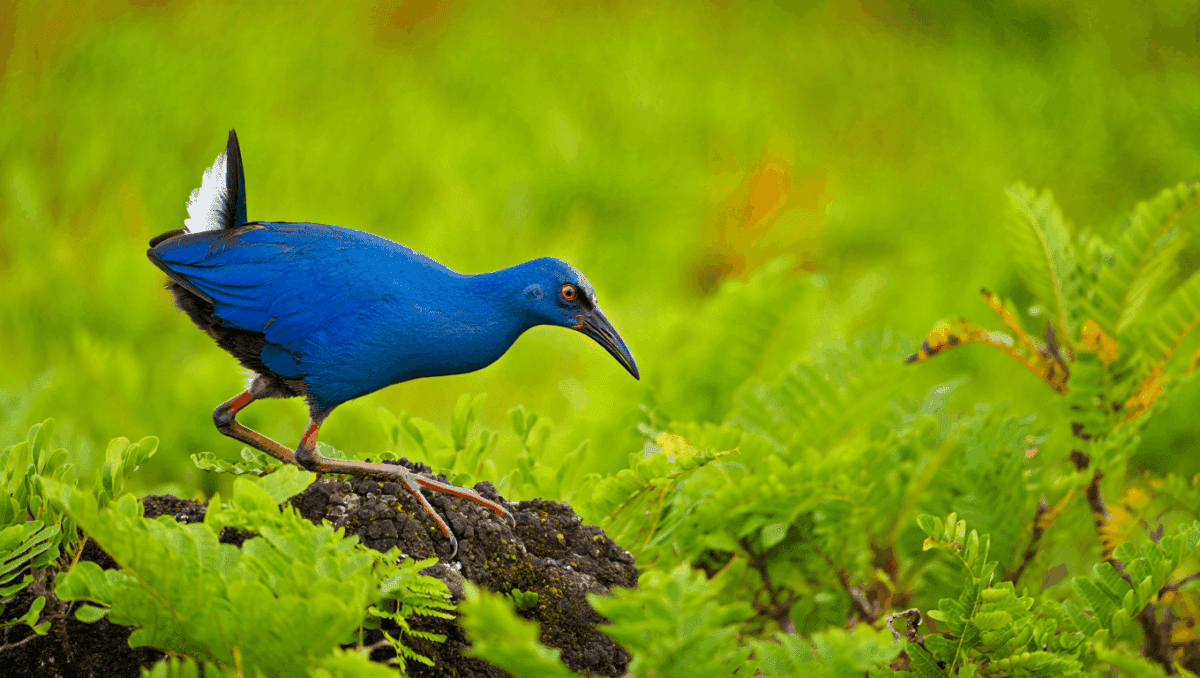
After years of careful work on a remote Ecuadorian island, a bird unseen there for generations has returned — a vivid sign that ambitious conservation plans can pay off. The reappearance of the striking blue Galapagos rail on Floreana island is fast becoming a symbol of ecological recovery across the archipelago.
Teams working with the Galapagos National Park and international partners removed invasive predators and restored habitat, and the results are already visible: endemic species are re-emerging, behaviors long suppressed by predation are returning, and scientists are hearing the islands come alive again.
The Growing Demand for Data-Driven Decision Making in Silicon Valley
He quit, ran out of money, and begged to come back — here’s how his boss reacted
How Floreana was cleared of invasive rats, cats and parasitic flies
Restoration of Floreana was not a single action but a decade-long campaign of planning, removal and monitoring. Conservation organizations coordinated closely with park authorities to carry out complex eradication work that had to be precise and thorough to protect native wildlife.
- Target species removed: invasive rats, feral cats and avian parasitic flies.
- Approach: phased operations, intensive monitoring, and biosecurity measures to prevent reintroductions.
- Partners: local authorities, international NGOs and research groups provided technical guidance and field teams.
The goal was simple in concept but difficult in practice: remove the predators and pests that were eating eggs, preying on adults and otherwise decimating native bird populations, then keep the island protected so recovering populations can take hold.
Meet the Galapagos rail — a small, vividly colored ground bird
The Galapagos rail is a compact, ground-dwelling bird with an unexpected palette of blues across its plumage, deep red eyes and a brown patch along its back. Though it persists on some islands, it had not been documented on Floreana for roughly two centuries; museum records show a specimen collected during the era of Charles Darwin.
These rails nest on the ground, which made them exceptionally vulnerable to introduced predators: rats will take eggs and chicks, while cats can hunt adults. Without effective predator control, rails struggled to survive where invasive mammals became established.
Why the rail’s return matters for science and conservation
The presence of rails again on Floreana is more than a photo opportunity — it’s evidence that habitats can recover their ecological functions once threats are removed. For researchers, it also raises intriguing questions about how populations re-establish themselves after long absences: did a remnant group persist, or did birds recolonize from nearby islands?
Other species bouncing back — signs of a wider ecological revival
Restoration efforts have produced a cascade of recoveries across Floreana’s flora and fauna. Field teams report growing numbers and bolder behavior in several endemic species.
- Lava lizards reappearing in greater numbers.
- Galapagos doves and native geckos returning to areas where they had been scarce.
- Dark-billed cuckoos and other landbirds being observed more frequently.
- Native finches altering their behavior and expanding their song patterns.
Birdsong is one of the most visible signs of recovery: with fewer predators, young finches are singing earlier, more often and experimenting with new melodies — behaviors that had been suppressed while survival was uncertain.
Possible ways the rails made their comeback
Biologists are considering several scenarios to explain the rails’ return. One is that a tiny, unseen population survived in refuges and slowly expanded once predators were gone. Another is natural recolonization from nearby islands where rail populations persisted. Genetic studies and continued monitoring will help distinguish these possibilities.
Whatever the route, the rails’ presence shows how quickly ecological dynamics can shift when a major threat is removed — returning both species and the natural behaviors that define island ecosystems.
Who coordinated the work and what steps remain to protect Floreana
Multiple organizations combined local knowledge and international expertise to plan and implement the restoration. The Galapagos National Park Directorate led operations on the ground, backed by conservation groups and research institutions that supplied logistics, monitoring equipment and scientific oversight.
- Extensive surveys to map invasive species and sensitive native populations.
- Targeted removal campaigns using methods designed to minimize harm to native wildlife.
- Post-eradication surveillance to confirm success and prevent reinvasion.
- Long-term monitoring to track recovery of birds, reptiles and plants.
Maintaining biosecurity is now critical: preventing new introductions of rats, cats or other invasive organisms will determine whether current gains are permanent. Continued funding, community engagement and science-based management are all essential to ensure that the island’s native species keep rebounding.
What researchers are watching next on Floreana
Scientists will be tracking population trends, breeding success and behavioral changes in returning species. Studies will likely focus on finch song development, rail population dynamics and whether other species that had vanished locally will reappear as habitat conditions improve.
These next steps will help conservationists refine restoration techniques that could be applied to other islands facing similar invasive-species challenges, expanding the lessons learned from Floreana across the Galapagos and beyond.
You might also like:
- 158 giant endangered tortoises released on Galápagos island after being extinct for 180 years
- Native Hawaiians not primary cause of bird extinctions, study finds
- Zoo saves 21 snails from extinction, returns hundreds to pristine Atlantic island
- Marsupial nearly extinct makes full recovery during Australian mega drought
- Invasive trees and fish removed from vital South African ecosystems

Michael Thompson is an experienced journalist covering U.S. and global news. With ten years on the front lines, he breaks down political and economic stories that matter. His precise writing and keen attention to detail help you grasp the real‑world impact of every event.


Man, this Galapagos rail story is wild! Imagine just disappearing for two centuries and then casually strolling back like, Hey, whatd I miss? Natures got some real plot twists up its sleeve, huh?
Whoa, talk about a comeback story! This rail bird was basically playing hide and seek for two centuries, then suddenly goes, Ta-da! Kudos to Floreana for giving this flashy fella a new stage to strut its stuff.
Man, talk about a comeback! This Galapagos rail is like the ultimate vanishing act champ. Imagine being MIA for two centuries then showing up like, Hey, Im back, yall! Natures full of surprises, aint it?
Oh boy, talk about a comeback story! That Galapagos rail mustve been chilling somewhere, sipping on coconut water for 200 years. But seriously, good to see them back strutting their colorful feathers after all that island TLC.
Dang, talk about a comeback, right? That Galapagos rail mustve been on an extended vacation, sippin coconut water and catching some rays! But now, theyre back struttin their stuff with those vibrant feathers. Island life mustve been rejuvenating for em. Its like theyve been to a fancy spa and came out lookin fabulous!
No way, mate! The Galapagos rail making a comeback after 200 years? Thats like finding a unicorn in your backyard. Natures full of surprises, innit? Gotta love a good wildlife plot twist!
Man, talk about a comeback story! The Galapagos rail pulling a disappearing act for 200 years and then showing up post-restoration? Thats like the ultimate plot twist in the animal kingdom! Natures full of surprises, aint it?
I remember studying the Galapagos rail in high school! Crazy to hear it vanished and now reappeared. Natures full of surprises, man! Hope they can protect this lil guy this time around.
I remember learning about this rail bird in school! Its wild that its been missing for 200 years, and now it suddenly pops up again. Like a surprise guest at a party no one invited! Life finds a way, huh?
Yo, can you believe it? That Galapagos rail ghosted for 200 years and now just pops up like Hey, Im back! Talk about a comeback story. Natures full of surprises, man.
Man, imagine ghosting the world for 200 years and then casually strolling back in like nothing happened. The Galapagos rail is living its best life! Natures full of surprises, huh?
Man, talk about a comeback story! That Galapagos rail is like the prodigal son of birds, disappearing for two centuries and then showing up like Hey, whatd I miss? Natures full of surprises, aint it?
I remember readin about that rail bird in a nature documentary ages ago! Crazy how it vanished for 200 years, then pops back up like Hey, folks, Im still here! Natures full of surprises, aint it?