
Show summary Hide summary
- Mass removals and restoration: 13,000 acres reclaimed from invaders
- Saving wetlands and frogs by removing maritime pines on Klein Swartberg
- Rebuilding Cape Flats Sand Fynbos: Tokai Park’s hands-on restoration
- How a rescue–rear–release program revived the Clanwilliam sandfish
- Why tackling invasives across continents is more complex — and more necessary
- Who led the work and which partnerships mattered
- Practical steps communities and managers can replicate
Conservation teams in South Africa have quietly reclaimed thousands of acres once choked by invasive plants and protected vulnerable native animals from non-native predators. Over the last several years, a coordinated push by government agencies, local NGOs and international partners has turned degraded wetlands, fynbos, and rivers back toward ecological health.
These efforts — combining removal, controlled burns, captive‑rearing, and community training — were carried out under the auspices of the International Union for the Conservation of Nature and its partners. The work shows how targeted, multi-pronged strategies can restore habitat and boost the numbers of species on the brink of extinction.
The Growing Demand for Data-Driven Decision Making in Silicon Valley
He quit, ran out of money, and begged to come back — here’s how his boss reacted
Mass removals and restoration: 13,000 acres reclaimed from invaders
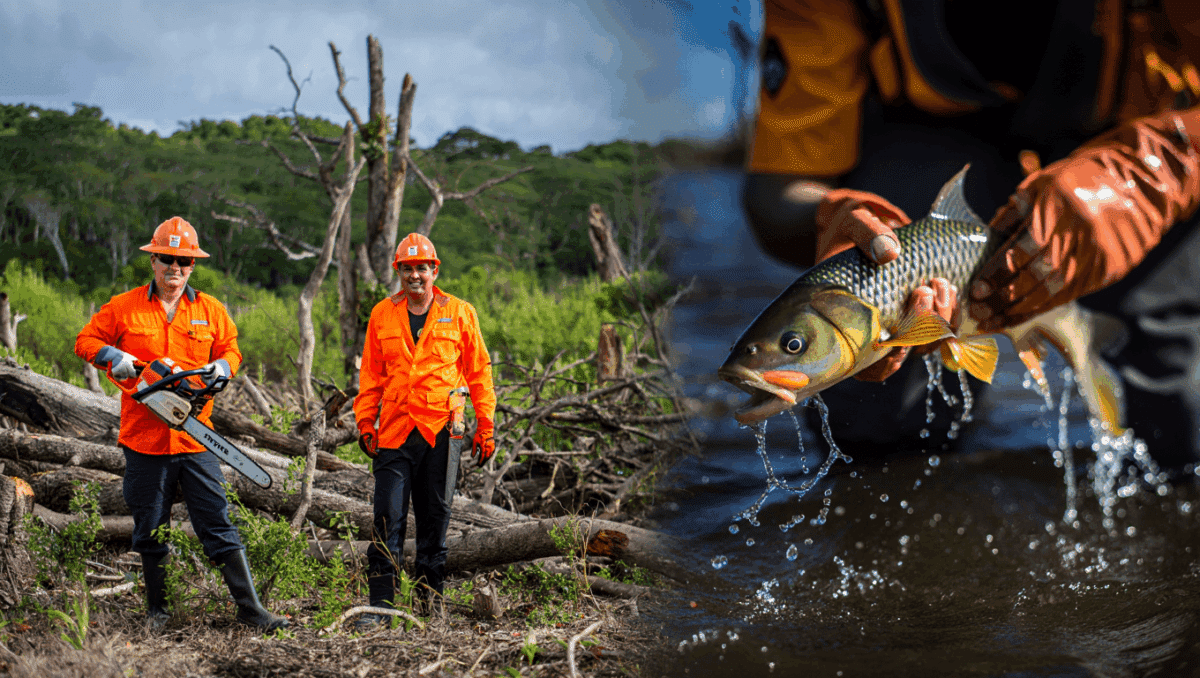
Between 2017 and 2025, teams working with the IUCN and local partners carried out a suite of projects that cleared invasive trees and fish from roughly 13,000 acres of native habitat. The program blended techniques tailored to each landscape, proving that a layered approach yields stronger results than single-method interventions.
Tools used across landscapes
- Mechanical felling and manual clearing of invasive trees
- Controlled burns to remove dense stands that altered hydrology
- Biological control and targeted herbicides where appropriate
- Rescue–rear–release programs for imperiled fish
- Community-led planting and ecological training for local interns
Saving wetlands and frogs by removing maritime pines on Klein Swartberg
On the Klein Swartberg Mountain in the Western Cape, thirsty maritime pines had been drawing down the water table and drying critical wetlands used by a tiny amphibian. Conservationists used planned burns and hand-clearing to remove the invasive stands, restoring hydrology across more than 8,500 acres and reopening breeding habitat.
The species most directly helped was the Critically‑Endangered rough moss frog (Arthroleptella rugosa). With the pines gone, wetland conditions recovered and field teams detected six previously unknown subpopulations — a sign that habitat restoration can reveal refuges that had been hidden by invasive canopy.
Rebuilding Cape Flats Sand Fynbos: Tokai Park’s hands-on restoration
In Cape Town’s Tokai Park, dense stands of Eucalyptus and Acacia were stripping the soil of moisture and changing the microenvironment that native fynbos species need to survive. Friends of Tokai Park led a locally run operation to reverse those changes, pairing habitat clearance with native planting and capacity building.
- Area cleared: 12 acres
- Seedlings planted: 4,500 native saplings
- Results: invasive cover fell by 22%, while native vegetation increased by 28%
Beyond the ecological win, the project provided on-the-ground restoration training for young conservationists and helped protect the unique Cape Flats Sand Fynbos, a vegetation type found only in the Cape Floral Region.
How a rescue–rear–release program revived the Clanwilliam sandfish
The Clanwilliam sandfish (Labeo seeberi) is considered South Africa’s most threatened migratory freshwater fish, imperiled by introduced predators such as bass and bluegill. Because this species migrates long distances, protecting a single stretch of river is not enough — threats occur throughout its range.
Conservationists used a rescue–rear–release approach: individuals were taken from the most dangerous reaches, raised in predator-free tanks until they reached sizes that predators could no longer consume, and then released into carefully secured river reaches. Managers also removed alien fish by netting where practical, creating temporary refuges for juveniles to mature.
Monitoring at the Biedouw River showed a notable response: migrating spawners rose from 78 individuals in 2020 to 180 in 2021 — a clear indication that the combined tactics boosted survival during vulnerable life stages.
Why tackling invasives across continents is more complex — and more necessary
Invasive species impose a heavy toll across Africa: agricultural losses, impacts on fisheries and livestock, and damage to tourism combine to cost the continent an estimated $65 billion every year. Islands are often easier to manage because their boundaries limit spread; continent-scale invasions move in every direction and cross political borders, making them harder to eradicate without broad collaboration.
- Cross-jurisdictional coordination is essential to prevent re-invasion.
- Combining removal with habitat restoration reduces the chance that invasive species will simply return.
- Engaging local communities and training new conservation practitioners multiplies long-term capacity.
Who led the work and which partnerships mattered
Key players in these projects included international and local organizations: the IUCN provided guidance and synthesis, while groups such as the Endangered Wildlife Trust, Friends of Tokai Park, and the Freshwater Research Center executed on-the-ground interventions and long-term monitoring. The time frame most active for these efforts spanned 2017–2025, a period that allowed adaptive management and follow-up surveys to measure recovery.
Practical steps communities and managers can replicate
The South African examples point to repeatable actions that conservation teams elsewhere can adopt:
- Map invasion hotspots and prioritize areas where removal will yield rapid ecological benefits.
- Use a mix of techniques — mechanical, fire, biological, and manual — tuned to the target species and site.
- Establish temporary predator-free rearing sites for vulnerable fauna when in-situ protection is insufficient.
- Pair clearance with native replanting to stabilize soils and occupy ecological niches.
- Invest in local training and community engagement so restoration continues after external funding ends.
These projects demonstrate that integrated, well-coordinated action can tip the balance back in favor of native species.
You might also like:
- Galapagos rail missing for 200 years reappears after Floreana island restoration
- Zoo saves 21 snails from extinction, returns hundreds to pristine Atlantic island
- 158 giant endangered tortoises released on Galápagos island after being extinct for 180 years
- Queensland tidal gates removed: returning saltwater restores native wetlands and wildlife
- Oyster reef restoration off Portsmouth becomes England’s largest with 200+ volunteers

Michael Thompson is an experienced journalist covering U.S. and global news. With ten years on the front lines, he breaks down political and economic stories that matter. His precise writing and keen attention to detail help you grasp the real‑world impact of every event.


Man, those invasive trees and fish in South Africa were like party crashers at a VIP event! Good riddance, I say. Let the native plants and critters reclaim their turf, nature deserves a chance to thrive without the unwanted guests!
Man, those invasive species wreak havoc on ecosystems. Its like they crash a party and ruin it for everyone. Good on South Africa for taking action. Lets restore those vital habitats and give native species a chance to thrive!
Man, talk about a massive cleanup! Those invasive trees and fish were really causing chaos in South Africa. Its like a real-life game of environmental Jenga. Hopefully, the ecosystems can bounce back stronger than ever!
Man, those invasive species wreak havoc like a bad houseguest. Good on South Africa for kicking them out! Its like natures version of a cleanup crew. Keep restoring those vital ecosystems, one tree and fish at a time!
Dang right, mate! Invasive species are like those party crashers who mess up your place. South Africas playing it smart by kicking em out. Lets give Mother Nature a hand and keep those ecosystems in check, tree by tree, fish by fish. Who knew wed need a cleanup crew for the great outdoors, huh?
Man, those invasive species wreak havoc! Remember when Uncle Bobs koi pond got infested with those crazy fish? Took ages to clear em out. Good on South Africa for tackling this mess!
I know, right? Those pesky invaders can really cause chaos! Uncle Bobs koi pond turned into a battleground with those wild fish. It was like a scene straight out of a monster movie! Kudos to South Africa for stepping up and handling the situation. Who knew underwater drama could be so intense, huh?
Man, those invasive species are like party crashers, ruining the whole ecosystem vibe. Good riddance to em! Its like natures cleanup crew is finally getting the rowdy guests out and restoring order. Lets keep the party going, South Africa!
Man, invasive species are like that annoying guest who overstays their welcome at a party. Good on South Africa for kicking out those party crashers and giving the native species a chance to thrive again. Balance restored, natures happy dance!
Man, those invasive trees and fish in South Africa were really wreaking havoc, huh? Good riddance! Natures gotta reclaim its turf. Cant mess with the ecosystems vibe like that. Hope they keep up the restoration work!
Oh man, those pesky trees and fish really caused a ruckus in South Africa, huh? Natures like, Nah, not on my watch! Gotta respect the ecosystems groove, right? Cant mess with Mother Natures vibe! Hope they keep hustlin with the restoration work, gotta give props where its due!
Man, those invasive species wreak havoc in ecosystems. Its like that one time I let my cousin crash at my place – chaos everywhere! Props to the peeps in South Africa for restoring balance. Nature needs its own Marie Kondo, am I right?
Man, invasive species wreak havoc, dude. South Africas ecosystems got a real struggle. Its like a never-ending battle, you know? But hey, big up to those warriors out there fighting to restore balance. Mad respect.
Man, those ecosystems in South Africa were crawling with invasive species! Good riddance to those pesky trees and fish, reclaiming 13,000 acres like natures own battle royale. Lets hope the restoration efforts stick this time!
Oh, mate, those pesky invaders wreaking havoc in South Africa, its like a nature showdown! Heres hoping this time Mother Natures got the upper hand in the epic battle for those 13,000 acres. Lets cheer for a restoration success this round!
I remember hiking in South Africa, those invasive trees were a real nuisance. Glad theyre taking action now. Ecosystems need balance, man. Cant let those invaders mess things up for the local wildlife.
Man, those invasive species wreak havoc in ecosystems. Its like a bad house party – they show up uninvited, mess everything up, and leave a disaster behind. Kudos to the folks restoring balance in South Africa. Natures got some mighty resilient defenders!
Man, those invasive species wreak havoc like a bad house party. South Africas doing the right thing by cleaning up the mess. Gotta show those buggers whos boss in these vital ecosystems!
Man, those invasive species in South Africa were like party crashers ruining the vibe. Good riddance, I say! Let the native flora and fauna reclaim their turf. Natures got this, just needs a little human help.