
Show summary Hide summary
- How the ampurta bounced back during the Millennium Drought
- The ecological dominoes: rabbits, predators, disease and drought
- Traits that helped the ampurta thrive when others struggled
- Observational evidence and study findings from UNSW ecologists
- Implications for restoration, reintroductions, and landscape management
- Opportunities and next steps for researchers and conservationists
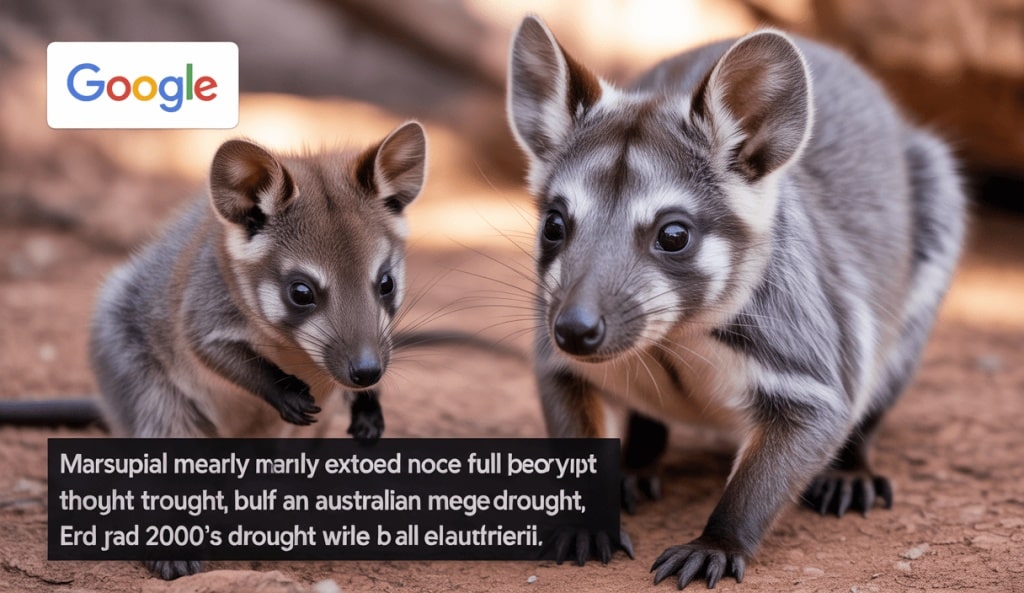
For a tiny, rat-sized marsupial once thought all but lost from large swaths of Australia, the early 2000s drought brought an unexpected turnaround. Instead of sliding closer to continent-wide extinction, the ampurta (Dasycercus hillieri) expanded into territories where it had been presumed gone, surprising researchers and offering a rare bright spot in Australia’s long struggle to save native mammals.
New monitoring and analysis from ecologists at the University of New South Wales reveal how a combination of climate extremes and disease among invasive species reshaped predator-prey dynamics — and in turn opened space for a resilient native carnivore to rebound.
How the ampurta bounced back during the Millennium Drought
Researchers tracking the ampurta across arid and semi-arid zones documented a striking range expansion during the drought years beginning in 2001. Previously listed as Endangered in 1999 and believed locally extinct in several states, the species reappeared across an area of more than 48,000 km2 — larger than the country of Denmark. By 2019 the International Union for the Conservation of Nature had moved the ampurta’s global status to Least Concern.
The Growing Demand for Data-Driven Decision Making in Silicon Valley
He quit, ran out of money, and begged to come back — here’s how his boss reacted
The recovery was neither linear nor driven by conservation budgets. Instead, natural shifts in the landscape and animal communities during prolonged dry periods created conditions that favored the ampurta’s life history traits and feeding flexibility.
The ecological dominoes: rabbits, predators, disease and drought
A critical part of the story involves invasive species and a viral outbreak that altered food web dynamics.
- Rabbits: Periods of higher rainfall fuel rabbit population explosions, which in turn support rising numbers of feral cats and red foxes — major predators of small native mammals.
- Rabbit Hemorrhagic Disease Virus (RHDV): When RHDV swept through rabbit populations, it caused dramatic declines in their numbers, removing a major prey base for invasive predators.
- Drought (the Millennium Drought, 2001–2009): Extended dry conditions further suppressed rabbit recovery and reduced habitat suitability for larger, water-dependent species.
With fewer rabbits to sustain high populations of feral cats and foxes, predation pressure on small marsupials like the ampurta relaxed. The combined effect of disease-driven rabbit crashes and prolonged drought essentially gave the ampurta a reprieve and a window to re-establish in areas where it had once vanished.
Traits that helped the ampurta thrive when others struggled
The ampurta’s biology made it particularly well-suited to capitalize on those changing circumstances.
- Dietary flexibility: As an opportunistic predator and omnivore, the ampurta consumes insects, small vertebrates, and plant matter, enabling it to persist when specific prey are scarce.
- Low water requirements: Its physiology supports survival in arid conditions, allowing it to maintain populations through extended dry spells.
- Small size and behavior: These factors reduce its resource needs and make it less detectable to predators when those predators’ numbers fall.
Together, these traits meant that while some native species declined during drought, the ampurta could expand into niches left open by shifting predator-prey relationships.
Observational evidence and study findings from UNSW ecologists
In a multi-author study from the Center for Ecosystem Science at the University of New South Wales, scientists mapped ampurta detections over two decades across Australia’s interior landscapes. Their key findings include:
- Substantial expansion of the species’ known range during severe drought years.
- Reappearance in regions where the ampurta had been listed as locally extinct.
- An overall increase in global extent of occurrence despite climate extremes.
The authors describe this pattern as “one of the clearest recent examples of native mammalian re-expansion under climate extremes” and frame it as a rare positive signal for conservation in a region where species loss has been so pervasive.
Implications for restoration, reintroductions, and landscape management
This unexpected recovery raises practical questions for conservation planning and recovery programs.
- Timing of interventions: The drought phase may present better windows for reintroductions and translocations because predation risk is temporarily reduced.
- Prioritizing species surveys: Monitoring during dry periods could reveal other native species that similarly rebound when invasive predator pressure weakens.
- Cost versus natural recovery: Landscape-scale recovery is often prohibitively expensive, but natural processes — such as disease outbreaks in invasive species combined with climatic extremes — can sometimes produce large-scale benefits for native fauna.
Researchers suggest targeted studies to identify which species might respond like the ampurta and where managers could safely reintroduce animals with a higher chance of long-term persistence.
Opportunities and next steps for researchers and conservationists
The ampurta case highlights the value of long-term monitoring and the need to consider how extreme climate events interact with invasive species and disease dynamics. Scientists recommend:
- Increasing systematic surveys in arid landscapes across drought and post-drought phases.
- Modeling predator-prey responses to combined drivers like RHDV and rainfall variability.
- Exploring adaptive reintroduction strategies timed to ecological windows of opportunity.
If multiple native mammals respond positively during similar conditions, managers could use those periods to scale up assisted recovery efforts in places where species remain extirpated, such as parts of New South Wales where the ampurta has yet to return.
You might also like:
- Galapagos rail missing for 200 years reappears after Floreana island restoration
- Snail breeding and reintroduction: scientists launch largest effort to save species thought extinct
- Rare Black-Tailed Rabbit Spotted After 120 Years: Discovery in Mexican Mountains
- Bandicoot marsupial to be released across Australia after captive breeding, once extinct in the wild
- Endangered cahow hatches on Nonsuch Island in Bermuda

Michael Thompson is an experienced journalist covering U.S. and global news. With ten years on the front lines, he breaks down political and economic stories that matter. His precise writing and keen attention to detail help you grasp the real‑world impact of every event.


I remember when folks thought the ampurta was a goner, but look at it now, bouncing back like a champ during the mega drought! Natures full of surprises, aint it? Crazy how resilient critters can be.
Mate, this reminds me of that one time when I thought my cactus died, but then it sprouted back to life like nothing happened. Nature is full of surprises, innit?
Dude, thats wild! Nature always keeps us on our toes, huh? Its like, just when you think youve got it all figured out, bam! Cactus revival! Makes you wonder what other surprises Mother Natures hiding up her sleeve, innit?
Mate, did ya hear bout those ampurtas? They were on the brink, then bam, theyre bouncing back during a mega drought! Natures full of surprises, aint it? Gotta respect those marsupials for their resilience, aye.
I remember hearin bout them ampurtas years back, strugglin durin that mega drought. Now, seein em bouncin back strong gives hope, natures a wild ride, aint it? Adapt or die, baby!
Man, talk about a comeback story! The ampurta aint playing around during that mega drought. Natures full of surprises, huh? Guess we can all learn a thing or two from these marsupials about resilience.
Mate, the ampurtas comeback during the mega drought is like a plot twist in a nature documentary. I reckon those marsupials are the real MVPs of the outback, surviving against the odds. Cheers to resilience!
Dude, aint that the truth! The ampurtas coming back like its nobodys business – talk about an underdog story in the Aussie wilderness! Makes you wonder what other surprises natures got up its sleeve, huh? Cheers to those marsupials kickin butt and takin names out there!
Mate, this is like that plot twist in a movie you never saw coming! The ampurta, nearly gone, just pops up like Hey, Im back, folks! Natures full of surprises, aint it? Cheers to the Aussie wildlife making a comeback!
Man, talk ‘bout comeback kids! Ampurta aint playin, beatin’ extinction during mega drought like a boss. Natures full of surprises, huh? Props to UNSW ecologists for keepin tabs on this epic turnaround!
Dang, ain’t that a plot twist! Nature’s really out here pullin’ off some epic comebacks. UNSW ecologists must be throwin’ a party right now, watchin’ Ampurta showin’ extinction who’s boss. Who knew Mother Nature had those tricks up her sleeve, huh? It’s like watchin’ a wild reality show unfold right before our eyes!
Man, talk about a comeback story! This ampurta sounds like the MVP of surviving tough times. Natures resilience is wild, aint it? Hoping more species catch a break like this little guy.
Man, talk about a comeback story! The ampurta pulling through during that mega drought is pure resilience. Nature never ceases to amaze. Kudos to those ecologists for shedding light on this. Mother Earth at its finest!
Dang, talk about Mother Natures plot twist! The ampurta aint playing games during that mega drought, huh? Its like natures flexing its muscles. Big shoutout to those ecologists for bringing the spotlight on this wild comeback. Its like Earths own drama series, man!
I remember when folks said the ampurta was done for. Now look at em, bouncin back stronger than ever during that mega drought! Natures full of surprises, aint it? Just goes to show ya, never count out the underdog marsupials, mate.
Mate, aint that the truth! Natures like a real-life soap opera, full of unexpected twists and turns. Those ampurtas are the real MVPs, huh? Who knew they had that comeback power in em! Its like watching an underdog movie play out right in our backyard, innit? Cheers to the marsupials keepin us on our toes!
I remember when folks said the ampurta was a goner during that mega drought. But look at em now, bouncin back like champs! Natures full of surprises, aint it? Mother Earths got her own magic tricks up her sleeve.
Man, those ampurtas are like the underdog that always surprises everyone, aint they? Making a comeback during a mega drought? Thats one tough marsupial! Natures full of surprises, I tell ya.
I remember learning about the ampurta in school, thought they were done for! Natures full of surprises, aint it? Maybe we humans could learn a thing or two from these little fellas about resilience.
I remember when folks said those marsupials were done for! But, look at em now, bouncing back during that mega drought like champs. Natures full of surprises, aint it?
Man, that ampurta is one resilient critter! Survives droughts like a champ. Natures full of surprises, aint it? Makes you wonder what other hidden heroes are out there, waiting to show us what theyre made of.
I remember hearin bout those little ampurtas durin that mega drought. Thought they were a goner for sure. But hey, good on em for bouncin back! Nature always finds a way, dont it?
Man, I totally feel ya! Those ampurtas were hangin on by a thread, but damn, Mother Natures got some serious magic up her sleeve. Its like shes playin a never-ending game of I got this. Cant help but root for the underdogs, right?