
Show summary Hide summary
- Scientific proof: chemical fingerprints in ancient maize
- Why the Humboldt Current mattered for ancient farming
- How guano became economic capital for the Chincha
- Relations with the Inca: bargaining power, not just conquest
- Long-term ripple effects: from indigenous stewardship to global exploitation
- What archaeologists and historians learn from guano’s legacy
For centuries coastal communities along Peru’s shorelines turned one of nature’s most unglamorous products into a strategic commodity: seabird guano. What began as thick layers of droppings on rocky islets became the backbone of intensive agriculture, wealth generation, and even diplomatic leverage for societies that rose on the edges of the Pacific.
Recent chemical detective work confirms an idea archaeologists long suspected: bird poop didn’t just fertilize fields — it helped shape the fortunes of entire polities. New analyses tie nitrogen-rich guano to maize grown by the Chincha people, offering a clearer picture of how ecosystems, trade, and politics were woven together in pre-Columbian Peru.
Scientific proof: chemical fingerprints in ancient maize
The Growing Demand for Data-Driven Decision Making in Silicon Valley
He quit, ran out of money, and begged to come back — here’s how his boss reacted
Researchers published in PLOS One report that maize kernels recovered from tombs in the Chincha Valley carry distinct isotopic and nitrogen signatures pointing to seabird-derived fertilizer. Led by Dr. Jacob Bongers from the University of Sydney, the team analyzed organic chemistry in plant remains and matched the ratios typically produced by guano-enriched soils.
What the tests reveal
- Elevated nitrogen concentrations in kernel samples compared with baseline terrestrial inputs.
- Isotope ratios consistent with nutrient cycling tied to marine-derived guano rather than solely terrestrial manures.
- Concordance with archaeological imagery and artifacts depicting seabirds, fish, and maize — suggesting cultural as well as agricultural significance.
The chemical evidence strengthens a long-held hypothesis: Chincha farmers deliberately used seabird guano at scale to boost crop yields, not merely as occasional soil amendments.
Why the Humboldt Current mattered for ancient farming
The productivity of the region starts offshore. The Humboldt Current — also called the Peru Current — brings cold, nutrient-dense water up the western coast of South America. That abundance feeds vast fish populations and, in turn, supports dense colonies of seabirds on the rocky islets lining Peru and Chile.
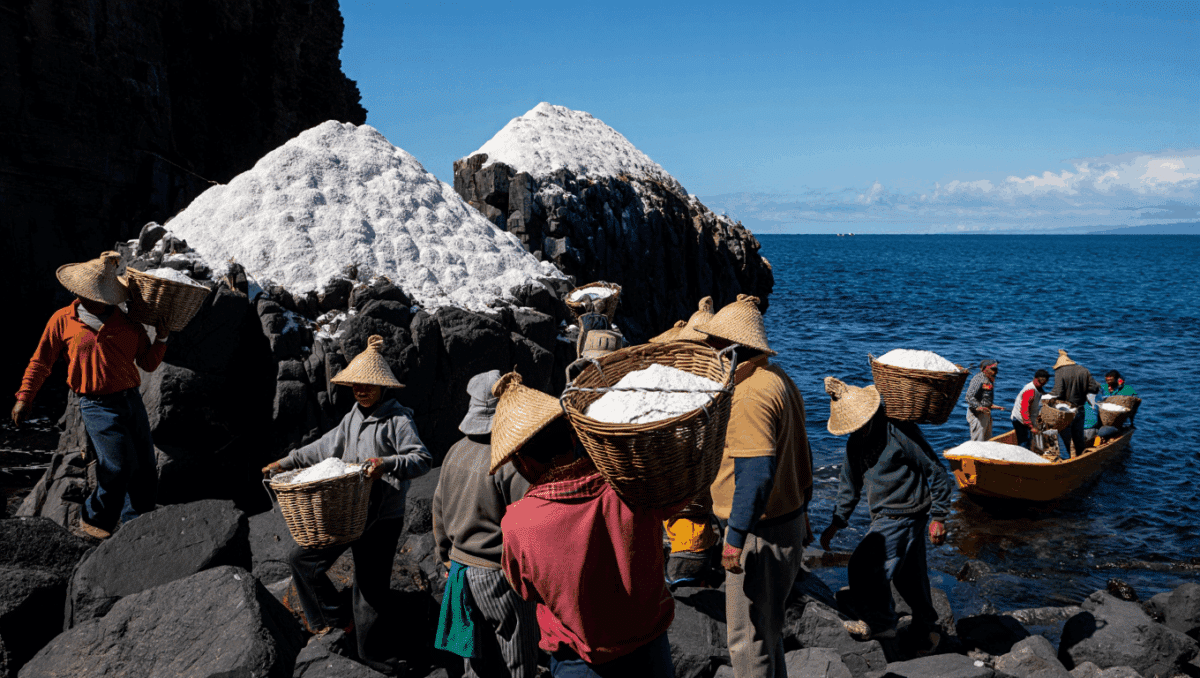
Over generations, those islands accumulated thick mats of guano. Exposed to sun and wind, the droppings fossilized into a stable, nitrogen-rich fertilizer that local communities could harvest and transport to inland fields.
How guano became economic capital for the Chincha
Archaeological and historical records suggest that by at least 1250 CE, the Chincha were routinely sailing offshore to collect guano and ferrying it home to enrich maize production. That agricultural productivity produced surpluses, which the Chincha converted into trade goods and political influence.
Guano’s practical advantages
- High nitrogen and phosphorus content dramatically increased crop yields.
- Durability and transportability made it an ideal trade commodity, moved by llamas and caravans.
- Predictable seasonal harvests from bird colonies enabled planning and wealth accumulation.
Control of guano equaled control of food security: whoever managed access to the islands and the fertilizer effectively held leverage over agricultural productivity and regional trade networks.
Relations with the Inca: bargaining power, not just conquest
When the Inca expanded along the coast, they encountered societies that already wielded considerable influence. Historical accounts and archaeological interpretation indicate the Chincha were incorporated through negotiation rather than outright military defeat. Access to guano-rich islands and the resulting food surplus likely played a central role in those discussions.
The Inca leadership recognized the value of sustained fertilizer supply and, according to later records, restricted island visits during seabird breeding seasons — a practice researchers interpret as an early form of resource management and conservation.
Long-term ripple effects: from indigenous stewardship to global exploitation
For centuries indigenous groups managed guano sustainably and integrated it into local economies. That changed dramatically with European arrival. Colonizers and later commercial interests harvested guano on an industrial scale to meet global fertilizer and even gunpowder needs, setting off a new era of export-driven extraction.
- European exploitation launched international trade in guano and intensified competition for island resources.
- Large-scale removal of guano disrupted local ecosystems and the economies that depended on them.
- Conflicts and environmental degradation followed as global demand surged.
The shift highlights a crucial contrast: precolonial communities often balanced use and conservation, while later industrial demand prioritized short-term extraction.
What archaeologists and historians learn from guano’s legacy
Studying guano’s role in ancient coastal societies offers more than a curious footnote; it reframes how scholars understand agricultural intensification, trade networks, and political power in the prehispanic Andes. The Chincha case shows how a naturally occurring marine byproduct could be converted into a strategic asset that shaped diplomacy, economy, and landscape management.
Key takeaways for modern readers
- Natural nutrient cycles can underpin complex human institutions.
- Small, persistent resource advantages — like reliable fertilizer — can yield outsized social and political consequences.
- Early conservation practices existed where communities depended on the long-term productivity of site-specific resources.
As chemical analyses continue to refine timelines and transport routes, we are likely to uncover more examples of how coastal ecosystems and human ingenuity intertwined to build wealth and influence long before the modern era of industrial fertilizers.
You might also like:
- Bird droppings powered coastal kingdom’s rise, archaeologists find
- Ancient Romans used feces as medicine, study confirms
- Rice prices hit 18-year low as yields per acre double
- French Polynesia protects a biodiverse marine reserve twice the size of Arizona teeming with life
- Native American dice show ancient gaming thousands of years before anyone else

William Anderson is a multimedia producer specializing in videos, podcasts, and interactive galleries. With five years of immersive content creation, he turns information into a rich audio‑visual experience. His storytelling skills draw you directly into the heart of every story, on any platform.


Dude, ancient Peru was like the OG superpower with that guano boost! Imagine farming with bird poop—wild! Makes you wonder what other weird stuff they used to flex back then, right?
Dude, ancient Peru was like the OG superpower with that guano vibe! Chemical fingerprints in maize? Mind blown. Humboldt Current was their secret sauce. Guano = ancient economic flex. Who knew poop could be so lit?
Dang, dude, ancient Peru had that guano game on lock! Maize with chemical fingerprints? Mind officially blown. The Humboldt Current was their secret sauce, for real. Who knew poop could be such a game-changer, right?
I remember watching this documentary on ancient Peru and guano was like the unsung hero, man. Its crazy how bird poop could make or break a civilization. Nature works in mysterious ways, I tell ya.
I remember learning about guano in school, but who knew bird poop could be so powerful, right? Ancient Peru was onto something with that fertilizer of the gods – talk about turning waste into wealth!
Man, totally! Who wouldve thought bird droppings could be so lit, right? Ancient Peru wasnt playing around with that fertilizer of the gods vibe. Turning poop into gold, talk about a glow-up! Its wild how natures surprises can be so darn powerful sometimes, aint it?
Guano? Yeah, that white gold made Peru flex its muscles back in the day. Imagine farming superpowers fueled by bird poop! Ancient Peruvians were onto something, alright. Natures fertilizer, the OG power-up!
Man, ancient Peru was onto something big with that guano, huh? Who knew bird poop could be so powerful! Natures own secret superfood for crops. Mother Earths got all the tricks up her sleeve, I tell ya.
Dang, guanos like the OG fertilizer, aint it? Ancient Peru aint playin around. Its wild how poop helped them level up to superpower status. Natures own secret sauce, I guess!
I remember learning bout guano in school, thought it was just bird poop. Turns out, that stinkin stuff made ancient Peru a powerhouse! Who knew droppings could be so powerful, huh?
Oh man, guano, right? Who wouldve guessed that good ol bird poop could be such a game-changer! Ancient Peru sure hit the jackpot with that stinkin stuff. Natures surprises, huh? Bet those Peruvians never thought theyd be raking in power from bird droppings! Lifes full of unexpected treasures, aint it?
I remember reading bout guano in history class, never thought bird poop could be so epic! Ancient Peru knew whats up. Natures treasure, man, who knew? Natures full of surprises, I tell ya.
Dude, guano was like the OG superfood for ancient Peru, right? Chemical fingerprints in their maize? Thats some next-level CSI stuff. Who knew bird poop could make a civilization flex so hard?
I remember my grandpa rambling bout guano like it was gold. Guess he wasnt far off! Who knew bird poop could turn ancient Peru into a powerhouse? Lifes full of surprises, aint it?
Man, ancient Peru really knew how to hustle with that guano, huh? Chemical fingerprints in maize? Thats some CSI-level investigation. Imagine a whole superpower built on bird droppings. Talk about turning sh*t into gold!