
Show summary Hide summary
- New evidence for late-stage volcanism near Pavonis Mons
- How scientists decoded lava flows from orbit
- What the mineral signatures tell us about Mars’ magma
- Interpreting a long-lived Martian magma plumbing system
- Why this matters for our view of Mars
- Methods, caveats, and next steps for Mars exploration
New research is painting a more dynamic picture of Mars’ volcanic past, one that overlaps with the final days of the dinosaurs and the early rise of mammals on Earth. Scientists now say that some volcanic activity in Mars’ vast Tharsis region continued far later than previously believed—into a time span people can relate to by Earth’s geological timeline.
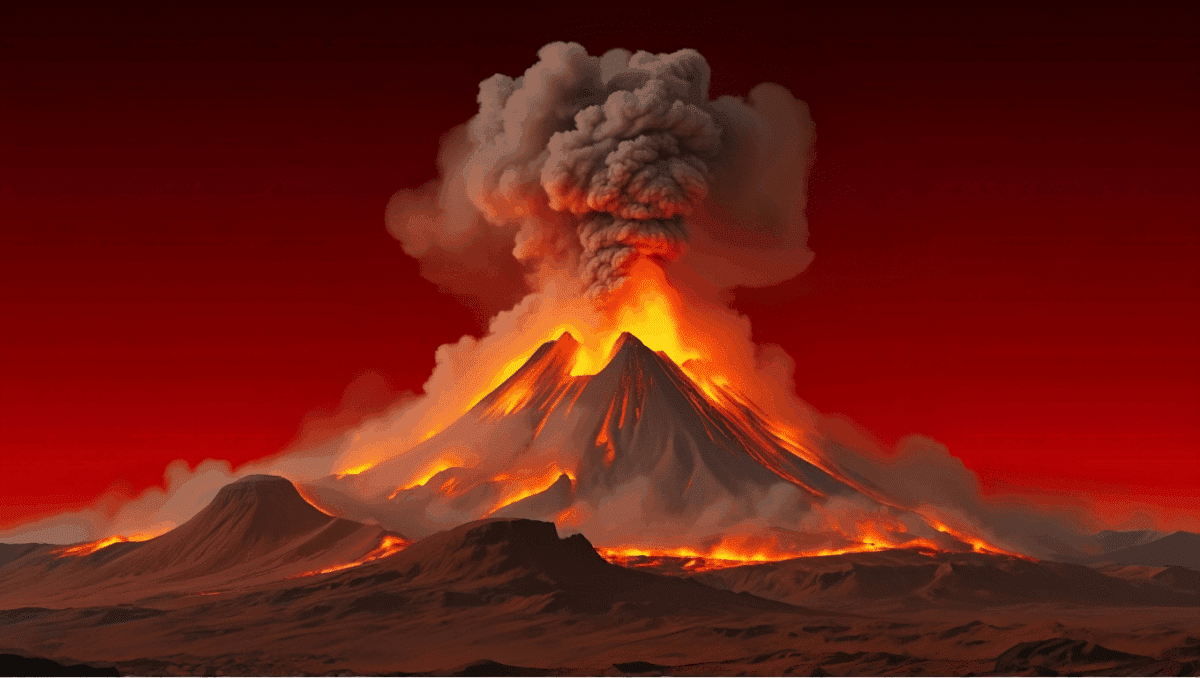
The focus is a volcanic complex just south of Pavonis Mons, one of the massive shield volcanoes that dominate Tharsis. Using orbital data rather than rock samples, researchers mapped lava flows and mineral signatures and found eruptions that started about 64 million years ago and continued in stages down to roughly 50 million years ago. That’s recent for Mars and overlaps with familiar chapters of Earth history.
New evidence for late-stage volcanism near Pavonis Mons
The study examined a sequence of lava fields south of Pavonis Mons and concluded the area experienced multiple eruptive episodes rather than a single ancient outburst. Researchers identified at least two distinct generations of flows separated by millions of years, suggesting a persistent and changing subsurface magma system.
The Growing Demand for Data-Driven Decision Making in Silicon Valley
He quit, ran out of money, and begged to come back — here’s how his boss reacted
- Oldest mapped eruptions: about 64 million years ago.
- Later eruptive pulses: flows around 50 million years ago.
- Duration of magmatic activity: evidence points to activity lasting at least about 9 million years.
These ages place the last major volcanic activity well into Mars’ Amazonian period, a geologic era often thought to be relatively quiet. Instead, the region shows the fingerprints of a plumbing system that persisted and evolved over time.
How scientists decoded lava flows from orbit
Because no rovers or landers sampled these rocks directly, the team relied on remote sensing techniques. They used spectral data from the Compact Reconnaissance Imaging Spectrometer for Mars (CRISM) aboard NASA’s Mars Reconnaissance Orbiter to read mineralogical differences across the lava units.
Mapping minerals and morphology
Orbital spectroscopy can identify diagnostic absorption features of common volcanic minerals. Combined with high-resolution imagery of flow shapes and textures, the researchers reconstructed the eruption styles and the chemical evolution of the magma over time.
- CRISM mineral maps revealed distinct mineral assemblages for older versus younger flows.
- Imagery showed older flows spreading thin and smooth across the surface, while younger flows were shorter and thicker.
- These lines of evidence together let the team infer how eruption mechanisms shifted—from long fissure-fed lava sheets to more localized cone-building events.
What the mineral signatures tell us about Mars’ magma
Mineral chemistry was the key to understanding how the subsurface magmatic system changed. The oldest lava units exhibit strong signatures of olivine, a mineral commonly associated with hotter, more primitive mantle-derived magma. The younger, cone-related flows show a dominance of high-calcium pyroxenes, indicating more evolved, cooler, and compositionally altered melts.
That mineral transition supports a narrative in which magma that once rose rapidly from depth later stalled and cooled in the crust. Over time the chemistry shifted, producing more viscous lava that built cones rather than long, fluid flows. The surface shapes mirror that change:
- Older flows: extensive, smooth, and thin—consistent with hot, low-viscosity eruptions.
- Younger flows: shorter, blockier, and thicker—consistent with cooler, higher-viscosity magma.
Interpreting a long-lived Martian magma plumbing system
Putting the mineralogy and morphology together, the authors argue for a long-lived, evolving subsurface network of magma chambers and conduits under the Pavonis flank. Instead of a single eruptive episode, the system underwent multiple stages as thermal and chemical conditions changed below ground.
Lead researcher Bartosz Pieterek summarized the picture as one of continued internal complexity: the volcano didn’t just erupt once and shut down; the subsurface plumbing remained active and evolving across millions of years as conditions in the crust shifted.
Why this matters for our view of Mars
This work changes how scientists think about the timing and style of Martian volcanism. It suggests that Mars retained enough internal heat to support long-lived magmatic systems well into epochs that overlap Earth’s familiar fossil record. Rather than a planet that simply cooled into inertness long ago, at least parts of Mars show signs of sustained geologic life.
Those findings also affect other questions about Mars:
- Thermal evolution: persistent volcanism requires a warmer interior for longer periods than some models predict.
- Surface alteration: successive eruptions and evolving magma chemistry influence the mineralogy available for remote detection and for future sampling.
- Exploration targets: regions with late-stage volcanism may preserve unique records of interior processes and past environments.
Methods, caveats, and next steps for Mars exploration
Remote-sensing studies like this are powerful but provisional—they read minerals and morphologies from orbit and infer subsurface processes. Confirming the timing and chemistry of these flows would be strengthened by in-situ measurements or sample returns. Still, the convergence of spectral data and geomorphology makes a persuasive case that the Tharsis flank near Pavonis Mons hosted a migrating suite of eruptions over millions of years.
Future missions that can directly sample these late Amazonian flows would test the mineralogical interpretations, refine eruption ages, and reveal the detailed history of Martian magmatism during a time that lines up with the end of the dinosaur era on Earth.
You might also like:
- Venus lava tubes may exist: what it means for geology and exploration
- 1.5 million km² buried by magma: colossal plumes may rewrite Earth’s future continents
- In 2011, a collector bought a Moroccan meteorite—it turned out to be proof of thermal water on Mars
- Less than a million years for a new ocean: the African continent is splitting fast
- Titan alien life: could Saturn’s moon harbor signs of life?

William Anderson is a multimedia producer specializing in videos, podcasts, and interactive galleries. With five years of immersive content creation, he turns information into a rich audio‑visual experience. His storytelling skills draw you directly into the heart of every story, on any platform.


I always knew Mars was up to something during the dinosaurs time! Can you imagine those volcanoes erupting while T-Rex was roaming around? Science is wild, man.
Oh man, imagine dinosaurs roaming Mars with volcanoes erupting in the backdrop? Thats like a sci-fi blockbuster waiting to happen! Cant wait to see if this study reveals some epic prehistoric Martian drama!
Man, imagine dinos roaming as Mars volcanoes go kaboom! Crazy stuff. Bet the T-Rex wouldnt bat an eye. Just another day in the neighborhood, right? Mars, you sneaky planet.
Man, talk about explosive times! Dinosaurs out, Mars volcanoes in? Sounds like a sci-fi flick waiting to happen. Imagine dinos dodging lava bombs while Martians chill on Olympus Mons. Natures got a wild imagination, huh?
Man, Mars be wildin! Volcanoes poppin off while dinos on Earth dealin with their own drama? Universe got no chill. Imagine them dinos seein Mars lightin up from across the galaxy. Crazy times!
Yo, for real! Mars out there causing a ruckus with its volcanoes while Earths dinos be like, Hold up, we got our own mess to deal with! Can you imagine the gossip going on in the galaxy? Those dinos must be like, Whats happening over there?! The universe be throwing shade left and right, no chill at all. Crazy times indeed!
I mean, imagine being a dino chillin on Earth, and then BAM! Mars decides to throw a volcanic party too? Talk about bad timing. Just my luck, huh? Natures got jokes.
Imagine being a dino, just chilling, minding your own business, and then Mars goes all Im gonna erupt too, why not? Talk about bad luck, right? I guess Earth and Mars missed the memo on party coordination. Natures throwing curveballs left and right, keeping us on our toes!
Man, thinking about dinosaurs and volcanoes on Mars, its like a sci-fi movie waiting to happen! Can you imagine those colossal eruptions alongside T-Rex roaming around? Science is wild, dude.
Im telling ya, Mars is like the ultimate drama queen! Dinosaurs on Earth dealing with their own mess, and boom, Mars be like, Hold my red wine, Im gonna erupt some volcanoes too! Cant make this stuff up!
Man, Mars is like a wild cousin at a family reunion – you never know what its gonna do next! Volcanoes during the dinosaurs last hurrah? Talk about a party crasher! Who knew Mars was such a drama queen!
Man, Mars be wildin with them volcanoes during dino time? Thats some sci-fi movie stuff right there! Imagine a T-Rex dodging lava bombs while Mars is like, Hold my beer. Crazy times, yall.
Man, imagine if dinosaurs saw Mars erupting! Thatd be a sight. Crazy how volcanoes connect worlds, huh? Natures wild. Gotta love science for digging up these mind-blowing stories.
Man, Mars just keeps spittin fire, huh? Imagine the dinosaurs lookin up like, Yo, whats with all the rumblin? Oh, just Mars bein extra again. Wild to think about what went down up there!
Man, like, imagine dinos walking around and Mars going kaboom with volcanoes! Its like a wild crossover between sci-fi and paleo stuff. Science is full of surprises, man. Who wouldve thought? Crazy times.
Man, imagine dinos roaming as Mars’ volcanoes went kaboom! Thats like a sci-fi movie plot! Science is wild, decoding lava flows from space and all. Wonder what else those Mars rocks are hiding.