
Show summary Hide summary
- How blackwater photography brought hidden behavior into view
- Why juveniles might use anemones as living shields
- Could this be mutualism? Benefits for both fish and anemone
- Examples and observations from the study
- Why these findings matter for marine science and storytelling
- Other recent examples of unusual animal interactions
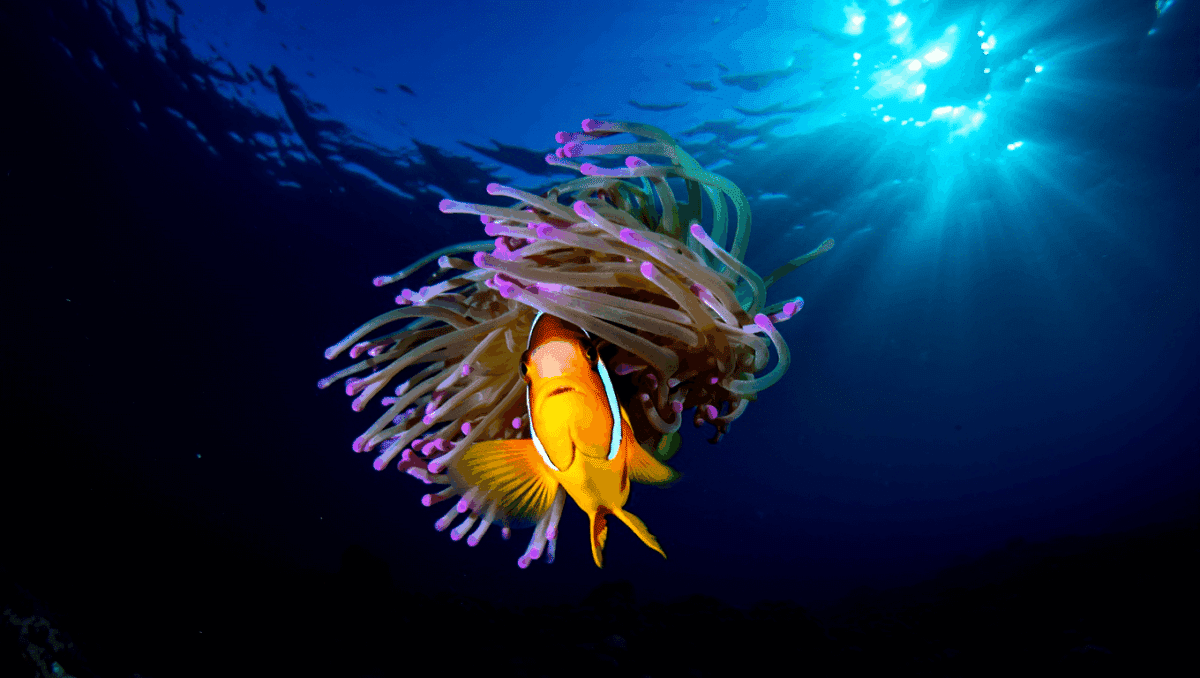
Night dives off the open ocean have revealed a surprising form of cooperation: tiny, young fish are sometimes seen carrying bite-sized anemones in ways that suggest protection, while the anemones may gain a ride to new waters. Photographers using specialized nighttime techniques captured images of these uncommon pairings, offering a fresh look at life in the dark-water column.
The photographs and observations, published in a peer-reviewed journal, expand our ideas about how juvenile fish survive and how invertebrates disperse. Scientists involved in the study say this behavior challenges familiar pop-culture portrayals of fish-anemone relationships and opens new questions about underwater survival strategies.
The Growing Demand for Data-Driven Decision Making in Silicon Valley
He quit, ran out of money, and begged to come back — here’s how his boss reacted
How blackwater photography brought hidden behavior into view
Researchers credit the rise of blackwater photography — high-sensitivity imaging done by divers at night in open water — with making these discoveries possible. Rather than taking pictures on bustling reefs, photographers drift in the twilight zone and use lights to illuminate fleeting encounters between larvae, juveniles, and small invertebrates.
William & Mary doctoral student Gabriel Afonso led the study and worked with experienced blackwater photographers, including Rich Collins, a consultant with the Florida Museum of Natural History. Together they documented interactions that rarely show up in daytime reef surveys.
What the photographers observed
- Several juvenile fish species were photographed holding or carrying larval anemones and button polyps in their mouths.
- Species involved included small filefish, driftfish, pomfrets, and a young jack — all captured in the act of transporting stinging invertebrates.
- Other surprising encounters previously recorded by blackwater photographers include fish mouthing toxic jellyfish and unusual pairings among tiny organisms.
Why juveniles might use anemones as living shields
Divers noted that the stings delivered by larval anemones are unlikely to fatally wound a predator, but they may make the fish unappealing or more difficult to eat. Carrying a noxious or stinging organism could therefore reduce predation risk during a vulnerable life stage.
Scientists describe this as a potential form of defensive behavior — juvenile fish appear to be deliberately associating with creatures that can irritate would-be attackers. The images suggest an active, physical interaction rather than a coincidental contact while drifting.
Could this be mutualism? Benefits for both fish and anemone
Beyond protection, the partnership may help the anemones, especially the tiny, sessile life stages that would otherwise be limited in movement. If a fish carries a larval anemone to a new location, the invertebrate could establish elsewhere, gaining a dispersal advantage.
This potential two-way benefit — defense for the fish and transport for the anemone — represents a form of mutualism that has not been widely reported in open-water contexts. Researchers say it broadens the types of symbiotic relationships we expect to see around reefs and in pelagic zones.
Examples and observations from the study
- Filefish were observed holding what appeared to be small anemone fragments or whole larval anemones in their mouths, despite the invertebrates’ capacity to sting.
- Driftfish and young pomfrets also carried button polyps, positioning the invertebrates so they might deter attackers.
- A juvenile jack was photographed with a tube anemone lodged near its mouth, suggesting similar protective behavior across unrelated fish families.
Why these findings matter for marine science and storytelling
Beyond their scientific value, the photographs call attention to the complexity of pelagic ecosystems and the many interactions that occur after dark. Blackwater dives regularly reveal behaviors that are invisible during daylight surveys, from unexpected food choices to novel symbioses.
Researchers hope the images will inspire both further study and a broader public appreciation for the hidden drama of the ocean. As one team member noted, documenting these fleeting moments can change how we think about survival strategies among juvenile marine animals.
Other recent examples of unusual animal interactions
- Researchers once found an age-old piece of footwear inside a raptor nest, illustrating how animals repurpose human debris.
- Field cameras have captured unlikely animal friendships, where two different species move together peacefully.
- Marine biologists documented a stingray with an unusual reproductive outcome that sparked interest in ray biology and captive care.
You might also like:
- Pearl necklace spider discovered: what scientists know about the new species
- Polar bear photographed with rare adopted cub in the wild
- Identify fish by sound: scientists can now recognize species from their sounds
- Comedy Wildlife Contest photo finalists revealed: hilarious wildlife photos to make you smile
- Great white shark teeth: science explains why they’re replaced constantly

Michael Thompson is an experienced journalist covering U.S. and global news. With ten years on the front lines, he breaks down political and economic stories that matter. His precise writing and keen attention to detail help you grasp the real‑world impact of every event.


Man, that blackwater photography is like uncovering secrets of the deep! I mean, who knew about this fish-anemone duo? Natures full of surprises, innit? Makes you wonder what else is going on down there!
Dang, aint that some mind-blowing stuff! Blackwater photographys like a peek into a whole new world, right? Natures playing 4D chess down there! Makes you think, what other shenanigans are going on in the deep blue sea?
Man, blackwater photography is like peeping into a secret underwater club! Juveniles using anemones as shields? Talk about next-level hide and seek! Could this be some underwater bromance? Fish and anemones, the new power duo?
Man, blackwater photography is like a portal to another universe, I swear. These photographers are like underwater detectives, uncovering these hidden interactions. Its wild how much we still have to learn about the oceans secrets.
I remember my first night dive, felt like a whole new world down there! Those photos of fish using anemones as shields are mind-blowing. Natures got some sneaky tricks up its sleeve, huh?
Man, I always thought blackwater diving was just for thrill-seekers. But now were finding out about fish using anemones as shields down there? Natures full of surprises, aint it? Just when you think youve seen it all!
Man, natures full of surprises! Like, who knew fish and anemones could be BFFs? Its like a whole underwater buddy system going on. Maybe us land-dwellers could learn a thing or two about teamwork from these sea critters!
Ive always said, under the sea, theres a whole world we barely know about! This blackwater photography is like the paparazzi of the ocean, catching all the juicy gossip between fish and anemones. Who knew they were such BFFs?
Oh, I totally get what you mean! Its like the ocean has its own little soap opera going on underwater. Who wouldve thought fish and anemones were gossip buddies? Next thing you know, theyll be sharing secrets about the starfish next door! Its a whole new world down there, isnt it?
I always thought nighttime was just for sleepin, but these divers saw fish cuddlin with anemones! Natures full of surprises, man. Who knew there was a whole underwater love story goin on?
Man, blackwater photographys like peekin into a secret underwater world! These divers uncoverin fish-anemone teamwork? Mind-blowin! Natures full of surprises, aint it? Cant wait for more discoveries!
I remember when I first saw anemones and clownfish in a tank, thinking Whoa, thats like straight out of Finding Nemo! Now this Night dive revealin new fish-anemone gig? Natures always one-uppin Pixar, huh?
Dude, totally get what you mean! Natures like, Hold my beer, Pixar! Imagine if they made a movie about this – Nemo may need to step up his game. Who knows, maybe the next sequels gonna be Finding Dorys Night Dive Adventure. What do you think, would you watch that?
Whoa, these fish and anemones are like the odd couple of the sea! Watching their nighttime shenanigans feels like stumbling upon a secret underwater party. Natures got some real quirky roommates going on down there, huh?
Dude, totally! Its like the oceans version of a buddy cop comedy down there. I can almost picture the fish as the straight-laced detective and the anemones as the quirky sidekick with all the wild ideas. Natures really out here creating its own sitcom, huh? Got any other marine life casting ideas for this underwater show?
Whoa, talk about underwater drama! Its like a soap opera down there! These fish using anemones as shields? Its like some next-level superhero team-up. Nature never fails to surprise with its wild collaborations.
Dang, talk about an aquatic soap opera! Those fish and anemones are like the ultimate duo, kicking butt underwater. Natures got some serious teamwork going on down there. Who knew the ocean was full of such drama and alliances? Mother Natures really out here spicing things up!
Man, this blackwater photo sesh is like peeking into a secret club! These fish using anemones as shields? Next level teamwork! Wonder if its a you scratch my back, Ill hide your fins kinda deal. Mutualism vibes, anyone?
Yo, for real, those fish and anemones are giving me major teamwork goals! Like, imagine having a shield buddy 24/7. Mutualism at its finest, right? Wonder if they ever argue like, Hey dude, scratch my back today, or I wont hide your fins tomorrow. Natures got jokes, man.
Man, blackwater photography never fails to surprise me. Seeing these fish-anemone duos forming new bonds underwater is wild. Who knew juveniles could be so crafty with their living shields? Natures full of sneaky geniuses!