
Show summary Hide summary
- From flood disaster to a new water lifeline for Bor
- How international aid funded a practical water solution
- What the new system delivers: scale, access, and affordability
- Local jobs and professional roles created by the utility
- Health, education and agricultural benefits from clean water
- Operational detail: how the utility functions day-to-day
- Why this approach matters for humanitarian and development practice
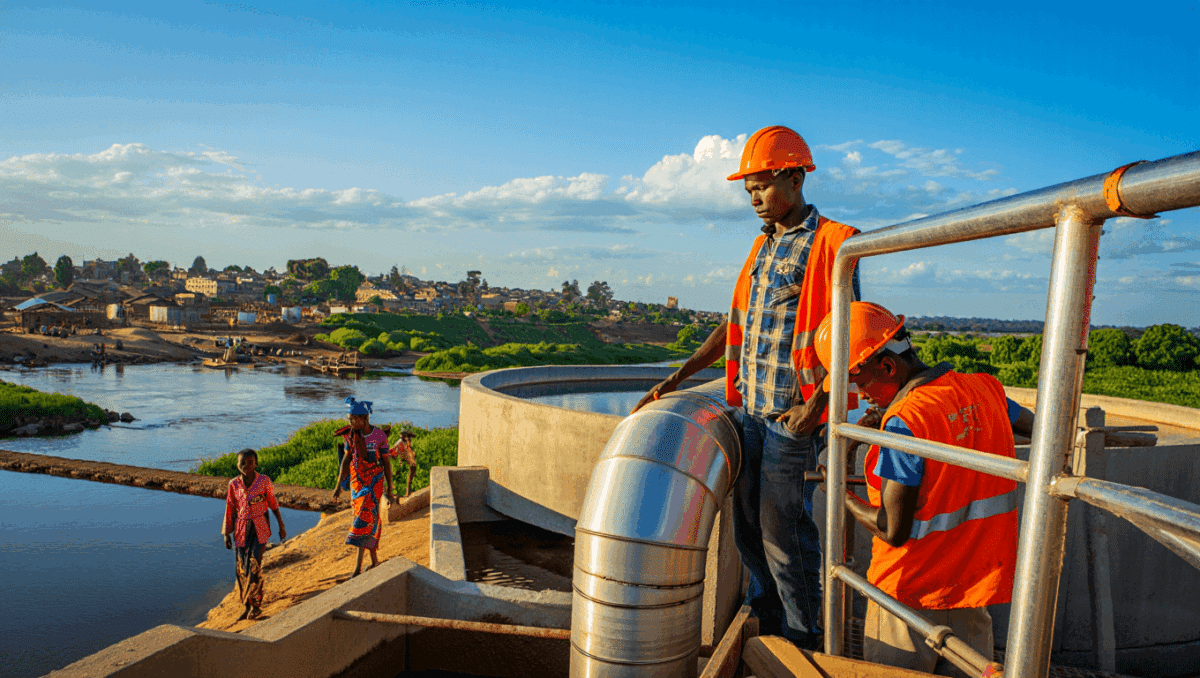
When catastrophic flooding hit Bor on the White Nile in 2020, the disaster laid bare how fragile the city’s water supply had become. What began as a humanitarian emergency has since been rebuilt into a modern water system that now serves tens of thousands and provides steady jobs and safer lives for residents.
The transformation came through targeted development support, technical training, and an expanded distribution network that lifted a sprawling, water-stressed community out of crisis into stability.
The Growing Demand for Data-Driven Decision Making in Silicon Valley
He quit, ran out of money, and begged to come back — here’s how his boss reacted
From flood disaster to a new water lifeline for Bor
In 2020, one of the Nile’s most destructive floods forced hundreds of thousands from their homes across South Sudan. In Bor, the deluge damaged wells and basic infrastructure, pushing the population into deeper vulnerability to waterborne illness and making access to clean drinking water a daily struggle.
About 380,000 people were displaced regionally during that event, and Bor’s already limited supplies were further degraded. Families reverted to drawing murky water in yellow jerry cans from makeshift riverside boreholes—an exhausting, unhealthy routine that ate into children’s school time and adults’ work hours.
How international aid funded a practical water solution
Development grants from the Netherlands and South Korea, combined with humanitarian leadership, provided the seed funding for a durable reconstruction. Rather than just restoring the pre-flood status quo, planners shifted toward a long-term utility model designed for reliability and local management.
The project’s total price tag was modest by international aid standards: $5.4 million, which works out to around $55 per person across the population served—an outcome many aid specialists view as highly cost-effective.
What the new system delivers: scale, access, and affordability
The rebuilt waterworks now feed a 33-mile piped network that reaches deep into town and surrounding neighborhoods. The supply chain supports:
- 28 community water kiosks offering low-cost dispensing points
- 704 household connections
- 7 schools and the local hospital
- About 98,000 people in total served by the network
Prices remain intentionally low: a single water canister at a kiosk costs roughly 3 cents, while delivered water to household taps runs about 80 cents per cubic yard. Those figures reflect efforts to balance cost recovery and affordability.
Local jobs and professional roles created by the utility
Beyond pipes and pumps, the project invested in people. Running a modern water service requires trained staff and steady administration, and Bor now has a growing cadre of local professionals keeping systems online.
- Field technicians: electricians, pump mechanics, and plumbers who repair lines and equipment
- Water-quality staff: lab technicians who test samples and confirm safety
- Administrative personnel: accountants and commercial managers handling billing, records, and compliance
These positions provide reliable wages and career pathways for residents who pursued technical education, creating a multiplier effect across the local economy.
Health, education and agricultural benefits from clean water
Access to treated water reduces the spread of diarrheal and other waterborne diseases, directly improving public health. Children who once missed school to fetch water can now remain in class, and medical facilities gain a dependable supply for patients.
Farmers also benefit: with a stable source, irrigation becomes feasible year-round, supporting crops and increasing food security. The project thus links clean water to education, health outcomes, and agricultural productivity.
Quotes and program guidance
UNICEF’s regional water and sanitation leadership described the initiative as an evolution from emergency response to sustainable service provision, emphasizing that rebuilding the water infrastructure was essential to reduce long-term vulnerability to disease after the flood.
Operational detail: how the utility functions day-to-day
Routine tasks include pump maintenance, water testing, kiosk management, and household meter readings. Financial operations—billing consumers and preparing consumption reports for local authorities—help maintain the network without depending entirely on external donors.
That model encourages local ownership while ensuring technical standards are met, creating a resilient system better prepared for future weather shocks.
Why this approach matters for humanitarian and development practice
Moving from short-term emergency relief to a durable infrastructure solution demonstrates a path other flood-affected, resource-scarce towns can follow. With relatively modest investment, the project delivered measurable public benefits and local employment, shifting the narrative from vulnerability to recovery and resilience.
You might also like:
- Bad Bunny live stream with Amazon Una Más signals push into livestream concerts
- 86 MW solar farm: Singapore to build on its largest reservoir
- Iraq unrecognizable and remarkable after decades of conflict, UN coordinator says
- Africa’s largest renewable energy and storage plant powers 200,000 homes built by French firm
- 75000€ fine and 2 years in prison: why washing your car at home is banned

Michael Thompson is an experienced journalist covering U.S. and global news. With ten years on the front lines, he breaks down political and economic stories that matter. His precise writing and keen attention to detail help you grasp the real‑world impact of every event.


Man, who woulda thought a flood could bring some good to Nile Town? Turning disaster into profit, now thats a smart move. Wonder what other towns could learn from this flip-the-script approach.
Man, aint that a plot twist for ya? Turning floods into cash flow? Bors got some mad entrepreneurial spirit! Who knew a watery mess could birth a lifeline!
Man, talk bout makin lemonade outta lemons! Nile town is flippin the script, turnin floods into gold with this water system hustle. Who knew disaster could birth such innovation? Props to em!
Man, who wouldve thought a flood could turn into a gold mine? Talk about making lemonade outta lemons! Nile towns really onto something with this whole floods into profit gig. Mother Natures fury turned into a blessing, I guess!
Man, that Nile town? Turning floods into gold, I dig it! Like, talk about making lemonade outta lemons, right? Gotta admire that hustle and creativity. Who knew disasters could spark such innovation?
Yo, I feel you on that Nile town vibe, dude! Turning floods into gold? Thats some next-level hustle and creativity right there. Its like theyre playing life on hard mode and still coming out on top. Who wouldve thought disasters could lead to such genius moves, right? Its all about that innovative mindset, turning setbacks into setups for success. Mad respect for that grind!
Man, imagine turning a flooding mess into a goldmine! Nile town is onto something with that water utility hustle. Bet theyre making bank and keeping folks hydrated. Smart move, gotta give em that!
I remember when our little town flooded, it was chaos! Now, seeing how they turned it around, making water work for us, thats some real innovation. Who wouldve thought a disaster could lead to a bright idea like this?
Man, remember when Bor was all flooded and messed up? Now theyre turning that mess into profit with this water system gig. Talk about making lemonade outta lemons! Who knew disasters could birth such smart ideas, right?
Man, imagine turning a flood into a cash cow! Nile towns really flipping the script. Making bank from a disaster? Thats some next-level hustle. Wonder if other places can pull this off.
I mean, who woulda thought a flood could bring in the cash, right? Nile towns really turned the tide on disaster. Making water work for em, talk about creativity!
I remember when Bor was all soaked up, now theyre flipping the script, making bank outta floods! Talk about turning lemons into lemonade, huh? Props to them for making water work for em!
I remember when Bor was just a sleepy town, now turning floods into gold? Thats some innovation! Makes you wonder what other places could do with a bit of creative thinking. Cheers to making lemonade out of lemons!
Man, Bors glow-up is unreal! Who woulda thought a sleepy town could hustle like that? Definitely got me thinking, yknow, if they can flip floods into gold, whats stoppin the rest of us from makin some magic happen? Heres to seein more places turnin lemons into lemonade!