
Show summary Hide summary
- Inside the floating turbine: how the hybrid system is built and cooled
- Why offshore and what problem it tries to solve for data centers
- Space-based alternatives: moving compute even farther from shore
- Operational challenges: corrosion, connectivity, and reliability at sea
- Timeline and what to monitor as prototypes go to sea
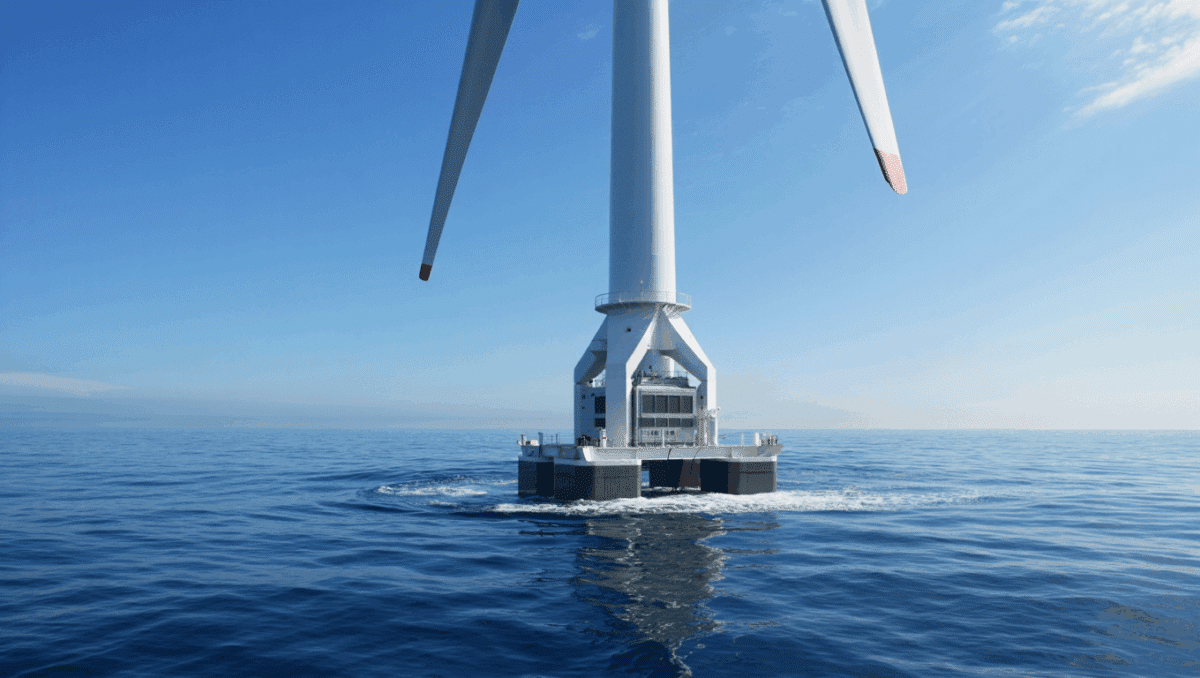
A new design for offshore wind turbines could turn the familiar white towers bobbing on the horizon into compact data centers. A renewable energy company is testing a concept that places compute equipment inside the floating structure’s ballast tanks so the ocean itself helps carry away the heat.
The move aims to address a surge in demand for power-hungry AI and GPU workloads by combining wind-generated electricity with the cooling potential of cold seawater. Early trials are planned in the North Sea, where the harsh marine environment will put the idea to a practical test.
Inside the floating turbine: how the hybrid system is built and cooled
The Growing Demand for Data-Driven Decision Making in Silicon Valley
He quit, ran out of money, and begged to come back — here’s how his boss reacted
The prototype repurposes the lower structure of a floating offshore turbine to host servers and networking gear. Instead of burying racks in a land-based building, the compute hardware sits within the top portion of deep ballast tanks that keep the platform upright.
- Structure: a floating tripod platform rather than a fixed, seabed-mounted foundation.
- Ballast design: the lower two-thirds of each tank are filled with freshwater to stabilize the unit, while the upper third holds the data equipment.
- Cooling loop: freshwater is circulated through a safety-cooling chamber that isolates the electronics from the seawater, absorbs heat from the servers, then returns to the lower tank where the heat dissipates to the surrounding ocean.
- Power: the turbine’s wind-generated electricity supplies the compute load directly, reducing reliance on onshore grids.
The company behind the effort says the prototype will test both thermal performance and resistance to corrosion and marine wear. If the trial meets targets, a larger installation could follow within a year of successful validation.
Why offshore and what problem it tries to solve for data centers
Land-based data centers face growing resistance: they consume large amounts of electricity, require extensive cooling systems, and occupy valuable real estate—often drawing community pushback. Offshore placement promises several potential advantages.
- Access to renewable energy: colocating compute with offshore wind directly ties demand to clean supply.
- Natural cooling: deep, cold seawater can absorb heat more efficiently than many onshore systems can manage.
- Reduced land use and visual impact: floating platforms keep large compute loads away from populated areas and the “not-in-my-backyard” debate.
Proponents also argue the approach could be cost-competitive with conventional data centers if the combined benefits of on-site renewables and free cooling offset construction and maintenance costs.
Space-based alternatives: moving compute even farther from shore
Some startups are exploring an even more radical option: placing servers in orbit. The vacuum of space eliminates the need for conventional cooling systems, and constant sunlight above the atmosphere makes solar power extremely reliable.
One company preparing a demonstration plans to launch a GPU-capable satellite to validate inference workloads in orbit, with a target launch aboard a commercial rocket. The concept relies on several potential advantages:
- Uninterrupted solar energy at roughly 1,361 W/m² (the solar constant), unobstructed by weather or atmosphere.
- Passive thermal management via radiators exposed to space instead of active chilled-water systems.
- Relieved pressure on terrestrial power grids and land use.
These space-focused efforts echo long-standing ideas about harvesting stellar energy on a large scale, though orbital projects must contend with latency, launch costs, and operations in a hostile environment.
How the energy math stacks up
Current U.S. estimates put data center electricity consumption in the tens of gigawatt-hours annually, with projections that demand could rise significantly this decade as AI workloads expand. Some analysts argue that only very dense, modular power sources—such as advanced nuclear—can meet that projected need at scale, while others see a mix of offshore renewables and distributed architectures as part of the solution.
Operational challenges: corrosion, connectivity, and reliability at sea
Placing sensitive electronics in a salty, marine setting introduces new engineering hurdles. The project must address:
- Corrosion and material degradation from salt spray and humidity.
- Redundancy and resilience for continuous compute availability in remote locations.
- High-bandwidth, low-latency connectivity—likely via subsea fiber or microwave links—to serve clients onshore.
- Maintenance logistics, including safe access for technicians and component replacement in rough seas.
Designers are also testing safety measures that separate seawater from server electronics, using freshwater loops and safety chambers to keep systems isolated while still benefiting from ocean cooling.
Timeline and what to monitor as prototypes go to sea
The company behind the turbine-data hybrid expects prototype deployment in the North Sea within a few years, with the goal of scaling up if tests prove successful. Observers should watch for performance metrics such as thermal efficiency, uptime, lifecycle maintenance costs, and the platform’s ability to withstand marine corrosion over extended operations.
Industry watchers say the next several years are critical: rapid demand for AI compute will force providers to trial unconventional placements and technologies, from floating wind platforms to orbital GPU farms. The outcomes of early pilots will shape whether these alternatives move beyond demonstrations into commercial networks.
You might also like:
- Big Tech data center problem: rising energy costs and community backlash
- Two-headed wind turbine could solve offshore wind industry challenges
- 86 MW solar farm: Singapore to build on its largest reservoir
- Pure water and hydrogen fuel from seawater: new facility produces both for pennies
- No electricity, no complex tech: this new cooling system drops 25°C to 3.6°C in 20 minutes

Michael Thompson is an experienced journalist covering U.S. and global news. With ten years on the front lines, he breaks down political and economic stories that matter. His precise writing and keen attention to detail help you grasp the real‑world impact of every event.


I once dreamt of a floating city in the sky, but hey, an ocean data center powered by wind turbines aint too shabby! Mother Nature and tech holding hands, huh? Wonder if those turbines double as seagull rest stops!
Man, talk bout innovashun! A floatin turbine powerin a data center? Crazy cool! Imagine future with data centers floatin round, harnessin wind power. Bet Elons already plottin space data centers!
Remember when folks said data centers were energy guzzlers? This offshore wind turbine is like, Hold my beer. Cooling with ocean water? Thats some next-level thinking. Imagine if our gadgets were this eco-friendly!
Dude, totally remember the good ol days when we thought data centers were the energy monsters? This wind turbine be like, Hold my beer, I can cool off with ocean water! Like, for real, imagine if our gadgets were living that eco-friendly life! Its like Mother Natures version of a tech upgrade, man.
Man, imagine having a data center runnin on wind power out at sea! Thats like some sci-fi stuff right there. Wonder how they keep those turbines cool in the salty ocean water, though. Cool concept, but hope they think bout the environment too.
Wind power at sea? Mate, thats some next-level innovation right there! But yeah, how the heck do they stop those turbines from turning into salty rust buckets? Gotta give props for the eco vibes, though. Lets hope theyre not just blowin hot air about savin the planet, ya know?
Man, the idea of an offshore wind turbine powering a data center is wild! Feels like a sci-fi flick come true. Wonder if theyll start building floating cities next. Skys the limit, or should I say, oceans the limit?
Man, talk about futuristic tech! Imagine if they mess up and we get a Skynet situation. Data centers on the high seas, powered by wind, but what if the ocean turns on us, huh? Just saying, keep an eye out!
Dude, I feel you on that Skynet vibe! The oceans a wild card, man. Imagine AI taking a dive and ending up more seaworthy than us! But hey, if were gonna get wrecked, might as well be by wind-powered servers, right? Watch out for those rogue waves, though!
Man, imagine a data center chilling on the waves, powered by wind turbines? Thats like a sci-fi flick come true! Bet the oceans like, Oh, you need some cooling? Say no more, fam! Mother Natures got our backs, I guess.
Man, talk about innovation! Offshore wind turbines powering data centers? Thats some next-level thinking. Cant wait to see how this hybrid system shakes up the energy game. The futures looking breezy!
Whoa, talk about a game-changer! Offshore wind turbines juicing up data centers? Thats some serious outside-the-box thinking, man. Cant wait to see if this hybrid setup really kicks up a storm in the energy scene. The futures definitely looking breezy with these bold moves!
Remember when we used to joke about building wind turbines in the middle of nowhere? Well, guess what, now theyre floating in the ocean, powering data centers! The future is wild, man.
Man, this offshore wind turbine data center setup got me thinking. Its like Mother Nature herself is helping cool those servers. Pretty cool how tech and nature can team up, right? Wonder if they ever have seagull-related technical difficulties, though.
Man, talk about thinking outside the box! Offshore wind turbines powering data centers? Thats some next-level innovation. Wonder if this will become the norm or stay a quirky experiment. Exciting stuff!
Oh man, talk about shaking things up! Offshore wind turbines powering data centers? Thats like mixing peanut butter and jelly! Who knows if thisll fly high or fizzle out like a damp firework. But hey, gotta admit, its got me on the edge of my seat. Who knew tech could be this wild, right?
Man, ever think about how were using wind turbines to power data centers out in the ocean? Wild stuff. Feels like were living in a sci-fi movie sometimes. Wonder whats next, floating servers in space? Skys the limit, I guess.
Yeah, man, its crazy to think about! Wind turbines powering data centers in the ocean? Thats some next-level stuff. Who wouldve thought, right? Floating servers in space could be next, who knows? The possibilities are endless, skys the limit, literally! Just imagine browsing the web with the stars as your backdrop. Mind-blowing, dude!
Man, that floating turbine powering a data center is like straight out of a sci-fi flick! Imagine all that energy from the wind and the ocean… Next level stuff. Wonder if theyll make a sequel with space-based data centers!
Dude, I know, right? That turbine is like straight outta a sci-fi movie! Feels like were living in the future, man. Space-based data centers sound wild though. Can you imagine the Wi-Fi signal up there? Outta this world!