
Show summary Hide summary
- How the plant converts seawater into fresh water and hydrogen
- Energy integration: using industrial waste heat to cut costs
- Price comparison: water at a fraction of traditional costs
- Environmental tradeoffs and technical hurdles
- Real-world benefits: clean fuel for transit and new industrial inputs
- Rizhao’s local context and potential for replication
- Broader implications for water security and clean fuels
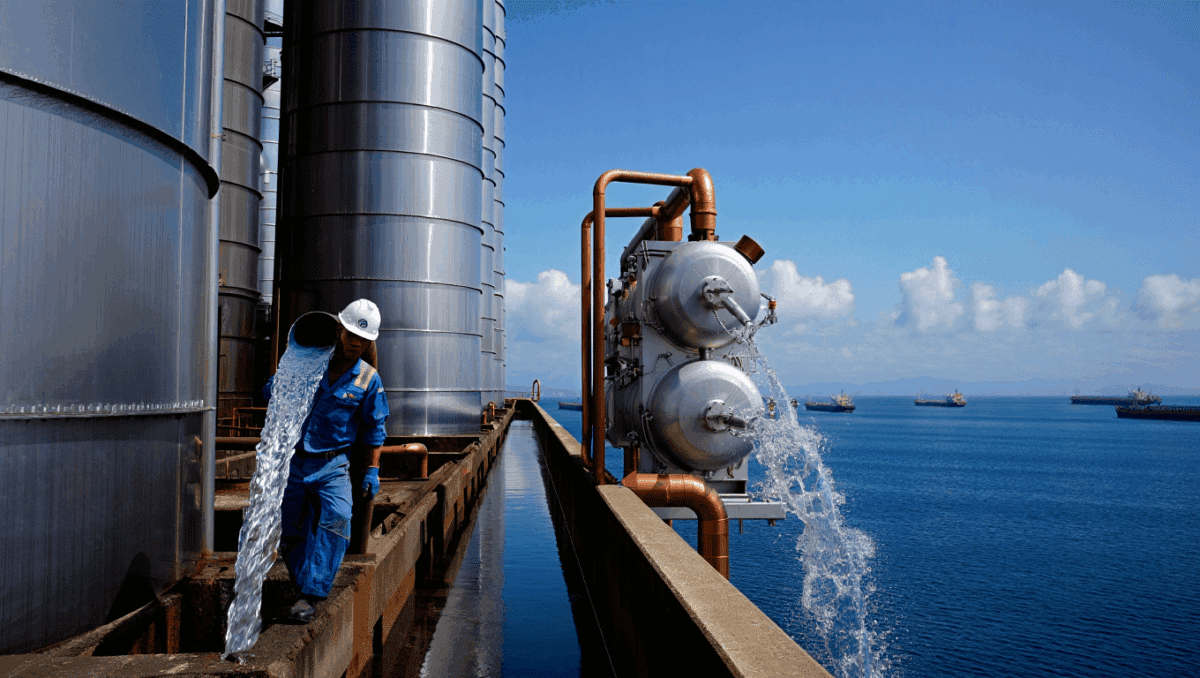
A new coastal facility in China is turning seawater into two valuable commodities at a fraction of the usual cost: potable water and green hydrogen. In its early weeks of operation the plant has shown that pairing desalination with industrial heat capture can upend long-standing assumptions about energy use and expense in seawater treatment.
Located in Rizhao — a Chinese city whose name means “sunshine” and that already relies heavily on solar-powered water heating — the installation is being hailed as a practical demonstration of how renewables and industrial symbiosis can deliver drinking water and low-carbon fuel simultaneously.
How the plant converts seawater into fresh water and hydrogen
The Growing Demand for Data-Driven Decision Making in Silicon Valley
He quit, ran out of money, and begged to come back — here’s how his boss reacted
The facility combines seawater desalination with electrolysis to produce fresh water and hydrogen gas. Rather than relying solely on new electricity generation, the system taps waste heat from a nearby steelworks to power the electrolysis process, dramatically lowering the operational energy input.
- Multi-product output per batch: For every 800 metric tons of seawater processed, the plant reportedly yields roughly 118,877 gallons of purified water, about 192,000 standard cubic meters of hydrogen, and nearly 350 metric tons of concentrated mineral brine suitable for industrial use.
- Electrolysis made greener: Because the electricity and thermal energy used for splitting water molecules come from renewable sources and recovered industrial heat, the hydrogen produced is classified as green hydrogen, not the higher-emissions “grey” hydrogen tied to fossil fuels.
Energy integration: using industrial waste heat to cut costs
What sets this project apart is how it uses existing industrial infrastructure. Waste thermal energy from a nearby steel foundry is routed into the electrolyzers, lowering the net energy requirement. This approach aligns with Chinese industrial policy that encourages leveraging coastal manufacturing assets to support large-scale electrification and low-carbon fuel production.
Researchers and engineers involved with the project describe it as a real-world example of “extracting energy from the sea” — not by turbines alone but by combining thermal recovery, renewable power, and advanced desalination engineering to create commercially viable outputs.
Why industrial symbiosis matters
- Reduces external electricity demand for electrolysis.
- Increases overall plant efficiency by pairing heat and power flows.
- Creates new revenue streams from both fuel and chemical-grade brine.
Price comparison: water at a fraction of traditional costs
The desalinated water price from the Rizhao project has been reported at about US$0.28 per cubic meter. That puts it well below leading large-scale plants elsewhere:
- Rizhao: ~US$0.28 per cubic meter
- Major Saudi facility: roughly double Rizhao’s cost per cubic meter (despite a much larger output)
- Carlsbad, California: around US$2.20 per cubic meter
Lower per-unit cost comes from the combined effects of recovered heat, renewable electricity inputs in the region, and the sale of brine as a marketable byproduct rather than a waste stream that requires expensive disposal.
Environmental tradeoffs and technical hurdles
Desalination can relieve water stress, but it has environmental and operational challenges that projects must address:
- Membrane scaling and cleaning: Reverse-osmosis systems require regular de-scaling, which conventionally uses chemicals that can harm marine life if mismanaged.
- Brine management: Highly concentrated salty effluent can damage coastal ecosystems if released untreated. Rizhao’s model diverts this brine into chemical manufacturing, turning a pollutant into a feedstock.
- Energy intensity: Historically, seawater desalination consumes large amounts of power. Integrating waste heat and renewables reduces that footprint, but broad adoption depends on local industrial and power configurations.
Innovations elsewhere aim to reduce these impacts, including experimental solar-driven evaporation systems enhanced with clay-infused hydrogels that can speed evaporation and lower the energy needs of desalination installations globally.
Real-world benefits: clean fuel for transit and new industrial inputs
The hydrogen produced by the facility is not merely a laboratory statistic. Project figures suggest the plant’s output could fuel municipal transport: enough hydrogen to power roughly 50 city buses for about 4,600 zero-emission miles of combined operation.
Meanwhile, the concentrated mineral effluent is being marketed to chemical manufacturers, creating an additional revenue source and avoiding the ecological risks of uncontrolled brine discharge. Turning waste into saleable material reduces disposal costs and enhances the economics of desalination-plus-hydrogen projects.
Rizhao’s local context and potential for replication
Rizhao’s strong commitment to solar energy and its coastal industrial network make it a natural testbed for this concept. The UN recognized the city’s livability in 2009, and many urban water heaters in the city are already solar-powered, lowering the baseline carbon intensity of municipal systems.
Scaling similar plants depends on two main factors:
- Availability of nearby industrial waste heat or low-cost renewable electricity to make electrolysis economical.
- Markets or uses for concentrated brine and hydrogen to absorb the additional outputs without relying solely on subsidies.
Broader implications for water security and clean fuels
Pairing desalination with hydrogen production offers a pathway to tackle two pressing challenges at once: water scarcity and decarbonizing transport and industry. The Rizhao pilot demonstrates that, with smart integration of local energy flows and byproduct markets, seawater can become a source of both drinking water and low-carbon fuel at competitive prices.
You might also like:
- San Diego desalination plant boosts water supply, helps drought-stricken states
- EU aims to decarbonize industrial heat generation with plasma, solar and magnets
- Africa’s largest renewable energy and storage plant powers 200,000 homes built by French firm
- Renewables project to power 6 million homes announced by sunniest, windiest country
- Methane to methanol breakthrough turns greenhouse gas into high-demand methanol

Michael Thompson is an experienced journalist covering U.S. and global news. With ten years on the front lines, he breaks down political and economic stories that matter. His precise writing and keen attention to detail help you grasp the real‑world impact of every event.


I remember back when we had to pay a fortune for fresh water. Now, this fancy new facility be poppin out pure water and hydrogen fuel from seawater for pennies? Sounds like some sci-fi magic to me!
Man, back in my day, we dreamed bout this! Turning seawater into fresh water AND hydrogen for pennies? Mind-blowing! Technologys really takin us places. Cant wait to see the world change with this!
Dude, totally feel you on that! Its like bippity boppity magic turning ocean water into liquid gold. Gotta admit, techs playin chess while were still tryna figure out checkers, huh? Cant wait to see this hydrogen wave wash over the world – gonna be a wild ride!
Yo, have you seen this plant? Theyre like some mad scientists turning seawater into fresh water and hydrogen for pennies! Its like magic, man. Bet theyre gonna change the game with that tech.
Man, imagine turning seawater into fresh water and hydrogen for cheap? This tech is like a superhero, saving the day! Using waste heat, being all eco-friendly… Its like a dream come true, finally some good news for the planet.
Man, it blows my mind how techs evolving! Turning seawater into fresh water and hydrogen for cheap? Like, science fiction coming to life. Wonder if theyll scale this up fast for global impact. Hope its not just a headline tease.
Man, I remember when water scarcity was all over the news. Now, this plant turning seawater into fresh water and hydrogen for cheap? Its like a sci-fi flick come true. Saving money and the planet? Sign me up!
Man, I remember when we had to pay a fortune for water and fuel. This new tech turning seawater into fresh water and hydrogen for pennies? Its like were living in a sci-fi movie! What a time to be alive, right?
Man, I always knew the ocean was hiding secrets! Turning seawater into fresh water and hydrogen for peanuts? Sign me up! Who needs expensive drinks when you can sip on some ocean magic, am I right?
Man, back in my day, wed dream of cheap water and fuel! This new techs like a sci-fi flick come true. Gotta admit, its cool seeing industrial waste put to good use. Whats next, flying cars?
I remember back when folks said wed run outta clean water and fuel. Now, this plants making both from seawater for cheap? Talk about a plot twist in the fight against climate change! Maybe theres hope after all.
Man, I remember when water shortages were all over the news. Now this plants like, Hold my drink. Turning seawater into fresh water and hydrogen for pennies? Who needs superhero movies when you got real-life tech wizards?
Yo, this tech sounds like straight-up magic! Turning salty ocean water into clean drinking water *and* hydrogen fuel? Thats some next-level wizardry right there. Cant wait to see how this game-changer plays out in the real world.
Dude, Ive always dreamed of finding a way to turn seawater into fresh water and hydrogen without breaking the bank. This new facility? Its like science fiction come to life, man. Cant wait to see where this tech takes us!
Whoa, talk about science fiction coming to life! Turning seawater into fresh water AND hydrogen for cheap? Sounds like a dream come true! Cant wait to see the ripple effect this plant will have on sustainability. So cool!