
Show summary Hide summary
- How control changed hands in northeast Syria
- What the new terms mean for Kurdish autonomy and resources
- Damascus narrative: erasing claims to Kurdish nationhood
- The SDF’s role against ISIS and the fallout from Western retrenchment
- The U.S. position and behind-the-scenes diplomacy
- Regional winners and the wider geopolitical cost
- Steps that could reduce immediate risks
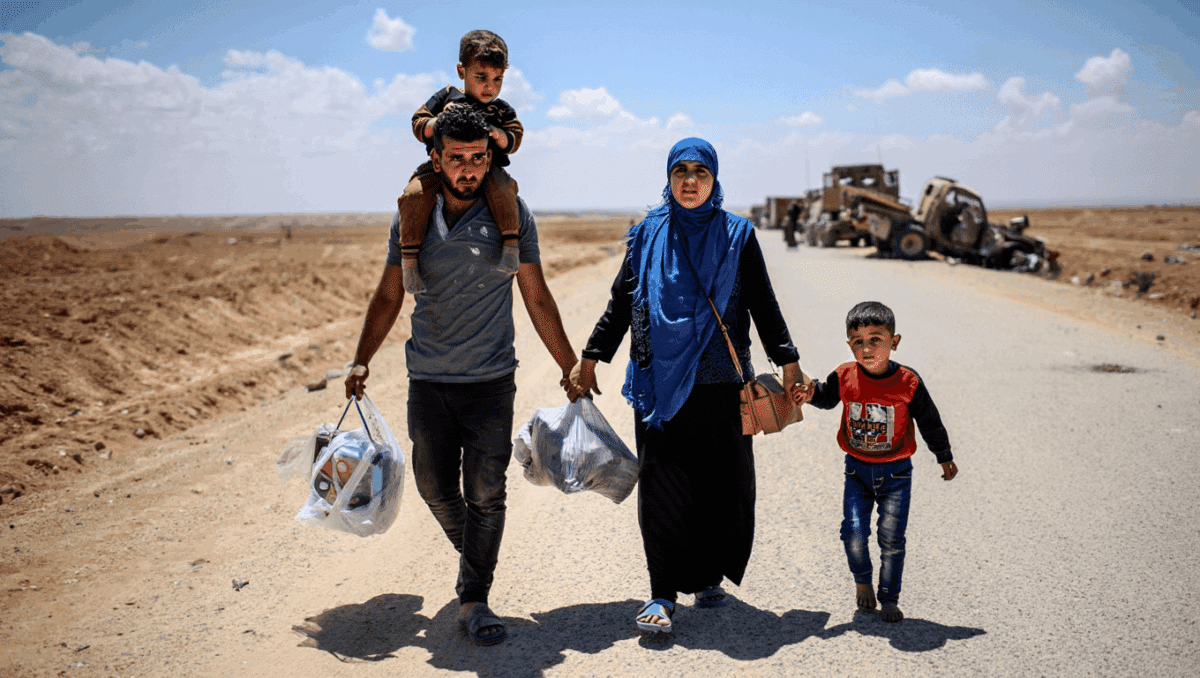
In northeastern Syria a fragile experiment in self-rule has been swept aside, leaving Kurdish communities exposed and allies in the West quietly reassessing their commitments. After years of serving as the principal ground force against the Islamic State, Kurdish-led authorities who built an autonomous administration are now being folded back into Damascus’ orbit under terms that strip much of their institutional power.
That shift has unfolded rapidly: Syrian government forces moved in, Turkish influence loomed, and Western powers — most notably the United States — largely stepped back. What began as a battleground over territory is fast becoming a contest over identity, control of resources, and who will be held responsible for tens of thousands of detainees and displaced people linked to ISIS.
How control changed hands in northeast Syria
The Growing Demand for Data-Driven Decision Making in Silicon Valley
He quit, ran out of money, and begged to come back — here’s how his boss reacted
Over the last few days, Damascus launched an offensive into the region long administered by Kurdish-led authorities often referred to as Rojava. The operation followed the breakdown of negotiations to integrate the semi-autonomous administration into the Syrian state. Syrian troops, operating with obvious Turkish backing in the background, rapidly seized towns and border points once held by the Syrian Democratic Forces (SDF).
Local commanders and Kurdish political leaders ultimately signed an agreement with the government in Damascus. On paper, the deal is framed as an “integration,” but its practical effects are stark: Kurdish security contingents are to be absorbed as individual recruits into Syrian defence and interior institutions, rather than being recognized as distinct units with their existing chain of command intact. Control over border crossings, detention facilities and key economic assets has been ceded to the central government.
What the new terms mean for Kurdish autonomy and resources
- Security forces: SDF fighters are to be reclassified as individual members of state security apparatuses, which dismantles their current command and operational cohesion.
- Border and detention control: The government takes responsibility for border points and prisons that hold thousands of suspected ISIS affiliates and family members.
- Economic assets: Oilfields, wheat-producing territories and hydroelectric facilities are being returned to Damascus control, cutting off the fiscal base that sustained local administration.
Stripped of revenue sources and the autonomy to manage security, Kurdish-led institutions lose both the practical means and the bargaining power that sustained their governance over the past several years.
Damascus narrative: erasing claims to Kurdish nationhood
Alongside the military advance, government-aligned spokespeople have pushed a narrative that downplays or denies a distinct Kurdish claim to Syria. Officials have dismissed the notion of a “Kurdish issue” and suggested that many Kurds only arrived in northern Syria relatively recently. That rhetoric functions as a prelude to legal and administrative moves that can limit cultural and political rights.
When a state asserts that a population has no historical claim to the land, it becomes easier to justify dispossession and the removal of political recognition. Such narratives also foreclose meaningful power-sharing and make long-term reconciliation more difficult.
The SDF’s role against ISIS and the fallout from Western retrenchment
When Islamic State swept through parts of Iraq and Syria, the SDF — a coalition dominated by Kurdish forces — became the principal local partner for Western militaries. They bore the heavy fighting against ISIS, secured territory, held prisoners and ran camps for families and fighters. Their efforts were central to dismantling the so-called caliphate’s territorial control.
But with Western priorities shifting and political protection waning, the SDF’s ability to guard correctional facilities and displacement camps has weakened. That has immediate security implications:
- Several detention centers were left vulnerable during the fighting, and authorities have reported escapes and security breaches.
- The transfer of detainees to Iraq — already underway — raises logistical and legal challenges; officials have warned thousands could be moved, increasing pressure on neighboring states and international legal systems.
- Camps that house tens of thousands, like al-Hol, are now under new management, heightening concerns about radicalization and humanitarian conditions.
Al-Hol and the humanitarian-security dilemma
Al-Hol camp alone houses roughly 40,000 residents from a mix of national backgrounds, many of them relatives of Islamic State members. For years humanitarian actors and security analysts have described the camp as a volatile environment where extremist ideologies can fester. As control changes hands, the practical responsibility for running and securing such places shifts to a government whose own record raises questions about protection and reintegration programs.
That shift is not purely administrative — it carries major public-safety risks. If oversight weakens, prison breaks and radicalization within camps could create a new generation of militants able to strike far beyond Syria’s borders.
The U.S. position and behind-the-scenes diplomacy
Washington’s posture has compounded Kurdish apprehension. Senior American envoys have indicated that the U.S. no longer intends to maintain a long-term military presence in Syria, arguing that the conditions that made partnership necessary — notably the absence of a central Syrian authority — have changed. Reports also suggest that closed-door meetings involving Western diplomats helped create the political space for Damascus to press its advantage.
Whether by design or omission, U.S. policy has left Kurdish partners exposed. Many in the region see this as further evidence that tactical alliances can be abandoned when they become politically inconvenient, regardless of past sacrifices on the battlefield.
Regional winners and the wider geopolitical cost
Turkey has long prioritized the elimination of autonomous Kurdish governance near its border, and Damascus’ realignment advances that goal. For Ankara and its allies, the return of central control over border areas represents a strategic victory. But the broader geopolitical calculus is more fraught: Western credibility with local partners suffers when commitments are perceived as temporary or transactional.
That credibility gap matters beyond Syria. Potential partners watching from Iraq, Ukraine and NATO capitals will factor this episode into their calculations about burden-sharing and risk. When allies doubt your reliability, they may seek other guarantees, forge new alignments, or radicalize their security strategies — all factors that can destabilize regions further.
Steps that could reduce immediate risks
Policymakers who want to mitigate the security and humanitarian fallout from the territorial shift have several practical options to consider:
- Negotiate enforceable protections for Kurdish-majority areas that include international monitoring.
- Establish multilateral frameworks for the custody and legal processing of ISIS detainees, involving neighboring states and international bodies.
- Ensure sustained humanitarian access and rehabilitation programs for camp residents to reduce recruitment and extremism risks.
Any meaningful move toward stability will require concrete guarantees backed by international institutions, not just rhetorical commitments from capitals that might change course as political winds shift.
Andrew Fox is a former British Army officer and an associate fellow at the Henry Jackson Society with a focus on defense and Middle East affairs.
You might also like:
- Kurds betrayed by the West: what it means for regional stability
- Border necessary for a country, officials warn
- Brighton gang rape signals growing safety concerns across Britain
- Pakistan-Afghanistan clashes: what sparked the recent cross-border fighting?
- Viktor Orban: how he revived European conservatism

Robert Johnson is a dedicated columnist focusing on political and social debates. With twelve years in editorial writing, he provides nuanced, well‑argued perspectives. His commentaries invite you to form your own views and engage in critical issues.


Man, saw this coming. US bailing on Syrian Kurds? Cold move. Its like those friends who ghost you when things get tough. Hope they find a way to stay safe amidst the chaos.
Dang, heard that! The US ghosting the Syrian Kurds is just low. Like that buddy who vanishes when the bill comes, man. Hope those Kurds can navigate their way through this mess and come out on top. Its a wild world out there, huh?
Man, the US just bailed on the Syrian Kurds like its no biggie. How can they do that after all these Kurds did fighting ISIS? Its messed up, yo. Gotta stand by your allies, right?
Yo, I feel you, man. Its like a cold shoulder to the ones who had their back, right? Allies should stick together through thick and thin. Aint that the whole point? Its like ditching your study buddy right before the exam. Not cool, Uncle Sam, not cool at all.
Man, its like a game of hot potato with real lives. The Kurds got dealt a shady hand once again. Makes you wonder whos really looking out for the little guys in this global power play.
Man, its like a real-life game of hot potato, huh? The Kurds always seem to get the short end of the stick in this messed-up power play. Its wild to think about whos actually watching out for the underdogs in this global circus.
Man, this whole situation with the Kurds just hits differently, yknow? Its like watching a chess game unfold, but with real lives at stake. Wonder how this move will play out in the grand scheme of things.
Man, totally get what you mean about the Kurds. Its like a high-stakes game of chess, but with real lives on the line. The tension is palpable, huh? Wonder if this move will be a game-changer or just another pawn sacrifice in the grand scheme of things.
Man, its like a game of chess with peoples lives. The Kurds deserve better. Imagine fighting ISIS shoulder to shoulder with the US, then getting ditched. Its a cold world out there.
Man, this US move in Syria got me feeling like a pawn in a geopolitical chess game. Those Kurds held it down against ISIS, now theyre left hanging. Worlds a messy place, aint it? Hope they find a way through this mess.
Man, its like a messed-up game of hot potato with real lives. The US leaves the Kurds hanging, and now everyones scrambling. Cant they see the consequences of their actions? Its a sad state of affairs.
Man, politics is a messy game. One day youre besties with the US, fighting ISIS, next thing you know, theyre out the door, leaving you hanging. Hope the Syrian Kurds find a way outta this pickle.
Man, this whole situation with the Syrian Kurds is a mess. Its like a game of musical chairs, but with peoples lives at stake. Hope they find some stability soon.
Man, the US just dipped on Syrian Kurds like they forgot to pick em up from soccer practice. Bet those Kurds feel like the last kid picked for dodgeball. Hope they find a solid defense strategy, cause its cold out there.
Man, those Syrian Kurds must be feeling abandoned like a forgotten lunchbox in the school cafeteria. Its a rough deal they got there. Hopefully, theyll bounce back stronger than ever. The world can be a cold place, but resilience is key.
Man, watching this unfold feels like a bad movie plot. The Kurds deserve better after all theyve done fighting ISIS. Hope they stay safe amidst this mess.
Man, this whole situation with the US ditching the Syrian Kurds is like a bad breakup where one person just ghosts the other. Cant believe theyre leaving them high and dry like that. Its a messed up world we live in.
Man, the US ditching the Syrian Kurds? Thats cold. I mean, these folks fought ISIS with us, and now we just bail? What happened to loyalty? Hope they stay safe out there.
Man, cant believe the US just ghosted the Syrian Kurds like that. Loyaltys a rare breed these days, huh? Its like were all playing a never-ending game of whos got my back? Hope those Kurds find some solid allies soon.
Man, its like a game of musical chairs in Syria, but with lives at stake. The Kurds getting left high and dry by the US is messed up. Hope they find a way out of this mess.
Man, its like a game of musical chairs in Syria, but with lives at stake. The Kurds getting left high and dry by the US is messed up. Hope they find a way out of this mess. Its a cruel world out there, aint it? One minute youre a strategic ally, next youre left holding the bag. Makes you wonder whos really got your back when the music stops.