
Show summary Hide summary
- How the full-arm exoskeleton detects and boosts intent to move
- One survivor’s experience with regained function and identity
- Trials, timeline, and the company’s goals for independence
- Practical benefits seen in everyday activities
- Where this technology fits in the broader landscape of assistive robotics
- Why full-arm assistance could change outcomes for stroke survivors
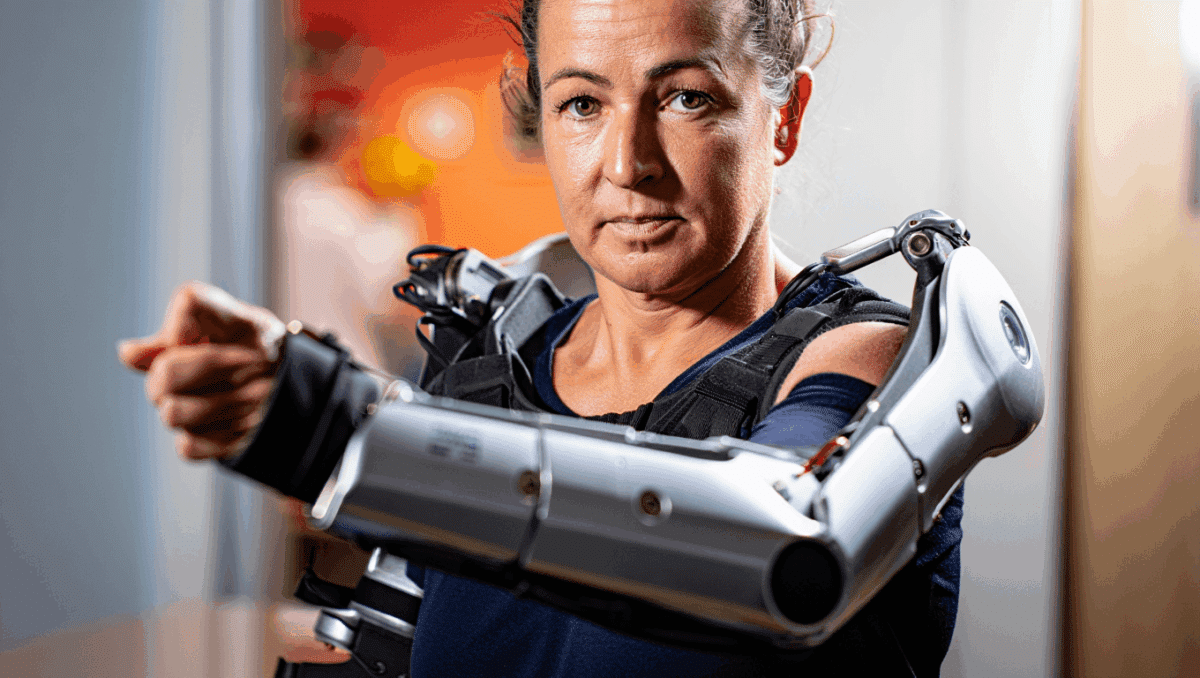
A Norwegian startup has built what may be the world’s first wearable robotic suit for an entire arm, designed to restore meaningful movement for people left partially paralyzed after a stroke. The shoulder-mounted device senses tiny residual motions and amplifies them, allowing users to perform everyday tasks that many had given up on.
Inventors hope the system—partly produced with 3D-printed parts—will move from prototype to market soon, offering a new option for survivors who want greater independence rather than just clinical improvement.
The Growing Demand for Data-Driven Decision Making in Silicon Valley
He quit, ran out of money, and begged to come back — here’s how his boss reacted
How the full-arm exoskeleton detects and boosts intent to move
Unlike single-joint devices or hand-only robotics, the new exoskeleton provides coordinated assistance for the shoulder, elbow and wrist. Sensors pick up minute, residual muscle activity and mechanical shifts in the paretic limb and translate those faint signals into larger, controlled movements.
Key components and operation
- Sensor array: Detects tiny voluntary muscle efforts and subtle joint motion.
- Actuation system: Gently amplifies the user’s own movement rather than imposing a fixed trajectory.
- Modular construction: Many parts are 3D-printed, which speeds development and allows customization.
Vilje Bionics, the company behind the device, says the system responds when a person concentrates on moving their arm: a small intention or twitch is registered and then enhanced so the limb completes the action. The effect is intended to feel natural, with the robotic assistance acting as an extension of the user’s own intent.
One survivor’s experience with regained function and identity
When she had a brain hemorrhage in 2017, Johanne Marie Hemnes lost most control of the left side of her body. Rehabilitation focused on getting her walking again, and while she succeeded in regaining mobility, the arm was largely left out of intensive therapy.
For years the arm felt foreign and uncooperative; Hemnes described it as something that “got in the way.” After trying the shoulder-mounted suit, she experienced a dramatic shift in how she perceived that limb, reporting that the movements felt like her own again and allowed her to interact with objects rather than avoid them.
Trials, timeline, and the company’s goals for independence
So far around 40 people have tested the system in clinical or pilot settings. Vilje Bionics plans to pursue commercial availability starting in Norway, targeting a release window in the first half of 2026.
- Current focus: helping people with long-term, significant disabilities perform daily tasks independently.
- Future ambitions: exploring the device’s role in rehabilitation programs to accelerate neuroplastic recovery.
- Regulatory and production steps: expanding trials, refining ergonomics, and preparing for broader distribution.
The startup’s founder has emphasized that the device is not intended to replace therapy but to provide functional independence to users whose impairments persist despite conventional rehabilitation.
Practical benefits seen in everyday activities
Early users report being able to return to routine tasks they had abandoned, including food preparation and opening containers—simple actions that have a large impact on quality of life. For many stroke survivors, regaining the ability to perform these activities independently is a major step toward self-sufficiency.
Where this technology fits in the broader landscape of assistive robotics
The exoskeleton adds to a growing field of wearable robotics aimed at mobility and function. Breakthroughs in materials, sensors, and lightweight actuators have made full-limb assistance more feasible outside research labs.
- Child-focused exoskeletons that enable walking practice for youngsters with severe gait impairments.
- Lower-limb suits that help people stand and walk after injury or illness.
- Robotic gloves and hand devices designed to restore fine motor skills and sensory feedback.
Developers expect continued convergence between rehabilitation robotics and consumer-oriented assistive devices as production scales and costs fall.
Why full-arm assistance could change outcomes for stroke survivors
As survival rates from stroke improve, more people live with chronic disability and unmet functional needs. According to the World Stroke Organization, one in four people will experience a stroke during their lifetime, creating a large population that could benefit from new assistive solutions.
By amplifying small, voluntary efforts rather than moving the limb autonomously, this class of exoskeletons aims to preserve the user’s sense of agency while providing the extra force needed to complete tasks. That combination — mechanical support plus intentional control — is what Vilje Bionics and similar ventures see as key to restoring both function and personal dignity.
Hemnes’s progress in tasks such as slicing vegetables and opening bottles illustrates the kind of day-to-day impact the company hopes to scale: users getting back small freedoms that reshape daily routines and reduce reliance on caregivers. A short video of the device in use has been shared by the developers to demonstrate how the robotic arm assists people in real situations.

You might also like:
- Soft exoskeleton shirt helps the wearer lift 35 pounds while weighing under 2 pounds
- Stroke rehabilitation: tongue stimulation device outperforms 4 years of therapy in 6 months
- Shoes that adapt to uneven surfaces help people with mobility issues walk easier: now online
- AI glasses for dementia: project labels on lenses to help patients identify objects
- Double neural bypass surgery helps paralyzed man feed himself and pet his dog

Michael Thompson is an experienced journalist covering U.S. and global news. With ten years on the front lines, he breaks down political and economic stories that matter. His precise writing and keen attention to detail help you grasp the real‑world impact of every event.


Man, this arm exoskeleton thing? Its like straight out of a sci-fi movie! Cant believe techs helping stroke survivors this way. Imagine the possibilities… Can it make me a sandwich too?
Man, imagine having one of those arm exoskeletons after a stroke. Its like Iron Man, but for real-life heroes. Technologys getting wild, fam. Hope they make it affordable for everyone who needs it!
Yo, totally feel you on that! Imagine rolling up to the grocery store with an Iron Man arm, grabbing those top-shelf cereals like a boss. Its wild how techs leveling up, gotta love it. Hope they dont slap a luxury price tag on it, though. Real heroes need affordable gear too!
Man, this arm exoskeleton breakthrough hits close to home. My aunt struggled after her stroke. Seeing tech like this giving independence back, its like watching a superhero origin story in real life, yknow? Hope it spreads fast.
Man, imagine having a robotic arm to help you after a stroke! I cant even handle chopsticks properly sometimes. Tech is wild! Hope it brings real change for those who need it most.
Man, this arm exoskeleton news hits home. My grandpa struggled after a stroke. Seeing tech like this giving independence back, its a game-changer. Hope it reaches those who need it most.
Man, I remember when my granny had a stroke. This arm exoskeleton thingy couldve helped her reclaim some independence. Techs wild, man. Wonder if its comfy or feels like wearing a robot suit all day.
Dang, thats tough, man. Sorry to hear bout your granny. Techs movin fast these days, aint it? I cant imagine rockin an arm exoskeleton all day. Must feel like youre part cyborg! Wonder if its like wearin a comfy hug or more like a clunky metal jacket. What do you reckon?
Man, I remember when exoskeletons were just in sci-fi flicks. Now theyre helping stroke survivors get their groove back? Thats some next-level tech right there. Cant wait to see more people benefit from this innovation!
Oh, a bionic arm! Reminds me of that sci-fi flick where cyborgs roamed the streets. But hey, if it helps stroke survivors, count me in. Tech saving lives – who wouldve thought?
Man, this arm exoskeleton tech is like straight out of a sci-fi flick! Stroke patients getting their independence back? Thats some real-life superhero stuff right there. Cant wait to see more breakthroughs like this!
Man, this exoskeleton tech is like straight out of a sci-fi flick! Imagine the possibilities for stroke survivors, gettin back their independence. Science is wild, man. Hope this aint just for the rich folks, though.
Dude, I totally feel ya on the sci-fi vibes! Its like were living in a movie, right? The way techs advancing, its mind-blowing. I hear ya on the whole stroke survivor thing too. Life-changing stuff. But hey, youre spot on about it not being just for the elite. Tech should be for everyone, not just the deep-pocket crew. Heres hoping it trickles down to all who need it, right?
Man, technology keeps blowin my mind! This arm exoskeleton for stroke patients? Thats some next-level stuff, helping folks regain independence. Hope it becomes more accessible soon. Big props to the innovators!
Man, imagine having a robot arm to help you out after a stroke. Thats some sci-fi stuff right there. Wonder if they can make it do cool tricks too, like making a perfect cup of coffee!
Oh man, a robot arm making coffee? Thats some next-level sci-fi stuff right there! Imagine waking up to R2-D2 brewing you a perfect cup of joe. Now thats the kind of droid I need in my life. Wonder if it can make a mean latte too, or maybe do a little dance while its at it. Living the dream, one robotic barista at a time!
Man, technology is wild! Imagine wearing an arm exoskeleton, like some sci-fi hero. Stroke recovery with a high-tech twist, huh? Who knows, maybe one day well all be bionic beings. Sci-fi becoming reality, folks!
Man, this arm exoskeleton thing? Its like straight out of a sci-fi movie! Feels surreal seeing tech actually making a difference for stroke survivors. Cant deny, its pretty darn cool.
Man, back in my day, movin after a stroke was a real struggle. This exoskeleton techs like somethin out of a sci-fi flick! Bet its gonna change a lotta lives. Props to the company behind this game-changer.
Man, I feel ya! Back in my day, tech was barely keeping up with my grandmas VHS player. Now were talkin exoskeletons and sci-fi vibes? Thats some next-level stuff, right? Gotta give props to the company behind this game-changer. Bet theyre gonna make some serious waves with this futuristic gear.
Man, this arm exoskeleton tech is like straight out of a sci-fi flick! Helping stroke patients get back on their feet – literally. Makes you wonder what other cool gadgets might pop up next to help folks in need.
Dude, I feel ya! That tech is like something outta a futuristic flick, right? Helping peeps bounce back after a stroke is some serious superhero stuff. Cant help but wonder whats next – bionic pet walkers or self-cooking pans? The futures looking wild!
Man, I remember when exoskeletons were just sci-fi dreams. Now theyre out here helping stroke patients regain movement. Technologys wild, aint it? Cant wait to see where well be in another decade!
Oh man, I totally feel ya! Its like were living in a sci-fi flick, right? The way techs evolving is mind-blowing. Can you imagine what kinda crazy stuff well have in our hands in ten years? Its like the futures knocking on our door, ready to blow our minds again!
Man, I remember when exoskeletons were just sci-fi dreams! Now theyre out here helping stroke patients reclaim their independence? Thats some next-level tech making a real difference in peoples lives. Kudos to the innovators behind this game-changer!
Man, I remember when exoskeletons were just sci-fi dreams! Now theyre helping stroke survivors get back on their feet? Thats some real-life superhero tech right there. Whats next, flying cars for everyone?