
Show summary Hide summary
- From a routine job to a medical emergency: how the injury unfolded
- How tongue-based neurostimulation works and why therapists combine it with traditional care
- Real-world impact: faster gains for balance, walking and speech
- Clinical evidence, approvals and payers: where the science stands
- Broader implications: beyond stroke to other neurological conditions
- Access, cost and what patients should know before trying the therapy
A freak fall from a ladder nearly left Mark Foster unable to speak clearly or move his right side. Months of traditional therapy brought slow, incremental gains — until a small, mouthpiece-style device that sends micro-currents through the tongue helped unlock progress he hadn’t seen in years.
Foster’s story is one of sudden injury, emergency surgery and an unexpected route back to mobility. Using the PoNS neurostimulation system alongside speech and physical therapy, he made dramatic strides in half a year that he says outpaced four years of earlier rehabilitation.
From a routine job to a medical emergency: how the injury unfolded
Foster, a construction worker from London, Ontario, fell about 10 feet while running electrical wiring on a job site. Initially he felt able to walk it off, but a co-worker convinced him to get scanned. CT and MRI imaging revealed extensive swelling and a pre-existing vascular malformation known as a cavernoma. Days later, a hot shower and the resulting rise in blood pressure precipitated a stroke.
The Growing Demand for Data-Driven Decision Making in Silicon Valley
He quit, ran out of money, and begged to come back — here’s how his boss reacted
What followed was a roller coaster: some early recovery, then sudden deterioration. When his wife noticed slurred speech and worsening balance, doctors discovered severe bleeding around the cavernoma and moved quickly to operate. The emergency surgery halted the immediate threat, but it also wiped out much of the functional improvement Foster had been building — leaving him with major deficits in movement and communication.
How tongue-based neurostimulation works and why therapists combine it with traditional care
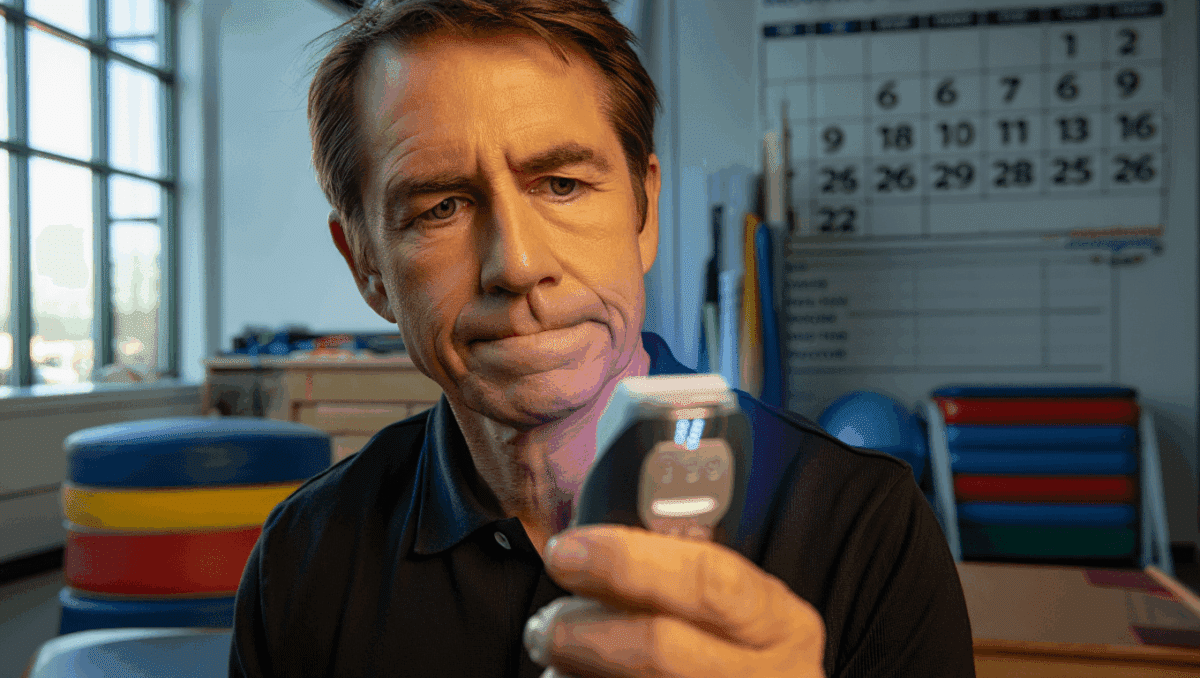
The device Foster used, known as the PoNS (Portable Neuromodulation Stimulator), is a mouthpiece that applies very small electrical pulses to the tongue while the user performs targeted exercises. A neck-worn controller adjusts the intensity, and the electrical input is intended to enhance neuroplasticity — the brain’s ability to form new connections — when paired with active rehabilitation.
What the therapy looks like in practice
- Patients wear the PoNS mouthpiece and controller during sessions that include balance, gait and speech exercises.
- The stimulation is subtle: sensations on the tongue serve as a neurosensory cue rather than a painful shock.
- Clinicians aim to amplify the effects of conventional therapy by engaging multiple sensory and motor pathways simultaneously.
By combining stimulation with exercise, the device helps the brain reorganize more efficiently than exercise alone. Therapists say the stimulation primes neural circuits so that the repetitive practice of walking or speaking produces stronger and faster improvements.
Real-world impact: faster gains for balance, walking and speech
Foster reports that six months of rehabilitation with the PoNS system delivered more noticeable improvement than the prior four years of standard care. He describes a marked lift in confidence and an easing of day-to-day movement that has brought the possibility of returning to work into view.
Clinicians using the device highlight similar outcomes: increased steadiness, better gait patterns and measurable gains in communication when stimulation is paired with focused therapy. Patients often comment that tasks feel easier to relearn once the device is part of their routine.
Clinical evidence, approvals and payers: where the science stands
Helius Medical Technologies, the maker of PoNS, originally developed the system for people with multiple sclerosis and later extended clinical research into stroke rehabilitation. A Phase 3 randomized, double-blind, placebo-controlled trial overseen by the FDA tested the device in stroke patients and reported meaningful benefit in balance and walking when PoNS was combined with therapy.
- Trial design: randomized, double-blind, placebo-controlled
- Primary outcomes: improvements in balance and gait when stimulation is paired with rehabilitation
- Patient population: stroke survivors with chronic balance and mobility issues
Insurance coverage is beginning to catch up. In June, CignaHealth became one of several major payers to authorize claims for the PoNS mouthpiece and controller. Published reimbursement figures place out-of-network adjusted negotiated list prices near $19,161, with average in-network contracted payment around $18,350.
Broader implications: beyond stroke to other neurological conditions
Tongue-based neurostimulation is attracting interest beyond post-stroke care. Researchers and companies are exploring similar approaches for multiple sclerosis, tinnitus and other disorders that involve disrupted sensory and motor pathways. Devices that target cranial nerve input through the tongue offer a noninvasive route to influence brainstem and cerebellar circuits.
Benefits patients and clinicians often cite include:
- Accelerated motor learning during therapy
- Improved balance and reduced fall risk
- Enhanced speech clarity when used alongside speech therapy
- Potential for outpatient, home-based use with clinician oversight
Some medical teams are also combining PoNS-style stimulation with advanced technologies such as robotic exoskeletons and intensive gait programs to push recovery further than either approach alone.
Access, cost and what patients should know before trying the therapy
Prospective users should discuss the therapy with their rehabilitation team and review medical eligibility, as not every patient is a candidate. Key considerations include:
- Appropriate clinical diagnosis and timing after injury or stroke
- Integration with a structured therapy program supervised by certified clinicians
- Insurance coverage details and out-of-pocket costs
- Ongoing follow-up to measure outcomes and adjust treatment
Helius and other organizations have posted informational materials and press releases summarizing trial results and patient experiences for those who want deeper technical and regulatory context.

You might also like:
- World’s first arm exoskeleton helps stroke patients regain independence
- Shoes that adapt to uneven surfaces help people with mobility issues walk easier: now online
- Cancer survival rates reach 70% after 20 years of research
- Revolutionary Artificial Tongue Mimics Human Taste: Learns Flavors Just Like Us!
- Hockey player returns to the rink nine months after devastating injury

Michael Thompson is an experienced journalist covering U.S. and global news. With ten years on the front lines, he breaks down political and economic stories that matter. His precise writing and keen attention to detail help you grasp the real‑world impact of every event.


Man, I remember Grandmas slow rehab after her stroke. Wish this tongue device was around then! Six months vs. four years? Thats a game-changer. Science is wild, innit?
Man, I remember my aunt struggling after her stroke. This device couldve changed her world. Its wild how techs shaking up rehab. Makes you wonder whats next, huh?
I once had this wacky uncle who swore by unconventional therapies. Hed be thrilled about this tongue stimulation thing beating years of regular rehab in months! Who knew the tongue was the secret weapon all along?
Man, I remember when rehab felt like climbing a mountain. This tongue gadget sounds like a game-changer. Six months vs. four years? Sign me up! Time to revolutionize therapy!
Man, this technologys like something out of a sci-fi flick! Tongue therapy trumping years of regular rehab in just months? Makes you wonder what other body parts can pull off these magic tricks. Sign me up!
Man, remember when therapy for a stroke felt like a never-ending slog? This tongue-stimulation breakthrough sounds like a game-changer! Six months vs. four years? Sign me up, Im all for fast-tracking that rehab hustle!
Man, I remember Aunt Gertys long rehab after her stroke. This tongue gadget sounds like a game-changer! Six months vs. four years? Sign me up! Time to tell ol Gerty the futures here.
Man, imagine skipping years of rehab with a device? Crazy how tech’s changing the game. The futures looking bright for stroke survivors. Cant wait to see more innovations like this in healthcare, you know?
I tried all kinds of therapies for my stroke recovery, but nothing like this tongue stimulation thing. Wish I had this back then! Six months vs. four years? Thats a game-changer! Wonder how this wizardry even works.
Man, imagine getting more progress in six months with a tongue gadget than in four years of regular therapy! Thats some sci-fi stuff right there. Who needs gym memberships when you can just tongue-twerk your way back to health, am I right?
Man, remember when therapy felt like a never-ending slog? This tongue stimulator sounds like a game-changer! Six months versus four years? Sign me up for that speedy recovery train!
I aint no expert, but this tongue therapy sounds like a game-changer! Forget years of rehab, bring on the tongue zappin! Cant imagine how weird it must feel, but hey, if it works, right?
Oh man, I totally get what ya mean! Tongue therapy does sound like somethin outta a sci-fi flick! Zappin tongues to heal em up? Wild! If it does the trick, why not, right? Gotta admit, the ideas out there, but hey, if it helps folks, more power to em!
Man, when I had my stroke, therapy felt like a never-ending slog. Wish they had tongue stimulation back then. Sounds crazy how much quicker folks are bouncing back now. Lucky ducks!
Man, talk about a game-changer! Who knew the tongue could be so powerful in rehab? Forget years of therapy, this devices six-month magic is straight-up mind-blowing! Gotta love science for its curveball surprises.
Man, imagine getting more progress in 6 months with a tongue gadget than in 4 years of old-school therapy! Its like going from dial-up internet to fiber optic in one leap. Tech really be changing the game for rehab, huh?
Man, technologys wild! Who wouldve thought a tongue gadget could outshine years of therapy? Imagine if all rehab was this futuristic. Tongue power, activate!
I mean, talk about a game-changer! Who wouldve thought the tongue could be the MVP in stroke rehab, outshining years of traditional therapy in just months? The futures looking pretty wild, aint it?