
Show summary Hide summary
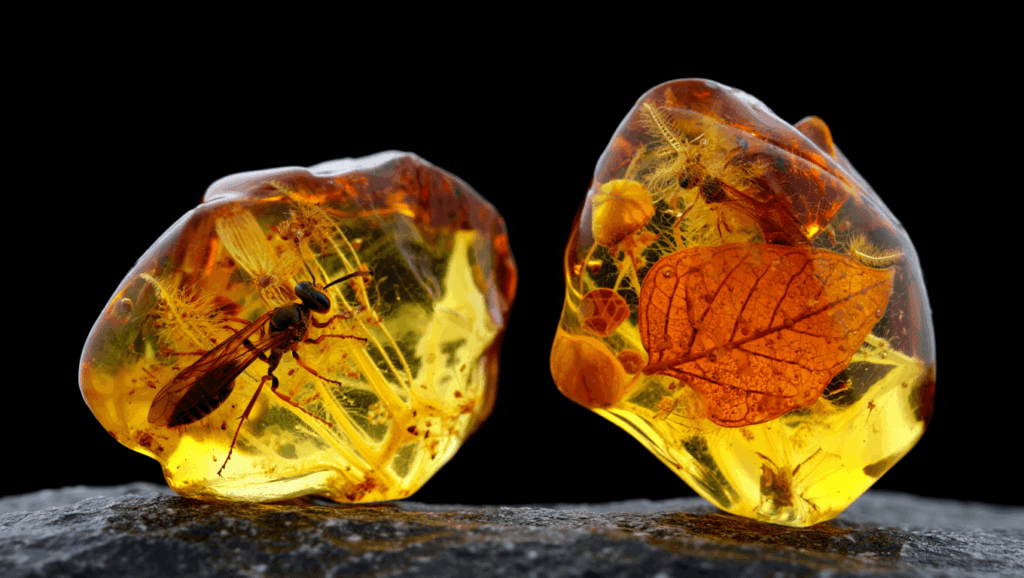
A pair of amber fragments unearthed in Ecuador offer a crystal-clear window into a forest that stood 112 million years ago — a world frozen in resin long before mammals rose to prominence. These tiny time capsules capture insects and webbing in three dimensions, giving researchers a rare glance at the small creatures that populated ancient Gondwana.
The discovery reads like something from a science-fiction movie but delivers real scientific value: one piece was dug up from beneath the earth, the other came from the branches of a long-dead tree. Together they contain an unusually rich array of preserved life, including multiple orders of arthropods and even threads of a spider’s web.
What the Ecuadorian amber reveals about ancient forest life
The Growing Demand for Data-Driven Decision Making in Silicon Valley
He quit, ran out of money, and begged to come back — here’s how his boss reacted
Inside the two amber pieces, scientists identified specimens from six different orders of arthropods. Among the preserved organisms were beetles, flies (including mosquitoes), and members of the wasp/ant family, plus arachnid remains and delicate silk strands. The specimens are rendered with such clarity that under microscopic inspection they resemble modern insects despite being more than 100 million years old.
- Specimen origins: one fragment was recovered from underground strata; the other was clearly produced by tree limbs and hardened in situ.
- Types of inclusions: beetles, dipterans (flies and mosquitoes), hymenopterans (wasps/ants), spiders and other tiny arthropods — offering a multi-taxa snapshot of an Early Cretaceous ecosystem.
- Rarity: these are only the second recorded bio-inclusions in amber from the Southern Hemisphere, making them especially valuable for paleobiogeography.
How amber captures and preserves delicate creatures
Amber begins as sticky tree resin that can trap insects, plant fragments, and droplets of sap. Over geologic time the resin hardens and chemically transforms into a stable, glass-like material that can keep fine external details intact. Because many small animals are built from chitin — a fragile material that rarely survives ordinary fossilization — amber is the key to preserving their three-dimensional shapes.
“Amber can freeze the external anatomy of tiny organisms with exceptional fidelity,” said Xavier Delclòs, a paleoentomologist at the University of Barcelona and lead author on the new study, explaining why these fossils look so fresh under the microscope. He told international outlets that without resin fossilization, many of these soft-bodied or small-skeleton creatures would be lost from the fossil record entirely.
Why these finds matter for understanding ancient ecosystems
The Ecuadorian amber dates to a time when Earth’s landmasses were still arranged in the giant supercontinent Gondwana. That context gives researchers clues about how life was distributed across southern continents and how early ecological relationships evolved.
Implications for plant-insect interactions
Scientists are particularly excited because the pieces come from an era tied to the early development of flowering plants and their insect pollinators. The coexistence of various insects with plant-resin producers suggests interactions that could illuminate the beginnings of the flower–pollinator partnership that drives much of today’s terrestrial biodiversity.
What amber can’t do: the limits of ancient DNA
Popular culture has long imagined amber as a vessel for intact ancient DNA, spawning blockbuster scenarios of resurrected giants. In reality, DNA degrades over time, breaking into fragments that eventually become unreadable. While a blood-feeding insect trapped in resin may have fed on dinosaurs or other vertebrates of its era, the genetic material inside is almost certainly too degraded for cloning or genetic resurrection.
Amber preserves form, not viable genomes. That distinction keeps the discovery firmly in the realm of paleontology rather than science fiction: researchers can reconstruct appearance, behavior, and ecological links, but not bring extinct organisms back to life.
Other remarkable amber discoveries for context
- A massive prehistoric flower preserved in amber offers a rare glimpse of ancient plant morphology and pollination structures.
- A “once-in-a-generation” fossil find in 16-million-year-old amber revealed entirely new species, widening our view of past biodiversity.
- Bird feathers trapped in amber dating to roughly 99 million years ago have provided clues to the evolution of feathers and their links to dinosaurs.
You might also like:
- Platypus fossil reveals it swam with dolphins 25 million years ago
- Jurassic insect chirps recreated: scientists simulate 165 million-year-old soundscape
- Marsupials discovered after 6,000 years presumed extinct
- 289-million-year-old fossil reveals earliest known lung function, mummified skin, scales, proteins
- Rock climbers accidentally discover 80-million-year-old fossil

Michael Thompson is an experienced journalist covering U.S. and global news. With ten years on the front lines, he breaks down political and economic stories that matter. His precise writing and keen attention to detail help you grasp the real‑world impact of every event.


Whoa, just imagine stumbling upon a 112-million-year-old amber piece like its no big deal. Thats like opening a time capsule to the Cretaceous era! Its like Mother Natures very own history book, man!
Dude, imagine being a bug stuck in that ancient amber forest, just chillin for 112 million years! Talk about being trapped in natures time capsule. Gives me the heebie-jeebies, man.
Dang, talk about time capsules! This ambers like a prehistoric Insta story, freeze-framing Cretaceous forest drama. Bet those ancient critters never guessed theyd end up trending 112 million years later. Natures OG influencers, man.
So, like, were talking 112-million-year-old amber capturing ancient forest vibes? Thats some Jurassic Park level stuff right there! Imagine stumbling upon a mini T-Rex frozen in time. Natures time capsule, man.
Man, that ambers like a time capsule! Imagine, 112 million years back, those little bugs frozen like Jurassic Park! Natures crazy, holdin secrets were still unravelin. Bet theyd have epic tales if they could talk!
Dude, can you imagine chillin in a Cretaceous forest? This ambers like a time machine, man. Preservin those ancient critters and plants, givin us a peek into their wild world. Natures own little time capsule, bro.
Yo man, totally feelin ya on that Cretaceous vibe. Imagine kickin it back in time, surrounded by those ancient trees and critters. Its like Mother Natures own little time capsule, givin us a sneak peek into the wild side of the past. Pretty rad stuff, bro.
Man, that amba got me thinkin bout time travel. Imagine, 112 million years back, chillin in that forest. Cool how natures frozen moments spark our imaginations now. Times a crazy thing, innit?
Man, that ambers like a time capsule! Can you imagine strolling through a Cretaceous forest? Bet those little critters trapped in there have some stories to tell. Natures own history book, right there.
Wait, so youre tellin me this amber piece is like a time capsule from a whole 112 million years ago? Thats wild, man. Imagine the stories these bugs could tell us about that ancient forest life!
I remember when I was a kid, I used to collect amber thinking there might be dinos trapped inside. Turns out, it’s full of ancient forest secrets! Who needs a time machine when you’ve got this 112-million-year-old treasure chest?
I remember finding a beetle in amber once, coolest thing ever! This Cretaceous forest snapshot is mind-blowing. Makes you wonder what else is waiting to be discovered in those ancient gems.
Man, imagine stumbling upon a 112-million-year-old forest snapshot in amber! Like, straight out of some ancient time-travel movie, right? Wild how nature keeps these delicate moments intact for us to discover.
Dude, thats like unearthing a slice of prehistoric Netflix! Natures the OG time traveler, dropping these ancient gems like its NBD. Always blows my mind how were just scratching the surface of whats been chillin in the earths archives.
So, like, this 112-million-year-old amber piece is basically like a time capsule of a whole Cretaceous forest, right? Imagine peeking into ancient plant-insect drama! Its like Mother Natures Netflix show, but way older and with more bugs!
Dang, that old ambers like a time machine! Imagine those ancient critters chillin in a prehistoric forest. Bet they had drama too – Who ate all the ferns, Jerry? Natures reality show, 112-million-year-old edition!
Whoa, talk about a time capsule, am I right? 112-million-year-old amber, holding onto a whole ancient forest scene? Bet those little bugs trapped in there had no clue theyd become stars of the past! Natures own Hollywood drama, preserved for us to uncover.
Oh, man, talk about a time capsule! Ambers like Mother Natures own hard drive, holdin onto ancient secrets. Bet those little critters stuck in there were just minding their own business, now theyre stars of the show!