
Show summary Hide summary
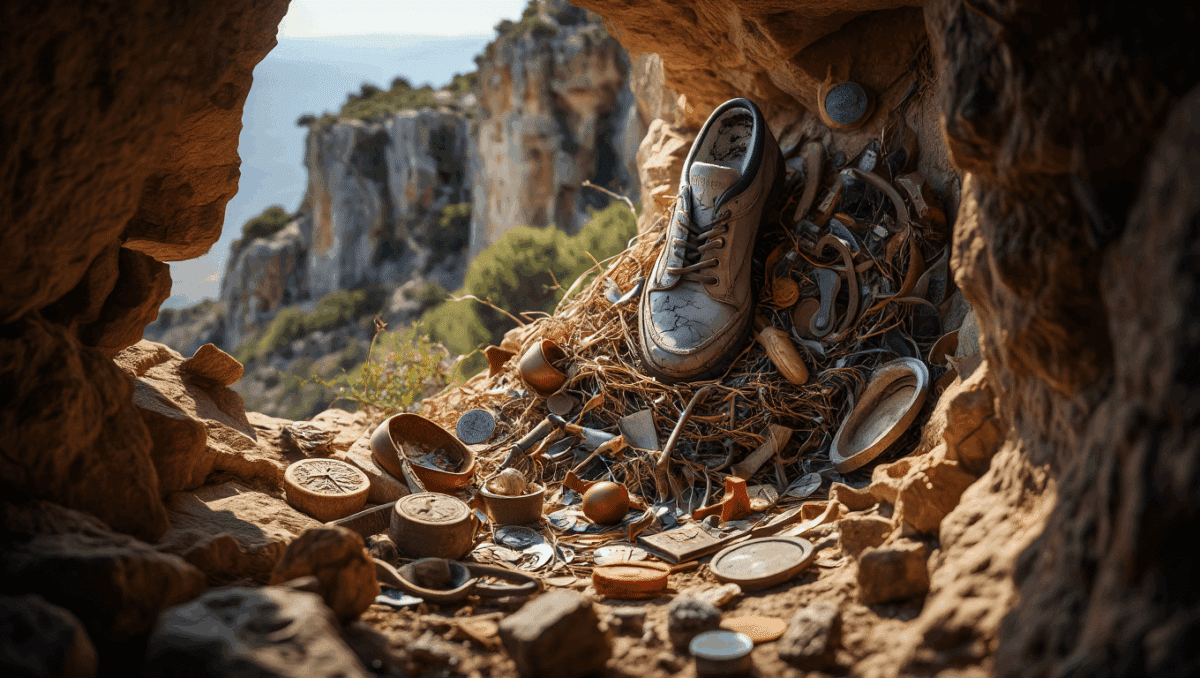
A routine inspection of a remote cliffside cave in Spain turned into an archaeological surprise when ecologists discovered an assortment of human-made items tucked into an abandoned bearded vulture nest. What looked at first like ordinary nesting material included a handful of straw sandals — one of which was later dated to the 14th century — and a remarkable assortment of artifacts that read like a compact record of past human and animal activity.
The find has captivated scientists because these large raptor nests can act as natural archives. Protected from wind and rain inside a cave, the nest preserved delicate organic materials and objects that would normally have long since disintegrated on an exposed ledge. For researchers, each fragment offers a new clue about past ecosystems, human presence in mountain regions, and the life histories of scavenging birds.
Why a vulture nest can become a time capsule
The Growing Demand for Data-Driven Decision Making in Silicon Valley
He quit, ran out of money, and begged to come back — here’s how his boss reacted
Bearded vultures and other large raptors often reuse nests for generations, steadily building layers of material that can accumulate over decades or even centuries. In this case, the nest’s sheltered location inside a cave created ideal conditions for preservation: low exposure to the elements, limited microbial decay, and a dry microclimate that helped organic items survive.
How scientists accessed the site
Members of the research team reached the nest by technical descent into the cave, carefully removing nest material to document and recover objects without damaging the structure. The nest’s compact, layered composition meant that each piece pulled out was potentially a different era — a biological and cultural stratigraphy waiting to be read.
Objects recovered: a surprising inventory of people and wildlife
The excavation produced a diverse collection of materials, ranging from footwear and leather scraps to animal bones and hunting debris. Among the most striking items were several sandals of straw construction, one type identified as an Agobía, which lab work suggests is roughly 650 years old. Other discoveries included:
- Additional sandals and fragments of woven basketry
- A dyed scrap of sheep leather indicating textile or craft activity
- The carved horn of a mountain goat, possibly a tool or decorative piece
- A crossbow bolt, which may have arrived attached to prey or been used as nesting material
- Hundreds of bone fragments — in total about 2,100 pieces of bone — including 86 hooves
- Eggshells and feathers that could retain chemical signatures of contaminants
What these finds reveal to ecologists and archaeologists
Items collected from nests like this bridge natural history and human history. For conservation scientists, bones and feathers tell a story about diet, prey availability, and potential exposure to toxins. For archaeologists, man-made objects such as footwear and carved bone provide context about local material culture and human presence in high mountain areas.
Researchers are particularly interested in chemical analysis of organic remains. Feathers and eggshells can be tested for heavy metals and other pollutants that accumulate in scavengers — substances that may have played a role in historical declines of vulture populations. At the same time, the presence of hunting implements or domestic debris helps reconstruct the relationship between people and highland ecosystems through time.
Historic nests: parallels from other studies and what they teach us
Previous research has shown that raptor nests can preserve long-term ecological records. For example, studies of large eagle nests have documented meter-deep accumulations of material built up over many generations, while analyses of deposits beneath certain falcon nests in polar regions have revealed biological remains that date back thousands of years. These precedents helped scientists recognize the potential importance of the Spanish cave nest as more than an isolated curiosity.
Natural archives created by birds are now seen as complementary to traditional archaeological and paleoecological evidence because nests concentrate both animal remains and any human items unintentionally carried in by prey or scavengers.
Next steps: research directions and unanswered questions
Lead researchers from the Pyrenean Institute of Ecology, including ecologist Antoni Margalida, plan a suite of laboratory studies on the recovered material. Planned analyses include radiocarbon dating to refine the timeline of deposition, isotopic and toxicological testing on feathers and eggshells, and detailed zooarchaeological work on the bone assemblage to identify prey species and seasonal patterns of feeding.
Margalida and colleagues emphasize that the nest functions like a “natural museum,” offering many avenues for future inquiry. Scientists hope the material will help explain historical shifts in vulture populations, identify environmental stressors that affected scavengers, and shed light on human activity in mountain landscapes over the past several centuries.
You might also like:
- 500,000-year-old wooden tools are the oldest ever discovered
- Ospreys recover as pioneering pairs nest away from main population
- Poisoned weapons older than previously thought, new study shows
- Vultures return to these mountains after 100 years, completing Europe’s Yellowstone
- Owl rescued from concrete gets feather transplant to fly silently back into the wild

Michael Thompson is an experienced journalist covering U.S. and global news. With ten years on the front lines, he breaks down political and economic stories that matter. His precise writing and keen attention to detail help you grasp the real‑world impact of every event.


Man, can you believe a 650-year-old shoe was chillin in a vulture nest? Like, what were those birds up to? Maybe they were fashionistas back in the day, who knows! Natures time capsules, I guess.
Man, can you imagine stumbling upon a 650-year-old shoe in a vultures nest? Sounds like the setup for some wild time-travel flick. Bet those archaeologists had a field day up there!
Man, talk about a wild treasure hunt! Imagine stumbling upon a shoe thats older than your great-great-great-grandpappy! Those vultures sure know how to hoard history. Bet theyre the real MVPs of archaeology, huh?
Man, finding a 650-year-old shoe in a vulture nest? Thats some wild stuff. Its like these birds are hoarding a whole time capsule up there. Wonder what other nuggets of history theyre guarding, huh?
Dude, those vultures really be out here hiding more secrets than a gossip girl at a high school party! Who knew they were into archeology, right? Next thing you know, theyll be unearthing a whole museum up in those nests. Maybe we should start sending them on treasure hunts or something, see what else they can dig up!
Man, imagine stumbling upon a 650-year-old shoe in a vultures nest! Natures own little time capsule. Wonder what other surprises those birds have been hiding up there. Bet they got some stories to tell!
Man, can you imagine stumbling upon a shoe thats older than your great-great-great-grandma? That vulture nest is like a time machine, holding secrets and treasures from centuries ago. Natures one wild historian!
Imagine tripping over some ancient shoe, older than even your great-great-great-grandma? That vulture nest? Its like a whole time machine, full of secrets and treasures from way back when. Mother Natures got some serious history lessons up her sleeve, huh?
Man, imagine stumbling upon a 650-year-old shoe in a vultures nest, thats wild! Its like Mother Natures own little time capsule up there. Wonder what else those sneaky birds have been hoarding!
Man, imagine finding a 650-year-old shoe in a vulture nest! Thats like a time-traveling fashion show! Who knew those birds were into historical artifacts? Bet they have a whole museum up there!
Man, finding a 650-year-old shoe in a vulture nest is like digging up a time capsule! Who knew these birds were into hoarding artifacts? Wonder what other surprises natures hiding up there.
Man, can you believe that a 650-year-old shoe was found in a vulture nest? Like, who knew vultures were into collecting ancient artifacts? Wonder if theyre gonna start a museum up there in the sky.
Man, talk about a blast from the past! Finding a 650-year-old shoe in a vulture nest? Thats wild. Imagine the stories those artifacts could tell. Nature really knows how to keep secrets!
Man, imagine stumbling upon a 650-year-old shoe in a vulture nest! Natures like a secret time capsule. Wonder what else those sneaky birds are hiding up there. Time to give those vultures honorary archaeology degrees!
Man, talk about a time capsule up there! Bet that vulture got a real kick out of decorating its nest with a 650-year-old shoe. Wonder what else those birdies are hiding up in the sky!
Dang, those sky critters are stepping up their game! Can you imagine the stories those birds could tell? Like, Hey, remember that time we swooped down and nabbed a shiny ring from a lost hiker? Who knows what else is hidden in their secret stash up there!