
Show summary Hide summary
- Fresh science pushes the timeline for poisoned weapons back decades — or more
- How researchers find and verify ancient poison traces
- What poisoned weapons tell us about prehistoric cognition and culture
- Geographic spread: evidence across continents, not a single invention
- The role of adhesives: more than glue
- Implications for hunting efficiency and social dynamics
- Open questions and the next wave of research
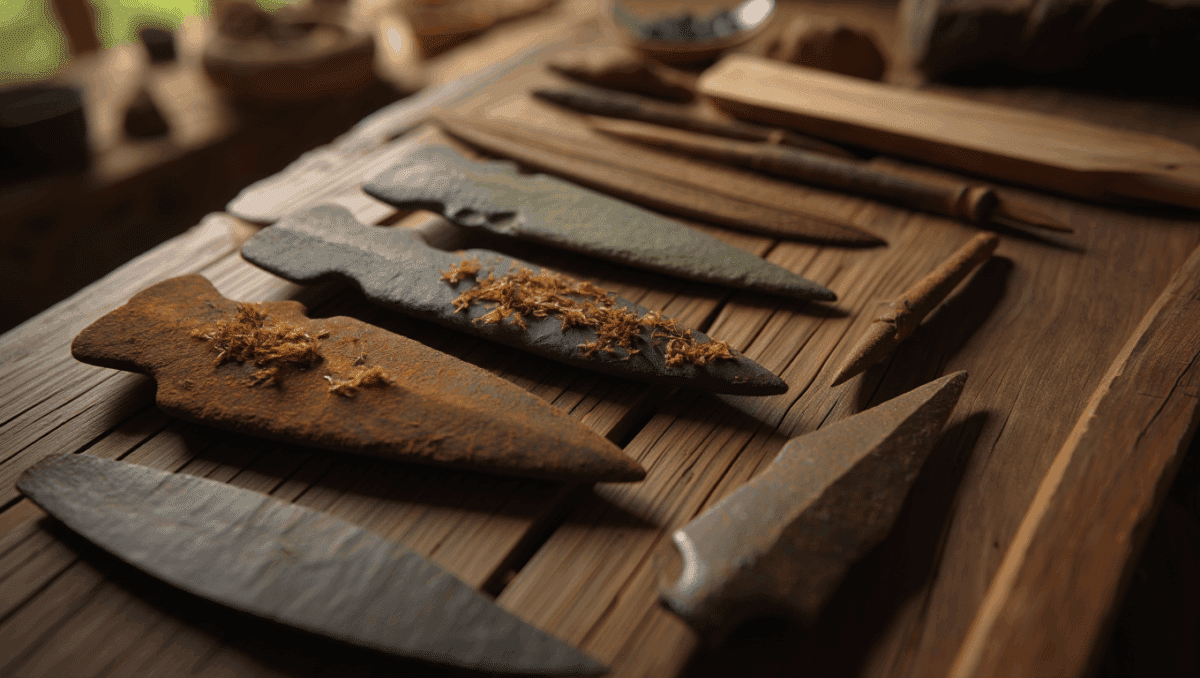
Early human hunters didn’t just sharpen stone — they transformed simple projectiles into chemical weapons long before scholars expected. New analyses of ancient weapon fragments and residue show that people applied plant and animal toxins to arrowheads and spear tips far earlier than the traditional timeline for organized toxic weaponry, forcing archaeologists to rethink how sophisticated prehistoric technology and knowledge of poisons really were.
This evidence shifts the story of human ingenuity: making and applying poisons requires gathering knowledge about local flora and fauna, processing materials, and passing on specialized techniques. The finds don’t just change the timeline for hunting tools — they reshape ideas about social learning, risk management, and prehistoric conflict.
Fresh science pushes the timeline for poisoned weapons back decades — or more
Scientists using sensitive chemical tests have detected organic residues on ancient lithic and bone points that match compounds found in known toxic plants and animal secretions. Those residues appear on tools from sites once thought to predate complex chemical use. In short, poisoned tips are not a late invention but part of a much older technological repertoire.
The Growing Demand for Data-Driven Decision Making in Silicon Valley
He quit, ran out of money, and begged to come back — here’s how his boss reacted
Instead of a sudden leap into toxicity during the Neolithic or Metal Ages, the emerging picture suggests gradual innovation: people experimented with natural poisons, refined extraction methods, and developed adhesive recipes that both bound points to shafts and preserved toxic compounds.
How researchers find and verify ancient poison traces
Modern labs combine multiple lines of evidence to make a convincing case for prehistoric poison use:
- Micro-residue extraction from tool surfaces, isolating organic molecules preserved in adhesives and crevices.
- Chemical fingerprinting using chromatography and mass spectrometry to identify alkaloids, cardiac glycosides, or other toxin classes.
- Comparative analysis with modern reference samples from regional plants and animal secretions.
- Microscopic study of use-wear patterns that match penetration and handling expected from poisoned tips.
Contamination control and reproducibility
Because organic residues are fragile, researchers emphasize strict lab protocols and independent replication. Multiple sites and teams finding similar signatures strengthens the interpretation that these residues are ancient and purposeful rather than modern contamination.
What poisoned weapons tell us about prehistoric cognition and culture
The presence of toxins on weapons suggests several deeper capabilities among prehistoric groups:
- Ethnobotanical knowledge: Identifying and processing toxic plants or animal secretions shows detailed ecological understanding.
- Complex manufacture: Combining adhesives with poisons indicates multi-stage production and skill transmission.
- Strategic hunting and combat: Poisoned projectiles extend hunting range and lethality, changing prey dynamics and possibly social power balances.
- Risk management: Handling poisons safely implies cultural rules and specialized roles within groups.
These elements point to social learning systems capable of preserving and refining dangerous techniques across generations.
Geographic spread: evidence across continents, not a single invention
Residues consistent with toxic use have been reported from a variety of regions, suggesting independent invention or rapid cultural transmission. Patterns emerging from published work and new analyses show:
- Stone and bone points from different climates and ecosystems carrying similar chemical traces.
- Adhesive recipes that combine plant resins with fats or ochre to bind and slow the release of toxins.
- Local adaptations where available toxic species changed the specific chemistry but kept the same functional outcome.
The role of adhesives: more than glue
Adhesives are central to the story. Far from being simple binders, prehistoric adhesives often served multiple purposes:
- Securing stone and bone points to shafts.
- Acting as carriers that preserved and delivered toxins to a wound site.
- Protecting labile organic compounds from degradation until impact.
Researchers find that some adhesive recipes are surprisingly sophisticated, blending resins, plant gums, animal fats, and powdered minerals to control viscosity, durability, and even the release profile of toxic compounds. This complexity highlights a deep practical chemistry long before written records.
Implications for hunting efficiency and social dynamics
Poisoned projectiles would have changed the calculus of hunting and conflict. Advantages include:
- Higher probability of downing large or dangerous prey.
- Reduced need for close-quarters confrontations, lowering injury risk for hunters.
- Potential to target animals otherwise avoided because of danger or scarcity.
On the social side, knowledge of poisons could confer status or specialized roles — those who prepared toxins and adhesives may have held valuable, guarded expertise that shaped leadership and trade networks.
Open questions and the next wave of research
While the new data are compelling, several important questions remain unanswered:
- How widespread was the practice within and between prehistoric populations?
- Did the appearance of poisoned weapons correlate with environmental pressures or population shifts?
- Can we reconstruct precise recipes and methods for toxin extraction from fragmentary organic residues?
Ongoing work aims to map residue chemistry across more sites, refine dating of contaminated artifacts, and experiment with safe reconstructions to test functional effectiveness. Interdisciplinary cooperation between archaeologists, chemists, and ethnobotanists will be critical.
You might also like:
- Oldest poisoned arrowheads date back 60,000 years, show hunters’ knowledge of toxins
- 500,000-year-old wooden tools are the oldest ever discovered
- Ancient Romans used feces as medicine, study confirms
- Neon Blue Wild Pigs in California: The Surprising Reason Behind Their Color Change
- Frog protein may be an antidote to deadly shellfish toxin in humans

William Anderson is a multimedia producer specializing in videos, podcasts, and interactive galleries. With five years of immersive content creation, he turns information into a rich audio‑visual experience. His storytelling skills draw you directly into the heart of every story, on any platform.


Man, ancient folks really knew how to get creative with their weapons! Poisoned arrows back in the day, now thats some wild stuff. Can you imagine the strategy behind using those bad boys in battle? Its like a real-life game of chess, but way deadlier!
Man, these ancient folks were wildin with their poisoned weapons way back when! Makes you wonder how they even figured out how to make those things. Imagine a prehistoric chemistry class — Alright, today were making arrowheads… but with a twist!
Man, ancient peeps were wildin with poisoned weapons way back? Imagine bein chillin in prehistoric times, dodging toxic arrows left and right. Thats some hardcore survival mode right there!
Whoa, imagine ancient folks slinging poison way back when! Makes you wonder what other surprises are waiting underground. Next thing you know, theyll discover prehistoric ninja turtles with toxin-tipped sais!
Man, imagine prehistoric folks being all sneaky with poisoned weapons! Makes you wonder what other surprises archaeologys got up its sleeve. Cant wait for the next big reveal!
Yall telling me our ancestors were out here spikin their weapons with poison way back? Thats some wild prehistoric ninja stuff right there! Makes you wonder what other ancient secrets are still layin low.
Man, can you imagine ancient folks using poisoned weapons? Thats some next-level strategy right there. Makes you wonder what else they were cooking up back then. Prehistoric times werent all about rocks and sticks, it seems!
Who would have thought ancient folks were into sneaky poison play? Makes you wonder what other surprises historys got up its sleeve! Can you imagine prehistoric cloak-and-dagger shenanigans with a toxic twist? Wild!
I always knew our ancestors were up to some sneaky stuff! Can you imagine using poisoned weapons way back when? Thats some next-level ancient warfare right there. Makes you wonder what else they had up their sleeves!
Man, this studys like digging up a treasure trove of ancient sneaky tactics! Prehistoric poison plot twists? Sign me up for that historical thriller. Wonder what other surprises are hidden in our ancestors bag of tricks.
I always knew our ancestors were sneaky, but poisoned weapons? Thats some next-level cunning! Makes you wonder what other ancient tricks they had up their sleeves. Cant wait to see what else researchers dig up!
Man, ancient folks were more sneaky than we thought! Poisoned weapons from way back? Imagine the strategies and cunning that went into that. Makes you wonder what else they were up to back in the day, huh?
Man, imagine ancient warriors with poisoned weapons? Thats some next-level strategy. Makes you wonder what else were underestimatin from back in the day. Historys full of surprises, innit?
Imagine those ancient warriors sneakin around with their sneaky poison weapons! History always keeps us on our toes, huh? Wonder what other wild tricks they had up their sleeves back then. Gotta love those unexpected surprises from the past!
I always knew those ancient warriors were up to something sneaky! Poisoned weapons all the way back then? Who needs Netflix dramas when history keeps dropping these plot twists? Cant wait for the next episode of Prehistoric Shenanigans!
Man, after reading this, I cant help but think about ancient battles being all sneaky with poisoned weapons. Its like, how far back does human craftiness go, right? Makes you wonder what else well dig up next!
I remember reading about ancient poison-tipped arrows as a kid and thinking it was rad. Turns out, theyve been around even longer than we thought? Mind blown! Can you imagine the sneaky tactics our ancestors were up to?
I heard about this study on ancient poisoned weapons, and lemme tell you, our ancestors were sneaky! Who knew they were using toxins way back when? Makes you wonder what other surprises archaeologys got buried, right?