
Show summary Hide summary
- How the escape unfolded and the immediate response
- Which primates were involved and why species matters for disease risk
- Actions taken by officials to contain animals and limit exposure
- What health authorities are watching for and testing procedures
- Why some escaped animals appear “aggressive”
- Transport rules, lab oversight and questions about accountability
- Historical context: similar escapes and lessons learned
- Practical guidance for residents and emergency responders
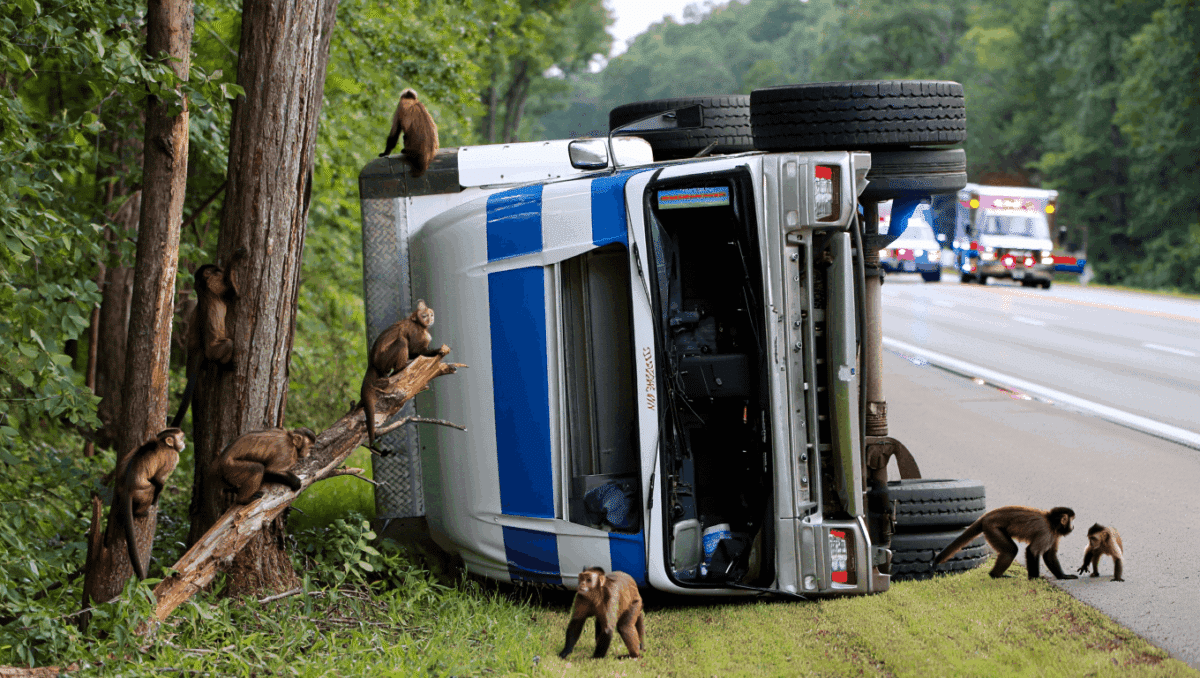
Two days after a highway crash sent a transport truck off the road, a small group of laboratory monkeys slipped free and scattered into nearby woods, sparking alarm in the surrounding towns and a fast-moving response from animal control and public health officials. Witnesses described the primates as “aggressive” on social media, and headlines immediately raised the question many residents were asking: could these escaped research animals pose a disease threat to people?
Officials say they are treating the situation seriously but cautiously, balancing public safety, animal welfare and the low but real risk of zoonotic infections. Below, we break down what is known about the incident, the types of health risks experts consider most relevant, how authorities have responded, and what residents should do if they encounter an escaped lab animal.
How the escape unfolded and the immediate response
The Growing Demand for Data-Driven Decision Making in Silicon Valley
He quit, ran out of money, and begged to come back — here’s how his boss reacted
Local emergency services responded to a multi-vehicle crash late in the evening when a truck hauling research animals lost control. The vehicle overturned, and while most of its cargo remained secured, several primates escaped through a damaged compartment and disappeared into a nearby wooded area.
Within hours, animal control teams, state wildlife officers and the laboratory’s representative were on scene. Road closures, search teams with humane traps, and notifications to neighboring communities were put in place. Social media amplified eyewitness reports of bold behavior, which increased public concern and drew a rapid media presence.
Which primates were involved and why species matters for disease risk
Experts say species identification is a key factor in assessing potential health threats. Many research facilities use macaques and other Old World monkeys because their physiology is similar to humans, but those species carry different pathogens than New World monkeys and apes.
- Macaques and herpes B virus: Some macaque species can harbor B virus (cercopithecine herpesvirus 1), which is generally harmless to monkeys but can cause severe disease in humans after bites, scratches or mucous membrane exposure.
- Other pathogens: Monkeys may also carry bacteria like Salmonella or Campylobacter, as well as parasites that can occasionally jump to humans under close contact.
- Vaccination and quarantine practices: Animals used in laboratory settings typically undergo health screenings and sometimes quarantine, but the presence of a pathogen varies by facility and study purpose.
Understanding actual versus perceived risk
While headlines can escalate fear, public health specialists emphasize that documented transmission of dangerous primate-borne diseases to the general public is uncommon. Risk increases mainly when people have direct contact — especially bites or scratches — or are exposed to bodily fluids.
Public health agencies have not confirmed any human infections tied to this escape, and authorities conducting tests on the animals aim to clarify whether any carry organisms of concern. Until testing is complete, a cautious approach is justified.
Actions taken by officials to contain animals and limit exposure
Authorities typically follow a standard set of procedures after such escapes:
- Deploy humane traps and coordinate search teams trained to handle primates.
- Set up roadblocks and restricted zones to prevent public access to the search area.
- Notify local healthcare providers and public health departments so they can advise on exposure protocols.
- Collect the animals for veterinary assessment and laboratory testing to rule out transmissible diseases.
Local law enforcement says residents should keep pets indoors and avoid approaching the animals. Animal handlers wear protective gear to reduce their own exposure risk during capture operations.
What health authorities are watching for and testing procedures
When primates are recaptured, veterinarians perform a physical exam and collect samples for laboratory analysis. Tests can include:
- PCR and serology for viral agents such as herpes B virus.
- Bacterial cultures for enteric pathogens like Salmonella.
- Parasitology screens and other targeted assays depending on the species and facility records.
Results can take days to arrive. In the meantime, public health teams issue exposure guidance and monitor for any symptomatic people who reported contact. If someone is bitten or scratched, clinicians may recommend wound cleaning, possible post-exposure antivirals for certain infections, and close follow-up.
Why some escaped animals appear “aggressive”
Behavior described as aggressive often reflects fear and disorientation rather than unprovoked hostility. Monkeys that break free from transport are stressed — loud crashes, unfamiliar surroundings and attempts to flee all elevate defensive behavior.
Stress can increase biting and scratching risk, which is precisely why authorities stress that members of the public should not attempt to capture or calm escaped primates.
Transport rules, lab oversight and questions about accountability
Incidents like this prompt scrutiny of shipping practices and regulatory oversight. Facilities and carriers are generally required to follow federal and state guidelines for transporting research animals, including secure enclosures, health documentation, and contingency plans for accidents.
- Regulators may audit the lab and transportation company to confirm compliance with animal welfare and biosafety standards.
- Investigations often look into crate integrity, driver training, route planning and emergency response readiness.
- Legal and reputational consequences for lapses can include fines, corrective action plans and public pressure for policy changes.
Historical context: similar escapes and lessons learned
Escaped research animals are rare but not unprecedented. Past events have produced robust after-action reviews that stress better containment measures, clearer communication between labs and local authorities, and improved public advisories. Those lessons shape current response tactics and testing protocols.
Practical guidance for residents and emergency responders
If you encounter an escaped primate or see one in your neighborhood, public health officials recommend the following:
- Do not approach, corner or attempt to feed or capture the animal.
- Keep children and pets indoors and away from the area.
- Report sightings to local law enforcement or animal control with the exact location and any identifying details.
- If you are bitten or scratched, wash the wound thoroughly with soap and water and seek medical care immediately.
- Follow updates from official channels rather than unverified social media posts.
Acting quickly and cautiously reduces potential exposure and helps authorities contain the situation more efficiently.
You might also like:
- Lab mice released into the wild: how they survive, behave and affect ecosystems
- Florida man accused of killing and eating pet peacocks during feud with neighbor
- Zootopia 2 sparks pet snake craze in China
- Florida iguanas falling from trees again
- Dangerous virus detected in Arctic whales by drones

William Anderson is a multimedia producer specializing in videos, podcasts, and interactive galleries. With five years of immersive content creation, he turns information into a rich audio‑visual experience. His storytelling skills draw you directly into the heart of every story, on any platform.


Man, you ever seen a monkey on a mission? These lab escapees are giving Planet of the Apes vibes for real. Hope theyre not carrying some crazy diseases, cause thats a whole new level of pandemic waiting to happen.
Dang, those monkeys mean business! Straight outta an action flick, huh? But seriously, I feel you on the whole disease thing. I mean, who knows what those little troublemakers might be packing? Stay safe out there, man!
Man, this whole monkey escape thing is like a plot straight outta a movie! Makes you wonder about the hidden dangers around, yknow? Hope they catch em all before something goes bananas.
Man, did you hear about those lab monkeys escaping a truck crash? Its like a sci-fi flick come to life! But for real, hope theyre not carrying some crazy diseases. Who knows what could go down if they start mingling with the wild primates out there.
Man, this reminds me of that time when I accidentally left the hamster cage open! Chaos everywhere. Hope those lab monkeys are okay, though. Wonder if theyll end up in some monkey business.
Dang, I remember that monkey madness! They were like little Houdinis, pulling a vanishing act. Hope theyre okay and wont spread any funky diseases. Bet those officials had a wild day!
Man, those mischievous monkeys really know how to keep things interesting! Hope they dont cause too much chaos out there. Those officials mustve had a real adventure trying to round them up. Gotta give it to the little rascals for spicing up the day!
Yo, imagine monkeys escaping a truck crash! Thats like a movie plot, man. But for real, hope theyre okay and dont spread any diseases. Natures wild, aint it?
I remember when I saw monkeys running loose on TV. Hilarious chaos! But this time, its like a sci-fi movie with a dose of reality. Hope they catch em before any weird diseases spread.
I totally feel ya, dude! Monkeys on the loose is already a wild sight, but toss in a dash of sci-fi drama, and were in for a real rollercoaster. Lets hope the authorities wrangle those cheeky monkeys back before things get too apocalyptic. Stay safe out there, monkey business aint no joke!
Yo, I heard about those lab monkeys breaking loose after a truck crash, wild stuff! Makes you think how secure these facilities really are, huh? Hope they caught em all before anything serious happened.
Yo, yeah, that monkey business was some real Jumanji-level madness. Like, imagine walking out your front door and seeing a chimp chilling on your porch! Insane, man. But for real, its freaky how easily things can go sideways, right? Hope they locked down those little troublemakers before they started plotting some Planet of the Apes type takeover!
Man, I swear this sounds like the start of a sci-fi flick. Monkeys breaking loose from a truck crash? Hope they dont start a Planet of the Apes situation here. Stay safe out there, folks!
Whoa, mate, youre right on target! Those monkeys causing chaos sound like the start of a wild sci-fi plot. Just crossed fingers they dont go all Planet of the Apes on us. Stay safe out there, everyone!
Man, that monkey escape sounds like a mad plot from a B-movie. Hope they dont bring some Planet of the Apes scenario with them. Stay safe out there, folks, you never know whats around the corner!