
Show summary Hide summary
- How drones turned whale breath into surveillance data
- What the genetic tests found and why experts are concerned
- Why warming Arctic waters raise the stakes
- Consequences for native communities and wildlife managers
- What scientists are doing next and how surveillance will expand
- Policy actions and research priorities going forward
- How this discovery changes marine disease surveillance
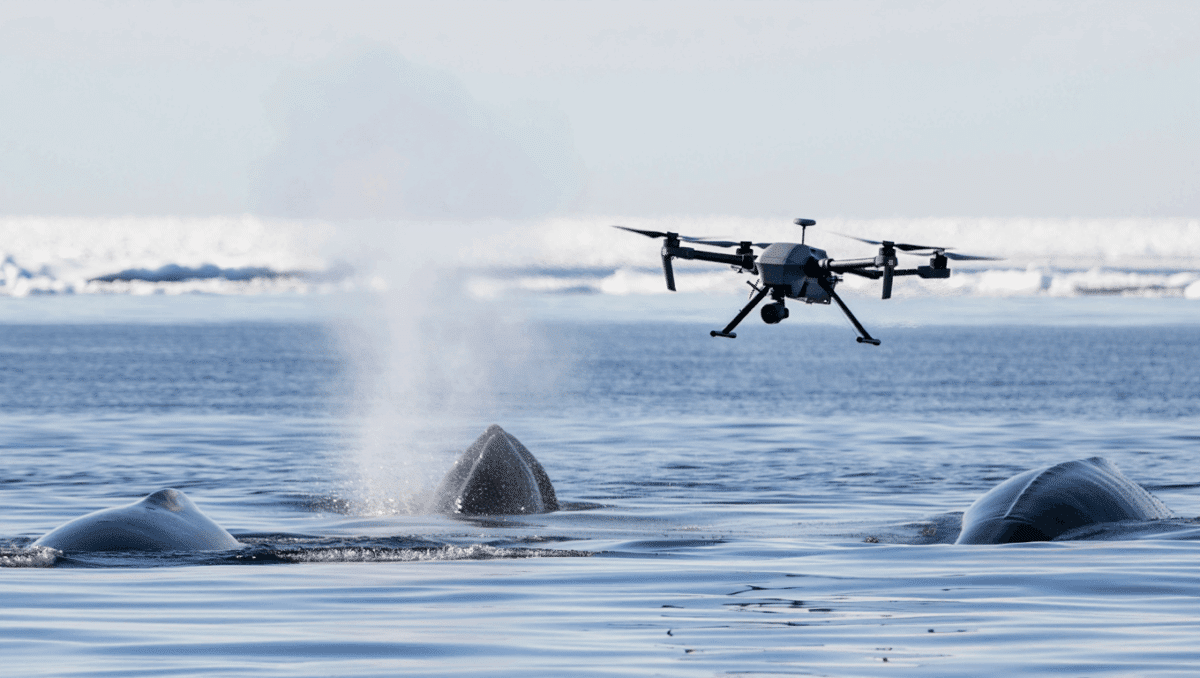
Scientists using unmanned aerial vehicles have detected viral material in the breath of Arctic whales, a finding that has researchers on edge because it points to a new pathway for disease surveillance — and a worrying sign that pathogens are on the move in polar waters. The discovery, made during summer fieldwork, used drones to collect exhaled breath condensate from whales, then sequenced genetic material that matched viruses known to cause serious illness in marine mammals.
The technique allowed teams to screen animals without disturbance, yielding data that would have been hard to obtain with traditional biopsy or necropsy methods. Now scientists are racing to determine how widespread the virus is, whether it’s actively causing disease, and what this might mean for Arctic ecosystems already stressed by rapid environmental change.
How drones turned whale breath into surveillance data
Drones equipped with sterile collection devices are changing the way marine veterinarians monitor whale health. Instead of approaching animals with boats or conducting invasive sampling, researchers hover a small unmanned aircraft a few meters above a whale’s blowhole and capture the mist expelled during exhalation.
The Growing Demand for Data-Driven Decision Making in Silicon Valley
He quit, ran out of money, and begged to come back — here’s how his boss reacted
- Samples are collected on disposable petri-dish–like surfaces or absorbent pads attached to the drone.
- Collected material is preserved immediately and shipped to laboratories for RNA/DNA extraction and sequencing.
- Sequencing can reveal bacterial and viral genetic signatures, giving a snapshot of pathogens the animal is carrying.
This noninvasive approach reduces stress on animals and allows teams to sample larger numbers of whales across remote areas, including fast-changing Arctic waters. Because drones can reach animals in ice-choked regions and minimize disruption, they are especially valuable for monitoring species that are difficult to study by other means.
What the genetic tests found and why experts are concerned
Genetic sequencing of the breath samples returned viral sequences similar to those from viruses that, historically, have caused respiratory disease and mass die-offs in marine mammals. While the work is ongoing, early analyses suggest the virus belongs to a family that can affect lungs and, in some cases, the nervous system.
Researchers caution that finding viral genetic material does not automatically mean active, widespread disease. Still, the identification of these sequences in multiple whales and locations is significant because:
- It indicates the virus is present in the population, not just a single isolated case.
- Some related viruses have caused large mortality events in other regions.
- Arctic species may have limited prior exposure and therefore lower immunity.
Public and scientific concern centers on whether this virus could spread quickly among whales or jump between species as warming waters change animal movement patterns.
Why warming Arctic waters raise the stakes
The Arctic is warming faster than almost any other region on the planet, and those shifts are reshaping marine ecosystems. As sea ice retreats and open-water periods lengthen, species that rarely interacted with Arctic whales are moving north. That creates new interfaces for pathogens.
Key drivers increasing disease risk include:
- Shifts in distribution: temperate species and their pathogens are expanding into Arctic ranges.
- Altered prey and predator dynamics that stress animal populations, making them more vulnerable to infection.
- Increased human activity — shipping, resource development, and tourism — that can facilitate pathogen introduction and transmission.
Scientists warn that these changes can lead to unexpected outbreaks and complicate conservation strategies. In an environment where biological communities are rapidly reassembling, pathogens can exploit new hosts with little warning.
Consequences for native communities and wildlife managers
Arctic whales are not only ecological icons; they are a cultural and nutritional cornerstone for many Indigenous communities. A disease outbreak among whales could have cascading effects on food security, cultural practices, and local economies.
Issues at the intersection of health, management, and subsistence hunting include:
- Monitoring harvest safety when animals are used for subsistence.
- Communicating risk to communities in culturally appropriate ways.
- Designing response plans that respect traditional knowledge and livelihoods.
Officials emphasize collaboration with local communities to establish early-warning systems and protocols for reporting sick or unusually behaving animals. Community-based observation paired with drone surveillance could improve detection and response to emerging threats.
What scientists are doing next and how surveillance will expand
Following the detection, research teams are expanding sampling efforts across a broader geographic range and including multiple whale species to map how prevalent the virus is. Next steps include:
- Collecting additional drone-based breath samples across seasons and locations.
- Conducting targeted health assessments on stranded or visibly sick individuals when safe and ethical.
- Comparing sequences to global databases to establish relationships to known pathogens.
Laboratories are also testing whether the genetic material represents active virus capable of replication or merely fragments from degraded particles. Distinguishing between active infection and incidental exposure is essential to gauge real risk.
Policy actions and research priorities going forward
The finding has prompted calls for coordinated surveillance programs that combine remote sensing, community reporting, and molecular testing. Recommended priorities include:
- Standardizing drone sampling protocols so data are comparable across research groups.
- Investing in rapid diagnostic capacity in northern labs to shorten turnaround times.
- Establishing cross-border partnerships because marine mammal movements and pathogens don’t respect political boundaries.
Public health agencies are monitoring the situation, though current evidence suggests the immediate human health risk is low. Still, researchers note that monitoring zoonotic potential — the ability of animal pathogens to infect people — remains an important part of comprehensive surveillance.
How this discovery changes marine disease surveillance
Beyond the specific pathogen, the event demonstrates the value of integrating technology, molecular tools, and local knowledge to monitor wildlife health in remote regions. Drone-based breath sampling offers a scalable, low-impact way to detect emerging threats early.
Benefits of this approach include:
- Rapid, repeatable sampling across difficult terrain.
- Lower stress and risk to animals compared with capture-based methods.
- Ability to survey otherwise inaccessible populations, improving detection coverage.
As environmental change accelerates, such tools will be essential for spotting biological red flags before they escalate into large-scale die-offs.
You might also like:
- Dolphin health revealed by seawater eDNA sampling in a conservation first
- Neon orange shark found in Costa Rica: what scientists know
- Humpback whale subspecies confirmed by genetic analysis
- World’s largest whale graveyard teems with deep-sea life including species unknown to science
- Endangered whale spotted in Ireland migrates to US, baffling scientists

William Anderson is a multimedia producer specializing in videos, podcasts, and interactive galleries. With five years of immersive content creation, he turns information into a rich audio‑visual experience. His storytelling skills draw you directly into the heart of every story, on any platform.


Man, Arctic whales cant catch a break! Drones spying on their breath now? Whats next, tiny whale-sized cameras in their blowholes? Hope they figure out how to protect these majestic creatures without invading their privacy.
Arctic whales and drones, huh? Reminds me of that sci-fi flick where robots take over the world. But this real-life stuff is scary. Whales getting sick? We gotta protect these gentle giants, man.
Man, drones are really out there doing the most these days, huh? First, theyre flying around, now theyre analyzing whale breath? Whats next, drone chefs in the kitchen? But seriously, this virus in Arctic whales is no joke. Hope they can tackle it fast.
Man, I always knew those Arctic whales were hiding something fishy under that icy surface! Drones catching viruses now? Whats next, whales with secret spy missions? Watch out for the narwhals, folks, they might be plotting world domination next!
Man, these whales cant catch a break, can they? Drones sniffin out viruses now. Hope they find a solution fore its too late. Natures like a puzzle, and we better start puttin the pieces together, you know?
Man, remember when drones just took cool pics? Now theyre out there sniffing whale breath for viruses. The Arctic is like a sci-fi movie, but real. Wonder what else those sneaky drones will find next.
Arctic whale drones? Sounds like a sci-fi flick! But, nope, its real life. Whales getting spied on by robots, DNA tests, and viruses? Natures throwing us some plot twists, huh?
Whales under drone surveillance? Dang, Mother Natures really stepping up her game! Its like shes got her own reality show going on out there. Cant wait for the whale drama to unfold – wonder if well see any fin-flipping confrontations or underwater gossip sessions. Natures plot twists are wild, man!
Man, natures like a Pandoras box, huh? Drones catching whales with a virus – thats some sci-fi stuff. Wonder what else theyll find out there. Natures full of surprises, and I aint sure were ready for em all!
I mean, who wouldve thought drones could sniff out viruses in whales? Its like some sci-fi meets nature documentary, ya know? But seriously, Arctic whales facing health threats? Thats a whole new level of concern right there.
Hold up, right? Drones doing virus detective work on whales? Its like David Attenborough meeting the Jetsons or somethin. But for real, Arctic whales catching some health flack? Thats a whole new can of worms. Crazy how tech and nature team up sometimes, innit?
Man, the Arctics got more drama than a soap opera! Drones spying on whales breath for viruses? Whats next, polar bears taking up ballet? But hey, if it helps us understand and protect these majestic creatures, count me in!
Dude, couldnt agree more! Its like Mother Nature decided to spice things up with a side of drama in the Arctic. Who knew whales were into that reality TV level of gossip? And polar bears in tutus? Now thats a mental image I cant shake off! But hey, if it means safeguarding these majestic creatures, count me in too! Natures throwing some wild plot twists our way for sure!
Man, imagine whales getting a virus? Thats wild! Drones sniffing out trouble in the Arctic, huh? Nature and tech teaming up for the win. Hope those majestic creatures pull through, though.
Man, those whales in the Arctic cant catch a break! Drones sniffing out viruses now? Its like some sci-fi flick, but real life. Hope they figure out how to protect those majestic creatures pronto.
Dang, aint that a plot twist for the whales! I hear ya, feels like a full-on sci-fi saga unfolding up there. Hope they crack the code and shield those beauties ASAP. Mother Nature, keep throwing those curveballs, huh?
Arctic drone whales? Thats some sci-fi meets nature drama! Can you imagine the intel theyre gathering from whale breath? Hope its for good, not just more spying on wildlife.
Arctic whale breath data? Sounds like a sci-fi plot twist! But, nope, its real! Drones are out here being the whale whisperers. Who knew our cetacean buddies were harboring dangerous viruses? Stay safe out there, whales!
Who wouldve thought whales could be the next virus hotspot? Drones out there doing more than just nosy surveillance, huh? Natures full of surprises, I guess. Wonder what else theyll uncover next.
Whales as virus hotspots? Can you believe it, mate? Those sneaky drones are pulling double duty now! Nature sure knows how to keep us on our toes. Who knows what other tricks its got up its sleeve? Maybe next up, well find out dolphins are secret math geniuses or something!