
Show summary Hide summary
- Where the dragon stones appear across Armenia’s high country
- What the stones look like and the imagery they bear
- Why altitude complicated—and ultimately informed—the analysis
- Evidence pointing to a prehistoric water cult
- Labor, cooperation and the social meaning of standing stones
- Later civilizations left their signatures on the stones
- What the new study changes about the long-standing mystery
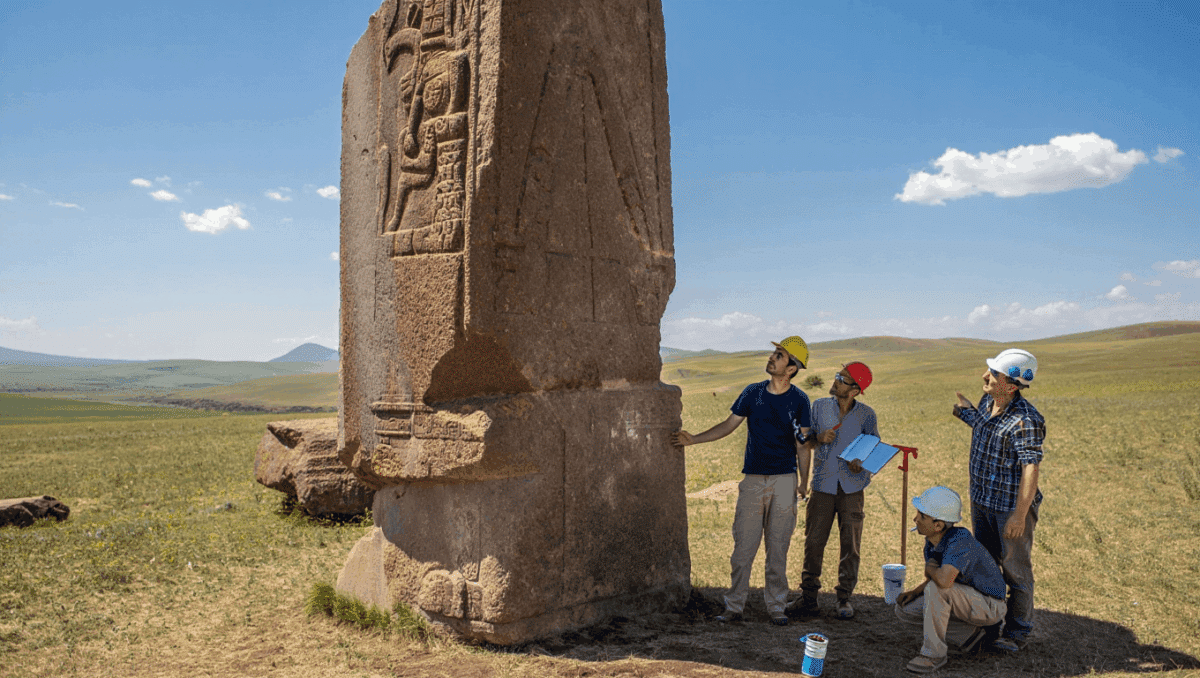
For millennia, massive carved stones have stood across Armenia’s highlands, puzzling scholars and travelers alike. Known locally as vishaps, or “dragons,” these Neolithic monoliths—some weighing several tons and reaching over nine feet tall—were raised more than 6,000 years ago, and a recent archaeological study may finally be unraveling their purpose.
A multidisciplinary team from the Yerevan State University Institute of Archaeology and Ethnography completed the first thorough survey of the vishaps, combining field measurements, landscape analysis, and cultural context to revisit long-standing mysteries about where these stones are found, how they were made, and why ancient communities invested so much labor to erect them.
Where the dragon stones appear across Armenia’s high country
The new survey maps dozens of vishaps clustered in specific mountain ranges rather than scattered randomly across the country. Key concentrations include:
The Growing Demand for Data-Driven Decision Making in Silicon Valley
He quit, ran out of money, and begged to come back — here’s how his boss reacted
- 43 vishaps in the Geghema Mountains
- 36 on the slopes of Mount Aragats
- 17 around the Vardenis Mountains
Smaller numbers occur beyond this north–south corridor, but the density along these ranges suggests the builders repeatedly returned to the same upland zones. The stones often occupy remote, high-elevation spots where snow covers the ground for much of the year.
What the stones look like and the imagery they bear
Vishaps are carved upright stelae ranging from roughly 3 to 8 tons. Their carved faces tend to display two dominant motifs:
- fish-shaped faces—streamlined forms that resemble aquatic creatures
- elongated, hide-like patterns that some researchers interpret as stretched skins or symbolic motifs linked to herding
The repetition of these two visual types across hundreds of sites points to shared iconography and possibly shared ritual meanings among prehistoric communities across the Armenian highlands.
Why altitude complicated—and ultimately informed—the analysis
One of the study’s surprises came from comparing stone size with elevation. Conventional thinking suggested that harsher conditions at higher altitude would favor smaller, easier-to-raise stelae. The team expected a relationship between altitude and monument scale: less time for work at high elevations, more modest stones. Instead, the data showed no simple pattern. Large carvings—some more than nine feet tall and tipping the scales above seven tons—sit at elevations near 9,000 feet, where seasonal accessibility and scarce resources would have made construction extraordinarily difficult.
Researchers reason that if logistical constraints alone shaped vishap size, big stones should be rare at the highest elevations. The absence of that pattern points to other motivating factors—ceremonial importance, visual prominence in the landscape, or symbolic choices that overrode pure practicality.
Evidence pointing to a prehistoric water cult
A leading interpretation emerging from the new work links the vishaps to water-centered ritual practice. Several lines of evidence support this idea:
- Many vishaps are located close to springs and meltwater sources.
- Fish-shaped carvings suggest symbolic ties to aquatic life.
- Hide-patterned stones cluster along valley routes that appear to coincide with ancient irrigation channels.
Taken together, these observations led the team to propose that vishaps marked places associated with water management, seasonal runoff, and possibly rites intended to secure or celebrate life-giving meltwater. In lower valleys, the hide-like symbols occur near pastures and routes where snowmelt would have fed irrigation systems that sustained settlements for centuries after the stones were first raised.
How landscape and economy may have intersected
Vishaps in valleys line up with traces of later habitations—classical and medieval villages, churches, and fortresses—suggesting continuity in the importance of those water-rich corridors. The presence of monumental markers where irrigation and grazing intersected makes a practical case: water shaped daily life, and marking control or protection of it would have bolstered community identity and resource management.
Labor, cooperation and the social meaning of standing stones
Erecting multi-ton monoliths in high, snowy terrain would have demanded organized labor, planning, and logistical support. Archaeologists interpret such efforts as evidence of social cohesion and shared belief systems. In general, monumental projects can serve as:
- expressions of communal identity
- statements of territorial presence
- centers for ritual activity that reinforce social bonds
The vishaps arguably functioned as more than mere boundary markers; they embodied shared values and collective effort, anchoring communities to the landscape through repeated ritual or practical use.
Later civilizations left their signatures on the stones
The vishaps did not remain static relics. Succeeding cultures repurposed or reinterpreted the stones, leaving marks that turned them into palimpsests of regional history. Examples include:
- Urartian-era cuneiform inscriptions carved into older stelae
- Christian crosses and graffiti etched by later communities
These later additions confirm that vishaps retained significance long after their makers vanished, serving as durable focal points across millennia and different belief systems.
What the new study changes about the long-standing mystery
By combining topographic distribution, iconographic patterns, and contextual archaeology, the Yerevan State University team has moved the debate beyond pure speculation. The weight of the evidence supports a link between vishaps and water-related uses—ritual, practical, or both—while also recognizing that their scale, placement, and ornamentation conveyed communal meaning that persisted into historical times. Further work—especially targeted excavations near springs and valley channels—could strengthen or refine the water-cult hypothesis and clarify how these remarkable stones fit into Neolithic social and environmental strategies.
You might also like:
- Jordan’s 5,500-year-old ritual landscape uncovered by archaeologists
- Grave digging world championship in Hungary: inside the unusual competition
- Roman stone-lined basin discovered predates concrete, reveals advanced engineering
- 3,200-year-old tomb found in Luxor dates to Ramses era
- Chimpanzees’ fascination with crystals offers clues to why early humans prized stones

Michael Thompson is an experienced journalist covering U.S. and global news. With ten years on the front lines, he breaks down political and economic stories that matter. His precise writing and keen attention to detail help you grasp the real‑world impact of every event.


So, these dragon stones in Armenia got some backstory now, eh? 6,000 years old and wrapped in mystery, huh? Wonder if they ever doubled as thrones for ancient dragon kings or just used for some epic prehistoric stone-skipping tournaments.
Man, these dragon stones in Armenia are like something out of a fantasy flick! I bet those archaeologists felt like they hit the jackpot solving that 6,000-year-old mystery. Wonder if dragons were part of some ancient water cult… Wild stuff, man!
Ive always been into ancient mysteries, but those dragon stones from Armenia? Theyre on another level! 6,000 years old and holding secrets of a prehistoric water cult? Sign me up for the next archaeological adventure!
I remember stumbling upon those dragon stones in Armenia during a backpacking trip. Always thought they were just cool rocks until archaeologists dropped this bombshell. Who knew they held such ancient secrets? Makes me wanna go back and see them in a whole new light!
Dang, thats wild! Who knew those dragon stones were more than just Instagrammable props, right? Its like finding out your favorite tree in the backyard is actually a centuries-old giant. Makes you wonder what other hidden gems are out there waiting to spill their ancient tea. Time for a sequel trip, huh?
Man, those dragon stones in Armenia have been a mystery for ages! Finally, archaeologists cracked the code. Its like unlocking a real-life ancient puzzle. Can you imagine what those 6,000-year-old stones have witnessed? Crazy!
Oh man, these dragon stones in Armenia got me thinking of ancient mysteries! Imagine stumbling upon those bad boys 6,000 years later. Thats like finding a time capsule from way back. Cool stuff!
Man, those dragon stones in Armenia are like straight out of a fantasy novel! Its wild how archaeologists cracked the code on these ancient mysteries. Makes you wonder what other secrets are hidden in the high country, huh?
Yo, Ive always digged those dragon stones vibe in Armenia, like ancient mysteries unveiling, man. Archaeologists cracking the code, its like a real-life Indiana Jones flick! Cant wait for the next chapter, you know?
Yo man, I feel you on that dragon stones vibe in Armenia! Its like stepping into a real-life Indiana Jones adventure, right? Archaeologists unraveling ancient mysteries, cracking codes—its the ultimate thrill ride! Cant wait to see what they dig up next!
Man, these dragon stones in Armenia are like straight out of a fantasy flick! Can you imagine the ancient rituals and myths surrounding them? Makes you wonder what other ancient mysteries are still waiting to be uncovered.