
Show summary Hide summary
- Murayghat revealed: a megalithic ritual landscape in Jordan
- From household shrines to communal monuments: what changed in material culture
- Climate stress, social disruption, and a new funerary landscape
- What the dolmens and monuments tell us about social organization
- Fieldwork, finds, and the team behind the discovery
- Monuments newly recorded and the skyline of the past
High on a windswept plateau in modern-day Jordan, archaeologists have pieced together evidence of a radical cultural shift that unfolded roughly 5,500 years ago. What had once been a landscape of family farms and household shrines appears to have been transformed into a shared ceremonial arena dominated by stone monuments, communal feasting, and new ways of handling death.
Researchers from the University of Copenhagen who have spent more than a decade excavating the Murayghat site say the changes at this highland complex mark a move away from the domestic, material-focused lives of the Chalcolithic era toward a social order organized around ritual and collective identity.
Murayghat revealed: a megalithic ritual landscape in Jordan
The Growing Demand for Data-Driven Decision Making in Silicon Valley
He quit, ran out of money, and begged to come back — here’s how his boss reacted
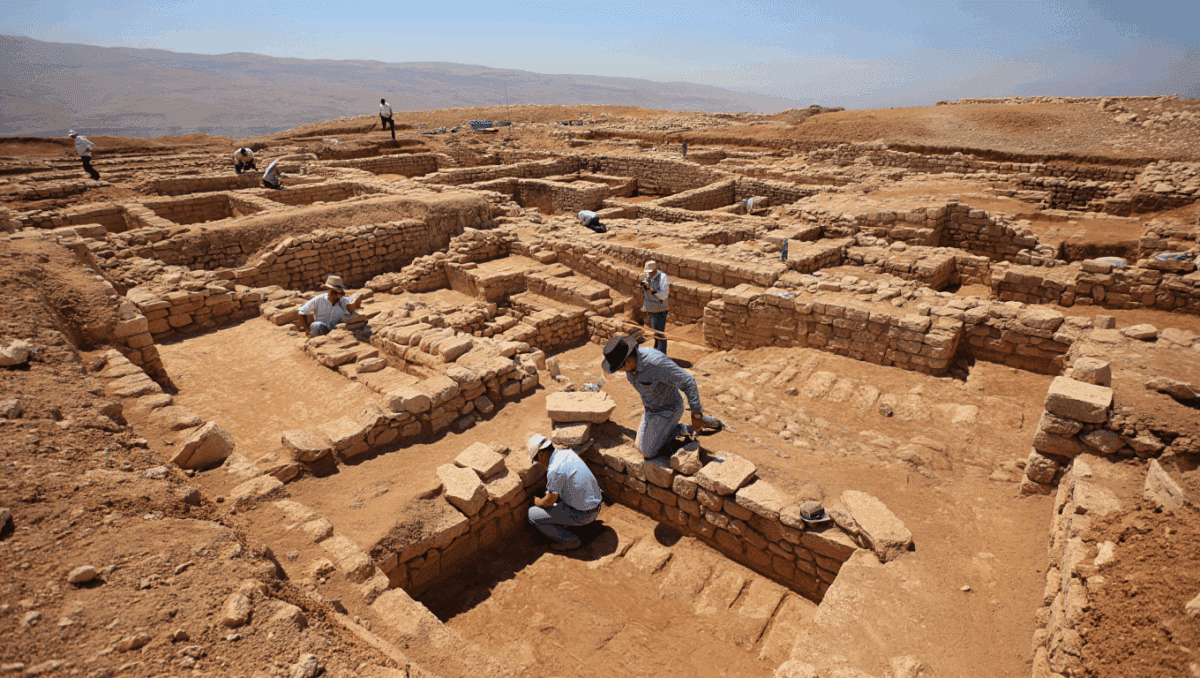
The Murayghat complex, located about 120 miles from the port city of Aqaba, contains a dense concentration of megalithic features: standing stones, stone-built enclosures, and more than 95 dolmen tombs dotted across the ridge. Excavations led by Danish archaeologists have mapped carved bedrock installations and large stone structures that lack typical domestic elements such as hearths or roofs, suggesting they were not intended as living spaces.
- Key site features: standing stones, dolmens (stone burial chambers), carved bedrock features, and stone enclosures.
- Location advantage: perched over a wadi, Murayghat occupies a natural meeting point with long sightlines across the landscape.
- Notable monument: the Hadjar al-Mansub—one of the largest standing stones cataloged at the site.
From household shrines to communal monuments: what changed in material culture
During the earlier Chalcolithic period (roughly 4500–3500 BCE), artifacts and ritual practice were mostly intimate and household-centered: personalized pottery, small cult objects, and copper ornaments indicate a symbolic world confined to domestic life. At Murayghat, however, the later archaeological record shows a clear departure from that model.
Pottery styles shift from individualized bowls to larger communal vessels. Personal copper trinkets and carved figurines give way to items that support group gatherings — signaling an increase in shared ceremonial activities and possibly feasting. This suggests social emphasis moved from household identity to broader communal rituals.
Evidence pointing to community gatherings
- Large storage and serving pottery replacing small personal vessels.
- Construction of open, roofless stone structures unsuitable for long-term habitation.
- Variability in dolmen styles across the plateau, implying participation by different groups.
Climate stress, social disruption, and a new funerary landscape
Archaeologists and environmental scientists working on the Murayghat project argue that the shift to monumental ritual may have been driven by wider ecological and economic turmoil. Paleoenvironmental data indicate a period of increased aridity lasting several centuries, which would have placed pressure on crops, herds, and established trade networks.
Concurrently, production of copper ritual items and other Chalcolithic symbolic goods declines sharply. Trade in metal appears to falter, and cemetery contexts show signs of repeated disturbance and looting. Together, these patterns point to both material collapse and changing attitudes toward death and ancestry.
Faced with the breakdown of familiar social mechanisms, communities appear to have invented new collective practices and monuments to reorganize life—and death—on a landscape scale.
What the dolmens and monuments tell us about social organization
Rather than representing a single, centralized authority imposing new customs, the archaeological evidence from Murayghat implies a more plural, negotiated reorganization. The variety in construction techniques across dolmens and the presence of multiple architectural languages indicate that different groups brought their traditions to a common ceremonial ground.
- Dolmen diversity: differences in size, layout, and stone-working style across the cemetery.
- Non-residential architecture: many megalithic buildings lack sleeping or cooking facilities, reinforcing their ceremonial purpose.
- Communal performance: the scale of some vessels and enclosures implies large shared meals or rites.
Fieldwork, finds, and the team behind the discovery
The Murayghat project has been under archaeological investigation by the University of Copenhagen for more than a decade. Field teams employed detailed mapping, excavation of burial contexts, and analysis of pottery, stone work, and environmental proxies to build a chronological and functional interpretation of the site.
Project leader Susanne Kerner and colleagues interpret Murayghat as an experimental social response to crisis: a place where multiple communities met, negotiated identity, and established new ritual practices in the absence of strong hierarchical institutions. In their words, the monuments provide a window into “how early societies coped with disruption by building new forms of community.”
Important archaeological takeaways
- Transformation in social focus: from private, household rituals to public, communal ones.
- Adaptive strategies: monument-building and feasting served as tools for social cohesion during times of stress.
- Regional significance: Murayghat offers a rare, large-scale example of ritual landscape formation in the southern Levant.
Monuments newly recorded and the skyline of the past
Many of Murayghat’s megaliths and tombs have been documented for the first time in modern archaeological surveys, revealing sophisticated stone-working skills and carefully arranged ceremonial spaces. The Hadjar al-Mansub, an impressive monolith among them, stands as a prominent marker that would have dominated the ridge and been visible from afar.
As researchers continue to analyze radiocarbon samples, pottery sequences, and environmental indicators, Murayghat is shaping up as a case study in how early communities reinvented social life through architecture, ritual practice, and shared memory.
You might also like:
- Roman stone-lined basin discovered predates concrete, reveals advanced engineering
- Egypt sun temple uncovered: 4,500-year-old site reveals ancient sun worship
- Armenia’s 6,000-year-old dragon stones mystery solved by archaeologists
- Scotland medieval island castle may reveal a forgotten western king
- 3,200-year-old tomb found in Luxor dates to Ramses era

Michael Thompson is an experienced journalist covering U.S. and global news. With ten years on the front lines, he breaks down political and economic stories that matter. His precise writing and keen attention to detail help you grasp the real‑world impact of every event.


Man, imagine stumbling upon a 5,500-year-old ritual landscape in Jordan? Bet they had some epic gatherings back then! Gives a whole new meaning to ancient history, right? Wonder what went down there all those years ago.
Dude, can you imagine stumbling on that ancient bash? Mustve been lit back then, huh? Bet they had some wild parties! Makes you wonder, what crazy stuff went down at those shindigs? Like, did they have the worlds first DJ dropping beats on a stone turntable or what?
I remember stumbling upon ancient ruins in Jordan once. It was like stepping into a time machine, feeling the weight of history. Makes you wonder about the stories etched in those stones… and the secrets they still hold.
Whoa! Unearthing a 5,500-year-old ritual landscape in Jordan? Thats like finding a hidden level in an ancient video game! Imagine the stories those stones could tell, like the OG monuments of the gaming world.
Remember that time we all thought ancient history was just pyramids and coliseums? Jordans megalithic ritual landscape proves theres always something new to learn. Makes you wonder what else is hiding out there, right?
Man, hearing bout this ancient ritual landscape in Jordan gives me chills. Can you imagine the stories those stones could tell if they could talk? Makes you wonder about the secrets buried in history.
Man, uncovering a 5,500-year-old ritual landscape in Jordan is like stepping into a time machine! Can you imagine the stories those stones could tell? Makes you wonder what kind of community rituals went down back then.
Dang, 5,500 years old? Thats like, older than my grandmas secret cookie recipe! Imagine the stories those stones could tell. Bet there were some epic rituals going down in ancient Jordan. Wonder what they were all about.
Who knew Jordan had such ancient vibes? 5,500 years! Makes you wonder what rituals they were up to back then. Bet they didnt have smartphones to distract them from the megalithic landscape view!
Man, Jordans ancient scene is wild, right?! 5,500 years back, no Insta or TikTok to keep em busy. Probably spent their days staring at those megaliths, wondering what the heck was going down. Imagine the conspiracy theories theyd cook up without Google to fact-check!
Man, digging up those ancient sites in Jordan is like uncovering a time capsule! Makes you wonder about the stories and rituals of folks way back. Bet they had their own dramas and sagas, just like us.
Dang, 5,500-year-old ritual landscape in Jordan? Thats like time-travel-level cool! Can you imagine the stories those stones could tell? History buffs must be losing their minds over this find!
Dude, totally! Imagine kickin it back with those ancient stones, sippin some tea while they spillin the tea on history. Bet those rocks got some wild tales to share! History buffs must be geekin out big time over this find, man!
Whoa, Jordan keeps spittin out surprises! 5,500 years old? Thats like finding out your grandmas secret recipe has been in the family since forever. Cant wait for more ancient secrets to pop up!
Man, uncovering a 5,500-year-old ritual landscape in Jordan? Thats like finding your grandpas secret treasure chest, but on a whole new level! Imagine the stories those stones could tell… if they could talk!
Man, uncovering ancient ritual landscapes in Jordan? Thats like peeking into a time capsule! Makes you wonder what kind of vibes those gatherings had. Bet they werent discussing the latest chariot races back then!
Who wouldve thought a chill spot for a 5,500-year-old hangout? Bet they had the OG picnic vibes! Historys full of surprises, huh? Wonder if they roasted marshmallows on those ancient stones!
Roasting marshmallows on ancient stones? Thats some next-level campfire game, dude! Imagine the stories those stones could tell, right? Bet those 5,500-year-old peeps knew how to throw a lit picnic party! Who needs a time machine when historys serving up these wild surprises, huh?
Whoa, 5,500-year-old party spot in Jordan? Imagine the ancient vibes! Bet they had some killer rituals back then. Wonder what music they grooved to… Stones telling some wild stories!
Whoa, 5,500-year-old rituals? Bet they had some epic gatherings back then! Makes you wonder what stories those stones could tell. Imagine time-traveling to a Jordanian ritual… Count me in!
Man, uncovering ancient ritual sites in Jordan? Thats like unlocking a new level in a video game, but for real! Imagine the stories those stones could tell. History is wild, folks.
Man, ancient times were wild! Imagine the parties they threw at Murayghat. Bet they had some epic rituals. Makes me wonder how different our gatherings are now, yknow? Times change, but human nature, thats a whole nother story.
Yo, totally feel you on that! Ancient times were like a whole movie set, right? Murayghat mustve been lit! Imagine the vibes and the crazy stuff they got up to. Like, did they party harder than us now or what? Its wild to think how much weve evolved, yet deep down, were still chasing that same buzz. Human natures a trip, man. Like, are we really that different from our ancestors? Makes you wonder…
Man, can you believe they found this ancient ritual landscape in Jordan? 5,500 years old! Makes you wonder what kind of ceremonies went down back then. Bet they didnt have Wi-Fi issues interrupting their gatherings.