
Show summary Hide summary
- Why this stone basin matters for understanding Roman-era engineering
- Putting Gabii in context: a largely unaltered neighbor to Rome
- Construction details: how the basin was built and how it worked
- Clues to the basin’s role: practical supply, ritual use, or both?
- The team behind the dig and next steps for research
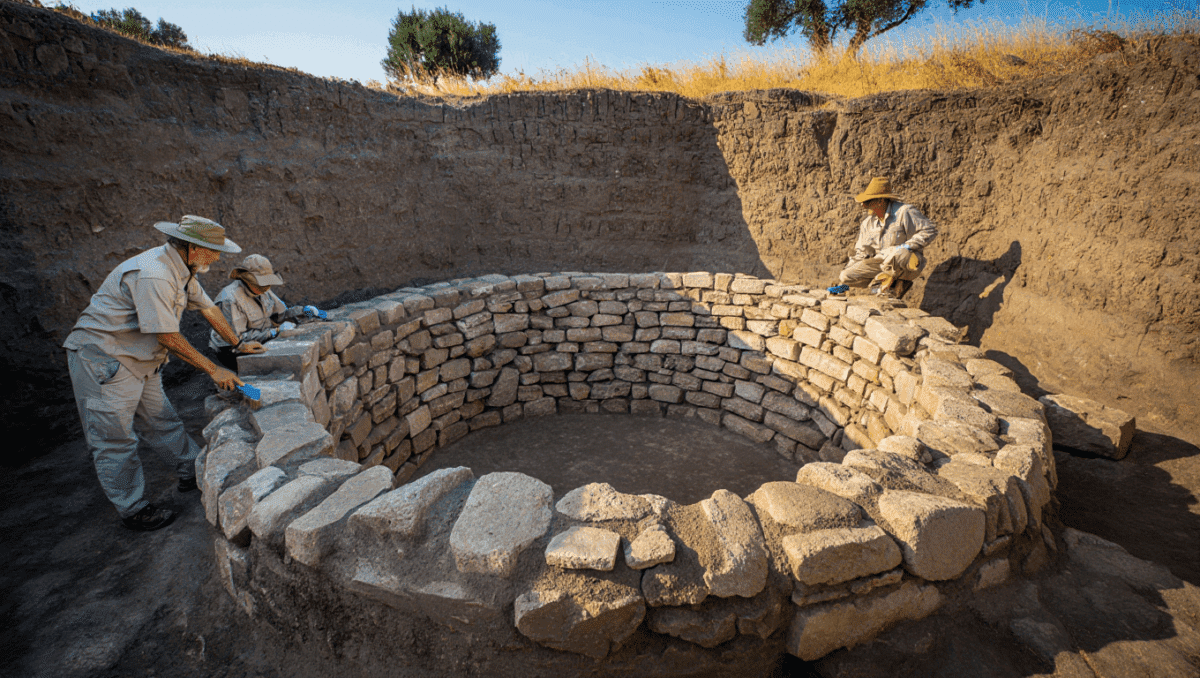
Archaeologists working at Gabii, an ancient town just outside Rome, have uncovered a massive stone-lined basin that rewrites part of the story about early Italian engineering. The structure, cut partly into bedrock and assembled with tightly stacked stones rather than mortar, appears to predate the wide use of Roman hydraulic concrete and reveals an ingenious use of the landscape.
Dating estimates place the basin in the Republican period—possibly as early as the fourth century BCE—making it one of the earliest monumental waterworks found at Gabii that is not a temple or defensive wall. The find sheds new light on how pre-Roman and early Roman builders handled water management and public architecture.
Why this stone basin matters for understanding Roman-era engineering
The Growing Demand for Data-Driven Decision Making in Silicon Valley
He quit, ran out of money, and begged to come back — here’s how his boss reacted
This basin stands out because it demonstrates sophisticated building techniques before concrete became standard in large-scale Roman construction. Excavators report that the masons relied on careful stone fitting and natural slopes to control water, rather than poured hydraulic mortars. That approach suggests a high level of practical engineering skill long before Rome perfected its famous concrete mixes.
Archaeologists point out parallels with Roman road construction, where the final surface was often formed by interlocking stones set like a wall. The basin appears to use a comparable stacking method that emphasizes long-term durability and stability against shifting soils and moving water.
Putting Gabii in context: a largely unaltered neighbor to Rome
Located less than 20 kilometers east of the city that would become Rome, Gabii was once a thriving settlement of a pre-Roman Italian people and was largely abandoned well before the end of the Republic. Because it escaped centuries of continuous rebuilding, the site offers a rare archaeological window into urban life and engineering methods that were later covered over in Rome itself.
The modern research program at Gabii began in 2009 with a geophysical survey led by teams from the University of Michigan and later expanded under a permit held by the University of Missouri. Fieldwork over the 2010s exposed sizeable portions of ancient blocks, and this new basin is the first major stone water installation discovered at the site that is not tied to a temple or fortification.
Construction details: how the basin was built and how it worked
Materials, foundation, and placement
The basin was partly hewn from bedrock and finished with layers of dressed stone carefully arranged to follow the slope of the terrain. Builders took advantage of the crater-like depression formed by ancient volcanic topography—using gravity and graded surfaces to move or hold water. Such placement demonstrates intentional landscape engineering rather than ad hoc construction.
- Carved bedrock base provided a stable foundation.
- Stacked stone walls show precise fitting to minimize seepage.
- Orientation and slope use local topography for passive water control.
Possible water sources and engineering questions
Excavators plan to analyze the soil and sediment at the basin’s lowest levels to determine whether it was fed by a natural spring, connected to the water table, or supplied by channeling from a nearby source. This sediment analysis will help clarify whether the basin functioned as a storage cistern, a communal water supply, or part of a ritual installation.
Clues to the basin’s role: practical supply, ritual use, or both?
Artifacts recovered near the basin include pottery fragments and oil lamps, finds that suggest human presence and activity beyond purely utilitarian maintenance. Those items have led lead archaeologists to propose multiple possible roles:
- Domestic or municipal water storage feeding nearby buildings
- Ceremonial or ritual basin connected with local cult practices
- Multiuse structure combining practical supply with symbolic function
Evidence such as votive deposits, lamp placement, and the basin’s prominent location will be decisive in interpreting its purpose. At present, the balance of artifacts hints that ceremonial activities may have accompanied everyday use.
The team behind the dig and next steps for research
The current excavation season is directed by a University of Missouri-led team within the larger Gabii Project. Marcello Mogetta, who chairs classics, archaeology, and religion at Missouri and coordinates field operations, emphasizes the research focus on connecting built features with landscape and hydrology. Future work will include sediment sampling, broader mapping of adjacent city blocks, and comparative study with other early Italian waterworks.
As analysis continues, specialists in engineering archaeology, hydrology, and materials conservation will collaborate to reconstruct how the basin operated and why the builders chose stone over the mortar-based techniques that later defined Roman public works.
You might also like:
- Rome’s self-healing concrete leads scientist to launch Roman-style concrete business
- Roman Empire interactive map: explore ancient roads and plan your trip
- 2,000-year-old shipwreck artifacts found in Swiss lake include Roman chariot parts
- Jordan’s 5,500-year-old ritual landscape uncovered by archaeologists
- Pompeii evidence reveals Roman automatic weapon used more than 2,000 years ago

Michael Thompson is an experienced journalist covering U.S. and global news. With ten years on the front lines, he breaks down political and economic stories that matter. His precise writing and keen attention to detail help you grasp the real‑world impact of every event.


Yo, imagine stumbling upon a stone-lined basin from Roman times? Bet its like time-traveling, seeing their advanced engineering firsthand. Makes you wonder what else they were hiding back then, right?
Man, these Romans really knew their stuff! Imagine engineering a stone-lined basin way back when. Makes me wonder what other ancient secrets are waiting to be uncovered. History is wild, man.
Man, back in the Roman days, they were out there flexin with their engineering skills! This stone-lined basin find is like a blast from the past, showin us how they rolled with advanced tech way before concrete was cool.
Dude, totally! Those Romans were like the OG engineers, flexin their skills way before it was cool. Its wild to see how they were out there slayin it with their stone-lined basins, aint it? Makes you wonder what other ancient tech gems they were hiding up their togas, huh?
Yo, imagine the Romans flexing their engineering skills with this ancient stone basin! Bet they were like, Check out our vibey water system, yall! Seriously, though, cool find shedding light on their tech game.
Man, this discoverys like unearthing a time capsule! The Roman stone basin spillin the tea on their engineering game, showin us how they flexed those construction muscles back in the day. Mad respect for the OG engineers!
Man, these Romans were on another level with their engineering game! Imagine the craftsmanship it took to build that stone-lined basin. Makes you appreciate their skills and innovation. Wonder what other cool discoveries are waiting to be unearthed!
Man, the Romans were on another level with their engineering game! That stone-lined basin discovery is blowing my mind. Can you imagine the skills and tools they had back in the day? So fascinating!
Man, those Romans were on a whole nother level with their engineering game! Bet theyd laugh at our modern tech. Makes you wonder what other mind-blowing stuffs still hidden out there, waiting to be uncovered.
I mean, right? Those Romans were like the OG engineers, probably laughing at our smartphones and self-driving cars. Its crazy to think about what else is out there, waiting to blow our minds. Who knows what secrets historys still hiding, huh?
Man, Romans were next level with their engineering game. This stone basin find is like finding out your grandpa was a secret superhero. Can you imagine the brainpower it took to build that thing back in the day? Mind-blowing!
Dang, those Romans were on another level with their engineering swag! Its like stumbling upon a hidden cape in your grandpas closet – who knew he had those secret superhero vibes? The brainpower to pull off that stone basin back then? Absolutely mind-blowing! Just picturing the ancient crew rocking hard hats and toiling away… wild stuff, man.
Man, Romans really knew how to build stuff, huh? This stone basin discovery is like peeking into their ancient engineering brains. Its wild how advanced they were back then. Makes you wonder what other cool secrets are still buried out there!
I always knew those Romans were up to something, mate. Ingenious, really. Bet they were having a good laugh while building this basin. Imagine the stories these stones could tell, eh?
Im telling ya, those Romans were onto something big back then! This stone basin discovery? Mind-blowing! Makes you wonder what else they had hidden up their togas, huh? Ancient engineers were low-key geniuses!
Man, Romans were on another level with their engineering game! Stone-lined basin? Thats some OG innovation right there. Makes you wonder what other ancient tech were underestimating, ya know?
Right? Those Romans were like the ancient MVPs of engineering! Its wild to think about the OG tech they were rocking. Makes you wonder what other ancient treasures were sleeping on, you feel me? Like, whats the next big discovery gonna be? Exciting stuff, man.
Oh, I remember gabbin about Roman engineering back in school. This stone basin find? Thats the real deal, mate. Shows how those ancient folks had their construction game on point, way before concrete was cool.
Dude, imagine the Romans out here flexin with their stone-lined basin! Like, forget concrete, they were on that advanced engineering vibe way back. Makes you wonder what other cool stuff they were up to, you know?
Man, the Romans were onto something with this stone basin engineering! Makes me think about how much we take for granted today. Bet theyd be chuckling at our fancy tech.
Aye, mate, those Romans sure knew a thing or two about basin engineering! Can you imagine their reaction to our high-tech gadgets now? Theyd probably be like, What in the name of Jupiters thunderbolts is this sorcery?! Its wild how far weve come since then, innit?
Man, Romans were really onto something with that stone-lined basin! Imagine the engineering skills — bet theyd ace any modern-day design challenge. Respect to the ancient architects!
Man, these Romans were something else! Building a stone-lined basin before concrete was even a thing? Thats next-level engineering right there. Imagine the skills they had back in the day. Truly mind-blowing!
Yo, isnt it wild how those Romans were out here engineering with stone basins before concrete was even a thing? Like, talk about OG engineering vibes. Makes you wonder what other ancient tricks they had up their togas, right?