
Show summary Hide summary
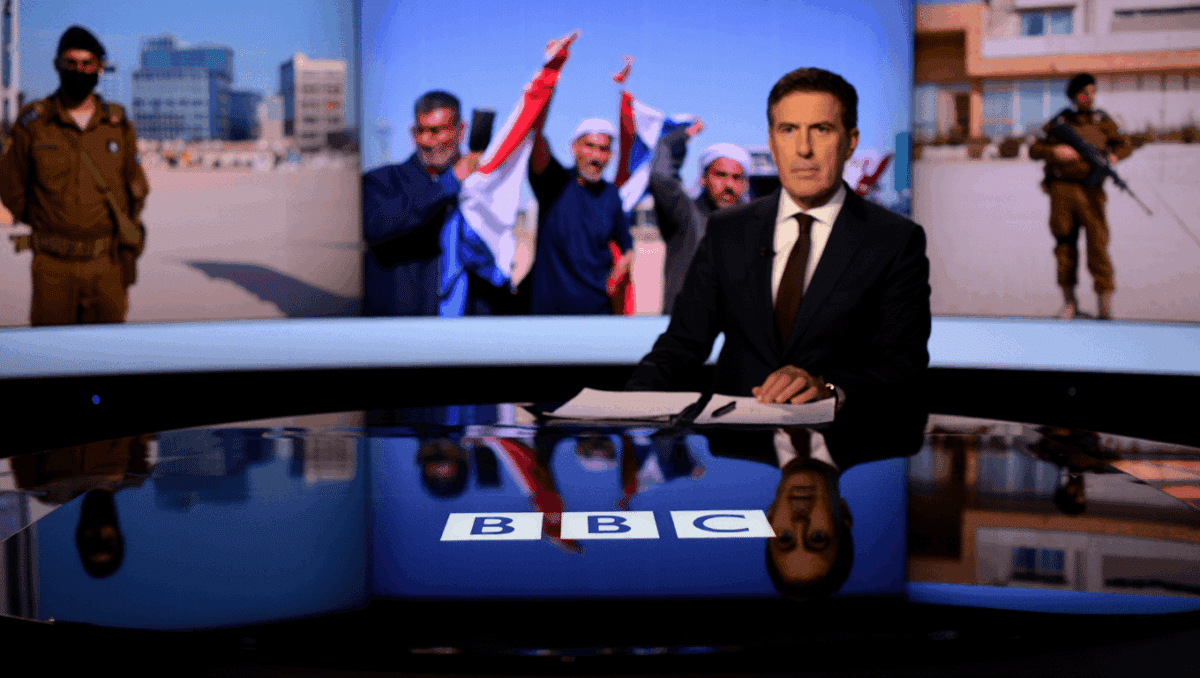
The leaked internal memo has reopened a long-simmering debate over impartiality at the BBC, this time centering on its coverage of Israel and Palestinians. What began as fallout from manipulated footage of former President Donald Trump has now morphed into a broader reckoning about newsroom judgment, editorial standards, and whether a major public broadcaster can fairly cover a conflict that inflames passions across the globe.
Beyond the headline-grabbing Trump controversy, the memo — made public by the Telegraph — details a string of reporting choices that critics say skewed coverage in ways that disadvantaged Israeli victims, amplified militant narratives and failed to correct demonstrable errors. The accusations range from selective sourcing to repeated dissemination of unverified claims, raising questions about editorial oversight and the role of public media in shaping international opinion.
The Growing Demand for Data-Driven Decision Making in Silicon Valley
He quit, ran out of money, and begged to come back — here’s how his boss reacted
What the memo alleges: a catalogue of contested reporting decisions
The leaked document compiles numerous instances where BBC reporting, especially from its Arabic service, appears to have favored Palestinian accounts or propagated inaccurate narratives. Taken together, these items paint a picture of coverage that many observers say lacked necessary context and balance.
- Underreporting of Israeli casualties: The memo states BBC Arabic ran minimal coverage of Israeli civilian suffering or condemnation of Hamas attacks.
- Prominent dissemination of militant statements: Reports gave extensive space to statements from Hamas and Hezbollah without adequate challenge or verification.
- Euphemistic language for terror assaults: Some dispatches described Hamas operations in clinical terms such as “military operations,” downplaying the violent civilian impact.
- Unverified enemy claims amplified: The service reportedly repeated Iranian and Syrian assertions that an incident involving children in the Golan Heights was staged by Israel — claims that lack independent confirmation.
- Questionable sourcing choices: Contributors who had repeatedly praised violent actions were sometimes presented merely as “eyewitnesses,” rather than being fully contextualized for audiences.
- Disproportionate emphasis on casualty counts: The BBC overall was accused of lending undue credibility to casualty figures supplied by Hamas.
- Confusing reporting on hospital graves: Journalists initially reported Palestinians digging graves near hospitals and later suggested, without clear evidence, that Israelis had subsequently dug graves to conceal mass deaths.
- Repeated false claims broadcast: Programs like Newsnight ran alarming predictions — such as thousands of infants dying within days — even after those projections were publicly debunked; images purported to show starvation were later revealed to depict unrelated medical conditions.
- Corrections issued too late: Multiple platforms within the corporation published material about famine and mass casualties in Gaza that later required clarifications or corrections.
- International law context omitted: Audiences were not always told that, under certain conditions, international law allows military targeting of facilities used for combat purposes — a nuance relevant to reporting on attacks that involved hospitals.
- Selective amplification of legal voices: The BBC extensively covered a letter from 600 lawyers alleging Britain’s arms sales to Israel breached international law but gave less attention to a counter-letter backed by roughly 1,000 lawyers contesting that view.
- Downplaying of militant infrastructure: Hamas tunnel systems were often described as logistics routes for “people and goods” rather than as conduits for armed operations.
- Misrepresentation of international rulings: Various BBC channels repeatedly implied the International Court of Justice had found a “plausible genocide” in Gaza, despite clarifications from the ICJ’s president that the court had not made that determination in the way it was portrayed.
How these reporting patterns shape public perception and anti-Semitism concerns
Media framing matters. When a major broadcaster underreports the suffering of one side, emphasizes unverified claims from hostile actors, or fails to correct demonstrable errors promptly, the result is not just sloppy journalism — it can become fuel for wider social currents.
Observers point out that antipathy toward Israel often overlaps with broader anti-Western and anti-Jewish sentiments. Demonstrations in major Western cities that adopt slogans like “globalize the intifada” signal a willingness among some activists to challenge liberal democracies themselves. When trusted news organizations seem to echo or normalize those narratives, it can harden public opinion in ways that revive older prejudices.
- Audiences rely on broadcasters for verification, context and proportionality; lapses can distort the story they carry forward.
- Anti-Semitism frequently draws strength from falsehoods — and inaccurate or one-sided reporting about contemporary Israel contributes to a long history of dangerous myths.
- Coverage that sanitizes militant activity or amplifies extremist voices without critique risks normalizing violence as a legitimate political tool.
Accountability questions: editorial leadership and the BBC’s response
The controversy over the Trump footage led to senior resignations, but critics say the corporation treated the allegations about Israel coverage with less urgency. According to the memo and subsequent reporting, when confronted with the compilation of questionable coverage choices, BBC executives were slow to fully engage or publicly acknowledge the scale of the issues.
Resignations versus institutional change
The dismissal of high-level personnel over manipulated material involving a political figure underscored that the BBC can be held to account. Yet many commentators argue that personnel changes alone do not address systemic editorial biases. Structural reforms, transparency around corrections, and clearer sourcing standards would be necessary to restore audience trust.
Public funding and public trust
Given that the BBC is financed through public mechanisms, its editorial decisions carry amplified consequences. Critics have accused the broadcaster of acting, inadvertently or otherwise, as a mouthpiece for narratives favorable to militant groups — a charge that, if true, would raise profound questions about public broadcasting obligations and safeguards.
What to watch next: audits, corrective steps, and newsroom culture
Journalists, media watchdogs, and parliamentary committees are likely to press for deeper reviews. Important areas to follow include:
- Independent audits of reporting across language services, with attention to sourcing and verification processes.
- Clearer, faster correction mechanisms when factual errors are identified.
- Training and editorial guidelines that emphasize context on international law and asymmetries in conflict reporting.
- Transparency about how the BBC weighs competing legal opinions, casualty figures and claims from parties to a conflict.
How the corporation responds will determine whether audiences see real reform or merely temporary damage control. Some insiders argue that entrenched editorial habits and the pressure of covering an emotionally charged conflict make change difficult, while others insist that stronger governance and external oversight can force meaningful improvements. The debate over those fixes is now playing out at the intersection of journalism, public accountability and international politics, and it promises to be closely watched by media consumers and policymakers alike.
You might also like:
- BBC accused of biased coverage of Trump
- BBC accused of gaslighting public over trans coverage
- BBC losing trust and viewers across the UK
- BBC crisis: why centrists are so upset and what it means for UK politics
- BBC criticized for ignoring Iranian uprisings: why coverage fell short

Robert Johnson is a dedicated columnist focusing on political and social debates. With twelve years in editorial writing, he provides nuanced, well‑argued perspectives. His commentaries invite you to form your own views and engage in critical issues.


Mate, the BBC tangled in propaganda drama? Sounds like a plot twist from a dodgy thriller! Wonder if theyll flip the script or stick to the same old channel. Popcorn ready!
I mean, come on, BBC! Cant dodge the heat on this one. Accusations flying like crazy. Whats next, a reality show called Propaganda Wars? Time to face the music and clean house, folks.
Mate, theyre saying BBCs playing for team Hamas? Cant tell truth from propaganda these days. Gotta watch our news sources like a hawk. Trust aint what it used to be, eh?
Man, the BBC drama is like a soap opera! Accused of being Hamas BFF now? I mean, are they news or a reality show? Grab your popcorn, folks, this plot twist is wild!
Man, the BBC in hot water for bias? Aint news. They gotta check themselves before they wreck themselves. Time for a serious reality check or theyll lose trust faster than my ex lost interest in avocado toast.
I mean, isnt the BBC supposed to be all about balanced reporting? If theyre playing favorites, thats a big yikes. Gotta wonder whose narrative were really getting served with our morning news…
I remember watching the BBC for unbiased news. Now, this memo? Its like finding out your fave childhood hero has a secret dark side. Can they fix this mess or is it game over?
Man, the BBC in hot water again? Feels like a broken record. Can they really shake off these accusations or is it a deep-rooted issue? Time for a real gut check on their editorial choices.
Man, its like a soap opera with the BBC and Hamas! Cant tell whos the star anymore. But seriously, media balance is crucial for public trust. Hope they sort this out for real news.
Wow, mate, its like a never-ending drama series with the BBC and Hamas hogging the spotlight! Cant even tell whos the lead actor anymore. Media balance is like the secret sauce for trust, innit? Hope they get their act together and start dishing out some legit news. Cheers to keeping it real, yeah?
Mate, the BBC in hot water again? Its like a telenovela, drama after drama. But seriously, if theyre biased, folks deserve honest news. Time for the BBC to step up and regain trust.