
Show summary Hide summary
- What a butterfly wing transplant looks like — and why it matters
- Step-by-step: How specialists perform a butterfly wing graft
- Why experts proceed cautiously: risks and realities of wing transplants
- Who helps make these rescues happen: the people and organizations involved
- How the video spread and what it means for public understanding
- Guidelines for anyone who finds an injured butterfly
- What this rescue suggests for the future of insect rehabilitation
- Quick facts about butterfly wings and recovery
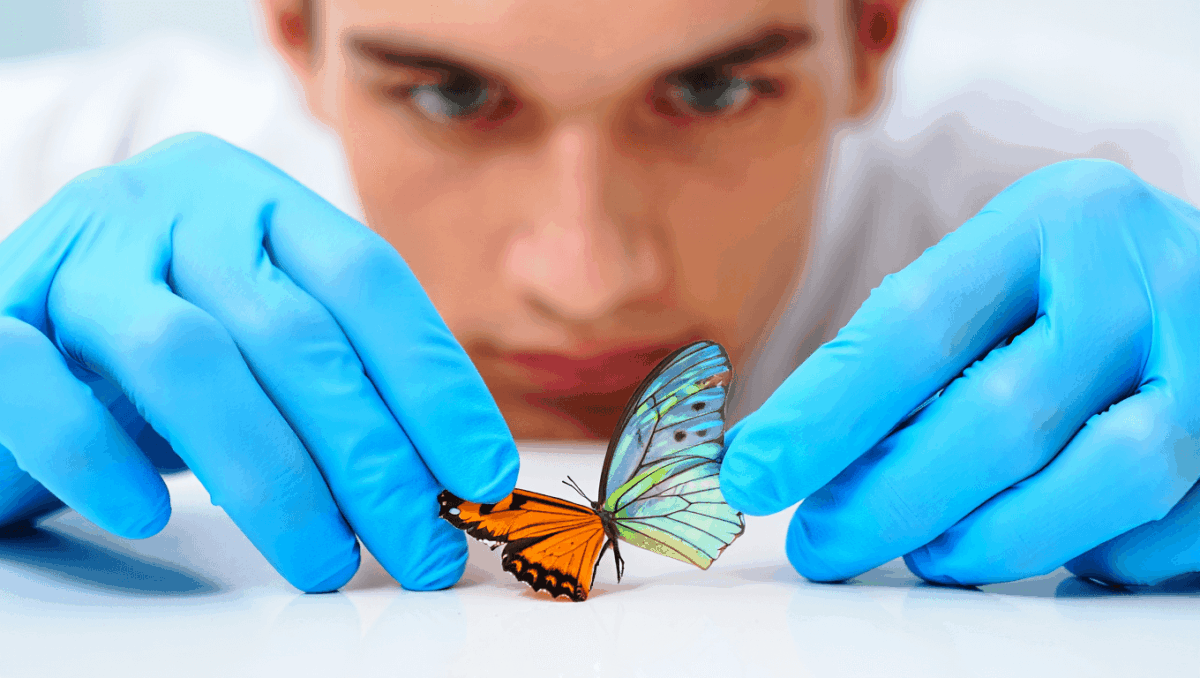
The footage is surreal: a tiny butterfly, barely the size of a thumbnail, lying still while a patient technician gently matches a donor wing to its fragile body. What looks at first like a craft project is actually a delicate medical intervention — a wing transplant that gave a damaged butterfly a real chance to fly again. The video has spread across social platforms, mixing surprise, delight, and a little squeamishness as viewers watch insect care at a micro scale.
Beyond the shock value, the clip raises questions about animal rehabilitation, scientific novelty, and how far people will go to save even the smallest lives. Entomologists and wildlife rehabilitators are taking notice, and the rescue touches on practical techniques, ethical lines, and the power of a viral moment to educate.
What a butterfly wing transplant looks like — and why it matters
Many people assume an injured insect is beyond help, but in controlled settings, replacing or reattaching a wing can restore crucial functions. A butterfly’s wings aren’t just for show — they provide lift, balance, and sensory information necessary for feeding and survival. In the video, a rehabilitator carefully cleans a damaged wing area, aligns a donor wing, and attaches it with a tiny amount of adhesive so the butterfly can regain symmetry.
The Growing Demand for Data-Driven Decision Making in Silicon Valley
He quit, ran out of money, and begged to come back — here’s how his boss reacted
The procedure is not cosmetic — it can be life-saving. Without the ability to fly, most butterflies cannot escape predators, reach nectar, or find mates. Restoring wing function can mean the difference between release and certain death in the wild.
Step-by-step: How specialists perform a butterfly wing graft
Preparation and assessment
- Examine the injury to determine if a graft is feasible.
- Select a suitable donor wing that matches in size, shape, and species.
- Ensure the recipient is stable and not suffering from other systemic issues.
The grafting process
- Clean the damaged area with a sterile solution; remove debris or loose scales carefully.
- Position the donor wing so veins and edges align as closely as possible.
- Use a minute, non-toxic adhesive to anchor the wing; sometimes a tiny splint or backing helps secure the joint.
- Allow time for the adhesive to set while keeping the insect in a calm, temperature-controlled environment.
Postoperative care and testing
- Monitor hydration and feeding — butterflies need nectar to recover energy.
- Observe flight attempts in a safe enclosure to ensure balance and lift are sufficient.
- Decide whether the butterfly is fit for release or requires prolonged care.
Why experts proceed cautiously: risks and realities of wing transplants
This kind of micro-surgery is not routine. There are real risks: mismatched wings can hamper flight mechanics, adhesives can be toxic if not selected carefully, and stress during handling can harm the insect. Rehabilitators weigh the chances of success against the welfare of the animal.
- Success rates vary depending on species, extent of damage, and the skill of the caregiver.
- Some species tolerate grafts better because of wing structure or behavior patterns.
- Even a seemingly successful graft might leave the butterfly vulnerable to predators in the wild.
Who helps make these rescues happen: the people and organizations involved
Many rescues are carried out by small wildlife clinics, entomology labs, and unpaid volunteers. These teams blend scientific knowledge with patient, hands-on experience. They often rely on donated donor wings — either from recently deceased insects of the same species or from lab-reared individuals — and on improvised microscopes and tools.
Common roles in a butterfly rescue
- Rehabilitator: performs the graft and oversees care.
- Volunteer: prepares enclosures, feeds nectar substitutes, and handles transport.
- Veterinary consultant or entomologist: advises on species-specific needs.
How the video spread and what it means for public understanding
The clip’s mix of wonder and novelty made it a perfect candidate for virality. People are fascinated by small-scale medical procedures, and watching a butterfly regain movement taps into strong emotional responses. Social media comments range from awe to debate about whether such efforts are humane or unnecessary.
Positive outcomes from the viral reach include increased awareness of insect conservation and surge in volunteer interest. But there are downsides: sensational footage can encourage untrained attempts at wildlife surgery or spread misinformation about what’s appropriate to do for injured insects.
Guidelines for anyone who finds an injured butterfly
- Do not attempt invasive procedures unless you are trained.
- Keep the butterfly warm and calm; place it in a ventilated box with soft tissue.
- Offer a shallow dish of sugar-water or a cut flower to encourage feeding if the insect is alert.
- Contact a local wildlife rehabilitator, entomology department, or rescue group for advice.
What this rescue suggests for the future of insect rehabilitation
The successful transplant showcased in the video is a reminder that small interventions, when done correctly, can have outsized impacts on individual animals and public perception. As interest grows, clinics may develop better tools, standardized protocols, and ethical guidelines for insect medical care. Researchers could also use these cases to study wing mechanics, adhesive materials suitable for porous chitin, and species-specific recovery patterns.
Quick facts about butterfly wings and recovery
- Butterfly wings are made of chitin and covered in scales that provide coloration and insulation.
- Wing symmetry is crucial for stable flight; even slight mismatches can disrupt aerodynamics.
- Many butterflies can survive minor tears, but large-scale damage often requires intervention.
- Successful rehabilitation depends on proper species identification and minimal handling stress.
You might also like:
- Butterfly wing transplant success after emergency surgery watched by millions on social media
- Owl rescued from concrete gets feather transplant to fly silently back into the wild
- ZooTampa releases 26 rehabilitated manatees into Florida waters in 2025, most on record
- Teen rescues baby beaver from river rapids in Canada
- 5-year-old with rare disease: younger sister offers to be bone marrow donor

William Anderson is a multimedia producer specializing in videos, podcasts, and interactive galleries. With five years of immersive content creation, he turns information into a rich audio‑visual experience. His storytelling skills draw you directly into the heart of every story, on any platform.


Man, watching that butterfly wing transplant vid hit me in the feels. Its like a delicate dance of skill and compassion. Props to the specialists for their artistry and saving those beautiful creatures.
Dang, I feel you, buddy. That butterfly surgery was like watching a high-stakes episode of Greys Anatomy, but with way more flutter. Those doctors are like the real-life fairy godmothers, sprinkling their magic on those delicate wings. Natures got some serious backup with those specialists around.
Man, I always thought butterfly wings were delicate little things, but this surgery video blew my mind! Who knew they could be transplanted to save lives? Natures miracles, right there.
Dang, watching that butterfly wing transplant vid hit me right in the feels. I mean, the precision, the care… Makes you appreciate the delicate beauty of nature, yknow? Its like a tiny miracle happening right before your eyes.
Dude, that wing surgery on a butterfly is like next-level sci-fi stuff, man. Who knew they do transplants on those little fluttery things? Nature is wild, bro.
I once saw a butterfly struggling with a damaged wing, couldnt fly. Watching this surgery, seeing experts give a new chance at life? Its like a second chance for that lil creature. Heartwarming stuff.
Man, thats some deep stuff you witnessed with that butterfly! Makes you appreciate the experts out there, huh? Giving a little creature a second shot at life is truly heartwarming. Its like a reminder that kindness and skill can make a huge difference, even for the smallest beings. Keep spreading those good vibes!
Dang, watching that butterfly wing transplant surgery video was wild! Makes you appreciate the intricate work these specialists do. Who knew saving those delicate creatures could be so intense? Natures miracles, man.
Who knew butterflies could get surgery too? Its like a whole new world out there. I wonder if the little creatures feel extra fabulous with their new wings. Fly on, little buddies!
Wow, right? Who woulda thought those delicate flutterbies go under the knife too? Must be like a whole VIP section in the bug world. I bet theyre struttin around like supermodels with those fresh wings. Keep on slayin, little buddies!
I once saw a butterfly wing repair on a nature show, but this surgery vid is next level! Its like watching a tiny miracle. Those delicate creatures need all the help they can get. Natures own little superheroes!
I remember seein a docu about butterfly conservation once. Fascinatin creatures. So cool to see how science can help em too! Nature is wild, dude.
I once saw a butterfly wing transplant on TV, blew my mind! Seeing the delicate work and skill involved, its like witnessing a real-life miracle. Those surgeons are true artists!
I once saw a caterpillar turn into a butterfly. It was like magic, man. This wing transplant stuff is next-level! Who knew humans could help out the little fluttery creatures too? Nature and science teaming up – radical!
Man, I always thought butterflies were just delicate creatures flitting around. But seeing this wing transplant video? Mind blown. Who knew these little beauties could get life-saving surgery too? Natures full of surprises, I tell ya.