
Show summary Hide summary
- Big catch in the Clarion-Clipperton Zone: 24 new amphipods
- Mirabestiidae and Mirabestioidea: brand-new branches on the crustacean family tree
- How the expedition and taxonomy workshop were organized
- Research tied to policy: Sustainable Seabed Knowledge Initiative
- Why the Clarion-Clipperton Zone is both familiar and mysterious
- Behind the names: how new creatures get their identities
- What scientists will do next
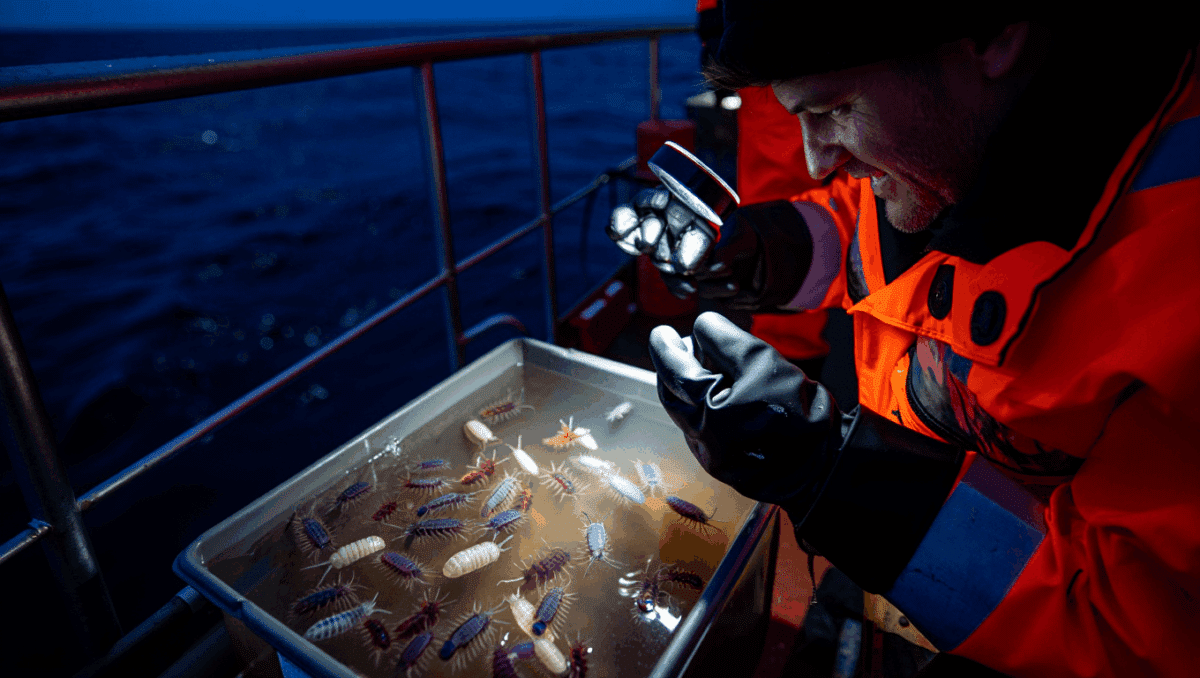
Scientists dredging the ocean floor between Hawaii and Mexico have hauled up a startling bounty: 24 previously unknown species of amphipods — tiny, shrimp-like crustaceans — including representatives of a brand-new family and superfamily. The finds, recovered from the murky depths of the Clarion-Clipperton Zone, add fresh branches to the tree of life and raise new questions about how we study and protect the deep sea.
What began as a focused biodiversity survey quickly turned into a major taxonomic haul, with researchers and students sorting and naming specimens amid a weeks-long workshop in Poland. The discovery underscores how little is known about abyssal ecosystems even in areas that have been sampled repeatedly, and it arrives as governments and corporations consider extracting minerals from the seafloor.
Big catch in the Clarion-Clipperton Zone: 24 new amphipods
The Growing Demand for Data-Driven Decision Making in Silicon Valley
He quit, ran out of money, and begged to come back — here’s how his boss reacted
The expedition targeted the Clarion-Clipperton Zone (CCZ), a vast stretch of abyssal plain that runs across the eastern Pacific Ocean between Hawaii and Mexico. The seafloor here plunges to depths of roughly 10,000 to 20,000 feet (about 3,000–6,000 meters), where amphipods thrive in a dark, cold environment.
- New species found: 24 amphipod species previously unknown to science.
- Novel taxonomic ranks: At least one entirely new family and one new superfamily discovered.
- New genera: Two genera described from the haul: Mirabestia and Pseudolepechinella.
Amphipods are an incredibly diverse group — more than 10,000 species have already been documented — but deep-sea surveys often reveal forms that don’t fit existing classifications.
Mirabestiidae and Mirabestioidea: brand-new branches on the crustacean family tree
Taxonomists working on the specimens identified an entirely new family, later named Mirabestiidae, and a new superfamily, Mirabestioidea. These discoveries represent much more than another entry in a catalog: they reveal previously unknown evolutionary lineages adapted to the abyssal plain.
Why a new family matters
Finding a new family or superfamily in modern taxonomy is a rare event. It signals that the organisms in question differ fundamentally from all previously described relatives in multiple structural and genetic ways. As one lead researcher noted, such a discovery is exceptional and will be remembered by the team.
How the expedition and taxonomy workshop were organized
The fieldwork and downstream analysis combined international scientific collaboration and hands-on training. Samples came from an oceanographic survey of the CCZ and were later examined during a taxonomy workshop at the University of Lodz in Poland.
- Organizers included the UK’s National Oceanographic Center (NOC) and a coalition of researchers from Europe, New Zealand, and Canada.
- The workshop was led by Dr. Anna Jażdżewska and involved students and early-career scientists learning taxonomic methods.
- Dr. Tammy Horton of the NOC played a major role in the research effort and highlighted the rarity of uncovering a new superfamily.
Research tied to policy: Sustainable Seabed Knowledge Initiative
The work was conducted under the International Seabed Authority’s Sustainable Seabed Knowledge Initiative (SSKI), which is pushing to formally describe 1,000 new deep-sea species before the decade ends. The initiative aims to provide a robust baseline of biodiversity data to inform decisions about potential deep-sea mining and conservation.
More than 90% of species in the CCZ remain unnamed, a fact that the SSKI cites as justification for accelerating taxonomic surveys. By filling taxonomic blind spots, researchers hope to give policy-makers the evidence they need to weigh environmental risks against economic interests.
Why the Clarion-Clipperton Zone is both familiar and mysterious
Although the CCZ occupies roughly 1.7 million square miles and has been sampled since its description by the Scripps Institution of Oceanography in 1954, it still yields surprises. Historically, the CCZ has been productive for species discovery: a substantial share of known deep-sea species were first described from specimens collected there.
Scientists emphasize that being a relatively well-surveyed region doesn’t mean it’s well understood. Abyssal biodiversity can hide in subtle morphological details and genetic distinctions that only become clear after careful taxonomic work back in the lab.
Behind the names: how new creatures get their identities
Part of the workshop’s energy came from naming the new species. Some were dedicated to the expedition leaders and mentors, while others honored relatives or captured impressions from the fieldwork. One amphipod even received a name inspired by a resemblance to a video game character.
- Naming serves scientific and cultural functions: it communicates relationships and sometimes tells a story about discovery.
- Specimens were photographed, measured, and genetically sampled before formal descriptions were published in taxonomic literature.
What scientists will do next
Researchers will continue detailed morphological descriptions, genetic analyses, and comparisons with existing collections to finalize species diagnoses. The new family and genera will be integrated into broader phylogenetic frameworks to map evolutionary relationships among amphipods.
The team also stresses the need for continued sampling and international cooperation to document biodiversity across the abyssal plains, particularly as stakeholders debate deep-sea resource extraction strategies. The CCZ discoveries are a reminder that the deep ocean still holds many secrets awaiting scientific attention.
You might also like:
- World’s largest whale graveyard teems with deep-sea life including species unknown to science
- Pearl necklace spider discovered: what scientists know about the new species
- Arctic ocean ridge discovered by divers, studded with volcanoes
- Prehistoric fish fossil rewrites evolution, reveals origins of catfish and carp
- Great Salt Lake new species discovered: what scientists know so far

Michael Thompson is an experienced journalist covering U.S. and global news. With ten years on the front lines, he breaks down political and economic stories that matter. His precise writing and keen attention to detail help you grasp the real‑world impact of every event.


So, were diving deep and hitting the jackpot with these new amphipods, huh? Twenty-four new species, a whole new family… Thats like finding a secret level in a video game you thought you knew inside out. Nature, you sneaky genius!
Dang, those amphipods are like the hidden Easter eggs of the sea, unveiling a whole new level of biodiversity! Nature be dropping surprises like a pro. Wonder what other secrets shes hiding down there… *inserts diving goggles emoji*
Man, those amphipods are like the rockstars of the deep sea, huh? Finding a whole new family of em is like discovering a hidden VIP section at a concert. Wonder who else is jamming out down there!
I remember watchin a documentary bout deep-sea creatures once, wild stuff! 24 new amphipods, huh? Sounds like a whole crustacean family reunion down there. Natures always throwin surprises, aint it?
I mean, talk bout a deep-sea discovery jackpot, right? 24 new species popping up, including a whole new amphipod family – thats like finding a surprise gift in your cereal box. Nature stays full of curveballs!
Man, those deep-sea amphipods? Theyre like the hipsters of the ocean, always coming up with new families and species before its cool. Cant wait to see these Mirabestiidae strutting their stuff!
Man, 24 new species down there, including a whole new amphipod family! Its like a deep-sea jackpot, right? Wonder what other hidden critters are chilling in the Clarion-Clipperton Zone. Time to update the ol crustacean family tree!
Man, those amphipods are like the rockstars of the deep sea, sneakin in with their new family and all. Makes you wonder what other surprises lurk down there. Natures full of surprises, aint it?
Ive always been intrigued by the mysterious creatures dwelling in the abyss. 24 new species, huh? Thats like finding a whole new gang at the bottom of the ocean! Cant wait to learn more about these funky amphipods.
Man, 24 new amphipods? Thats like finding a whole new party in the ocean, huh? Imagine stumbling upon a new fam of critters like that. Nature keeps droppin surprises like its nothing!
Whoa, 24 new amphipods? Thats like opening a secret underwater nightclub or somethin! Nature really be throwin those curveballs, keepin us on our toes. Cant help but wonder what other surprises are lurking beneath the waves, huh?
Man, these amphipods are the real MVPs of the deep sea, huh? Talk about a big family reunion down there! Cant wait to see what other surprises the oceans hiding. Nature always keeps us on our toes, aint it?
Whoa, 24 new critters discovered in the deep blue? Thats like finding a secret party in your own house! Imagine being the first to spot these amphipods, feeling like a marine detective uncovering hidden treasures. So, whens the next underwater shindig?
Mate, these new amphipods are like the surprise guests at a party you didnt know you needed. A whole new family in the deep-sea family tree? Thats like finding out your favorite show has an extra season!
Man, those amphipods are like the unexpected guests who bring the best party vibes! Its like stumbling upon a hidden gem in a treasure hunt, right? Discovering a new branch in the deep-sea family tree is like getting a bonus episode of your fave show. Its the kind of twist that keeps you hooked for more!
A marine biology enthusiast: Dang, those amphipods be stealin the spotlight! 24 new species? Thats like a whole underwater party goin on. Cant wait to learn more bout these quirky creatures and their fam!
Yo, for real though, those amphipods are out here making waves! 24 new species popping up like its nobodys business. Its like the ocean just threw a wild party and didnt even invite us. Cant wait to dive into the deets about these funky critters and their whole underwater crew. Lets get this marine biology fiesta started!
Oh, man, talk about deep-sea surprises! 24 new amphipods, including a whole new family? Thats like finding out your family tree has a whole new branch. Nature never runs out of tricks up its sleeve, huh?
Man, those deep-sea expeditions are like uncovering hidden treasure chests! 24 new amphipod species, including a whole new family? Thats like finding out your family tree has a secret branch you never knew about! Natures full of surprises, aint it?
Man, those amphipods stealing the spotlight! Its like a deep-sea talent show down there. Imagine being part of a new crustacean family—talk about a family reunion with a twist! Wonder if they have family drama too…