

Show summary Hide summary
- Why the Harper case has become a national flashpoint
- Legal options and the politics around early release
- Sentencing principles: trust, public service and aggravating factors
- How Britain’s prison capacity shortfall feeds the problem
- Policy proposals: emergency prisons, offshore transfers and cost trade-offs
- Leadership, credibility and the need for decisive action
Public outrage has flared after it emerged that two men involved in the death of PC Andrew Harper could be released halfway through their sentences. The case has reignited debates over sentencing, political responsibility, and a long-running crisis in prison capacity that has left ministers scrambling for options.
Harper, a Thames Valley constable who died in 2019 after being dragged beneath a vehicle during an attempted escape by suspects on a quad bike, became the face of a debate that blends legal technicalities with raw emotion. The potential early release of Jessie Cole and Albert Bowers — both serving 13-year terms and eligible for release after serving half — has prompted petitions, appeals from senior police leaders and fresh scrutiny of how the state manages custody space.
The Growing Demand for Data-Driven Decision Making in Silicon Valley
He quit, ran out of money, and begged to come back — here’s how his boss reacted
Why the Harper case has become a national flashpoint
The reaction to the news has been immediate and intense. A petition led by Aileen O’Connor, chair of the Thames Valley Police Federation, has amassed more than a million signatures. In addition, police chiefs across England and Wales have signed a joint letter urging intervention to prevent the pair’s early release.

- The crime: PC Andrew Harper was killed while on duty in 2019 after being caught up in a getaway following a theft.
- The sentences: Cole and Bowers received 13-year terms for manslaughter and are eligible for automatic release after serving half their sentences under current rules.
- Public response: Widespread anger from serving officers and the public has pushed the issue onto the political agenda.
That mix of legal technicality and public grief has made the Harper story more than another criminal case — it has become a test of political will and the penalties society imposes on those who kill people who serve the public.
Legal options and the politics around early release
Downing Street has said ministers cannot unilaterally block the release because Cole and Bowers were convicted before the passage of “Harper’s Law” in 2022, which introduced mandatory life terms in specific circumstances for attacks on emergency workers. That argument — that the law cannot be made retrospective — has been used to defend the automatic release timetable.
But legal precedent shows rapid action is possible. In 2020 the government rushed through emergency legislation to halt the early release of prisoners convicted of terrorism-related offences; that measure became law in just over two weeks and applied immediately. Supporters of intervention argue a similar route could be used now to prevent the release.
Pressure points on local and national leaders
- Senior police leaders have formally asked Greater Manchester Mayor Andy Burnham to explore every legal avenue to keep the men imprisoned.
- Ministers face public and media pressure to find a technical solution without breaching legal safeguards on retroactivity.
- Political appetite for emergency legislation may depend on how sustained and intense public outrage remains.
Sentencing principles: trust, public service and aggravating factors
Sentencing guidance already treats breaches of public trust as an aggravating factor. When public servants — including police officers — betray that trust, the courts can impose tougher penalties. The inverse argument, advanced by many who are angry at the possible early release, is that killing someone who was performing a public duty calls for greater severity and fewer routes to early freedom.
The logic resonates widely: those who risk their lives to protect communities deserve assurance that those who take such lives will face robust punishment. That moral intuition underpins much of the public anger in this case and explains why senior figures in policing have taken such a visible stance.
How Britain’s prison capacity shortfall feeds the problem
At the heart of the policy crunch is a simple logistical truth: there are not enough prison places to hold everyone up to the point the public expects. Even if a way is found to keep these two men behind bars, ministers are staring at a broader release program affecting roughly 5,000 prisoners set to be freed under current rules.
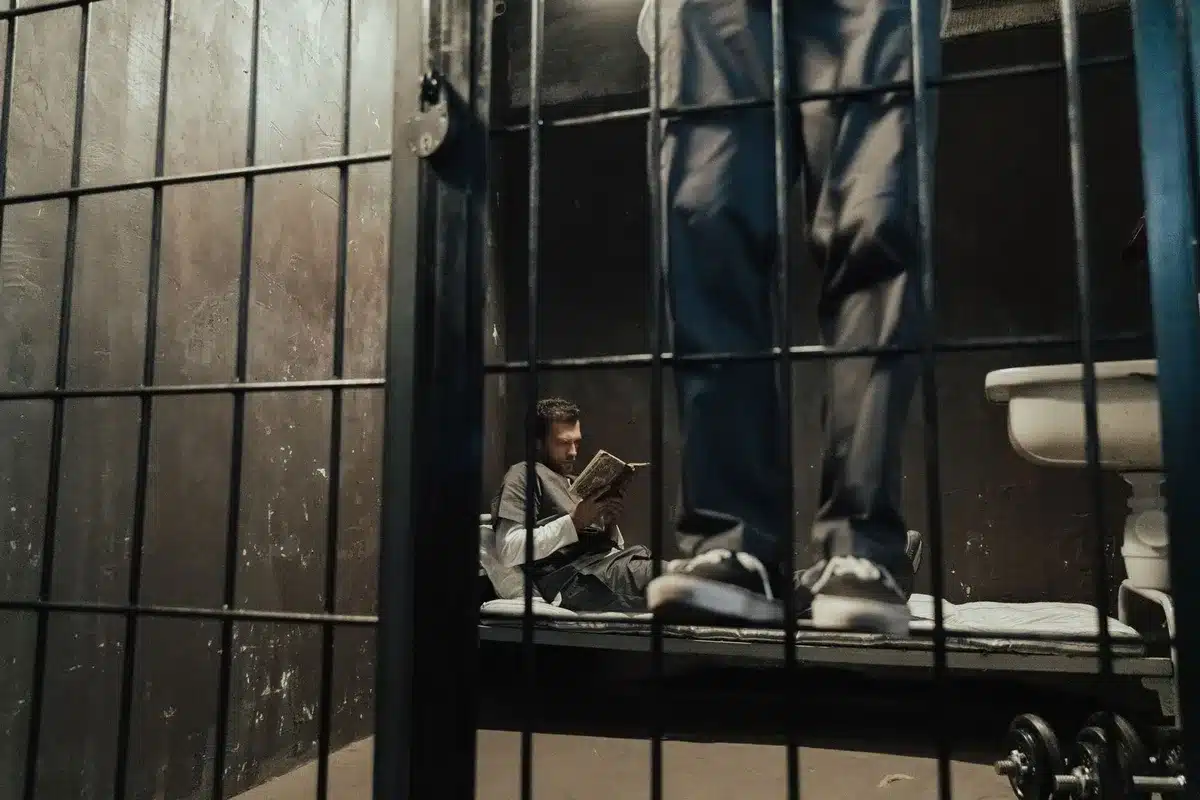
The capacity shortage is not new. A combination of closures, planning restrictions and short-term decision-making has constrained the estate for years. Between 2010 and the mid-2010s the official prison population and the available estate moved in ways that left the system brittle — authorities opened some new beds but also mothballed or shut old facilities, often citing local planning and political pressures.
- Prisons closed in several towns during the early 2010s, including sites later repurposed for tourism.
- Planning permission and local opposition frequently block proposals for new or expanded custodial facilities.
- Policymakers have repeatedly failed to commit to a coherent, long-term build program to match projected demand.
Policy proposals: emergency prisons, offshore transfers and cost trade-offs
Faced with the capacity problem, political actors have floated a range of remedies. Reform UK has proposed a two-part plan: build temporary, rapid-deployment “Nightingale” prisons and transfer some foreign national prisoners to facilities overseas. That latter suggestion — moving non-UK nationals to serve sentences in partner countries — has been particularly controversial.
What these options would look like
- Nightingale-style jails: Rapidly constructed, temporary wings to boost capacity in an emergency.
- International transfers: Agreements to relocate convicted foreign nationals to prisons abroad to free domestic space.
- Lease models: Some European countries have used leasing arrangements — paying another state for a block of places — as a precedent.
Reform UK claims such measures could free over 10,000 places and remove the need for the early-release scheme. Critics, including rights groups, warn about human-rights risks and the ethics of outsourcing custody. Supporters point to examples like the recent deal where a European country arranged to lease prison capacity overseas to cope with domestic pressures.
Cost is a sharp point of contention. Government figures show the average cost of a prison place in England and Wales in 2024–25 at roughly £59,026 per year, compared with the annual fee at Eton of about £65,673. Proponents of offshore options argue that housing some prisoners abroad could be cheaper and quicker than expanding the domestic estate — a claim used to justify urgent, creative steps.
Leadership, credibility and the need for decisive action
Local and national leaders have been inconsistent in their responses. Andy Burnham’s public statements have shifted under pressure, and the prime minister has so far shown reluctance to embrace the bolder fixes that some suggest. The current environment — where legal technicalities collide with public anger and a practical lack of places — demands political clarity and rapid decisions.
At the same time, any emergency intervention raises legal and ethical questions about retroactivity, proportionality and international obligations. Policymakers who want to act quickly must navigate those shoals while also answering the public’s demand for justice and safety.
Ameer Kotecha is chief executive of the Centre for Government Reform and a former senior diplomat, who served as head of the British consulate in Russia from 2023 to 2025.
You might also like:
- China spy case reveals Keir Starmer’s contempt for the rule of law
- UK border security: how many more girls will be trafficked?
- Rape gang ringleader must be deported now
- Peter Murrell shopping sprees reveal alleged financial misconduct at SNP
- Labour party already resembles the Conservatives one year in

Robert Johnson is a dedicated columnist focusing on political and social debates. With twelve years in editorial writing, he provides nuanced, well‑argued perspectives. His commentaries invite you to form your own views and engage in critical issues.


Man, this early release mess? Its like watching a slow-motion car crash. Cant believe the systems this broken. Someone needs to step up and fix this disaster, like, yesterday.
I remember when my cousin got released early for good behavior, but then got into trouble right away. It’s like, what’s the point of these schemes if they don’t address the root issues? Such a mess.
Man, this early release mess reminds me of that time I waited hours for a delayed train. Chronic state failure vibes, yknow? Harper case? More drama than my aunts soap operas.
Man, this early release mess is like a glitch in the system. Its like, how can we trust leaders when they cant even handle the basics? Feels like were all stuck in a bad movie plot.
Man, this early release mess aint surprising. Its like a broken record, same old tune. Leaders need a reality check. Time to step up their game and fix this chronic failure once and for all.
Man, this early release mess? Its like watching a clown juggle flaming torches on a unicycle. How many more blunders till they get it right? This aint a game, its peoples lives on the line. Sheesh.
Man, this early release mess just shows how messed up things are. Harper case? Just a symptom of a broken system. Leaders need to step up, stop the blame game, and fix this for real. Time for action, not talk.
Ya know, its like when youre stuck in a group project with that one person who never pulls their weight. This early release mess just shines a big ol light on how broken the system really is. Time for some serious change, folks.
Oh man, that feeling of carrying the team in a group project hits hard. Its like trying to juggle a dozen eggs and having someone constantly drop em. This early release fiasco? Its like a glaring spotlight on the cracks in the system, screaming for an overhaul. Time to shake things up, amirite?
Man, this whole early release thing just shows how messed up the system is. Harpers case is a lightning rod, but its about time we all faced the music. Trust and public service? More like trust and public circus.
Man, the early release mess? Its like watching a bad movie sequel, but in real life! Cant believe how the systems failing us left and right. Time for some serious changes, folks!
Yo, totally feel you on the early release chaos. Its like the sequel no one asked for, right? But instead of a cringe-worthy movie, were living it! The systems gotta get its act together, or were in for a bumpy ride. Time to shake things up, folks!
Man, this early release mess just shows how broken things are. Remember when folks believed in justice? Now its all politics and blame games. Can we trust anyone to fix this?
I remember back when my cousin got an early release for good behavior. Made me wonder, does the system really work or are we just fooling ourselves? This Harper case just shines a big ol spotlight on all the cracks.
Man, I hear you on that one. Its like a movie when the system actually works, right? But then you peek behind the curtain, and its like, damn, whats really going on here? Harpers case is like a massive neon sign screaming, Yo, we got some serious fixing to do! Its wild how one example can make you question everything.
Man, this whole early release mess just shows how broken our system is. Cant trust em to handle even basic stuff. Hope they get their act together soon, cause this is a hot mess.
Ugh, tell me about it! Its like theyre playing hot potato with responsibilities over there. One minute its supposed to be smooth sailing, then bam – were knee-deep in this disaster. Hopefully, theyll pull themselves together and sort this mess out before it spirals further. Cant believe were stuck in this loop, man.
Man, this early release mess just shows how broken things are. Its like a broken record, spinning round and round, with the same old tune of state failure. When will they learn?
Man, this early release mess? Its like a broken record on repeat. Cant trust the system these days. Whos really paying the price for this chronic state failure? Its a circus out there.
Man, this early release mess? Pure chaos. Makes me wonder whos really in charge around here. Shouldnt trust be a priority? Feels like were stuck in a loop of bad decisions.
Man, this early release mess? Its like watching a clown juggling grenades. Cant trust the system to keep us safe. Whats next, a criminal VIP lounge? Sheesh.
Man, seeing this early release mess just confirms my distrust in the system. They cant handle the heat, can they? Its like watching a clown juggling dynamite. Someones dropping the ball big time.
Man, this early release mess is like watching a train wreck in slow-mo. Harpers case just dropped a bomb on the national stage. Makes you wonder whos really looking out for justice in this chaos.
Man, its like a broken record. Early release mess exposes the same old state failure. Wheres the real change? Same old story, different day. Time for some serious overhaul.
Man, early release schemes just show how messed up the system is. Harpers case is a wildfire now. Legal loopholes, public outrage… Wheres the trust? Its a hot mess. Leaders gotta step up.