

Show summary Hide summary
- How the flood unfolded in Palm Bay and Brevard County
- A neighbor’s life-risking rescue of two vulnerable people
- Why residential flooding is uniquely dangerous
- What neighbors saw and what comes next for the community
- How officials and locals are coordinating relief efforts
- Documenting bravery: video and firsthand accounts
A neighbor in Palm Bay waded through waist-deep water and risked his life to carry two vulnerable residents to safety during what he called a “biblical” flooding event. As torrential rain turned streets into rivers, this small Florida community became the scene of multiple daring rescues — ordinary people and first responders scrambling to save those who could not escape on their own.
The storm dropped more than a foot of rain in some places, leaving homes submerged and roads impassable. In the middle of the chaos, neighbors formed an impromptu rescue team, using whatever they had at hand and waiting on airboats that sliced through the flood to reach people stranded in their own living rooms.
How the flood unfolded in Palm Bay and Brevard County
The downpour was part of an extreme weather event meteorologists describe as a rare, high-impact storm — a so-called 1,000-year rain event that unloaded between 16 and 22 inches of rain in a single day in parts of east Florida. Streets filled in minutes, basements and ground floors were quickly overtaken, and emergency crews were pushed to their limits.
The Growing Demand for Data-Driven Decision Making in Silicon Valley
He quit, ran out of money, and begged to come back — here’s how his boss reacted
Residents describe the rise of the water as sudden and brutal. Many who stayed in place found themselves trapped on upper floors or on patches of dry lawn. Local first responders, conservation officers and volunteers used airboats and other watercraft to navigate neighborhoods where standard rescue vehicles could not operate.
A neighbor’s life-risking rescue of two vulnerable people
One Palm Bay resident, Rick Addante, emerged as a central figure in the neighborhood response. He noticed two neighbors across the street in immediate peril: an 80-year-old man who had recently undergone open-heart surgery, and another neighbor confined to a motorized wheelchair due to amyotrophic lateral sclerosis (ALS).
Addante said the water was already reaching chest level in the street. Inside one home, the older man could barely move without losing his breath. Addante initially considered carrying him across the fast-moving current but instead worked to elevate the man on the highest point of his lawn and flag down rescuers. When airboats arrived — made unmistakable by their roaring engines — officers from Florida Fish and Wildlife helped carry the man and his terrified dog to an awaiting craft.
The sequence of rescues that followed
After getting the older man to safety, Addante and others turned their attention to the neighbor with ALS and to several people trapped on the second floor of another house whose first floor had been fully submerged. The response was a patchwork of neighbors, church volunteers and law enforcement working together:
- Community members waded through strong currents to move people to higher ground.
- Airboats threaded yards and streets, offering transport where trucks could not go.
- Florida Fish and Wildlife officers coordinated with volunteers to lift residents into boats and carry pets to safety.
“It was all hands on deck — people from churches, neighbors, and state officers,” one rescuer said, describing a scene of exhaustion and coordination.
Why residential flooding is uniquely dangerous
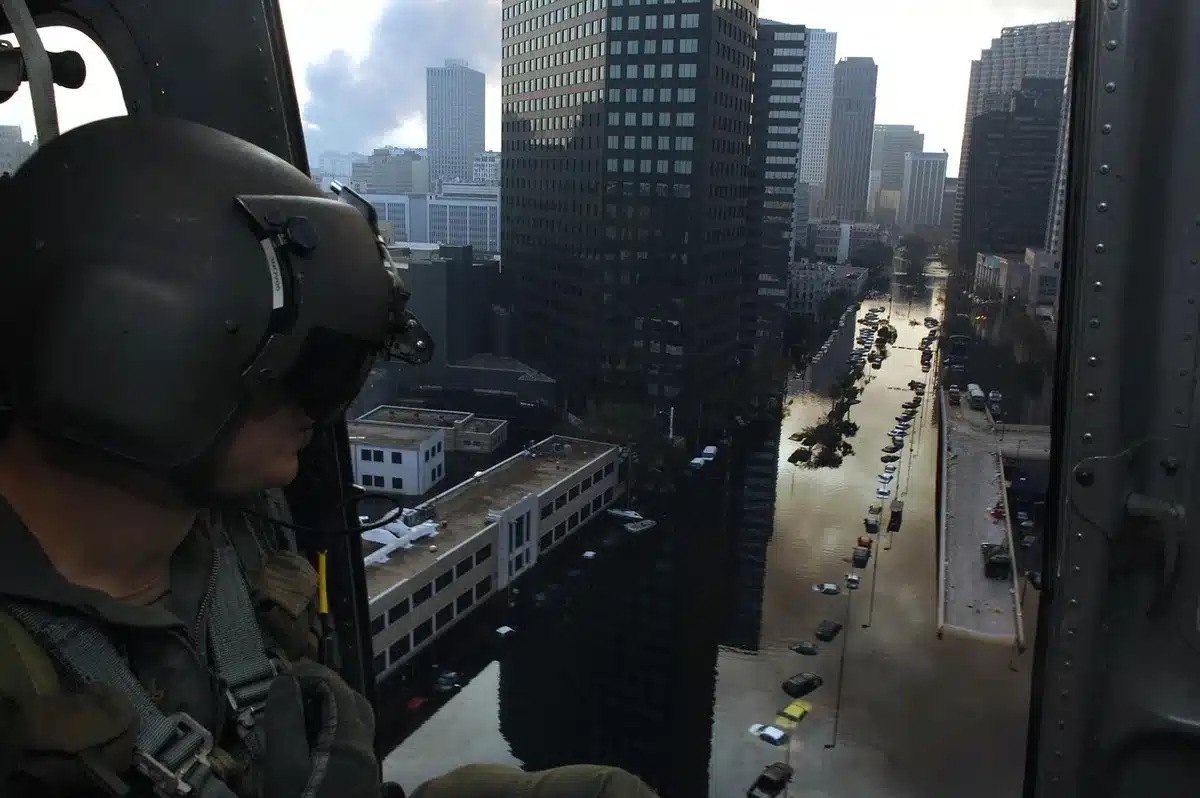
Floodwater rescues are complex and perilous. Rescuers must balance speed with safety, often making split-second decisions in murky, moving water that conceals multiple hazards. Among the threats facing anyone trying to traverse or work in floodwater:
- Hidden currents that can sweep people off their feet
- Dislodged manhole covers or storm drains creating suction and traps
- Downed power lines that can electrify water
- Contaminated sewage and wastewater creating infection and illness risks
Because of these dangers, many professional agencies advise the public to avoid wading in deep or fast-moving water when possible and to wait for trained responders. During the Palm Bay event, the combination of volunteer bravery and skilled airboat operators nevertheless made the difference for several households.
What neighbors saw and what comes next for the community
Video and eyewitness accounts from the neighborhood show frantic but coordinated activity: people carrying dogs and elderly residents, airboats pushing through yards, and neighbors guiding each other across churned streets. The visual evidence captured by residents and local media underlined how quickly calm street scenes were transformed into emergency corridors.
Cleanup crews began work as floodwaters receded, but recovery will be an ongoing challenge. Many families lost property and essentials, while the visible rescues left a quieter impression: a strengthened sense of mutual care. Community leaders and faith groups have mobilized to offer immediate assistance, coordinate donations and map out longer-term needs for those affected.
How officials and locals are coordinating relief efforts
Local agencies and volunteer groups have been compiling lists of needs and directing relief to the hardest-hit areas. Typical elements of the relief response include:
- Temporary shelters and evacuation support
- Distribution of dry clothing, food and water
- Volunteer cleanup crews for debris removal and home drying
- Mental health and medical follow-up for those impacted
Authorities continue to urge caution: flood-damaged homes can have electrical and structural hazards, and contaminated water can pose health risks. At the same time, images of neighbors hauling people and pets to safety have circulated widely online and on local broadcasts, highlighting a community response that blended urgency with compassion.
Documenting bravery: video and firsthand accounts
Cellphone footage and local news clips show the moment rescuers, including airboat crews from conservation teams, reached porches and lawns where people awaited help. In many clips, frightened pets cling to owners, and exhausted neighbors embrace after being carried to safety. Those recordings have become part of the public record of the event, used both to locate survivors in real time and to chronicle the storm’s human impact afterward.
Rescue teams emphasized that such operations require coordination, proper equipment and an understanding of the risks involved. Many of the on-the-ground actions in Palm Bay were a blend of professional response and neighbor-to-neighbor aid, underscoring how quickly communities can mobilize when infrastructure is overwhelmed.

You might also like:
- Taiwan volunteers flock to help flood victims after typhoon
- Heroic Neighbors Save Lives in Florida Plane Crash: Recognized for Courageous Rescue
- Drone company finds lost dog in 41 minutes: veteran-inspired search and rescue team rescues pet
- Missing autistic boy rescued after 3 days, rescuers call it a miracle
- North Texas firefighter saves 3 children trapped under boat on July 4

Michael Thompson is an experienced journalist covering U.S. and global news. With ten years on the front lines, he breaks down political and economic stories that matter. His precise writing and keen attention to detail help you grasp the real‑world impact of every event.

