
Show summary Hide summary
- Why public trash cans disappeared — and why officials are rethinking that choice
- Solar compactors: packing more trash into a smaller footprint
- Robotic bins that move the garbage — automated collection on demand
- Funding models and pilot deployments: how cities are adopting the tech
- Public reaction, labor questions, and the future of urban sanitation
- What visitors can expect as smart bins spread across Tokyo and Kyoto
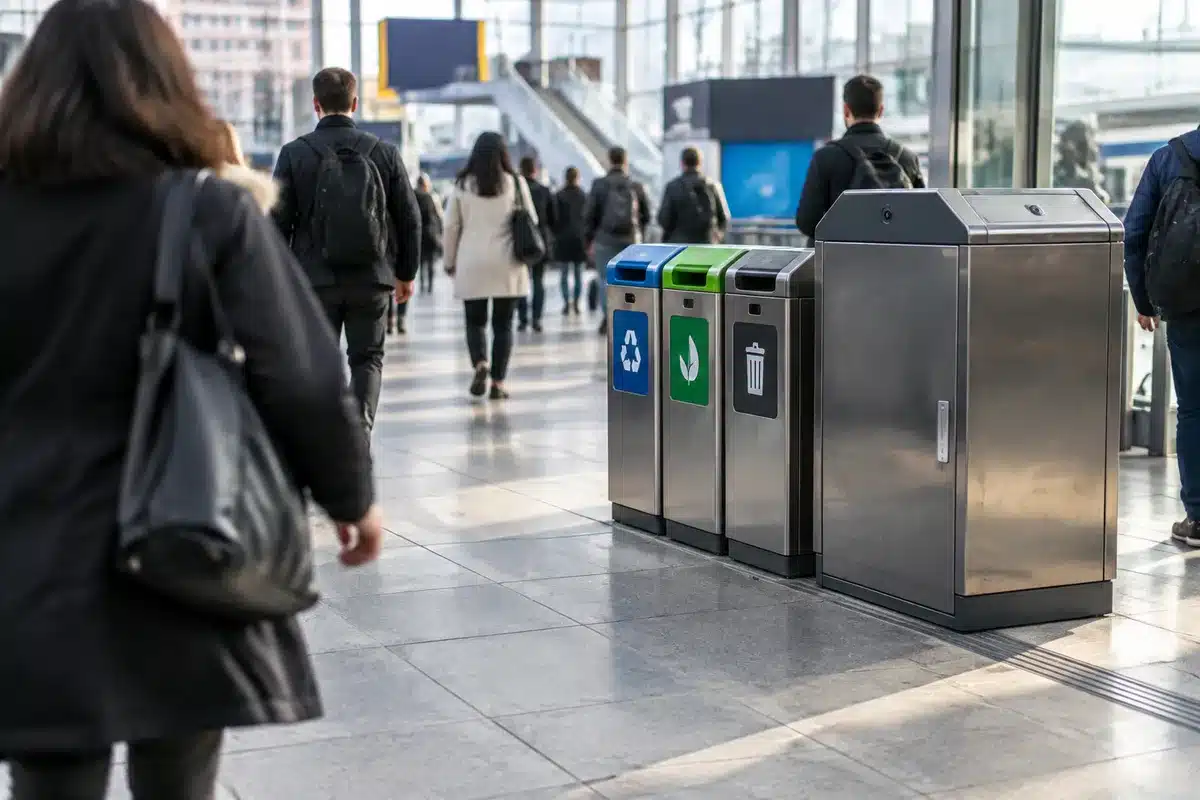
Tokyo’s streets have long been admired for their cleanliness — and puzzled over by visitors who notice a scarcity of public trash cans. What looks like an odd cultural quirk is actually the result of deliberate policy: for years municipalities have removed bins to reduce overflow, lower labor costs, and address security concerns. Now, faced with surging tourism and complaints from travelers, city officials and private firms are quietly testing a new generation of smart and robotic bins designed to keep sidewalks neat without undoing that carefully maintained civic order.
These innovations range from solar-powered compactors that drastically reduce pickup frequency to self-driving collection units that ferry rubbish out of sight for emptying. Early trials in busy spots, including Shinjuku Station, suggest the tech can bridge the gap between Japan’s public-cleanliness culture and the practical needs of visitors — while offering a more efficient model for urban waste management.
Why public trash cans disappeared — and why officials are rethinking that choice
Japanese cities gradually reduced the number of public waste receptacles over decades. The reasons were practical: unsecured bins could become litter magnets, overflow in peak hours, and present security vulnerabilities. There’s also a social rationale behind the decision — when disposal is less convenient, people tend to produce and carry less trash.
The Growing Demand for Data-Driven Decision Making in Silicon Valley
He quit, ran out of money, and begged to come back — here’s how his boss reacted
But as international tourism rebounded, that approach started to strain. Visitors unfamiliar with carrying their trash home or finding appropriate disposal points struggled, and the lack of bins became a recurring complaint. In response, metropolitan governments began looking for middle-ground solutions that preserve the country’s tidy streets without forcing tourists into awkward situations.

Solar compactors: packing more trash into a smaller footprint
Companies are introducing compacting units that fit into existing public space while reducing collection frequency. One notable example is the SmaGO system marketed by Forcetec.
Key features of modern solar compactors
- Solar-powered operation for off-grid deployments and lower running costs.
- Automated compaction to multiply storage capacity — cutting the number of times crews must visit each bin.
- Remote monitoring so operators can see fill levels in real time and schedule pickups before overflow occurs.
- Designs that blend with urban streetscapes and reduce visual clutter.
Forcetec’s SmaGO, developed originally in the U.S., is designed to compact contents frequently — which allows a single unit to hold many times the volume of a standard trash can. According to company representatives, the technology addresses twin worries that have kept officials from reinstalling bins: overflowing containers and the manpower required for frequent collection. In some cases, firms have provided these systems at reduced cost through corporate sponsorships or civic tax-support programs that offset installation expenses.
Robotic bins that move the garbage — automated collection on demand
Beyond compactors, startups are piloting fully autonomous waste receptacles that actively relocate themselves for servicing. California-based Cartken, for example, has built small robotic bins equipped with sensors and navigation systems that can detect when they’re near capacity and then drive to a designated pickup area where crews can empty them safely and efficiently.
- Self-driving behavior: Robots travel out of public-facing zones when full, avoiding overflow in crowded locations.
- Sensor-based alerts: Fill-level detection triggers the robot’s movement and notifies operators.
- Compact design: Units are sized to fit sidewalks and transit hubs without obstructing foot traffic.
East Japan Railway has tested such robotic janitors at Shinjuku Station, one of the busiest transit hubs in the world, and preliminary public feedback has been notably positive. Transit operators say commuters appreciate bins that don’t spill and that the autonomous units reduce the repetitive collection routes that previously strained budgets.

Funding models and pilot deployments: how cities are adopting the tech
Local governments are blending public and private resources to pilot smart waste systems. Common financing and support strategies include:
- Corporate sponsorships that underwrite units in exchange for branding or local goodwill.
- Civic tax programs that allow businesses to contribute to neighborhood infrastructure.
- Direct procurement contracts with vendors for trial deployments in high-traffic tourist zones.
This mixed approach helps cities experiment without committing to large-scale rollouts immediately. Trials also let officials gather data on maintenance needs, public acceptance, and operational savings before deciding whether to expand the program.
Public reaction, labor questions, and the future of urban sanitation
Smart bins and robotic collectors inevitably prompt debates about jobs and automation. In Japan’s case, many routine street-sweeping and trash-collection duties had already been centralized or reduced; proponents argue that the new technologies may restore some on-the-ground roles — for monitoring, maintenance, and collection supervision — even while automating repetitive tasks.
Surveys from pilot sites indicate a favorable public response so far: commuters and tourists appreciate cleaner platforms and fewer overflowing containers. For city planners, the key metrics are straightforward — lower cleanup costs, fewer complaints, and sustained cleanliness even during peak tourist seasons.
What visitors can expect as smart bins spread across Tokyo and Kyoto
If trials continue to succeed, travelers will likely notice a gradual return of public disposal options — but in forms designed for efficiency rather than ubiquity. Look for:
- Fewer traditional metal cans and more discreet, sensor-equipped units.
- Visible signage or apps indicating bin locations and fill status in major districts.
- Robotic carts operating behind the scenes to empty receptacles during off-peak hours.
These shifts aim to reconcile Japan’s long-standing culture of public cleanliness with the realities of modern tourism and urban life. Strong technical controls and careful deployment strategies are intended to keep sidewalks tidy while maintaining the low-profile public space that residents prefer.

You might also like:
- AI extracts valuable materials from trash to boost recycling and resource recovery
- New Delhi teens recycle 2 million pounds of waste across 14 Indian cities after asthma attack
- Mount Everest trash cleanup in Nepal fails after botched operation
- School uniform donations by teens save 1,400 families $140K
- Arizona Suburb Transforms Into Cool Mediterranean-Style Walkable Town: Experience the Charm!

Michael Thompson is an experienced journalist covering U.S. and global news. With ten years on the front lines, he breaks down political and economic stories that matter. His precise writing and keen attention to detail help you grasp the real‑world impact of every event.

