
Show summary Hide summary
- How events unfolded across the city on March 23
- Police tactics, arrests, and public safety measures
- Why the term “intifada” provoked controversy and what it means
- Impact on communities: cohesion, fear, and local institutions
- Political response: government, opposition, and diplomatic notes
- Legal considerations and the balance between free speech and safety
- What happened on the ground: personal accounts and immediate aftermath
- Looking forward: the immediate priorities for the city and civil society
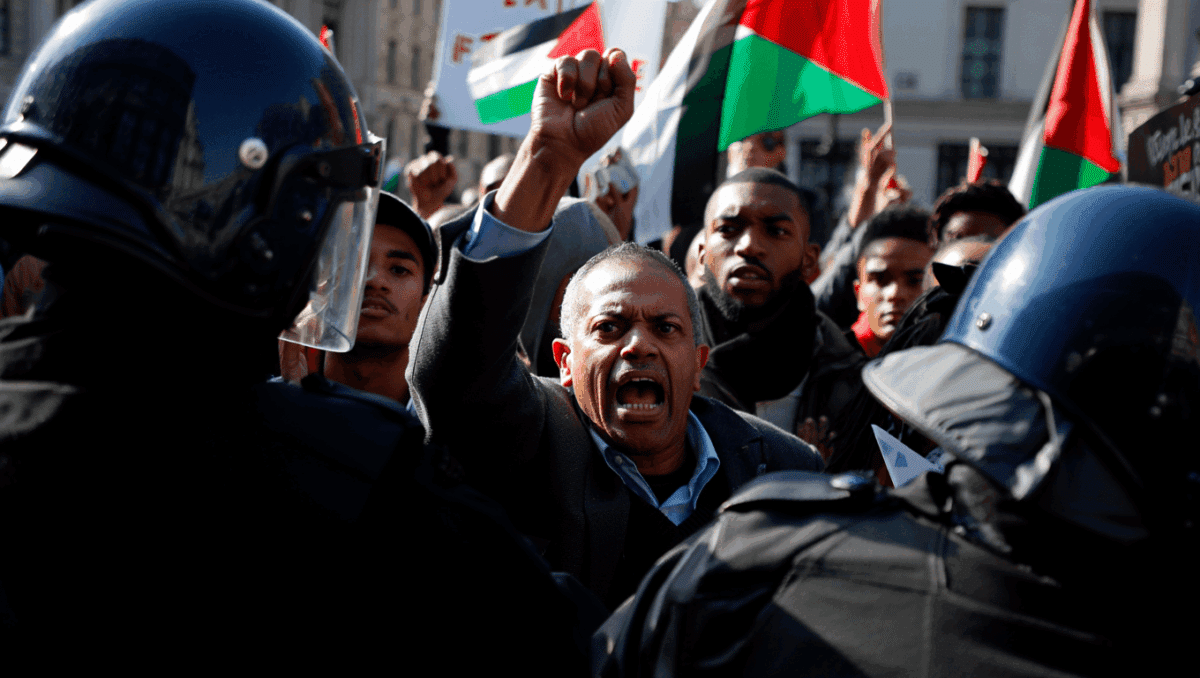
London’s streets were transformed into a tense stage on March 23, 2026, as large crowds gathered across the city in demonstrations tied to the ongoing conflict in Israel and Gaza. What began as coordinated marches and vigils in central squares quickly spilled into confrontational scenes in some neighborhoods, prompting a heavy police presence and sparking a heated public debate over rhetoric, safety, and free expression.
Organizers and participants described the day as a moment of collective outrage and solidarity; city officials and some community leaders warned the language used by a minority of protesters — notably the invocation of the word “intifada” — risked inflaming already fragile communal relations. As authorities worked to restore order, the episodes raised urgent questions about policing, political speech, and the boundaries between peaceful protest and incitement.
How events unfolded across the city on March 23
Major gatherings and flashpoints
The Growing Demand for Data-Driven Decision Making in Silicon Valley
He quit, ran out of money, and begged to come back — here’s how his boss reacted
- Morning rallies clustered around Trafalgar Square and Parliament Square, with speakers calling for an immediate ceasefire and humanitarian corridors.
- Smaller, more assertive groups moved into residential areas in parts of east and north London, where confrontations with counter-demonstrators and police were reported.
- By late afternoon, several marches converged near major thoroughfares, causing transport disruptions and station closures as police sought to manage crowd flow.
Eyewitnesses described a mixture of solemn vigils, passionate chants, and moments of outright hostility — scenes that varied significantly from one neighborhood to another. Some areas remained peaceful throughout, while others required tactical interventions to prevent escalation.
Police tactics, arrests, and public safety measures
Authorities mobilized substantial resources to monitor demonstrations and deter violence. The Metropolitan Police deployed specialized units to key locations, used barriers to control crowds, and issued dispersal notices in hotspots. Officers emphasized a dual approach: upholding the right to protest while taking action against unlawful behavior.
- Law enforcement used kettling in several locations to prevent clashes between rival groups.
- Public transport authorities announced temporary station closures and rerouted services to protect commuters and ensure crowd safety.
- Police reported a range of enforcement actions including arrests for public order offences, assaults, and damage to property.
Officials cautioned residents to avoid flashpoints and to check local transport advisories as the situation evolved. Community groups also set up hotlines and safe spaces for those feeling threatened or displaced by the events.
Why the term “intifada” provoked controversy and what it means
The use of the Arabic word “intifada” — often translated as “uprising” or “shaking off” — became a flashpoint in public debate. For many protesters, invoking the term signaled a call for intensified resistance and global solidarity with Palestinians. For critics, the word carries historical associations with violent uprising and raised fears of glorifying violence.
Voices from different perspectives
- Supporters argued the phrase expressed frustration and a desire for nonviolent mass civil resistance to change policy and public opinion.
- Critics, including some Jewish community organizations, said it risked normalizing a rhetoric that had previously accompanied attacks and could stoke antisemitic incidents.
- Legal experts noted that political speech is protected but crosses into criminal territory when it directly incites violence or harassment.
Language matters: words that resonate historically can escalate tensions in a diverse city, observers said, adding that community leaders must navigate the line between passionate advocacy and rhetoric that can be perceived as threatening.
Impact on communities: cohesion, fear, and local institutions
The demonstrations intensified strains already present in neighborhoods with sizable Jewish and Muslim populations. Synagogues, mosques, schools, and shops reported heightened anxiety and, in some cases, temporarily reduced hours or closed for safety reasons.
- Local businesses reported lower foot traffic in areas near demonstrations and temporary damages in a handful of storefronts.
- Religious institutions increased security and coordinated with police to protect worshippers and staff.
- Community mediators and interfaith groups stepped up outreach to calm tensions and prevent retaliatory incidents.
Families and students described a city where everyday routines were interrupted, with some parents keeping children home and colleges issuing alerts to students about avoiding particular zones.
Political response: government, opposition, and diplomatic notes
National and local politicians reacted quickly, balancing support for the right to protest with condemnation of violent acts or incendiary language. Senior officials urged restraint and called for protection of all citizens regardless of faith or background.
Domestic statements and measures
- City leaders appealed for calm and announced additional funding for community protection initiatives.
- Lawmakers debated emergency measures to address hate crime and the use of online platforms to coordinate potentially unlawful activity.
- Some opposition figures criticized the government for either overreacting or failing to preempt tensions.
International dimension
Diplomatic missions in London monitored events closely, issuing travel advisories for staff in affected neighborhoods and making public appeals for the safety of foreign nationals.
Observers warned that the rhetoric and images circulating from London could reverberate internationally, influencing diplomatic discourse and fueling similar demonstrations in other cities.
Legal considerations and the balance between free speech and safety
Lawyers and civil liberties groups emphasized the complexity of policing highly charged political expression. The threshold for criminal liability — incitement to violence or public disorder — is legally defined but can be difficult to apply in fast-moving demonstrations.
- Prosecutors signaled they would review footage and social media posts to determine whether arrests should lead to charges.
- Civil rights advocates warned against heavy-handed policing that could chill lawful protest and erode trust in institutions.
- Community leaders urged the courts and police to act transparently to maintain public confidence.
Legal experts highlighted the role of evidence and intent in distinguishing protected speech from criminal conduct, recommending careful documentation by both authorities and civil organizations.
What happened on the ground: personal accounts and immediate aftermath
Several protesters described the day as a cathartic release of pent-up emotion; others recalled moments of fear when a march turned confrontational. First responders reported a demanding shift pattern as they tended to injuries and cleared debris while trying to keep lines of communication open between rival groups.
- Medical volunteers set up pop-up aid stations for minor injuries and dehydration.
- Volunteers from community groups facilitated mediation between demonstrators and local businesses.
- Journalists and citizen reporters streamed live footage that shaped public perceptions throughout the day.
As night fell, many neighborhoods simmered rather than settled, with residents bracing for further demonstrations and officials preparing contingency plans.
Looking forward: the immediate priorities for the city and civil society
Authorities and community leaders are now focused on de-escalation, rebuilding trust, and preparing for possible renewed actions in the coming days. Key priorities include restoring safe access to public spaces, addressing hate incidents quickly, and opening channels for dialogue between afflicted communities.
- Enhanced patrols and community liaison teams are expected to remain in place while schools and businesses reopen.
- Interfaith and civic organizations plan a series of listening sessions to address grievances and reduce polarization.
- Policymakers face calls to articulate clearer guidance on protest regulation and online coordination.
You might also like:
- Hate marchers couldn’t even take one day off
- Trans+ pride London marred by alleged violent bigotry
- British Jews under siege as antisemitism and attacks rise in UK
- UK Islamic blasphemy laws defeated in free speech victory
- ISIS: is it part of the progressive alliance?

Robert Johnson is a dedicated columnist focusing on political and social debates. With twelve years in editorial writing, he provides nuanced, well‑argued perspectives. His commentaries invite you to form your own views and engage in critical issues.


Oi, mate, its like a powder keg exploded in Trafalgar Square! Protests, clashes, chaos… feels like a page ripped outta history. The citys a mess, hope everyone stays safe. But hey, cant ignore the passion, innit?
Man, these protests really hit close to home. Its wild seeing the clash of beliefs and emotions spill out onto the streets of London. Hope everyone stays safe amidst all this intensity.
Man, its like a powder keg ready to blow! The tension, the clashes, its all so intense. Wonder if therell be any resolution soon or if its just gonna keep escalating. Wild times in the city, thats for sure.
Mate, I was there during the last one, and let me tell ya, things got heated real quick. Hope folks stay safe out there. Its a mess. Peace and love, people.
Man, I feel ya! It was like a pressure cooker last time, right? Hopefully, peeps keep their cool this time around. Safety first, always. Lets spread that peace and love vibe. Stay safe out there, folks!
Mate, its like a powder keg ready to blow! The clashes in London, mate, got me thinking, wheres the peace in all this chaos? Is there a way to bridge these divides, or are we doomed to a cycle of unrest?
I remember when tensions ran high back home, but seeing it unfold in London hits different. Protests, clashes, chaos—its like deja vu. Wonder if they can find common ground amidst the turmoil.
Yo, its like watching a live-action drama unfold, except its real life. Protests, clashes, police – feels like a movie plot, but it aint. Crazy how real-world issues can turn streets into battlefields.
Man, protests in London got intense! Reminds me of that time back home. Hope they find a way to sort it out peacefully. Stay safe out there, folks.
Man, its like a powder keg ready to blow! Seeing these protests and clashes unfold in London hits close to home. Hope everyone stays safe and listens to each other. Peace is the way forward.
Dude, I feel you on this one. Its crazy out there, like a ticking time bomb waiting to go off! Hope people start listening instead of just yelling. Stay safe, London! Peace out.
Man, its like a clash of ideologies out there. Remember that one time we thought the world would unite under one flag? Now its all protests and chaos. Stay safe, folks.