Show summary Hide summary
- How Mélenchon’s Messaging Differs from Other Candidates
- Government Response: Accusations of Deliberate Disruption
- What Mélenchon’s Strategy Appears Designed to Achieve
- From Secular Firebrand to Complimenter of New Alliances
- Controversial Reactions to International Violence
- Conspiracy Claims and the Risk of Polarizing Narratives
- Accusations of Antisemitism and Cultural Targeting
- Electoral Consequences: Who Stands to Gain?
- What the Debate Reveals About France’s Identity Struggle
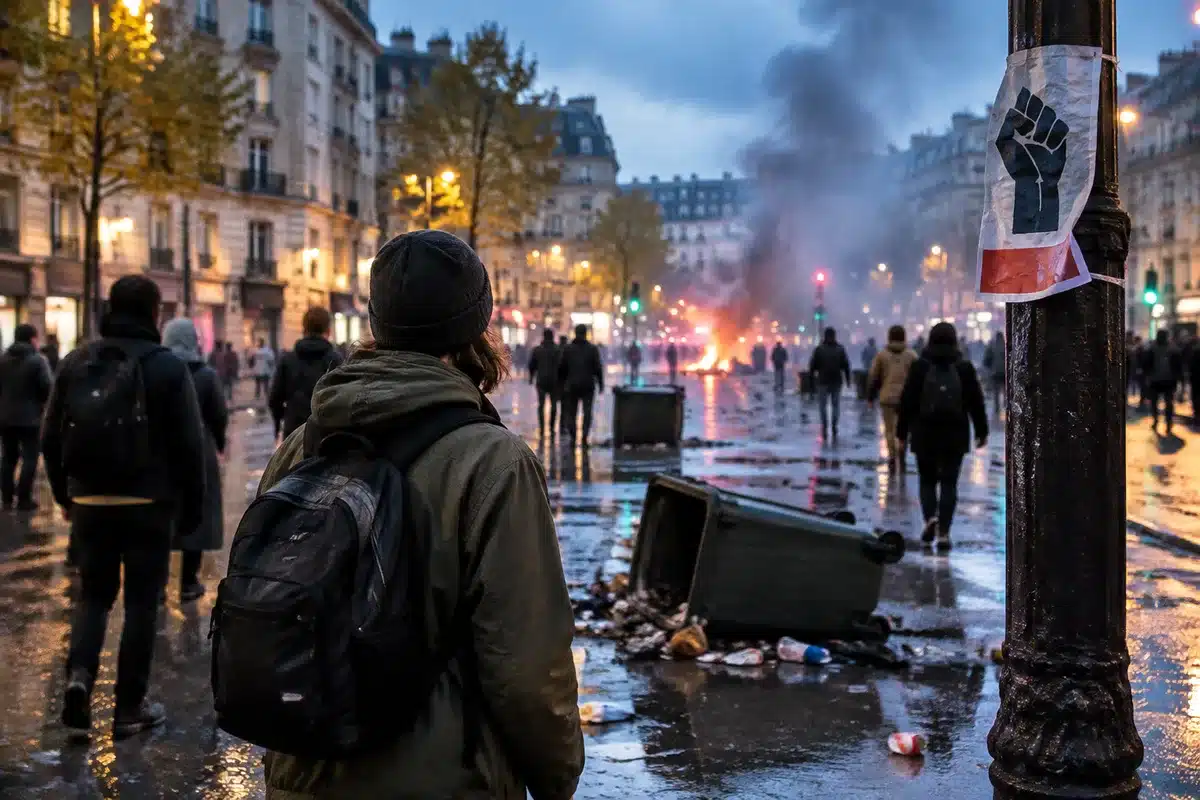
French cities have been roiled by some of the worst unrest in decades, as clashes, arson and looting have filled nightly headlines and sent shockwaves through the campaign to replace Emmanuel Macron. Most presidential hopefuls have loudly demanded a restoration of order; one prominent contender has taken a markedly different tack, at times seeming to encourage the turmoil rather than condemn it.
Jean-Luc Mélenchon, leader of La France Insoumise (LFI), has repeatedly framed the disorder in revolutionary terms and has been criticized by the government for rhetoric that some say fans rather than soothes the flames. The debate now centers on whether Mélenchon’s posture is a calculated political move, a genuine ideological shift, or a mix of both.
How Mélenchon’s Messaging Differs from Other Candidates
The Growing Demand for Data-Driven Decision Making in Silicon Valley
He quit, ran out of money, and begged to come back — here’s how his boss reacted
Across the political spectrum, contenders have publicly called for a rapid end to the violence. Mélenchon stands apart. Rather than unequivocally denouncing the street clashes and episodes of criminality, he has often emphasized what he casts as the political purpose behind popular protests and has framed youth unrest in historic revolutionary language.

- Selective condemnation: He has been slow to call out attacks on property and people, focusing instead on structural grievances.
- Revolutionary framing: Some of his posts and speeches compare today’s demonstrators to earlier uprisings in French history.
- Attribution of blame: He frequently assigns responsibility for escalations to law enforcement tactics or to political opponents seeking to “criminalize” dissent.
Government Response: Accusations of Deliberate Disruption
Authorities have not been silent. The prime minister has publicly accused Mélenchon and associated ultra-left groups of pushing a strategy of deliberate disorder to undermine public confidence in the state and gain political traction. Officials used a French term that roughly translates as “sowing chaos” to describe what they see as a coordinated effort to destabilize civic life.
Whether or not there is a centralized plot, ministers argue that rhetoric matters. They warn that portraying violence as mere political theater can embolden extremist elements and complicate policing efforts, while Mélenchon’s backers counter that government warnings are exagerated and politically motivated.
What Mélenchon’s Strategy Appears Designed to Achieve
Mélenchon’s appeal is not targeted at the broad center of the electorate but focused on building a new coalition. His campaign increasingly seeks support among younger voters and communities with immigrant backgrounds—groups that feel sidelined by traditional parties.

- He promotes a vision of a remade France that centers multicultural urban communities.
- He argues that traditional republican norms have failed to integrate or represent these populations.
- His rhetoric challenges not only the political right but also the established left and the cultural majority.
This strategy carries both promise and peril: it energizes certain bases while alienating others, and it raises questions about how to reconcile competing identities in a national political program.
From Secular Firebrand to Complimenter of New Alliances
Mélenchon once stood as an outspoken defender of secular republican values. He previously used blunt language to criticize religious extremism and defended free critique of religion. Over recent years, however, his tone has shifted. Instances where he once called out religiously motivated violence have given way to more guarded, sometimes ambiguous language that downplays ideological motives.
Observers point to this evolution as a tactical move to court communities whose support might otherwise be hesitant in response to overtly secularist rhetoric. Critics say the change amounts to excusing or minimizing threats when they come from Islamist militants, while supporters insist it reflects a desire to avoid polarizing communities further.
Controversial Reactions to International Violence
LFI’s public statements on international conflicts, particularly the October attacks in Israel, have sparked outrage across French political life. Party messaging described the events in neutral or contextual terms that many saw as failing to fully acknowledge the scale and brutality of the attacks. Opponents accused Mélenchon and his movement of offering rhetorical cover for violence; allies argued the party was highlighting geopolitical context and criticizing state policies.
Conspiracy Claims and the Risk of Polarizing Narratives
Mélenchon has at times suggested that violent incidents have been manipulated or timed to influence elections, citing past attacks as examples of events used to shape political outcomes. These assertions feed into a broader narrative that certain actors exploit fear to benefit from polarization. Such claims make for dramatic headlines but also carry the danger of deepening mistrust in institutions and fueling divisive, conspiratorial thinking.
Examples critics cite
- Assertions that prior terror attacks were opportunistically politicized around election cycles.
- Public suggestions that investigations and discourse are steered to stigmatize Muslim communities.
- Allegations that established media and political forces coordinate to marginalize dissident voices.
Accusations of Antisemitism and Cultural Targeting
Accusations of antisemitism have followed Mélenchon for years, tied to both his rhetoric about international politics and comments that critics say conflate Jewish communities with political positions. He has also blamed foreign governments for influencing outcomes in other countries’ elections, remarks that opponents argue cross a line into stereotyping.
At the same time, his emphasis on reworking national identity—declaring the old cultural majority obsolete and embracing multiple, overlapping identities—has alarmed those who fear the erasure of republican secularism. Supporters counter that his language tries to make room for communities who have been historically excluded from political power.
Electoral Consequences: Who Stands to Gain?
The unrest has reshaped campaign dynamics. Polls indicate that law-and-order messaging benefits right-wing parties promising tougher policing and stricter immigration controls. Advocates of a hardline response argue that citizens want safety and cultural continuity—concerns that drive support toward parties promising both.
- Right-wing momentum: A law-and-order narrative tends to boost parties promising immediate, visible action.
- Left-wing gamble: Mélenchon’s approach risks pushing moderate and center-left voters away while solidifying a more radical base.
- Uncertain center: Many swing voters react to the nightly images on television and social media, often shifting their preferences accordingly.
What the Debate Reveals About France’s Identity Struggle
At its core, the controversy over Mélenchon’s stance exposes a deeper debate about what France should be. Is the nation best served by reaffirming a unified republican culture and secular institutions, or by embracing a radically plural civic identity that prioritizes group representation and cultural change?
That question cuts across policy areas—immigration, education, policing and foreign policy—and its resolution will shape both rhetoric and governance in the years ahead. The current unrest is both a symptom and an accelerant of this national conversation, and political choices in the coming months could have lasting consequences.
Fraser Myers is deputy editor of spiked and host of the spiked podcast.
You might also like:
- France protests and riots spread as fires and clashes hit major cities
- Hungarian Revolution anniversary reveals Europe’s decline
- Britain becoming like France raises alarm about politics, public services
- Anti-Israel hatred threatens Jews worldwide
- Zack Polanski campaigning in Urdu: why he’s targeting Urdu-speaking voters

Robert Johnson is a dedicated columnist focusing on political and social debates. With twelve years in editorial writing, he provides nuanced, well‑argued perspectives. His commentaries invite you to form your own views and engage in critical issues.