
Show summary Hide summary
- How the political architecture concentrates power
- Documented human rights violations and suppression of dissent
- Economic strain: sanctions, mismanagement and public hardship
- Security posture and regional ambitions
- Opposition movements, civil society and the role of culture
- International reactions and policy options under debate
- What keeps unrest cycling through the country
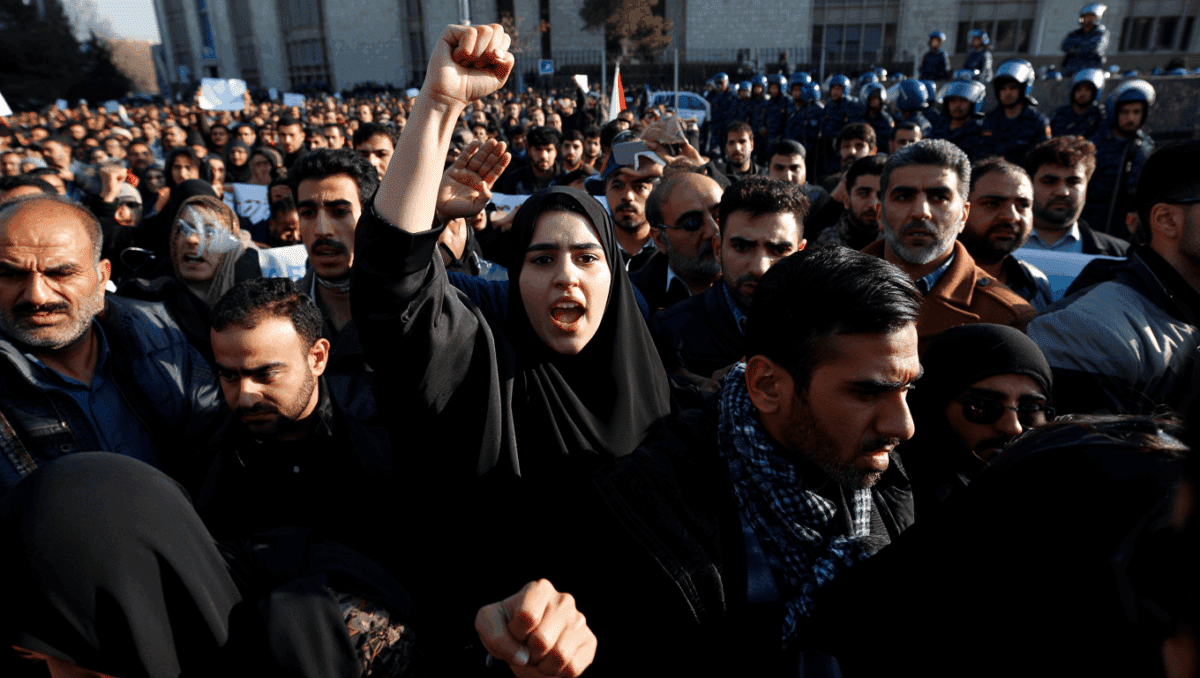
The people inside Iran’s cities and villages have been living with a complicated mix of fear, defiance and hope for decades. From Tehran’s crowded streets to smaller towns and Kurdish and Baluch regions, public anger has repeatedly flared into protests that expose a system many describe as deeply repressive. These events are not just isolated outbursts; they reveal a state apparatus that combines ideological control, security force brutality, and economic mismanagement.
Understanding the forces that sustain the Islamic Republic requires looking at its political structure, its record on human rights, the economic pressures that affect ordinary citizens, and the regional strategies that shape its interactions with neighbors and global powers. Below, we unpack these elements to show how they intersect and why they continue to provoke domestic unrest and international concern.
How the political architecture concentrates power
The Islamic Republic’s governing model blends elected institutions with unelected, authoritarian oversight. A small number of institutions hold decisive authority over the country’s political and security decisions.
The Growing Demand for Data-Driven Decision Making in Silicon Valley
He quit, ran out of money, and begged to come back — here’s how his boss reacted
- Supreme leadership: The supreme leader retains ultimate control over major policy directions, the judiciary and the armed forces, limiting meaningful checks on power.
- Guardian Council and vetting: Candidates for parliamentary and presidential elections are filtered by unelected bodies, shrinking political competition and silencing reformist currents.
- Parallel security structures: The Islamic Revolutionary Guard Corps (IRGC) and Basij militias operate alongside regular institutions, often with overlapping responsibilities and loyalty to ideological objectives rather than public accountability.
This concentration of authority makes reform from within difficult and often risky for politicians, activists and civil society leaders.
Documented human rights violations and suppression of dissent
Human rights organizations, independent journalists and eyewitnesses describe a consistent pattern of state responses to protest and criticism.
Methods of repression
- Mass arrests during and after demonstrations, with detainees sometimes held without access to lawyers.
- Use of live ammunition, beatings and crowd-control methods that have resulted in civilian deaths and lasting injuries.
- Online censorship, blocking of social media platforms and disconnection of mobile data during unrest to prevent coordination and independent reporting.
Women, ethnic minorities and political activists have disproportionately faced harassment, restrictions and punitive measures, fueling deeper grievances. Cases of forced disappearances and reports of mistreatment in detention centers have been repeatedly raised by international watchdogs.
Economic strain: sanctions, mismanagement and public hardship
Economics plays a central role in the system’s stability and in popular anger. International sanctions have weighed heavily on the economy, but domestic policy choices and corruption are also critical drivers.
- Sanctions have restricted access to foreign investment, complex financial transactions and global markets.
- Inflation, currency depreciation and unemployment have eroded living standards for many families.
- Subsidy reforms and uneven distribution of public goods have heightened perceptions of inequality.
The economic narrative is nuanced: while sanctions create real constraints, decisions about resource allocation and transparency also shape citizens’ daily realities. Economic grievances often accelerate political mobilization, turning bread-and-butter concerns into broader calls for accountability.
Security posture and regional ambitions
Beyond internal control, the Islamic Republic projects power across the Middle East through an array of alliances, militias and strategic partnerships. This approach serves ideological goals and aims to counter regional rivals.
Key elements of Iran’s regional strategy
- Support for non-state actors and allied governments in Lebanon, Iraq, Syria and Yemen, which extends influence but invites friction.
- Investment in proxy networks to deter adversaries and secure strategic interests.
- A nuclear program that has oscillated between diplomatic engagement and brinkmanship, provoking international scrutiny and sanctions.
These policies create a dual effect: they bolster the regime’s claim to regional relevance while drawing international pressure that can deepen domestic strains.
Opposition movements, civil society and the role of culture
Iranian society is complex and dynamic, with numerous strands of resistance and civic engagement. From student groups to labor unions, and from women’s rights activists to artists and journalists, different actors challenge the state’s monopoly on political life.
- Urban protests frequently attract diverse social groups, reflecting shared economic and political frustrations.
- Ethnic and regional movements press for cultural recognition and local autonomy.
- Digital activism and diaspora networks amplify domestic voices and document abuses for international audiences.
Despite intense repression, networks of solidarity and creativity persist. Cultural expression—poetry, music, film and visual arts—often becomes a subtle vehicle for dissent and social critique.
International reactions and policy options under debate
Global responses to the Islamic Republic’s conduct range from sanctions and diplomatic isolation to tentative engagement. Policymakers weigh several competing considerations:
- Whether sanctions deepen suffering among civilians or pressure leaders to alter behavior.
- The potential of diplomatic agreements—such as nuclear accords—to reduce tensions without rewarding domestic repression.
- Humanitarian pathways to support civil society and protect vulnerable populations while maintaining leverage on key issues.
Analysts argue for a calibrated mix of measures that target elite networks and security apparatuses while protecting ordinary Iranians. At the same time, debates continue about whether engagement can produce meaningful change or simply give the regime room to consolidate power.
What keeps unrest cycling through the country
Several interlocking dynamics explain why protests recur despite harsh crackdowns:
- Structural grievances: Economic hardship, unequal justice and restricted freedoms create persistent flashpoints.
- Symbolic triggers: Individual incidents—often involving violence against citizens—can catalyze broader movements.
- Information flows: Social media, despite being intermittently blocked, helps disseminate accounts and mobilize support quickly.
Understanding these cycles is essential for any external actor trying to influence outcomes and for domestic groups seeking sustainable change.
You might also like:
- Iran’s Islamic Republic: why it must fall
- Iran’s new supreme leader to follow father’s hardline policies
- Iran protests: Iranians rise up against brutal Islamist rulers
- Western hypocrisy over sympathy for Iran’s Islamic Republic
- US Report Slams Paraguay’s Human Rights Record: State Dept Reveals Alarming Details

Robert Johnson is a dedicated columnist focusing on political and social debates. With twelve years in editorial writing, he provides nuanced, well‑argued perspectives. His commentaries invite you to form your own views and engage in critical issues.


Man, reading about these human rights abuses in the Islamic Republic just makes my blood boil. Its like powers concentrated in the wrong hands, and its all about control and oppression. When will things change for the better, huh?
Man, these reports just make my blood boil. Its like power got em blindfolded, forgettin basic humanity. How can folks turn a blind eye to such blatant injustice and abuse? Its sick.
Man, its like a broken record with these human rights abuses. When will they learn? Its like theyre stuck in a time loop of repression. Will things ever change, or are we just shouting into the void?
Man, reading about these human rights violations just makes me sick. The power games, the repression, its like a never-ending nightmare. When will these leaders realize that true strength comes from respecting and uplifting their people, not crushing them?
Man, those human rights abuses… I thought we were past all that, you know? Its like power just makes some folks go crazy. This reports a wake-up call for sure. Time to start holding those in charge accountable.
Man, its like a broken record with these abuses. How much longer can they keep sweeping this under the rug? People are suffering, voices silenced. Time to shake things up and make these violations stop!
Dang, for real! Its like a never-ending loop of the same old tune, aint it? These abuses just keep on playing on repeat, while folks out there are getting the short end of the stick. Its time to turn up the volume, make some noise, and finally hit pause on these violations. Time to break that record and bring about some real change!
Man, reading this report on human rights abuses is like a punch in the gut. How can a country claim to represent its people while suppressing their voices and freedoms? Its a harsh reminder of the dark side of power.
Man, this report is like pulling back the curtain on a twisted show. The power plays, the crackdowns on dissent… Its like Orwells worst nightmare. How do they sleep at night, knowing what theyre doing to their own people?
Man, these human rights abuses are like a broken record on repeat. When will they realize that real power comes from uplifting, not oppressing? Its like they skipped the memo on basic decency.
Man, its like theyre turning a blind eye to the basic human rights, yknow? This report just confirms what we already suspected. The power play aint cool. Gotta speak up for those who cant.
Yeah, its seriously messed up. The higher-ups just turn a blind eye to what really matters, huh? Its like theyre playing chess with peoples lives, forgetting that basic human rights should never be a game. We gotta keep fighting for the voiceless, cause silence aint an option. Its on us to make some noise and shake things up.
Man, these reports keep droppin like its hot, showin the ugly side of power. Gotta wonder, aint there a way to fix this mess? Systemic repression aint a good look for nobody, am I right?
Man, reading about these human rights abuses in the Islamic Republic just makes my blood boil. Its like power got em blindfolded to basic decency. How can they sleep at night knowing what theyre doing to people? Its messed up.
Man, reading this stuff hits hard. My grandpa used to tell me stories about fighting for freedom, and now this. Its like power just makes some folks forget what really matters. Makes me wonder if things will ever change.