
Show summary Hide summary
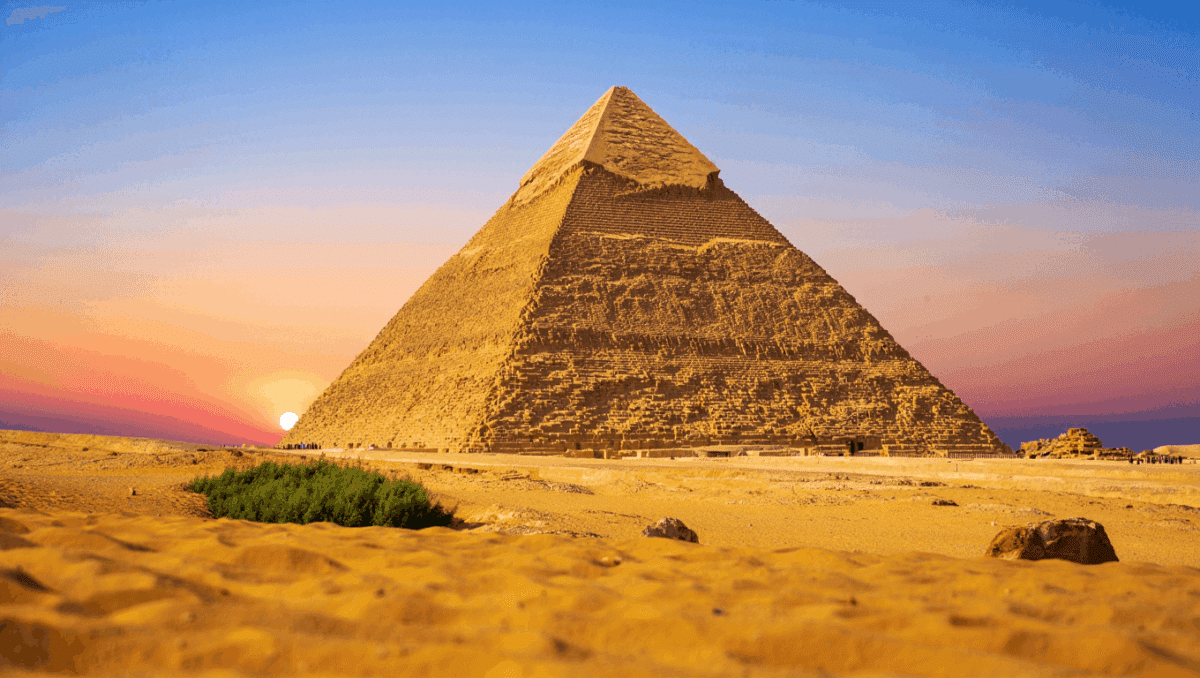
The Great Pyramid at Giza has long been a magnet for grand theories, but a recent paper has pushed that tendency into bold new territory: an engineer claims the monument could be tens of thousands of years older than mainstream archaeology accepts. The assertion has reignited debate online and in specialist circles, partly because it leans heavily on stone erosion patterns rather than the array of archaeological dating methods Egyptologists typically rely on.
The paper, authored by an engineer at the University of Bologna and circulated on ResearchGate, proposes that weathering on internal and formerly sheltered blocks points to a very ancient construction date. Critics say the idea sounds intriguing at first glance but unravels under closer inspection, leaving the pyramid’s conventional timeline intact for now.
What the new erosion-based analysis proposes
Alberto Donini, the study’s author, bases his argument on comparisons between blocks that were once protected by the pyramid’s smooth limestone casing and those long exposed to the elements. He measured differences in surface degradation and fed those measurements into a statistical model to estimate how long the stones had been exposed.
The Growing Demand for Data-Driven Decision Making in Silicon Valley
He quit, ran out of money, and begged to come back — here’s how his boss reacted
Key claims from the paper include:
- Modeled dates place the Great Pyramid’s construction somewhere in the broad range of 9000 BCE to 37,000 BCE.
- The study reports an average (mean) estimate near 23,000 BCE, and cites a roughly 68 percent probability for the wider bracket.
- From this, the author suggests an advanced pre-Holocene civilization could have existed in the Nile region capable of large-scale stone architecture long before the dynastic era.
Why many scientists are unconvinced
Skepticism among archaeologists and science journalists centers on the limits of using erosion as a clock. James Felton of IFLScience summarized the main criticism: the method may appear reasonable superficially, but relies on assumptions that are hard to defend across millennia.
Major issues raised include:
- Variable climate history: Egypt’s environment has alternated between wetter and drier phases, affecting rates of stone weathering.
- Micro-environmental differences: Sand burial, splash from seasonal rains, exposure to windblown grit, and human activity all create uneven erosion patterns.
- Loss of original casing: The pyramid once wore a polished limestone skin; reuse of those casing stones and later repairs complicate assessments of which surfaces were sheltered and for how long.
- Methodological assumptions: The model assumes relatively constant rates of weathering and comparable initial surface conditions—assumptions many specialists find unjustified over tens of thousands of years.
- Peer review status: The paper is currently available on ResearchGate and has not completed formal peer review, limiting confidence in its conclusions.
How the pyramids fit into the established archaeological timeline
Mainstream Egyptology places the construction of the Great Pyramid (often attributed to Pharaoh Khufu) in the Fourth Dynasty, around c. 2600 BCE. That placement isn’t arbitrary; it rests on multiple lines of evidence collected over decades.
Types of evidence supporting the conventional date
- Material culture: Pottery, tools, and settlement remains found in association with pyramid complexes demonstrate a clear technological and cultural continuity leading to the Old Kingdom.
- Inscriptions and historical records: Tomb inscriptions, king lists, and later historical references tie monumental building projects to a coherent dynastic sequence.
- Radiocarbon and organic remains: Charred wood, plant fibers, and other organic samples recovered from construction contexts have been radiocarbon-dated and align with the 3rd millennium BCE timeframe.
- Architectural evolution: The step pyramid at Saqqara and other pre-Giza structures show a gradual development of stoneworking skills and project scale that culminate with the Giza monuments.
What would be needed to overturn the consensus
Extraordinary claims require extraordinary evidence. For the notion of a 20,000–30,000-year-old pyramid to gain traction among specialists, researchers would need multiple, independently verified lines of proof:
- Peer-reviewed publications detailing methods, raw data, and error analysis for erosion modeling.
- Independent dating from secure contexts—radiocarbon, optically stimulated luminescence (OSL), or other chronometric techniques—directly associated with construction layers.
- Stratigraphic data and in-situ finds that clearly tie ancient materials to the building phase rather than later intrusions or repairs.
- Reproducible replication of erosion-rate experiments across different Giza blocks and comparable sites, addressing environmental variability.
Until those kinds of corroborating results arrive, the idea remains a provocative hypothesis rather than a replacement for the well-supported 3rd-millennium BCE model. The debate highlights how different scientific tools—geological modeling versus archaeological stratigraphy and dating—can yield competing narratives, and why cross-disciplinary scrutiny is essential as new claims about ancient monuments surface.
You might also like:
- For TikTok, she dances on a Mayan pyramid—and the crowd makes her regret it
- Roman stone-lined basin discovered predates concrete, reveals advanced engineering
- Ziggurat of Ur preservation: Iraq uses bricks matching 5,000-year-old original
- Oldest poisoned arrowheads date back 60,000 years, show hunters’ knowledge of toxins
- Lighthouse of Alexandria: raised ancient blocks shed light on construction

William Anderson is a multimedia producer specializing in videos, podcasts, and interactive galleries. With five years of immersive content creation, he turns information into a rich audio‑visual experience. His storytelling skills draw you directly into the heart of every story, on any platform.


Yo, have you ever thought about how the Great Pyramid might be playing us? Like, Surprise! Im actually older than you think! Cant trust those stones, man. Mind-blowing stuff!
Dang, dude, totally feel ya on that one! The Great Pyramid be like, Surprise, Im the original OG! Those stones playin us all along. Cant trust em, man! Its like, whos really in charge here – us or the pyramid? Mind-blowing for real!
Man, these pyramids keep surprising us! Its like finding out your grandpa was a secret rockstar back in the day. Cant wait to see if this new study shakes up the history books for real!
I know, right? These pyramids are like the OG rockstars of ancient times! Imagine if they had a secret pyramid party going on back then. Cant wait to see if this study drops some history bombshells!
Man, imagine if those pyramids are older than we thought! Like, what if they were built by aliens or time travelers? Its like digging into a history mystery, dude. Who knows what secrets those ancient stones are hiding!
Dude, imagine if those pyramids are even older than we thought! Like, what if they were built by aliens or time travelers? Its like unearthing a history mystery, man. Who knows what secrets those ancient stones are hiding! Crazy to think about, right? Makes you wonder what else is out there waiting to be discovered in the sands of time.
Man, the Great Pyramids like that cool grandpa with more stories than you thought. Always surprising us, huh? Cant wait for the scientists to sort out this debate. Ancient historys one wild ride!
Man, this news got me thinkin about all them ancient mysteries. The Great Pyramid might be even older? Crazy stuff! Cant wait to see if they crack this case wide open. Time for some pyramid-themed detective work, eh?
Man, the Great Pyramids age debate is like a never-ending soap opera. Is it older than we think? New study says yes. The plot thickens! Im grabbing my popcorn for this archaeological drama!
Ive always been intrigued by the mystery surrounding the Great Pyramid. If its even older than we thought, who knows what else we might discover about ancient civilizations! Time to rewrite those history books, huh?
Man, this studys like a plot twist in a movie you thought you had all figured out. The Great Pyramid playing hard to get with its age, huh? Maybe its just enjoying keeping us on our toes.
Man, the Great Pyramids age debate is wild! Always thought it was like set in stone (pun intended). But erosion clues? Mind-blown. Cant wait for the archaeo-showdown on this. Time for some popcorn!
Man, imagine if the Great Pyramid of Giza is even older than we thought? Thatd be mind-blowing! Cant wait to see how this discovery shakes up the history books. Time for some ancient mysteries to unravel!
I mean, who even knows how old our history is, right? One day theyre like, Pyramids are this old, next thing you know, theyre older. Its like a soap opera, but with rocks.
Man, imagine if these pyramids are older than we thought! Its like finding out your grandmas secretly a rockstar. Cant wait for the archaeology drama thats gonna unfold from this bombshell revelation!
Man, imagine the Great Pyramid being even older than we thought! Its like finding out your grandpa is actually a hundred years older than he claimed. Cant wait to see how this shakes up the history books!
I always knew those old stones held more secrets than they let on! Bet the Great Pyramids got a few tricks up its sleeve yet. Cant wait for the next big revelation to blow everyones minds!
Man, this discoverys like finding a hidden level in a classic video game! The Great Pyramid may be older? Its like the history books need a major update. Cant wait for the next plot twist!