
Show summary Hide summary
- Why Titan Captivates Astrobiologists and Planetary Scientists
- Key Discoveries from Cassini and Huygens That Changed the Conversation
- Methane Seas and Surface Chemistry: An Alien Solvent System
- Where Life Could — Theoretically — Exist on Titan
- How Upcoming Missions Will Test Habitability Questions
- Scientific and Philosophical Challenges to the Idea of Life on Titan
- What Discoveries on Titan Would Mean for the Search for Life
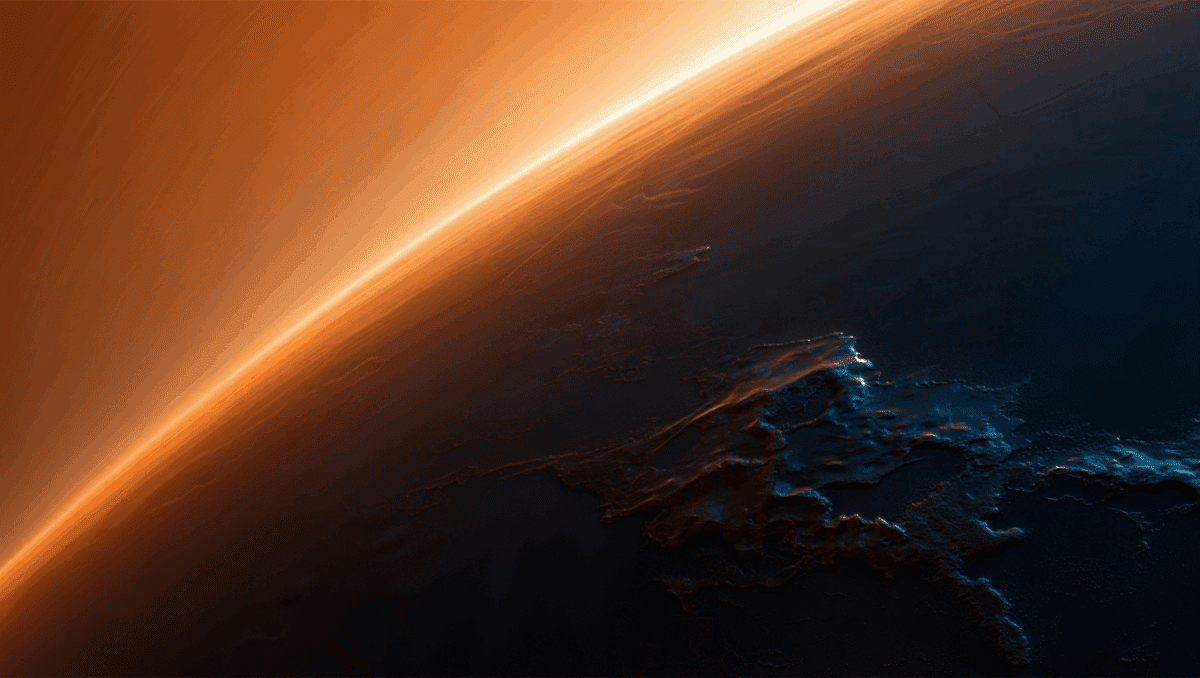
Saturn’s largest moon, Titan, keeps pulling scientists and the public into a blend of mystery and scientific promise. With a thick orange haze, liquid seas on its surface, and a chemistry unlike Earth’s, Titan raises one of the most tantalizing questions in planetary science: could it harbor forms of life — or at least the chemistry that leads to life?
Over decades of observations and a landmark probe mission, Titan has gone from a hazy dot to a complex world with active weather, organic chemistry, and possible reservoirs of liquid water beneath its icy crust. Researchers are now gearing up to test hypotheses in situ, and the debate about habitability on this frigid satellite has never been livelier.
Why Titan Captivates Astrobiologists and Planetary Scientists
The Growing Demand for Data-Driven Decision Making in Silicon Valley
He quit, ran out of money, and begged to come back — here’s how his boss reacted
Titan is unlike any other moon in the solar system. It’s the only moon with a dense atmosphere and the only body besides Earth known to have stable liquids on its surface. That combination creates a natural laboratory for prebiotic chemistry and alternative biochemistries.
- Thick nitrogen atmosphere: Dominated by nitrogen with methane traces, Titan’s atmosphere fuels complex organic reactions driven by sunlight and energetic particles.
- Surface liquids: Vast lakes and seas of methane and ethane persist at frigid temperatures around -179°C (-290°F), forming weather systems and shorelines.
- Rich organic chemistry: Sunlight and Saturn’s magnetosphere break methane molecules, producing heavier hydrocarbons and nitriles that settle onto the surface.
Key Discoveries from Cassini and Huygens That Changed the Conversation
The Cassini orbiter and Huygens probe reshaped our understanding of Titan during their decade-long investigation of the Saturn system. Instead of a static, dead world, they revealed dynamics, variety, and active processes.
Major findings
- Huygens enabled the first direct look at Titan’s surface, showing drainage channels, rounded pebbles, and evidence of liquid flow.
- Cassini mapped methane lakes in polar regions and tracked seasonal changes, indicating a methane cycle akin to Earth’s hydrological cycle.
- Measurements detected complex organic aerosols in the atmosphere and produced evidence for chemical building blocks that could be precursors to life.
Perhaps most intriguing was the suggestion of a subsurface ocean. Gravity and radar data indicated layers of liquid water and ammonia under the ice shell, opening the possibility of an environment with liquid water in contact with rock — a classic criterion for habitability.
Methane Seas and Surface Chemistry: An Alien Solvent System
Titan’s lakes of liquid methane and ethane are a striking departure from Earth’s water seas. At Titan’s temperatures, hydrocarbons are liquids, enabling surface-based weather and chemistry that can mimic, yet differ sharply from, processes on our planet.
- Organic deposition: Complex organics rain out of the atmosphere, settling on dunes and shores and supplying a surface rich in carbon-based compounds.
- Possible chemical gradients: Interfaces between liquid hydrocarbons and icy coastlines could host concentration mechanisms essential for chemical evolution.
- Surface geology: Cryovolcanism, erosion, and seasonal flooding reshape landscapes and expose subsurface materials.
Where Life Could — Theoretically — Exist on Titan
When scientists talk about life on Titan, they separate the possibilities into three general environments: the dense atmosphere, the hydrocarbon lakes and surface, and a potential subsurface ocean.
Atmosphere
The upper atmosphere produces complex organic molecules via photochemistry. Some researchers propose that aerosol particles falling through warmer layers could host chemical reactions leading to more complex organics.
Surface and lakes
Speculation here centers on life using methane or other hydrocarbons as a solvent instead of water. While such biochemistry would be fundamentally different from terrestrial life, some laboratory studies suggest methane-based chemistries could support metabolic-like processes under Titan conditions.
Subsurface ocean
A subsurface water-ammonia ocean would be the most Earth-like habitat. If it contacts a rocky core, hydrothermal processes could supply energy and nutrients. This scenario mirrors environments on Europa and Enceladus that are considered promising for life.
- Surface habitats would require alternate solvent chemistry and adaptations to extreme cold.
- Subsurface habitats would rely on liquid water, heat, and mineral interactions for chemical energy.
How Upcoming Missions Will Test Habitability Questions
The most anticipated mission addressing Titan’s mysteries is NASA’s Dragonfly rotorcraft. Scheduled to launch in the mid-2020s, Dragonfly will land and hop across diverse sites, sampling organics and probing surface and atmospheric processes.
What Dragonfly aims to do
- Drill and sample surface material for organic compounds and chemical signatures.
- Measure isotopic ratios and trace gases to constrain sources and sinks of methane and other organics.
- Investigate energy gradients and environmental conditions that might permit prebiotic chemistry.
Dragonfly’s mobility is crucial: by accessing dunes, lakebeds, and other terrains, the mission will test multiple hypotheses about how organics are produced, concentrated, and altered on Titan.
Scientific and Philosophical Challenges to the Idea of Life on Titan
Despite the fascination, Titan presents severe obstacles to traditional life as we know it. Temperatures are extremely low, chemical reaction rates are slow, and water — the solvent for all known Earth life — is frozen at the surface.
- Energetics: Chemical energy sources for metabolism are limited in the cold hydrocarbon environment.
- Reaction rates: Low temperatures dramatically slow down chemical kinetics, complicating pathways to complex molecules.
- Solvent constraints: Any hypothetical methane-based biochemistry would face very different solubility and structural challenges than water-based life.
Yet these challenges drive creative laboratory experiments and theoretical models that expand our definition of habitability. Even if Titan lacks life, it remains invaluable for understanding how planetary environments produce complex organic chemistry.
What Discoveries on Titan Would Mean for the Search for Life
Finding life — or unmistakable biosignatures — on Titan would transform our understanding of biology’s diversity and distribution in the cosmos. Equally important would be detecting abiotic processes that mimic biological signatures, refining how we identify life elsewhere.
- Evidence of independent origins of life would indicate that life is common given suitable conditions.
- Discovery of alternative solvent-based chemistry would broaden the kinds of worlds considered potentially habitable.
- Insights into prebiotic pathways could illuminate how life begins under radically different conditions than early Earth.
You might also like:
- Will-o’-the-wisps origins: scientists may have found how they form and how life began
- Methane to methanol breakthrough turns greenhouse gas into high-demand methanol
- NASA may have found life on Mars 50 years ago and accidentally killed it
- Saturn mystery solved by astronomers
- 6 million pounds of compost delivered to NYC gardeners in 2025 as part of an organic waste program

William Anderson is a multimedia producer specializing in videos, podcasts, and interactive galleries. With five years of immersive content creation, he turns information into a rich audio‑visual experience. His storytelling skills draw you directly into the heart of every story, on any platform.


Man, Titans like the mysterious kid at school who always surprises you. Methane seas, icy terrain—whats next, aliens sippin cosmic tea? Cant wait for the sequel!
Man, Titans like the ultimate mystery box in space! Methane seas, icy crust, potential for life… Its like playing cosmic bingo with our expectations! What do you think, could those Saturn vibes really hide life in plain sight?
Man, Titans like the mysterious kid in school nobody can figure out. With its methane seas and potential alien chemistry, that moons got astrobiologists buzzing. Who knows what secrets hide in its alien landscape? Exciting stuff!
Bro, imagine if Titans hiding some extraterrestrial homies in its methane lakes. Like, what if theyre just chillin, watching us through their alien telescopes, sippin on some cosmic tea. Mind-blowing stuff!
Man, Titans like the mysterious kid in class whos always up to something cool. Methane seas, icy surface, potential alien life… Its the moon that keeps on giving. Cant wait for the next chapter in this cosmic saga!
I remember this one time, watchin a doc on Titan and its methane seas. Crazy to think bout alien life out there. Who knows whats really goin on in those distant moons, man. Wild stuff.
Yo, dude, I feel ya on that! Watching that doc on Titan mustve been mind-blowing. Alien life chilling in methane seas? Thats like sci-fi come to life, man. Makes you wonder what other crazy stuffs happening out there in those far-off moons. The universe is a total mystery, aint it? Just when you think you got it figured out, it hits you with some more wild stuff. Makes you feel small in the grand scheme of things, huh?
Man, what if Titans got some wild alien crew chilling in its methane seas, huh? Just picturing it blows my mind! Its like a whole sci-fi movie unfolding up there. *Cue X-Files theme*
Man, Titan is like the mysterious kid in school no one understands but everyone wants to be friends with. With its methane lakes and icy surface, its like the ultimate enigma in our cosmic backyard. Who knows what secrets its hiding, right?
Man, Titan is like the ultimate mystery box in space, right? With its methane lakes and weird chemistry, I wouldnt be surprised if we find some funky alien critters chilling there. Saturns moon is basically the sci-fi fans dream come true!
Man, Titans like the mystery kid in class, you know? All those methane seas and chemistry tricks… I cant help but wonder, will we ever uncover its secrets? Imagine the stories it could tell!
Ive always been low-key obsessed with Titan, man. Its like the moon thats so extra, with its methane seas and potential alien chemistry vibe. Imagine if we find some real funky life forms there, thatd be wild!
You know, Titans like that friend whos always full of surprises. I mean, methane seas? Thats some wild stuff! Makes you wonder what other alien tricks its hiding up its sleeve.
I remember watching sci-fi flicks as a kid, dreaming bout life beyond Earth. Now, Titans in the spotlight! Methane seas, alien chem—mind-blowing! Astrobiology just kicked into high gear!
Man, Titans like the mysterious kid in school with all the secrets. Methane seas, crazy surface chemistry — its like a sci-fi movie set! Just waiting for the big reveal, you know? Exciting stuff!
Oh man, youre so right! Titans be like that kid who never spills the tea, keepin us all on the edge of our seats. Its like a wild sci-fi flick, but real life! Cant wait for the grand reveal – gonna be epic!
Man, Titans like the mysterious kid in the playground who might have all the cool toys hidden away. Life on a Saturn moon? Thats some next-level sci-fi stuff! Cant wait to see what else we discover out there.
Dude, totally feel ya on that! Titans be keeping secrets like a mystery box in a cluttered attic. Life on a Saturn moon? Sounds like a plot twist straight outta a sci-fi flick! Cant help but wonder what other mind-blowing stuffs hiding out there in the galactic backyard. Exciting times ahead!
Man, Titans like that mysterious kid in school you cant figure out. Methane seas, icy surface – whats next, alien beach parties? Its like a sci-fi movie, but real. Mind. Blown.
Man, Titans like the mysterious kid at school whos always got secrets to spill. Methane seas, alien chem, Im hooked! Saturns moons the real deal, keeping us astro geeks on our toes!
Man, Titans like the mysterious kid at school who never gives away their secrets. Methane seas, icy surface, potential for life? Its like a sci-fi plot come to life. Im all in for this cosmic mystery show!
Man, Titans like the wild child of Saturns moons, right? With those methane seas and wacky chemistry, its like a sci-fi party up there! Who knows, maybe one day well find some real extraterrestrial shindig going on.
Man, Titans like the mystery guest at the alien party, right? Always intriguing the astrobiologists! With those methane lakes and icy terrain, I bet its hiding some mind-blowing secrets. Whats next, space penguins?