
Show summary Hide summary
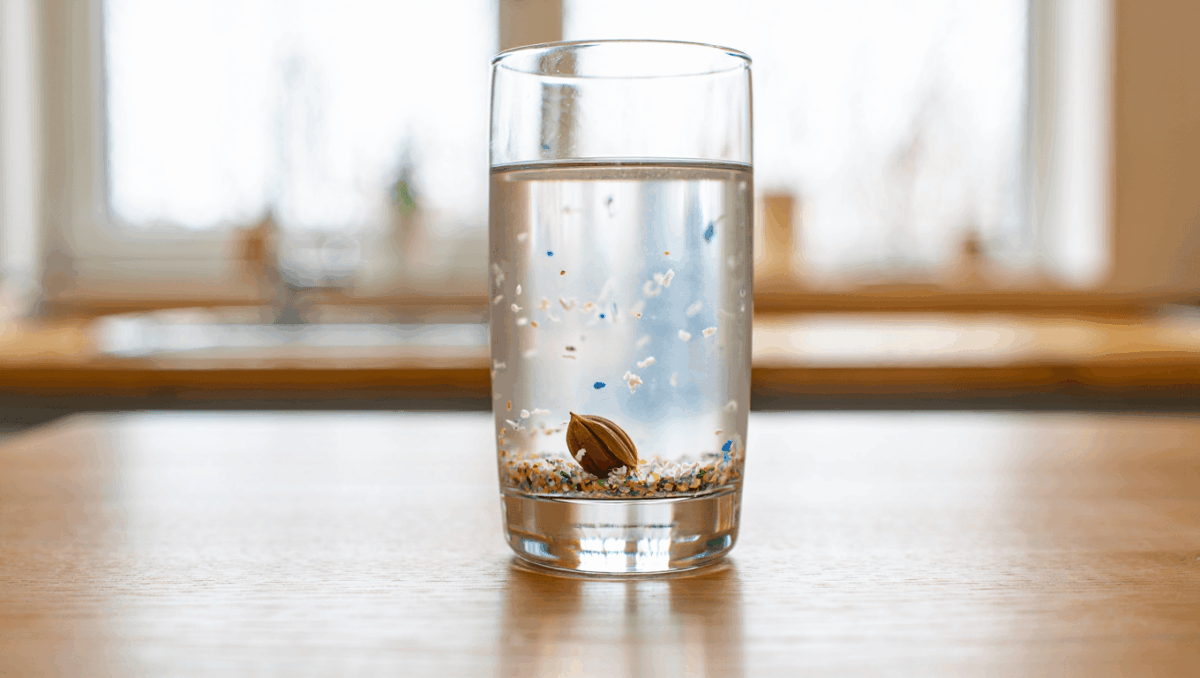
A plant long prized for its nutritional and medicinal uses may have a surprising new role: helping strip tiny plastic particles from drinking water. Recent laboratory work suggests seeds from the Moringa tree — often called the “miracle tree” — can act as a natural water purifier, capturing microplastics at rates that rival conventional chemical treatments.
Researchers feeding microplastic-laden water through a system modeled on municipal filtration found the Moringa seed treatment removed the vast majority of PVC microplastic particles. The finding opens fresh possibilities for low-cost, locally sourced filtration in places where chemical coagulants or infrastructure are limited.
The Growing Demand for Data-Driven Decision Making in Silicon Valley
He quit, ran out of money, and begged to come back — here’s how his boss reacted
How Moringa seeds work as a microplastic filter
Moringa seeds contain naturally occurring compounds that cause suspended particles to clump together, a process known as coagulation and flocculation. In practical terms, tiny plastic fragments that float freely in water are bound into larger aggregates that settle out or can be strained away.
- Natural coagulant action: Seed proteins and other molecules neutralize particle charges and promote aggregation.
- Floc formation: Once particles join into flocs, they become large enough to be removed by simple filtration or sedimentation.
What the experiment did and how it mimicked city water treatment
Scientists deliberately ground PVC into extremely small fragments — tiny enough to resemble the kinds of microplastic pollution found in treated water — then introduced those particles into a treatment line modeled on modern direct filtration plants. The setup included sequential coagulation, flocculation, and filtration stages to simulate real-world municipal processes.
Rather than relying on synthetic chemicals, the team dosed the water with processed Moringa seed material to trigger flocculation, then ran the treated stream through standard filtration media to capture the aggregates.
Key findings: removal rates and comparisons with alum
The Moringa seed approach proved highly effective in the lab. Researchers reported roughly 98.5% removal of PVC microplastics under the test conditions — a performance on par with aluminum sulfate (alum), the widely used industrial coagulant.
Notable observations included:
- Comparable efficiency: Moringa matched or nearly matched alum’s performance in removing microplastic particles.
- Better in alkaline water: The seeds sometimes outperformed alum where water was more basic, suggesting environmental conditions influence effectiveness.
Alum is effective but comes with trade-offs: it produces a toxic sludge that requires disposal and contributes aluminum to the environment, and its production is energy- and resource-intensive. Aluminum exposure has been linked in some studies to neurological effects, which raises concerns about widespread use and residuals.
Advantages and drawbacks of the plant-based method
- Advantages
- Renewable, plant-derived material
- Potentially low-cost for communities already growing Moringa
- Effective for capturing a very high proportion of microplastics in tests
- Drawbacks
- Requires large quantities of seeds to service urban-scale water needs
- Generates organic waste that must be managed
- Performance can vary with water chemistry and seed processing
Real-world practicality: scale, waste, and ideal use cases
A single processed Moringa seed can treat about ten liters of water, which is promising for household or small-community systems but implies major logistical challenges for larger municipalities. Scaling up would demand a steady supply of seed pods, processing capacity, and disposal or reuse paths for the organic residue left behind.
Where this method may be most practical:
- Rural villages and small towns, especially in tropical regions where Moringa is already cultivated
- Emergency or off-grid situations where imported chemicals are unavailable
- Community-level point-of-use treatment systems that can integrate a local biomass supply
In many tropical settings Moringa is grown for food, traditional medicine, and to support beekeeping. That existing cultivation could enable communities to repurpose seed pods for water treatment without heavy new investments in chemical supply chains.
Why removing microplastics from water is urgent
Microplastics are omnipresent: they occur as visible fragments and as particles far smaller than a human hair, and they have been detected in remote environments and in human tissues. Studies estimate that through drinking water and air exposure, people may ingest the mass equivalent of multiple credit cards of plastic each year. Scientists are still studying the long-term health effects, but many plastic particles and associated additives can interfere with hormonal systems and carry other toxicological risks.
Removing microplastics at the treatment stage reduces the burden entering households and ecosystems and may limit downstream exposure through drinking water, agriculture, and wildlife pathways.
You might also like:
- Tamarind powder removes microplastics: three Asian teens win Earth Prize
- Plastic to vinegar: sunlight-powered process converts multiple plastics with no emissions
- Activated carbon from coffee and plastic waste captures CO2 in project by female-led Arab team
- Teen discovers coconut fungi can filter plastic and sunscreen from ocean, wins science fair
- Ban on wet wipes: why consumers must push back now

Michael Thompson is an experienced journalist covering U.S. and global news. With ten years on the front lines, he breaks down political and economic stories that matter. His precise writing and keen attention to detail help you grasp the real‑world impact of every event.


Yo, this news bout Moringa seeds filterin microplastics got me reelin. Nature showin us up with its tricks, huh? Bet those miracle tree seeds are throwin some shade at our fancy filters now!
Yo, did ya hear bout them Moringa seeds? Filtering out microplastics like champs! Natures got some cool tricks up its sleeve, eh? Mother Earth comin in clutch with them eco-friendly solutions!
Yo, those Moringa seeds are on a roll, huh? Natures like, Hold my drink, I got this! Mother Earths like the MVP of eco-friendly solutions, comin through with the mic drop! Cant wait to see what other tricks shes got up her sleeve, right?
Oh, man, I once tried filtering water with random stuff in the kitchen, ended up with a mess! But Moringa seeds taking out microplastics? Thats some next-level science meets nature magic right there. Natures got tricks up her sleeve, huh?
Dude, I feel ya! Kitchen experiments can go from zero to chaotic real quick. But Moringa seeds taking on microplastics? Mother Natures like, Hold my tea. Its like shes got a secret superhero stash or something! Ever stumble upon other mind-blowing nature hacks in your kitchen adventures?
Man, Moringa seeds filtering microplastics? Thats wild! Nature never ceases to amaze me. Bet those little seeds are doing more for the planet than most humans. We gotta step up our game, seriously.
Man, this Moringa tree is like a superhero against microplastics! Filtering tap water like a boss, removing over 98% of those sneaky plastic bits. Natures got some serious skills, huh? Mother Earth for the win!
Dang, these Moringa seeds be like natures little superheroes, swoopin in to save the day! Filtering out microplastics like its no biggie, over 98%? Thats some serious plant power right there. Mother Nature never ceases to amaze, huh?
Yo, imagine if natures fixing our mess for us? Moringa seeds filtering out microplastics from tap water like a boss! Mother Earth be like, Yall need help? Props to those miracle seeds, doing what we couldnt.
Dude, imagine nature pulling a superhero move! These Moringa seeds filtering out microplastics from tap water like its no biggie. Mother Earth always showing us how its done, huh? Natures got our backs, man.
Dang, Mother Nature flexing hard with those Moringa seeds! Filtering out microplastics like a boss. Cant help but feel like were the ones still playing catch-up, huh? Natures on another level, man. Always has been, always will be. Just gotta respect the OG, right?
Man, nature always surprises me! Moringa seeds filtering out microplastics? Thats some next-level stuff right there. Mother Earth never fails to show us how to clean up our mess.
Dude, aint nature a sneaky genius? Moringa seeds playing janitor for microplastics? Mother Earths really out there showing us how its done. Gotta give props where props are due, right? Crazy how shes like, Here, lemme help ya out with that mess you made! Natures like the ultimate humble-bragger, man.
Man, Moringa seeds doing the job better than my ex dodging responsibilities! Filtering out 98% of microplastics from tap water? Thats nature showing off. Can these seeds also make my inbox 98% spam-free?
Man, I remember hearing bout Moringa seeds in bio class! Crazy how theyre out here cleaning up our tap water from those sneaky microplastics. Natures got tricks up her sleeve, huh? Mother Earth be like, I got this!
Yo, check this out! Moringa seeds filtering microplastics in tap water like magic? Thats wild! Nature always coming through with the solutions. Who needs fancy tech when you got miracle tree seeds doing the job?
Reminds me of that time I tried using coconut husks to filter my aquarium. But this Moringa seed thing? Sounds like natures got some filter game! Wonder if its as effective as they say, or just another eco-trend.