
Show summary Hide summary
- Why Nepal stepped in and what it promised
- Big obstacles: why removing Everest’s trash is so hard
- What’s being left behind and why it matters
- Who’s responsible — and whose priorities win?
- Controversies and practical setbacks that undermined efforts
- Ideas under discussion and technology being tested
- How climate and tourism trends complicate cleanup work
- Voices from the mountain: perspectives rarely seen in headlines
- What watchdogs and experts recommend next
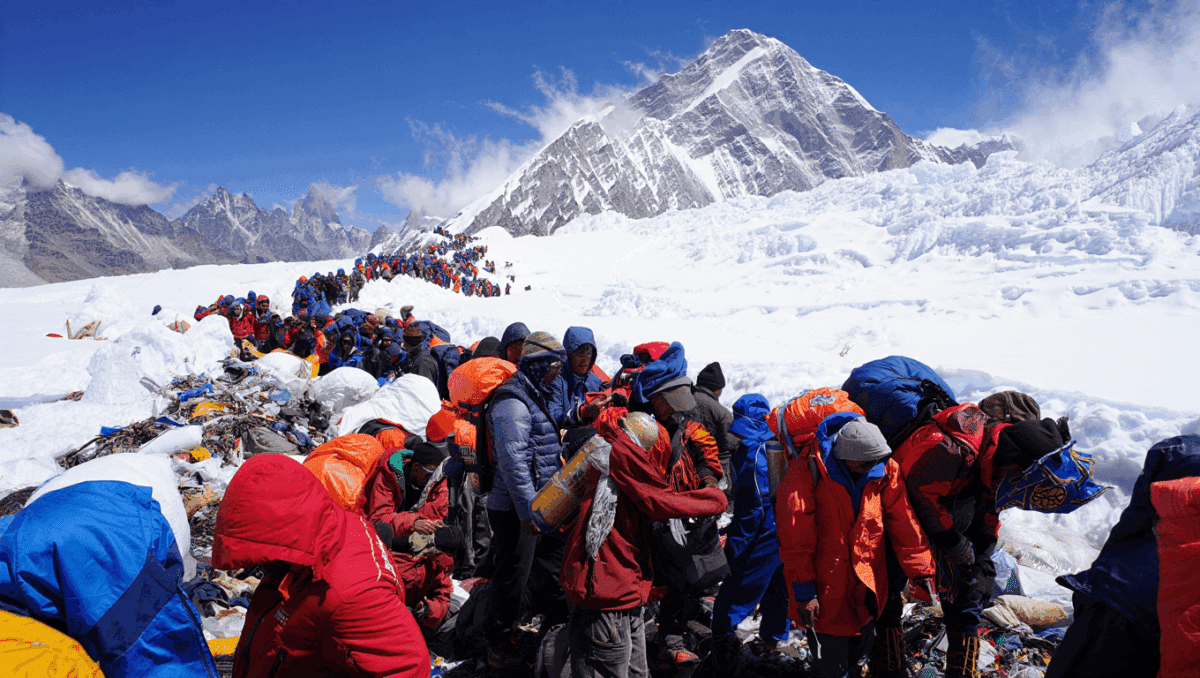
When the climbing season opens, Mount Everest attracts thousands of people — climbers chasing a summit, guides ferrying equipment, and a steady stream of support staff. What once was a remote, snow-covered peak has become a crowded, commercialized route where discarded oxygen bottles, tents, and food packaging accumulate faster than the weather can erase them. Nepal launched a visible cleanup effort in recent years to reverse that trend, but the operation has been more complicated and less successful than officials hoped.
From government pledges and high-profile cleanup expeditions to public embarrassment as litter and human waste remained visible on the slopes, the campaign revealed stubborn logistical and cultural problems. The story is not just about trash on a mountain; it exposes the limits of policy when extreme altitude, rising tourism, and local livelihoods collide.
Why Nepal stepped in and what it promised
Nepal’s mountain regions are central to the country’s economy and identity. As Everest drew more climbers, the environmental toll became harder to ignore, and politicians responded by promising cleanup drives and stricter rules for expedition teams.
The Growing Demand for Data-Driven Decision Making in Silicon Valley
He quit, ran out of money, and begged to come back — here’s how his boss reacted
- Policy actions: Authorities announced measures aimed at reducing waste and holding climbers accountable for material they brought up the mountain.
- High-visibility cleanups: Teams of volunteers and paid workers were organized to retrieve trash, sometimes accompanied by international groups and media coverage.
- Public messaging: The effort was promoted as both a national duty and a tourism safeguard, intended to restore Everest’s image.
These initiatives were intended to be decisive. Instead, they exposed gaps between policy intentions and what is feasible on the world’s highest slopes.
Big obstacles: why removing Everest’s trash is so hard
The mountain’s extreme environment creates unique challenges that ordinary cleanup programs don’t face. Even experienced climbers and Sherpa guides testified that the conditions make waste collection unpredictable and dangerous.
Altitude and weather
At altitudes above 20,000 feet, workers fight hypoxia, severe cold, and sudden storms. Carrying heavy sacks of trash down steep ice fields and crevasses multiplies the risk. For many teams, the choice between safety and hauling debris is stark.
Logistics and cost
Getting crews and gear to remote camps requires helicopters, porters, and complex coordination. Sorting, packing, and transporting waste off the mountain demands time and money that local authorities and expedition operators often lack or are unwilling to commit.
- Transportation costs are high and unpredictable.
- Safe handling of hazardous materials, such as used oxygen canisters and fuel containers, needs special procedures.
- At lower camps, infrastructure for securely storing and transporting collected waste is limited.
Human behavior and incentives
Policies rely on climbers and companies to comply. Some teams do follow rules, but others cut corners when weighed against summit ambitions and tight schedules. Weak enforcement and the remote nature of operations make penalties difficult to apply consistently.
What’s being left behind and why it matters
The debris on Everest is varied: broken tents, empty oxygen cylinders, food packaging, climbing gear, and human waste. Each category presents different clean-up and health challenges.
- Abandoned gear: Heavy or damaged ropes, tents, and metal frames are often left when they become cumbersome.
- Single-use plastics and packaging: Lightweight and ubiquitous, these items float or get buried and remain for decades.
- Medical and hazardous waste: Used syringes, broken oxygen bottles, and fuel containers pose environmental and safety risks.
- Human remains and bodily waste: Extreme cold preserves bodies and scatters human waste that cannot be biodegraded—raising ethical, cultural, and sanitation issues.
This combination not only mars Everest’s scenery but carries consequences for local water sources and wildlife, and affects the mountain’s status as a global icon.
Who’s responsible — and whose priorities win?
Blame and responsibility are tangled. Sherpa guides, expedition operators, foreign climbers, local communities, and the Nepali government all play roles, and their priorities sometimes conflict.
- Guides and support staff: Sherpas bear a disproportionate share of the physical cleanup work and safety risk, yet many feel undercompensated for it.
- Commercial operators: Companies that book climbers and run logistics are expected to manage waste, but standards and enforcement vary.
- Climbers: Individual behavior matters, and not all climbers comply with deposit and carry-out rules.
- Government agencies: Officials issue regulations and organize campaigns, but limited budgets and coordination problems hamper follow-through.
The result is an uneasy truce: symbolic cleanups and regulations exist, but day-to-day management and enforcement on the slopes lag behind.
Controversies and practical setbacks that undermined efforts
Several high-profile incidents highlighted the fragility of Nepal’s cleanup strategy.
- Some enforcement mechanisms relied on paperwork or return inspections that were hard to implement in a fast-moving climbing season.
- Reports surfaced of trash being transported off the mountain only to be dumped elsewhere, undermining public trust.
- Weather delays and safety concerns forced crews to abandon collections mid-expedition.
- Disputes over who should pay for removal—local agencies, expedition companies, or foreign governments—further stalled work.
These setbacks eroded political capital and made it difficult to build sustained momentum.
Ideas under discussion and technology being tested
Despite the difficulties, new approaches are emerging as authorities and non-profits search for realistic solutions. Several initiatives are being piloted or proposed to improve results.
Economic incentives and accountability
Some programs aim to tie climbing permits to tangible requirements, such as deposits or mandatory waste-return verification, to encourage compliance. The challenge is to balance deterrents with access for climbers and fairness for local businesses.
Specialized cleanup teams and equipment
Expedition-style cleanup teams trained in high-altitude operations and equipped with the right tools can retrieve more debris safely. Partnerships with international organizations and private donors are helping fund these missions.
Waste management infrastructure
Investments in collection points, secure transport methods, and proper disposal facilities at lower elevations would reduce the risk that recovered waste simply ends up in other sensitive environments.
Education and cultural shifts
Long-term change depends on shifting behavior among climbers, guides, and operators. Outreach campaigns that blend local stewardship with global responsibility are part of the plan, though they require sustained effort and funding.
How climate and tourism trends complicate cleanup work
Rising temperatures and increased traffic amplify the scale of the problem. Melting ice can expose long-buried items that weren’t accounted for in prior cleanups, and the growing commercial market brings more people—and more waste—each season.
- Climate change is revealing previously buried debris and changing conditions for safe retrieval.
- Growing tourism increases the volume of both intentional and accidental waste generation.
- Economic dependency on mountaineering income makes strict, costly cleanup policies politically sensitive for local communities.
A comprehensive approach must square environmental goals with the economic realities of Himalayan life.
Voices from the mountain: perspectives rarely seen in headlines
Local guides and cleaners speak of fatigue and frustration. Many are proud to protect their homeland but warn that short-term actions without structural change will have limited effect. Foreign climbers who’ve stayed to help clean express a similar mix of awe and concern, noting that the mountain’s allure shouldn’t exempt visitors from stewardship.
Practical, sustained investment and better coordination are recurring themes in these conversations, along with calls for transparent reporting so progress is verifiable rather than merely advertised.
What watchdogs and experts recommend next
Environmental groups and mountaineering organizations are advocating for multi-pronged strategies that combine stricter permit conditions, funded cleanup teams, greater accountability for operators, and improved waste-handling systems at lower altitudes. Pilots using tracking tags on equipment and GPS logs of collected waste have been suggested to increase transparency.
You might also like:
- Mount Everest climbers rescued after freak October blizzard leaves dozens stranded
- Ocean plastic cleanup: phone case brand builds autonomous floating collection platform
- Japanese eco fireworks use water-soluble shells to cut debris
- San Francisco Trash Art Wows: 35 Years of Creativity From Recycled Garbage at Free Gallery Event
- 100,000 new jobs to clean up the coastline and protect species from plastic, overdevelopment

William Anderson is a multimedia producer specializing in videos, podcasts, and interactive galleries. With five years of immersive content creation, he turns information into a rich audio‑visual experience. His storytelling skills draw you directly into the heart of every story, on any platform.


Man, that Everest cleanup fiasco? Reminds me of that time my friends tried to organize a beach cleanup but ended up making a bigger mess. Hope Nepal gets it right next time. Mother Nature deserves better.
I once thought Everest was all about reaching the top, not messing it up. Whos in charge of this mess? Cant they clean up without causing more trouble? Its like a bad plot twist in a movie!
Man, its frustrating to see the Everest cleanup failing. Cant folks just respect nature and clean up after themselves? Mother Earth deserves better. Hopefully, Nepal can figure out a solid plan to tackle this mess.
I know, right? Its like some folks missed the memo on basic decency. Like, cmon, clean up your own backyard, literally! Mother Earth aint your personal trash can. Lets hope they get their act together in Nepal. We cant let Everest turn into a garbage dump on our watch.
Man, its like a plot twist gone wrong! Everest trash cleanup failing? Thats some next-level drama. But hey, lets hope Nepals got a solid Plan B to keep that mountain pristine. Mother Nature deserves better, right?
Man, cleaning up Everest feels like mopping during a hurricane! Its like, Hey, lets tidy up this colossal mess… at 29,000 feet, in freezing winds, with oxygen tanks on our backs. Someone bring these folks a warm cuppa and a reality check!
Dang, talk about a chilly challenge! Scaling Everest is already a wild ride, now adding a cleanup? Thats like trying to fold laundry in a wind tunnel! I cant even keep my room tidy, let alone a mountain. They deserve more than a cuppa after that. Maybe a hot tub and a medal!
I once trekked in Nepal, saw trash on Everest. Sad to hear about the failed cleanup. We gotta protect these wonders. Mother Nature aint the janitor, folks! Time to step up, save our playgrounds.
Man, its like trying to clean up after a wild party but on a massive mountain scale! Can you even imagine the struggle of hauling trash down from Everest? Mother Natures like, Nope, not that easy, folks.
Man, cleaning up Everest is like trying to mop up a waterfall with a toothbrush. The scale is insane. But hey, we gotta keep at it. Mother Nature aint gonna clean up our mess forever.
Man, aint that the truth! Everests like a giant kids room after a wild party, but instead of Legos, its trash everywhere. We definitely gotta step up our game before Mother Nature throws her hands up and says, Im out! Its like were playing catch-up with a speeding train. How do we even begin to tackle a mess this massive?
Man, the Everest cleanup fails a harsh reminder of human impact. Were like messy guests in natures house. Hope Nepals got a solid plan to tackle this mess for good. Mother Earth deserves better.
I once trekked Everest, saw trash piles. Shame it’s a mess. Why cant we clean up right? Nepal’s trying, but dang, tough job. Hope they find a way, for Earths sake!
Dang, Everest? Thats no small feat, dude! Seeing trash up there mustve been a bummer. Nepals hustle is real, but yeah, cleaning up a whole mountain? Tough gig. Lets hope they figure it out, for Mother Earths sake, right?
Man, Everests cleanup sounds like a real mess. Reminds me of my failed attempt to declutter the garage last weekend. Always harder than it looks, huh? Hope they figure it out soon.
Oh man, I feel you! Decluttering can be a real nightmare. Its like trying to conquer a mini Everest in your own garage, right? Hopefully both you and the cleanup crew find a way to tackle the mess soon. Good luck with your next attempt!
Man, its like cleaning up after a house party gone wrong on the worlds highest peak. Youd think wed treat Everest with more respect. Mother Nature aint a maid, folks. Time to get our act together.
Man, aint that the truth. Its like the aftermath of a wild party up on Everest! Mother Nature must be shaking her head at us. We gotta step up our game and show some respect to the big lady herself. Time to clean up our act, folks!