
Show summary Hide summary
- How Hubble and Webb complement each other to reveal Saturn’s hidden layers
- New atmospheric features revealed: jet ribbons, lingering storm scars, and southern convective activity
- The polar hexagon: a rare, decades-spanning weather phenomenon
- Infrared surprises: polar glows, ring brightness, and possible auroral signals
- Seasonal context and what the observations mean for future studies
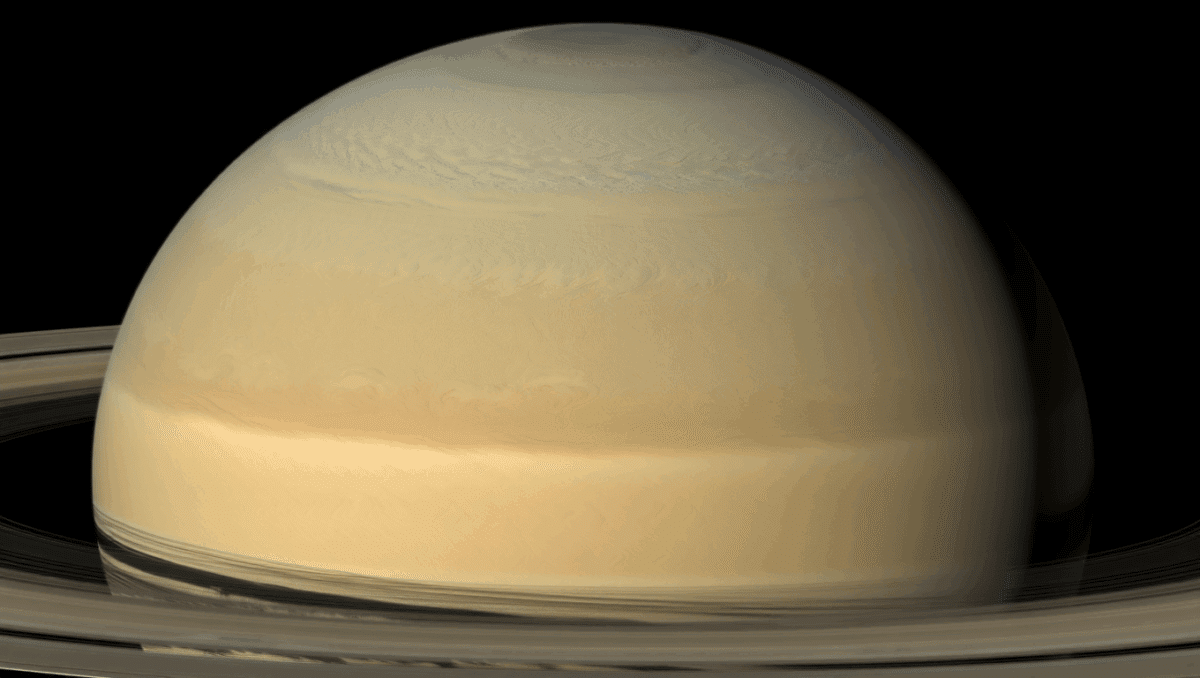
Saturn has been photographed like never before: two of NASA’s flagship observatories—Hubble and the James Webb Space Telescope—have returned images that peel back layers of the planet’s atmosphere and reveal its rings in startling new detail. The pair of perspectives, one in visible light and the other in infrared, combine to tell a richer story about the gas giant’s storms, winds, and seasonal changes.
These images are more than eye candy. By comparing what Hubble sees in reflected sunlight with Webb’s ability to detect heat and deeper cloud layers, scientists can trace weather patterns and atmospheric structure across scales that were previously out of reach.
How Hubble and Webb complement each other to reveal Saturn’s hidden layers
The Growing Demand for Data-Driven Decision Making in Silicon Valley
He quit, ran out of money, and begged to come back — here’s how his boss reacted
Hubble captures subtle color and cloud-top detail in visible light, making it ideal for tracking banding patterns, transient storms, and the fine color differences across the planet’s face. Webb, operating in the infrared, penetrates lower into the atmosphere and exposes deeper cloud formations, thermal contrasts, and emissions that are invisible in optical wavelengths.
Key observational facts
- Hubble’s shot was taken in August 2024 as part of the long-term OPAL (Outer Planet Atmospheres Legacy) monitoring program.
- Webb observed Saturn a few months later using Director’s Discretionary Time, giving researchers a complementary infrared look.
- The two observations were separated by about 14 weeks, showing Saturn’s changing appearance as it moves toward the 2025 equinox.
New atmospheric features revealed: jet ribbons, lingering storm scars, and southern convective activity
In Webb’s infrared view a sinuous jet known as the “ribbon wave” winds across Saturn’s northern mid-latitudes, revealing the imprint of deeper atmospheric waves that barely show up in visible light. A compact bright spot near that ribbon marks the fading trace of the massive Great Springtime Storm that roiled the planet in 2011–2012. Multiple other compact storms pepper the southern hemisphere in Webb’s image, evidence of vigorous convection below the cloud tops.
- Ribbon wave: a long-lived jet stream whose shape is driven by subsurface waves.
- Storm remnant: a small but persistent feature tied to the 2011–2012 superstorm.
- Southern storms: scattered convective cells that show up clearly in infrared.
These patterns are sculpted by winds and wave interactions under the visible cloud deck, making Saturn an outstanding natural laboratory for studying extreme fluid dynamics and atmospheric physics.
The polar hexagon: a rare, decades-spanning weather phenomenon
Saturn’s famous north-polar hexagon, first photographed by Voyager in 1981, remains faintly visible in both Hubble and Webb frames. The geometric jet feature has persisted through many seasons, underscoring the stability of some large-scale atmospheric processes on gas giants.
Because the northern pole is tilting into winter, Earth-based and space-based views will grow progressively limited: the pole will spend roughly 15 years in reduced sunlight, so these images likely represent some of the last high-resolution looks at the hexagon until the pole returns to sunlight in the 2040s.
Infrared surprises: polar glows, ring brightness, and possible auroral signals
Webb’s infrared data shows the poles with a distinctive grey-green tone at wavelengths near 4.3 microns. Scientists suggest two leading explanations:
- a layer of high-altitude aerosols that scatters or emits differently at those wavelengths, and
- auroral-type emissions produced when charged particles interact with Saturn’s magnetic field.
The rings stand out exceptionally bright in Webb’s image because they are largely composed of highly reflective water ice, which shines at infrared wavelengths when illuminated. In Hubble’s visible-light frame the sunlit face of the rings is still bright but reveals more of the shadows that the rings cast on the planet’s disk.
Subtle ring structures captured by both telescopes
- Spokes and fine structure in the B ring appear differently between infrared and visible observations.
- The tenuous F ring looks razor-thin and well-defined in Webb’s view, while it appears only faintly lit in Hubble’s image.
- Shadows and sunlight geometry highlight differences in how the rings and planet reflect and emit light at different wavelengths.
Seasonal context and what the observations mean for future studies
These 2024 images were taken while Saturn moves from northern summer toward the 2025 equinox, a shift that gradually improves our view of the southern hemisphere. As Saturn’s tilt changes through the next decade, astronomers expect progressively clearer views of southern atmospheric activity, peaking through the 2030s.
Long-term monitoring programs like OPAL provide a decades-long record of banding changes, storm cycles, and seasonal shifts. Webb’s sensitivity to infrared wavelengths now layers additional, deeper-probing information onto that record, helping researchers measure vertical cloud structure, thermal contrasts, and particle layers that Hubble cannot see alone.
By combining datasets from both observatories, scientists can track the evolution of individual storms, study how jet streams like the ribbon wave form and persist, and better understand how Saturn’s internal dynamics interact with solar-driven seasonal forcing—work that will continue as the telescopes return to the planet in coming years.
You might also like:
- Saturn mystery solved by astronomers
- Gas giant exoplanet where clouds turn to stone
- 2025’s Final Planet Parade Approaches: Learn How to Witness This Celestial Event!
- Bizarre comet stumps world’s most powerful telescopes
- Roman Space Telescope survives attempted budget cuts, set to launch 9 months early

Michael Thompson is an experienced journalist covering U.S. and global news. With ten years on the front lines, he breaks down political and economic stories that matter. His precise writing and keen attention to detail help you grasp the real‑world impact of every event.


Man, seeing those Saturn clouds through the space telescopes feels like peeking into another world! The layers, the storm scars, that hexagon – its like nature showing off its art gallery up there. Cant wait for more juicy insights!
Man, those Saturn clouds are like a mesmerizing lava lamp in space! Its wild how the Hubble and Webb telescopes team up to decode the secrets of the ringed planet. The cosmic beauty and science nerdiness collide in these mind-blowing images.
Man, Saturns got it going on with those clouds! Hubble and Webb are like the dynamic duo of space telescopes, tag-teaming to unlock all those hidden layers. Who knew the polar hexagon was the cool kid on the block for decades?
Man, these Saturn cloud pics got me feeling like Im in a trippy sci-fi flick! Those jet ribbons and hexagon thingamajigs are straight outta a cosmic kaleidoscope. Space just keeps on surprising, huh?
Wow, seeing those Saturn clouds through the telescope is mind-blowing! Makes me feel like a tiny speck in a vast universe. Wonder what other secrets lurk in those swirling layers. Exciting stuff!
Man, aint nothin like stargazin to remind us how tiny we are in this vast universe, right? Those Saturn clouds are like a whole other world out there, swirlin and hidin who knows what secrets. Makes ya wonder, what else is out there just waitin to be discovered? Excitin stuff, for real.
So, like, Saturn got these wild clouds, right? The space telescopes spillin secrets! Hubble and Webb are tag-teamin to show off Saturns swag. Who knew the planet had such a fashion statement goin on up there?
Dang, Saturns really flexin those clouds, huh? Hubble and Webb teamin up like the Avengers to give us the 411 on Saturns fashion game? Who knew the ringed planet was a trendsetter in the cosmic runway? Bet those clouds are rockin designer labels up there!
Man, those Saturn clouds are like a mesmerizing painting in the sky, aint they? Imagine cruising through those jet ribbons or getting lost in those storm scars. Space is wild, yall.
I remember watching those Saturn pics on the news. Crazy how they keep finding new stuff up there. Jet ribbons, storm scars… Its like a whole sci-fi movie playing out in space! So cool!
I remember when Saturn was just a blurry blob in textbooks. Now, with these telescope images, its like peeking at its secrets. Wild to think about the layers and storms swirling around up there. Astronomys a trip, man.
Man, aint it crazy how Saturn went from a blurry blob to a full-on showstopper? Its like were spying on its deepest secrets up there. Astronomy really takes you on a wild ride, huh? Those layers and storms swirling around… mind-blowing stuff, dude. Just makes you wonder what else is hiding out there in the cosmos, right?
Saturn, man, its like the king of bling in our solar system! Those clouds aint just fluffy, theyre like the fashion statement of space. Hubble and Webb teaming up? Thats like Batman and Robin but for science, yo!
Yo, totally feel ya on that, bro! Saturn be rocking its bling like its hosting a space fashion show. Those clouds aint just fluffy, theyre straight-up stylin! And Hubble and Webb teaming up? Thats like the ultimate science duo busting cosmic crime together. Cant wait to see what kind of intergalactic drama they uncover next!
I once dreamt I was surfing Saturns clouds, dodging jet ribbons and storm scars like a space cowboy. These telescope images are like a sci-fi flick come to life! Cant wait for the sequel with Webb and Hubble teaming up!
Man, these Saturn clouds got me feelin like Im in a sci-fi flick! Hubble and Webb teaming up like superheroes to show us Saturns secrets? Thats some next-level stargazing right there. Cant wait for more mind-blowing discoveries!
I remember stargazing with my grandpa, imagining what lied beyond Saturns rings. These telescope images bring back that wonder. Its like peering into a cosmic kaleidoscope, each cloud revealing a new secret of the universe.
Man, thats deep stuff, bro. Stargazing with your grandpa sounds like a vibe, for real. Saturns rings got me feeling some kind of way, too. Its like a whole other world out there, huh? Do you ever wonder if aliens are playing hide and seek behind those clouds? Just a thought, man. Peace out.
Wait, did you see those Saturn cloud images? Crazy how space telescopes unveil hidden stuff. Hubble and Webb tag-teaming to spill the cosmic tea. Like, Saturns got a whole makeover going on up there!
Dude, those Saturn clouds are like a cosmic tie-dye party! Hubble and Webb tag-teamin to unveil those hidden layers, its like space CSI but for weather. Diggin those jet ribbons and storm scars, Saturns got style!
So, like, Saturns clouds are like a whole mood, right? These space telescope pics are like peeking into another world. Can you imagine being up there, chilling in those jet ribbons and storm scars? Wild stuff, man.