
Show summary Hide summary
- Large-scale review reveals more rebounds than declines
- What’s driving the uptick: protections, community shifts and new rules
- Winners and losers: species-by-species trends and hot spots
- Climate change and shifting nesting behavior
- Implications for fisheries, policy and future monitoring
- Where conservation still needs urgency
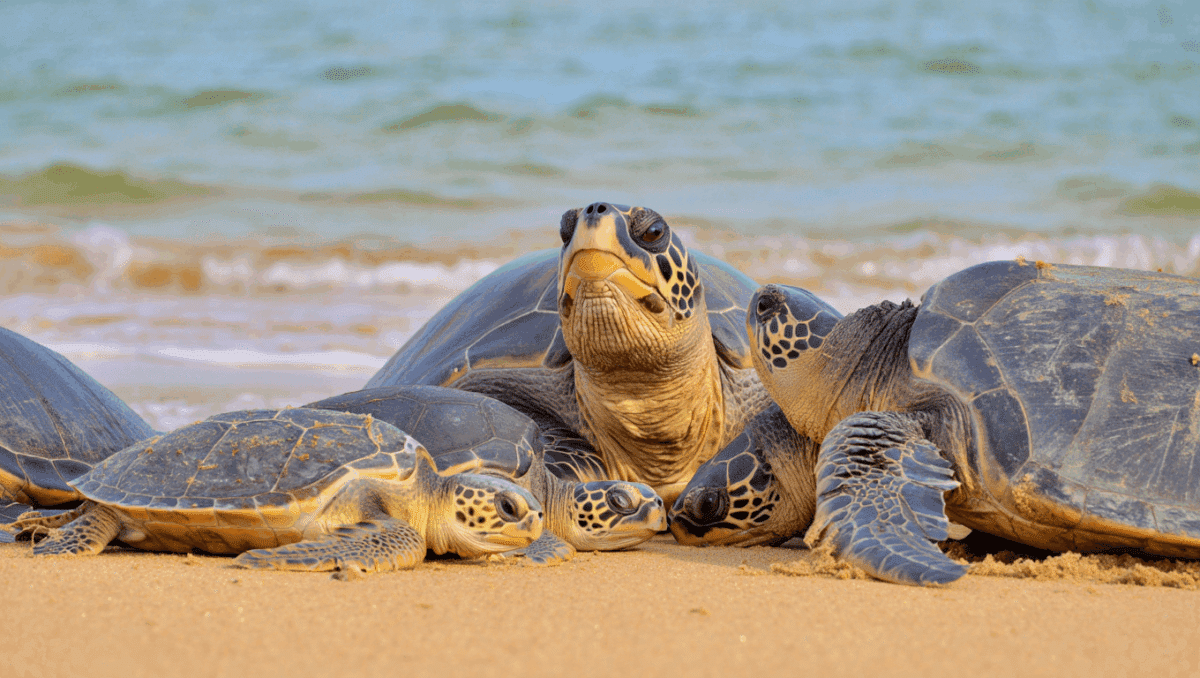
Sea turtles are making a surprising comeback around the world, according to a sweeping new review by scientists working with NOAA and university partners. After decades of steep declines from hunting, habitat loss and accidental capture in fishing gear, many nesting populations are now growing — a sign that conservation measures and changing human attitudes are starting to pay off.
The analysis, published in Nature Reviews Biodiversity in 2025, examined nearly 300 time-series records for all seven species of sea turtles and found more ups than downs. The recovery isn’t uniform: some species and regions are rebounding strongly while others remain fragile. Still, researchers say the overall trend offers a rare conservation win in a warming, crowded ocean.
The Growing Demand for Data-Driven Decision Making in Silicon Valley
He quit, ran out of money, and begged to come back — here’s how his boss reacted
Large-scale review reveals more rebounds than declines
Researchers assembled long-term data from nesting beaches across the globe and compared population trends for green, loggerhead, leatherback, hawksbill, olive ridley, Kemp’s ridley and flatback turtles. Their findings show a clear signal: stable or increasing trends outnumber declines in most species and subpopulations.
- Almost 300 distinct records were analyzed to track changes over time.
- Significant population increases were reported far more often than substantial decreases.
- Compared with patterns observed in 2024, the frequency of notable increases rose markedly.
The review highlights dramatic local recoveries in some places. For example, egg counts for green turtles in the Seychelles have surged by roughly 500%, and loggerhead nest numbers in parts of the Atlantic have jumped from a few hundred a year to tens of thousands in little more than a decade.
What’s driving the uptick: protections, community shifts and new rules
Scientists point to a combination of legislative protections, targeted fisheries regulations, and grassroots community changes as the engine behind many recoveries. As governments banned or tightly regulated harvests and enforced protected areas, sea turtle nesting sites received the chance to rebound.
Practical steps that helped
- Legal protections such as endangered species laws that reduce hunting and trade.
- Fisheries reforms that minimize bycatch, including gear modifications and seasonal closures.
- Reduction of beachfront lighting and other measures to prevent hatchling disorientation.
- Local economic shifts toward ecotourism, where former hunters now earn income from guiding turtle-watching tours.
Conservation success often followed when communities and policymakers worked together, say the authors. In many regions, younger generations no longer view turtles as commodities, and community leaders who once took part in harvesting have transitioned to roles in protection and sustainable tourism.
Winners and losers: species-by-species trends and hot spots
The global picture is mixed: several species and populations are thriving, while others still face steep declines.
- Green turtles: Most regional populations show growth, with notable egg-laying increases in the Indian Ocean.
- Loggerheads: Many nesting beaches report substantial rises. In parts of the Mediterranean and Cape Verde, annual nest counts climbed dramatically over recent years.
- Olive ridley, Kemp’s ridley, hawksbill and flatback: Data are sparser, but available records indicate localized recoveries in several areas.
- Leatherbacks: The largest turtles remain the most vulnerable, with multiple populations in decline, especially those that migrate long distances across the Pacific and in the Caribbean.
Leatherbacks face compounded threats: they depend on scattered, long-distance foraging grounds and nesting beaches that are highly sensitive to environmental change and human impacts. These life-history traits make recovery slower and harder.
Climate change and shifting nesting behavior
Warmer oceans and hotter sands are reshaping nesting dynamics. Rising temperatures influence hatchling sex ratios and can alter the timing and location of nesting. Yet the review found early signs of behavioral flexibility.
- Some loggerhead populations appear to be establishing nests in cooler or more northerly areas, which could reduce risks from warming beaches.
- Nesting seasons may shift earlier in the year in some regions, potentially helping turtles avoid peak heat.
Behavioral shifts could buffer certain populations against climate impacts, but the researchers caution that flexibility is not a universal solution. Long-distance migrants and species with limited nesting ranges remain highly susceptible to rapid environmental change.
Implications for fisheries, policy and future monitoring
Beyond celebrating successes, the study offers actionable intelligence for managers and policymakers. By pinpointing where turtles are increasing or declining, authorities can tailor fishing seasons, expand protected areas, and prioritize monitoring where data are thin.
Key recommendations coming from the review
- Use the compiled trends to time and place fishing restrictions that reduce accidental turtle capture.
- Invest in long-term monitoring at under-sampled nesting sites to close data gaps.
- Support community-based conservation and alternative livelihoods that reduce hunting pressure.
- Consider climate-adaptive strategies, such as protecting potential new nesting beaches that are cooler.
NOAA scientist Jeffrey Seminoff and colleagues emphasize that when harmful pressures are removed, turtles often rebound — an outcome that demonstrates the power of focused conservation and policy action.
Where conservation still needs urgency
Despite encouraging signs, the recovery is fragile in places. The Pacific leatherback population, which migrates between Indonesia and feeding grounds off North America, is in worrying decline. Caribbean leatherbacks are also struggling. Conservation groups warn that without continued protections and international cooperation, these populations may slip backward.
Continued enforcement, smarter fisheries practices and engagement with coastal communities remain essential if the recovery trend is to become a durable reality across all species and regions.
You might also like:
- Eastern imperial eagle, Serbia’s national bird, sees record breeding year
- New Zealand marine reserves: 5 new sites to protect dolphins and kelp forests off South Island
- Rare sea turtle rescued on UK beach flown 5,000 miles to Texas rehab before returning to Gulf
- Great Lakes otters: conservation success as populations flourish in US and Ontario
- Blue and fin whale sightings increase, offering new hope for survival

Michael Thompson is an experienced journalist covering U.S. and global news. With ten years on the front lines, he breaks down political and economic stories that matter. His precise writing and keen attention to detail help you grasp the real‑world impact of every event.


Man, hearing about sea turtles making a comeback warms my heart! Its like a nature redemption story, yknow? We gotta keep pushing for those protections and rules, cause these turtles deserve a fighting chance in this crazy world.
Man, I remember when sea turtles were struggling hard. Now, hearing bout their comeback? Makes my heart do a lil happy dance. Big ups to the peeps protecting those gentle giants.
Dude, totally feel ya on that! Its wild how those sea turtles bounced back, huh? Mother Natures full of surprises, man. Gotta give props to the squad looking out for our shelly pals. Its like a real-life under-the-sea superhero movie!
Yall, its like the sea turtles are throwing a comeback party! With nests and habitats getting TLC, theyre bouncing back. Lets keep this trend going, cause who doesnt love some good news for our shelled buddies?
Man, its like watching a comeback story unfold, but with sea turtles! Natures own underdogs making a grand return thanks to some solid teamwork and protective measures. Who knew wed be rooting for these shelled buddies, huh? Natures got tricks up her sleeve!
Man, I remember when sea turtles were struggling hard. Now, hearing theyre making a comeback? Thats some good news for once. Lets hope we keep up the good work and dont mess it up this time.
Man, remember when we thought sea turtles were toast? Now theyre like, Surprise, were back! Maybe there is hope for us humans yet. Lets keep protecting those nests and habitats, folks. Natures throwing us a bone here.