
Show summary Hide summary
- Long-promised cross-country autonomy never arrived
- Live-streamed road test ended badly about an hour into the drive
- “Full Self-Driving (Supervised)” — what it really is
- How and why the system missed an obvious hazard
- Safety record, public trust, and the role of influencers
- Regulatory and industry fallout: what’s at stake
- Takeaways for drivers, buyers, and observers of autonomous tech
The gleam that once surrounded Elon Musk and the Tesla name has dulled. Once synonymous with breakneck innovation, the company now faces a quieter, nagging question: can its latest promises match reality?
That doubt sharpened this year when two well-known Tesla enthusiasts set out to prove a point on camera—and instead exposed persistent limits in Tesla’s so-called autonomous driving system.
Long-promised cross-country autonomy never arrived
The Growing Demand for Data-Driven Decision Making in Silicon Valley
He quit, ran out of money, and begged to come back — here’s how his boss reacted
Nearly a decade ago, Tesla’s leadership suggested a fully autonomous, coast-to-coast ride would soon be possible. Years later, that milestone remains unclaimed. Experts and consumers alike have grown skeptical as repeated timelines for major leaps in autonomous driving continually slip.
Part of the problem is incentive: flashy timelines are often designed to reassure investors and generate headlines, not to reflect the messy, incremental progress of real-world engineering. Bold public promises have a way of outpacing what the technology and testing can reliably deliver, leaving companies vulnerable when real-world scenarios expose gaps.
Live-streamed road test ended badly about an hour into the drive
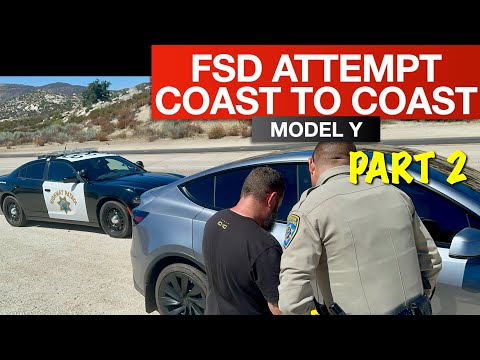
In 2025, two Tesla-focused influencers attempted a highly publicized drive using a Tesla Model Y running Full Self-Driving v13.9. Their plan: stream a San Francisco-to-Jacksonville trip to demonstrate how close the cars are to full autonomy.
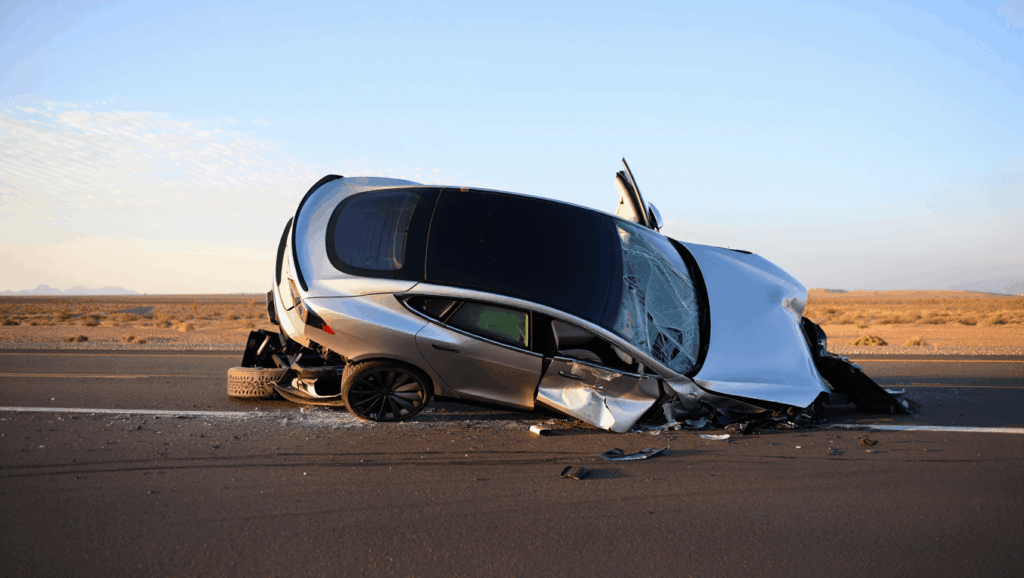
They didn’t get far. Roughly 60 miles into the journey, the vehicle struck a large metal girder positioned in the roadway. Witness footage shows the object was highly visible, yet the car’s driver-assist system failed to react. The human operator intervened only at the last possible moment—after the vehicle briefly lifted off the pavement. The impact damaged the suspension and broke a sway bar bracket.
“Full Self-Driving (Supervised)” — what it really is
Tesla’s branding sometimes obscures the system’s true capabilities. Despite the name, the system on most Teslas is not autonomous in the way the public imagines. Regulators and industry standards describe it as a driver-assist tool that still requires constant human oversight.
- Level of autonomy: The system operates at a level where a human must be ready to take control at any time.
- Human role: Drivers are expected to supervise, monitor the environment, and intervene when systems encounter unexpected hazards.
- Branding ambiguity: The label “Full Self-Driving (Supervised)” can create a misleading impression that a vehicle is capable of independent operation when it is not.
How and why the system missed an obvious hazard
No single cause is definitive without a formal investigation, but several technical and operational factors often contribute when a vision-based driving system fails to spot roadside obstacles:
- Perception limits: Camera-only systems can struggle with unusual objects, shapes, and unexpected shadows or reflections.
- Training data gaps: Machine learning models perform poorly on situations that were rare or absent in their training datasets.
- Edge-case complexity: Debris, temporary roadwork, and atypical metal objects can confuse object-classification networks.
- Reaction latency: Even when detected, the planning and control stack may not have enough time or margin to generate a safe avoidance maneuver at highway speeds.
Safety record, public trust, and the role of influencers
Tesla’s driver-assist systems have been linked to numerous reported crashes, some fatal. Incidents like the live-stream crash amplify concerns, especially when high-profile fans treat advanced driver aids as demonstrations of full autonomy.
Influencers and livestream events can rapidly spread footage and narratives that magnify risk. When participants test limits publicly, it can:
- Encourage viewers to overestimate system capabilities.
- Increase pressure on manufacturers to tout progress prematurely.
- Draw regulatory attention and media scrutiny that focuses on failures as much as successes.
Regulatory and industry fallout: what’s at stake
Incidents like this can accelerate regulatory oversight, push for clearer labeling and driver responsibilities, and shape public sentiment about autonomous driving. For Tesla, the stakes are both reputational and practical: continued high-profile failures could erode consumer confidence just as competitors accelerate investments in more conservative, sensor-fused approaches.
- Regulators may demand stricter disclosure about system limits and clearer safeguards to ensure human drivers remain engaged.
- OEMs and suppliers could pivot toward redundant sensor suites—combining cameras, radar, and lidar—to reduce single-point perception failures.
- Drivers and owners may become more cautious, or conversely, more complacent if brand messaging is not corrected.
Takeaways for drivers, buyers, and observers of autonomous tech
There are practical lessons that extend beyond any single crash:
- Read branding critically: names like “Full Self-Driving” are marketing terms, not certifications of autonomy.
- Remain alert: driver-assist features require constant attention, even when they appear competent on highways.
- Demand transparency: clearer documentation, black-box data access after incidents, and independent testing would improve accountability.
What to watch next
As Tesla and other companies iterate on software and data collection, observers should look for rigorous, independent evaluations and regulatory actions that clarify how these systems are tested and deployed on public roads. The interplay between high-stakes marketing, social-media-fueled demonstrations, and real-world performance will continue to shape the narrative around autonomous driving—and public safety.
You might also like:
- Tesla Abandons Full Self-Driving Dream: Shifts Focus from Autonomous Cars
- Tesla Autopilot swerves to avoid 75 mph head-on collision, saving lives
- Tesla robotaxi safety driver fell asleep on duty
- Tesla Mad Max mode under federal investigation for safety and cybersecurity concerns
- Waymo viral video shows human driver on golf course

William Anderson is a multimedia producer specializing in videos, podcasts, and interactive galleries. With five years of immersive content creation, he turns information into a rich audio‑visual experience. His storytelling skills draw you directly into the heart of every story, on any platform.


Man, Teslas self-driving stunt crashing mid-coast? Thats like a bad sci-fi flick plot. Did they miss the memo on safety? Better stick to good ol human drivers for now, huh?
Man, Teslas self-driving stunt hitting the brakes mid-coast? What a plot twist! Imagine livestreaming your cross-country adventure and it ends with a crash. Elon Musk, you sure know how to keep us on our toes!
Man, Teslas self-driving stunt crashing? I saw it coming. They hype up autonomy, but wheres the beef? All show, no go. Live-streamed disaster was inevitable. When will they learn?
Man, Teslas self-driving tech needs a reality check. Imagine the chaos if it went coast-to-coast unsupervised! Its like letting a toddler loose in a candy store, just waiting for disaster to strike.
Man, Teslas self-driving stunt crashing mid-coast? Thats like ordering a pizza and the delivery guy eats it on your doorstep. Promises, promises, but wheres the real deal, Elon? Gotta step up your game, buddy.
Dang, Elons gotta get his act together, man. Its like ordering a burrito only to find out its just an empty tortilla. The hypes real, but wheres the substance, dude? Time to kick it up a notch, Elon. We aint here for the smoke and mirrors, we want the real deal!
Man, Teslas self-driving dramas like watching a sci-fi flick unfold in real life. Its a rollercoaster ride of high hopes and sudden stops. Maybe they should stick to making electric cars rather than sci-fi fantasies on wheels.
Man, I was rooting for Teslas coast-to-coast self-driving attempt. A road trip with no driving? Sign me up! But now, a crash? Come on, Elon, you had one job!
Man, I was so ready to kick back and watch those Teslas conquer the road solo! But now a crash? Cmon, Elon, get your autopilot game on point! Gotta admit, though, its like watching a sci-fi movie in real life, drama and all. Whats next, flying DeLoreans?
Man, Tesla always keeps us on our toes with their self-driving shenanigans. One minute theyre promising the moon, the next theyre crashing on a coast-to-coast trip. Cant help but wonder if the future is really ready for this tech.
Honestly, Teslas self-driving rollercoaster ride has more twists than a soap opera. One minute its all Well take you to Mars, next thing you know, theyre cruising into a ditch. Cant help but wonder if theyre playing chess while were all playing checkers with this tech.
Man, I remember when everyone was hyped about Teslas self-driving. Now this crash during the coast-to-coast test? Yikes. Guess the tech still needs some real fine-tuning. Safety first, folks!
Man, I remember when I tried to let my Roomba navigate the living room. It crashed into everything! Cant imagine a whole Tesla doing a coast-to-coast drive. Maybe they need to watch Cars for tips.
Dude, I feel ya! My Roombas like a drunken sailor in our place too, bumping into stuff like its playing bumper cars. A Tesla on a cross-country joyride? Sounds like a Pixar movie waiting to happen. Maybe Lightning McQueen can teach em a thing or two about smooth driving!
Man, Tesla keeps hitting roadblocks with this self-driving gig. Its like watching a soap opera unfold on wheels. Will they ever crack the code, or are we stuck in this loop of almost there forever?
Man, talk about a bummer. Teslas self-driving road trip hitting a snag? Thats like ordering pizza and finding out they forgot the cheese. Hope they sort out those kinks quick, or its gonna be a long drive home.