
Show summary Hide summary
- Excavation at the Tower: what was found and where
- Evidence pointing to epidemic-era burials
- Scientific testing planned to identify plague victims
- What this tells us about London’s past public health crises
- Heritage management and ethical handling of remains
- Broader implications for research and public engagement
- Next steps as specialists continue their work
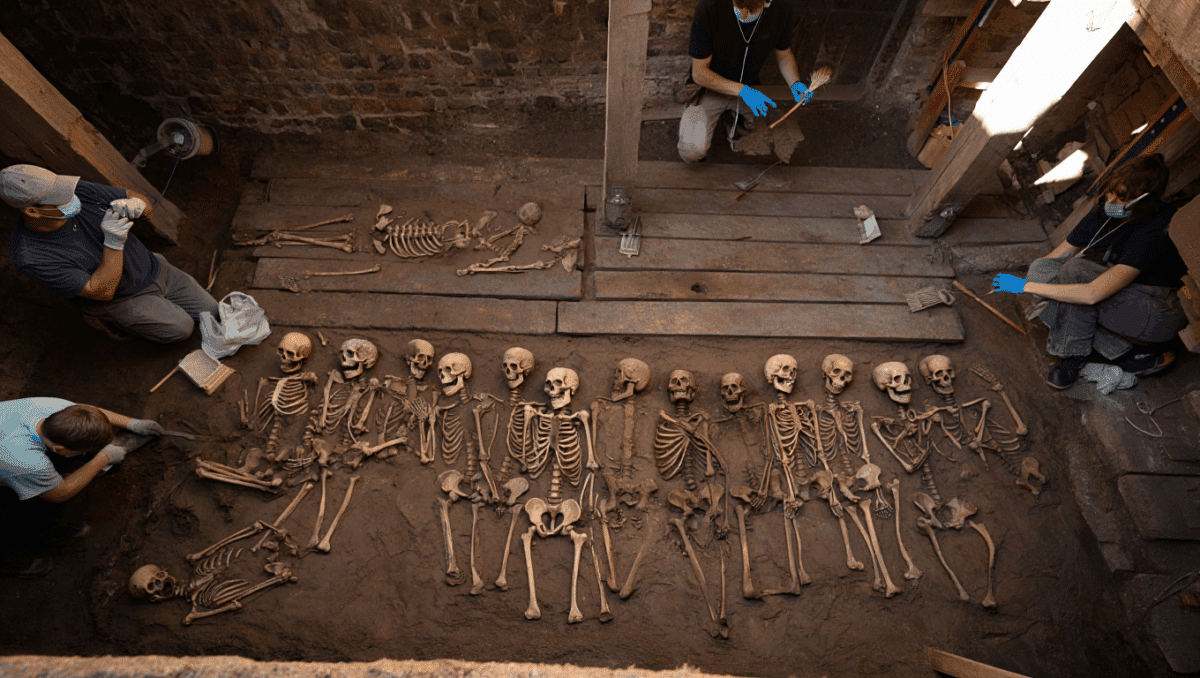
Archaeologists working inside the Tower of London have uncovered more than 20 human skeletons beneath the historic fortress, a discovery that is shedding new light on how Londoners coped with disease and death in earlier centuries. Some of the remains show signs that specialists say could be linked to epidemic illness, and teams are preparing scientific tests to confirm whether any were victims of the plague.
Excavation at the Tower: what was found and where
Work crews and archaeologists made the find during routine conservation and groundworks within the Tower complex. The skeletons were unearthed in a cluster, within a disturbed stratigraphic layer that suggests deliberate burial rather than casual refuse. The location — inside the protected perimeter of one of Britain’s most famous landmarks — immediately elevated the find’s significance for both historians and heritage managers.
The Growing Demand for Data-Driven Decision Making in Silicon Valley
He quit, ran out of money, and begged to come back — here’s how his boss reacted
Evidence pointing to epidemic-era burials
Initial examinations by osteologists noted features often associated with rapid, mass interment: shallow graves, tightly grouped skeletons, and minimal grave goods. While these clues do not by themselves prove the cause of death, they fit patterns known from documented plague burials elsewhere in England.
- Clustering of burials — multiple bodies placed in a small area rather than individual, long-term cemeteries.
- Simple burial posture — bodies laid flat without elaborate markers or coffins.
- Demographic range — preliminary age and sex estimates indicate adults and younger individuals were among the dead, consistent with epidemic mortality profiles.
Scientific testing planned to identify plague victims
Researchers will apply a suite of laboratory techniques to the remains. The goal is to establish dates, health status, and whether any individuals carried the bacterium Yersinia pestis, the pathogen responsible for historic plague outbreaks.
Key analyses to be performed
- Radiocarbon dating to narrow down the century or specific decades when the burials occurred.
- Ancient DNA (aDNA) screening to detect genetic traces of Yersinia pestis and other pathogens.
- Osteological assessment to document trauma, chronic disease, and nutritional markers on the bones.
- Isotope analysis to reveal geographic origins and diet, which can help reconstruct life histories.
What this tells us about London’s past public health crises
Mass burials across England are often associated with major disease outbreaks, such as the Black Death in the mid-14th century and later waves of plague through the 16th and 17th centuries. Finding potential plague victims within the Tower grounds adds nuance to our understanding of how contagion, burial logistics, and urban pressures intersected in a fortified site that also functioned as a royal palace and prison.
- It suggests emergency burial solutions may have occurred even inside highly controlled, politically important compounds.
- It highlights how rapid-onset mortality affected people of different statuses and occupations.
- It provides material that could clarify whether outbreaks at particular times affected military, administrative, or civilian populations differently.
Heritage management and ethical handling of remains
Because the Tower of London is a World Heritage Site managed by Historic Royal Palaces, the find triggers established conservation, legal, and ethical procedures. Specialists must balance scientific inquiry with respect for the deceased and compliance with current legislation governing archaeological human remains.
Steps taken by custodians and archaeologists
- Secure removal and documentation of the remains by licensed archaeologists.
- Detailed recording of the burial context, including photographs, plans, and stratigraphic notes.
- Consultation with heritage bodies to determine permissions for sampling and analysis.
- Plans for appropriate reburial or curation depending on the outcome of scientific tests and legal requirements.
Broader implications for research and public engagement
Beyond immediate forensic and historical answers, the discovery creates opportunities for multidisciplinary research and public interpretation. If plague DNA is detected, these individuals could help map the spread and evolution of Yersinia pestis in London. Even absent pathogen confirmation, the burials contribute valuable data on mortality, burial customs, and urban life during times of crisis.
Museum teams and historians are preparing to share findings with the public through exhibitions, lectures, and digital content as analyses progress, ensuring the story of these individuals informs both scholarship and collective memory.
Next steps as specialists continue their work
Laboratory results are expected to take months. Until then, conservators will preserve sampled material, and archaeologists will complete contextual studies that include reviewing archival records for references to outbreaks, burial regulations, and Tower history that might explain why these people were interred where they were. The investigation remains active, and further announcements will follow as scientific evidence clarifies the identities and causes of death of those recovered.
You might also like:
- Celtic princely tomb found in Germany: nearly unmatched ancient noble burial
- Ancient Egyptian crypt in Luxor with 22 singing priests unsealed for first time
- Brazil passes law inspired by dog’s 10-year grave vigil to strengthen pet protections
- Scotland medieval island castle may reveal a forgotten western king
- 100 human skulls found in basement, alleged grave robber arrested

William Anderson is a multimedia producer specializing in videos, podcasts, and interactive galleries. With five years of immersive content creation, he turns information into a rich audio‑visual experience. His storytelling skills draw you directly into the heart of every story, on any platform.


I used to think the Towers skeletons were just part of the spooky decor. Turns out, theyre real! Imagine finding out youre living atop a historical plague hotspot. Talk about a bone-chilling surprise!
Man, finding those skeletons at the Tower of London is like uncovering a real-life Game of Thrones plot twist! Can you imagine the stories those bones could tell if they could speak? History coming alive, for real!
I heard they dug up some skeletons at the Tower of London. Oi, sounds like the start of a spooky story! Wonder how those poor souls ended up there. Bet there are some wild tales buried in those bones.
Dang, finding skeletons at the Tower of London? Thats some creepy stuff, man. Imagine stumbling upon that while exploring. Makes you wonder what stories those bones could tell, huh?
Yo, remember that time we talked about the Tower of London being haunted by all those old spirits? Now theyre digging up skeletons, finding possible plague victims! Crazy how history keeps coming back to haunt us, huh?
Oh, Tower of London, what secrets ya hiding now? Skeletons popping up like daisies, probs from the plague era? Time for a good ol historical CSI episode! Cant wait for the results. *grabs popcorn*
Oh, mate, finding skeletons in the Tower of London is like stumbling upon a real-life history mystery. Can you imagine the stories those bones could tell? Gives me the chills, in a cool way!
Man, totally agree with you on that! Its like unearthing a time capsule, innit? Makes you wonder what secrets those old bones are keeping. Bet theyve seen some wild stuff go down back in the day. Gives me the creeps, but in a kinda exciting way, ya know? Just picturing the drama and intrigue from centuries ago… insane!
Whoa, the Tower of Londons spilling some dark secrets, huh? More than 20 skeletons found, possibly plague victims. Imagine the stories those bones could tell. Time to unravel the mysteries, CSI-style!
Mate, finding skeletons in the Tower of London is like a spooky history lesson coming to life! Wonder what secrets those bones hold. Can you imagine being buried in such a legendary spot? Crazy stuff!
Mate, those Tower of London skeletons are like a real-life horror flick, innit? Imagine being buried there – talk about the ultimate VIP treatment! Bet those bones hold more secrets than a gossiping neighbor. Crazy to think about, eh?
I remember learning bout the Tower of London in history class, but skeletons? Creepy stuff. Wonder what tales those bones could tell. Hope they find out more bout those plague victims.
Man, the Tower of London aint just about crown jewels and guards with funky hats, huh? Finding those skeletons, maybe from the plague? Gives me chills. Historys wild, yall.
Oh, mate, the Tower of Londons got more secrets than a gossiping granny! Finding them skeletons is like stumbling upon a time-traveling horror flick. Historys full of surprises, aint it? Gives me the heebie-jeebies just thinking about it!
Mate, this Tower of London dig is wild! Finding over 20 skeletons, possibly from the plague era? Thats straight out of a historical thriller, innit? Cant wait to see what they uncover next!
Totally mental, mate! History really be spilling out all its secrets! Can you imagine stumbling upon 20 skeletons like its a game of hide-and-seek? The next chapter gonna be a real page-turner. Wonder what other surprises are lurking in those old stones, aye?