Show summary Hide summary
- What’s driving unrest across Europe — and why it matters
- Why Britain looks different: fragmentation over mass revolt
- How Britain’s housing and income problems stack up
- “Slow violence” in neighborhoods: the quiet deterioration
- Politics, policy and a sense of abandonment
- What’s happening on the ground — community responses and fractures
- About the author
Cities from Paris to Madrid have been rocked by days of clashes and mass demonstrations. The sparks are varied — from housing evictions to long-term economic frustration — but taken together they reveal a continent-wide crisis of living standards and civic trust.
Behind the headlines of looting and street fights are deeper currents: job insecurity, unaffordable homes, fraying public services and a growing tolerance for anti-social behaviour. Those forces have a particular shape in Britain, where steady decline in everyday living conditions has quietly reshaped communities.
The Growing Demand for Data-Driven Decision Making in Silicon Valley
He quit, ran out of money, and begged to come back — here’s how his boss reacted
What’s driving unrest across Europe — and why it matters
Recent disturbances in France, Germany, Italy and Spain are not all the same. Each country has its own flashpoints, yet there are shared issues that feed public anger: rising costs, weak integration policies, and a sense that politicians have failed to protect ordinary people.
- Economic pressure: Inflation and stagnant wages have squeezed household budgets across the EU.
- Housing fault lines: Evictions and extreme rental costs have turned housing into a political flashpoint in several countries.
- Broken promises on social integration: Migrant absorption and youth opportunities remain uneven, creating pockets of marginalization.
Media focus often centers on dramatic street clashes, but those scenes are symptoms. The underlying grievances — especially when paired with visible examples of cruelty or displacement — can mobilize large sections of the population who feel ignored.
Why Britain looks different: fragmentation over mass revolt
Despite facing many of the same pressures as its neighbors, the UK has not experienced unrest on the same scale. That absence of a single, sustained uprising doesn’t mean the problems aren’t real — it may reflect a more fractured political and social landscape.

Division as a dampener on collective action
Since the Brexit vote, divisions along lines of class, age and region have deepened. People increasingly view each other as political opponents rather than allies against shared policy failures, turning public anger inward. The result is less coordinated protest and more social fragmentation.
- Geographic polarization: different areas feel they have distinct, often competing interests.
- Intergenerational strain: younger and older cohorts pull in different directions on priorities like housing and welfare.
- Declining trust in institutions: when faith in political leaders collapses, people look for other ways to manage their grievances.
How Britain’s housing and income problems stack up
The UK faces a particularly acute housing affordability problem: high prices, chronic undersupply and a legacy of poor-quality stock in many places. That combines with long-term wage stagnation to leave many families financially worse off compared with counterparts in several European peers.
Independent comparisons suggest that households in the UK on lower to middle incomes have significantly less purchasing power than similar families in countries like France, Germany and the Netherlands — a gap running into thousands of pounds annually. Over nearly two decades, average wages adjusted for inflation in Britain have made little progress, whereas other European economies have managed modest gains.
“Slow violence” in neighborhoods: the quiet deterioration
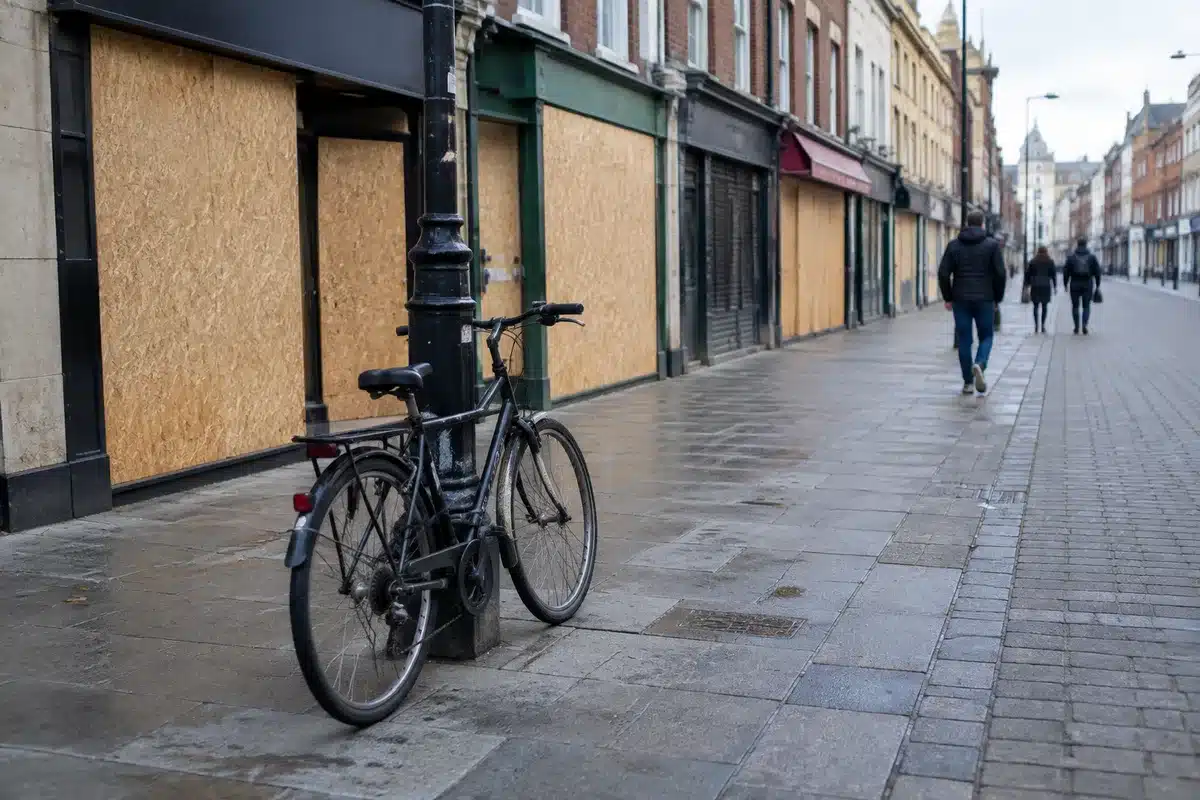
Not all decline shows up as dramatic headlines. There is a quieter, cumulative breakdown of the public realm — shops closing on high streets, increased homelessness, visible substance dependency and rising petty crime. This gradual collapse resembles what some criminologists described decades ago as a form of persistent, low-intensity social violence.

Signs people see every day include:
- Boarded-up storefronts and fewer local services
- Spikes in anti-social behaviour that make public spaces feel unsafe
- Growing numbers of people sleeping rough or living in insecure housing
- More knife incidents and drug-related harms in certain areas
Those patterns erode civic pride and make long-term recovery harder: when communities lose confidence in their local environment, they are less likely to invest time and energy in rebuilding it.
Politics, policy and a sense of abandonment
Many of the structural problems have political roots. Years of policy choices — on housing supply, social spending, policing priorities and local government capacity — have shaped the lived experience of towns and cities.
How policy choices feed civic decline
- Underinvestment in public services: reduced funding for local authorities, social housing and community programs limits options for vulnerable people.
- Market-driven housing policies: reliance on private developers without sufficient social housing provision intensifies affordability problems.
- Short-term political cycles: frequent upheaval makes long-term urban planning and social policy harder to sustain.
When people repeatedly feel ignored by Westminster or feel that public institutions exist to protect themselves rather than serve citizens, alienation grows. That detachment often translates into apathy, or worse, into anger directed at neighbors rather than at the institutions that shaped the conditions they face.
What’s happening on the ground — community responses and fractures
Local reactions vary. Some neighborhoods mobilize to protect and restore public life: mutual aid groups, volunteer clean-ups and community tenancy campaigns are active in many places. Elsewhere, resignation has taken hold — people simply stop expecting better, and some turn inwards, allowing neglect to deepen.
- Community organizing: grassroots groups pushing for tenant protections and local investment.
- Informal mutual aid: neighbors filling gaps left by shrinking public services.
- Fracture and blame: mistrust between different community groups hampers unified action.
About the author
Lisa McKenzie writes from a working-class background and researches the social impacts of economic and policy shifts on everyday communities. Her work centers on how inequality and political choices reshape local life and civic engagement.
You might also like:
- Britain becoming like France raises alarm about politics, public services
- Britain: has it already fallen? Melanie Phillips on national decline
- Zack Polanski offers little to working-class voters, critics say
- Shropshire migrant street tears up social contract
- Birth crisis: why migration can’t solve it, Stephen J. Shaw explains

Robert Johnson is a dedicated columnist focusing on political and social debates. With twelve years in editorial writing, he provides nuanced, well‑argued perspectives. His commentaries invite you to form your own views and engage in critical issues.