
Show summary Hide summary
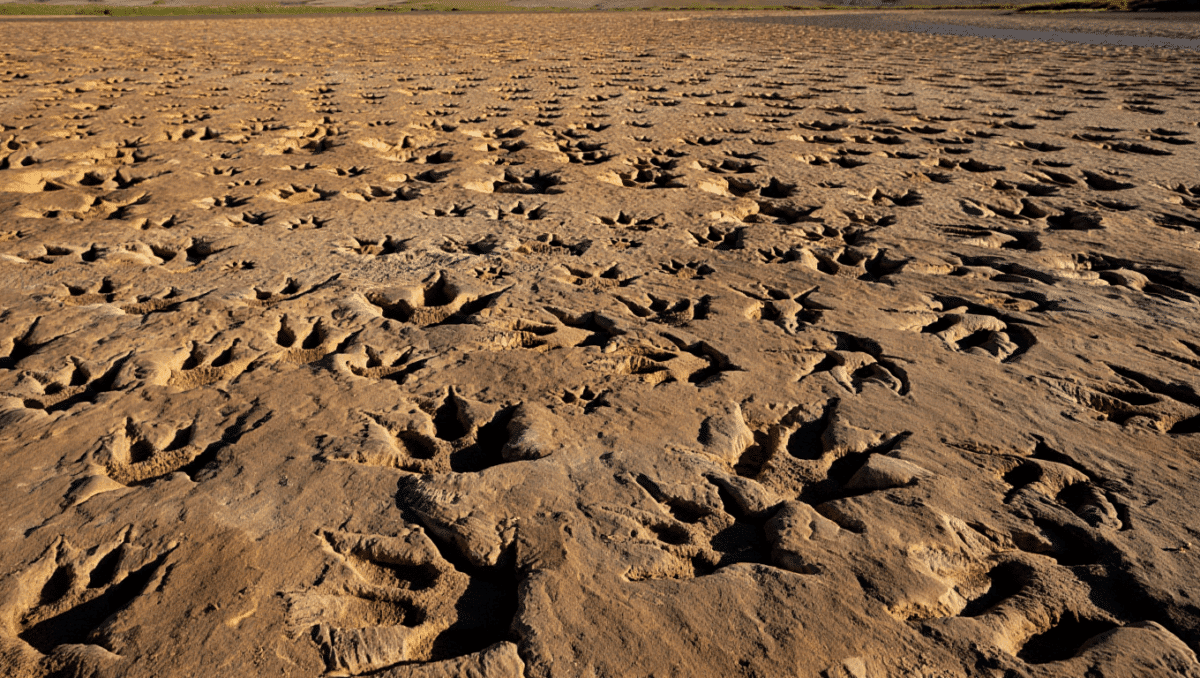
The rocky flats of Bolivia’s Carreras Pampas are telling a story that bones alone can’t: an enormous, well-preserved record of dinosaur movement. Scientists mapping the site have uncovered thousands of footprints pressed into what was once a muddy channel, revealing behaviors, groupings and routes that illuminate how these animals lived and traveled.
Field researchers describe a carpet of three-toed impressions stretching across the landscape — a snapshot of activity frozen for tens of millions of years. The size, spacing and orientation of these marks give paleontologists rare, direct evidence of how theropod dinosaurs walked, ran, waded and possibly migrated across ancient South America.
Bolivia’s jaw-dropping dinosaur tracksite: numbers and setting
The Growing Demand for Data-Driven Decision Making in Silicon Valley
He quit, ran out of money, and begged to come back — here’s how his boss reacted
In the heart of Torotoro National Park, teams have cataloged an astonishing 16,600 individual footprints, grouped into dozens of distinct trackways. These impressions lie on a single remnant surface that once bordered a watercourse, now exposed by erosion and time. The scale of the deposit makes it one of the most extensive dinosaur tracksites yet documented anywhere on Earth.
The prints come from theropods — the bipedal, mostly carnivorous dinosaurs that include the lineage leading to T. rex. Some tracks are isolated prints, while others form coherent series showing repeated travel in the same direction. At the same time, a variety of stride patterns suggests that some animals paused, others moved steadily, and a few appear to have been wading or swimming when they left impressions.
What footprints tell us that bones cannot
Unlike skeletons, footprints lock a dinosaur in place at a precise moment. From the rock record at Carreras Pampas, researchers can infer movement, posture, and behavior in ways bones rarely allow. Key pieces of information derived from the trackways include:
- Estimated body size based on footprint dimensions.
- Speed estimates derived from stride length and spacing.
- Locomotor details such as tail contact, toe impressions, and changes in gait.
- Possible social behavior, when multiple trackways overlap or run in parallel.
Track morphology reveals subtle details: narrow toe prints and long stride lengths point to faster movement, while closely spaced impressions and turning paths indicate low-speed maneuvering or high hip mobility. Occasional drag marks and varied toe depth also hint at uneven ground or shallow water conditions where some theropods were partially buoyant.
Estimating size, speed and health from tracks
Scientists use simple geometric relationships to translate a footprint into body metrics: a larger print generally equates to a larger animal, and the distance between prints helps estimate pace. Variations within a single trackway can suggest injured limbs, young animals traveling with adults, or responses to changing terrain. At Carreras Pampas, prints range from those made by relatively small theropods — perhaps two feet at the hip — to larger individuals approaching three feet at hip height.
How researchers documented and interpreted the site
The study, published in PLOS One, combined field surveys, photogrammetry and mapping to register thousands of imprints. Researchers carefully recorded orientation and alignment across the deposit, noting that many trackways trend roughly north-northwest or southeast. This repeated directionality implies a preferred route across an open landscape, perhaps part of a seasonal corridor stretching toward what is now Argentina.
Dr. Jeremy McLarty, who helped lead the work, emphasized the uniqueness of the site: when walking on the fossil surface, visitors stand literally where dinosaurs once stepped. Team members concluded that a large proportion of the prints were created within a relatively short span of time geologically, producing a remarkably concentrated snapshot of activity.
Evidence for group movement and varied behaviors
Some sets of trackways run parallel or overlap in ways that suggest multiple animals moved through the area together or along the same path days or weeks apart. Other impressions show back-and-forth motion, consistent with foraging or pacing, while shallow, widely spaced marks indicate wading or swimming behavior through a muddy channel. Together these patterns give a multi-dimensional view of daily life for these theropods.
Age, geological context, and related discoveries worldwide
Geological analysis places the Carreras Pampas prints near the end of the Cretaceous Period, roughly between 100 and 66 million years ago. That timing situates the site among other significant Late Cretaceous tracksites across Gondwana, where similar fossilized footprints preserve snapshots of dinosaur behavior just before the mass extinction event.
Comparable discoveries elsewhere reinforce how footprints complement fossil bones:
- Beachside imprints discovered by visitors that reveal large, three-toed prints exposed by erosion.
- Centuries-old agricultural and construction sites where ancient walks were found beneath modern surfaces.
- Riverbeds that periodically dry and reveal well-preserved tracks after droughts.
Outside specialists who reviewed the Carreras Pampas work told media outlets they were excited to see such a concentrated record. The site provides fertile ground for future research aimed at linking specific track morphologies to theropod groups and reconstructing how these animals used ancient South American landscapes.
You might also like:
- T. rex trackway in North Dakota: first adult 66-million-year-old footprints discovered
- 90-million-year-old missing link fossil of tiny bird-like dinosaur discovered
- Megaraptor fossil found with ancient crocodile in its mouth
- Pachycephalosaur skull upends understanding of dome-headed dinosaurs
- Rock climbers accidentally discover 80-million-year-old fossil

Michael Thompson is an experienced journalist covering U.S. and global news. With ten years on the front lines, he breaks down political and economic stories that matter. His precise writing and keen attention to detail help you grasp the real‑world impact of every event.


Whoa, 16,000 dino footprints? Thats like a prehistoric dance party! Imagine the chaos back then…I can barely walk without tripping, and these guys were leaving trails all over the place. Wild stuff!
Man, those dino footprints got me thinking. Imagine if we could time travel and see those giants stompin around. Bet they had some wild stories to tell. Wish I couldve seen it firsthand!
Dang, 16,000 dino footprints? Thats like a prehistoric parade! Imagine the chaos back then. Wonder if they had a T-Rex crossing guard. Safety first, even for ancient reptiles!
Man, imagine stumbling upon 16,000 dino footprints? Like, did they have a massive prehistoric dance-off or what? Bet those tracks could tell stories cooler than any bone could spill. Tracking time machines next!
Man, imagine stumbling upon 16,000 dino footprints! Thats like a prehistoric stampede party. Bet those dinos were in a hurry or having a wild dance-off. Natures history book is full of surprises, huh?
Imagine stumbling upon 16,000 dino footprints, mate! Its like a prehistoric dance floor on steroids! Those dinos mustve been in a mad rush or throwing the sickest party ever. Natures full of surprises, innit? Wonder what other bangers shes hiding!
Man, imagine walking in the footsteps of dinosaurs! 16,000 footprints? Thats some serious dino traffic. Mustve been one wild prehistoric party going on. Bet the cleanup was a nightmare!
Man, 16,000 dino footprints? Thats like a prehistoric dance floor! Imagine those big guys boogying around. Bet they had some killer moves back in the day. Wonder if they had a dino DJ spinning tracks, too!
Man, 16,000 dino footprints? Thats like a prehistoric dance party! Imagine if they could talk, what stories would they tell? Bet those tracks have more drama than a soap opera.
16,000 dino footprints? Thats like a prehistoric dance floor! Wonder if they had a T-Rex DJ spinning tracks back then. Can you imagine the size of the party, though? Rawr!
Whoa, 16,000 dino footprints? Thats like a prehistoric dance floor! Imagine the rager that went down back then. Bet those dinos had some killer moves. Can we get a time machine to crash that party?
Dude, totally! Can you imagine T-Rex busting out some sick moves on that dance floor? Bet they were the life of the party back then. Time machine to crash a dino rager? Count me in, man! Lets make it happen and show those dinos how its done!
Man, imagine stumbling upon 16,000 dino footprints! Its like walking into a prehistoric dance floor. Bet those tracks tell wild tales. Natures own history book, writ in mud and stone.
Man, dinos really stomped hard back then! 16,000 footprints, thats like a prehistoric dance floor. Imagine the chaos! Wish I couldve seen those giant reptiles struttin their stuff.