
Show summary Hide summary
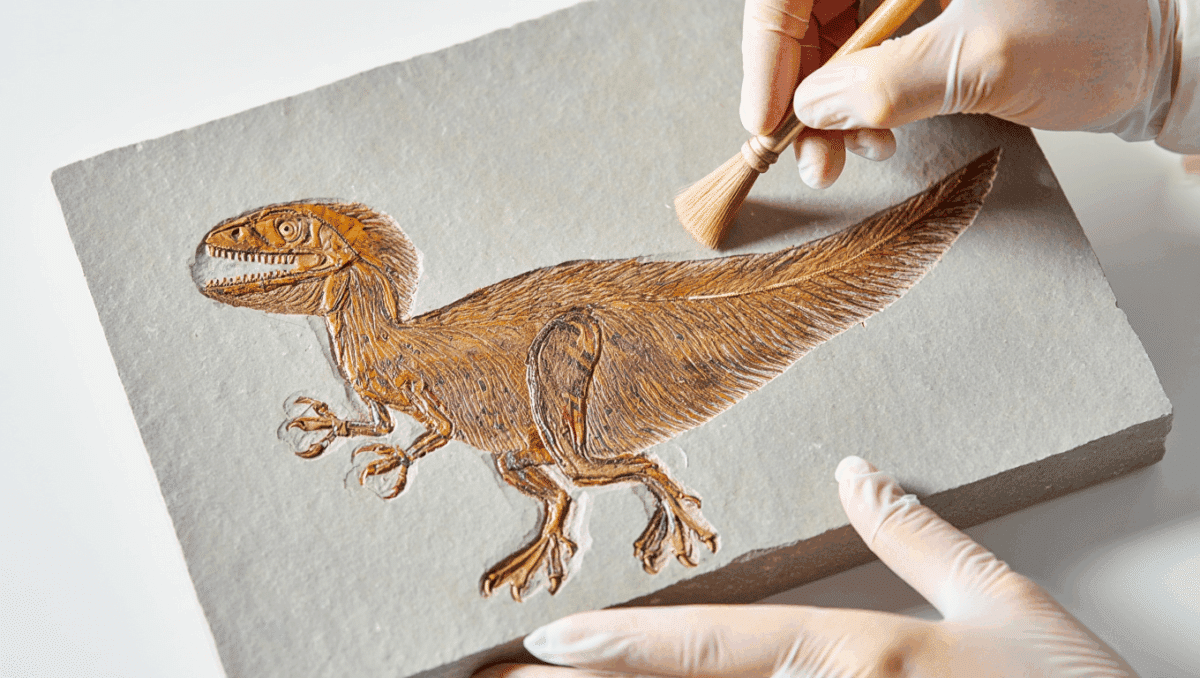
A nearly complete, palm-sized dinosaur unearthed in northern Patagonia is reshaping scientists’ ideas about a strange lineage of bird-like reptiles. The fossil, identified as Alnashetri cerropoliciensis and dated to roughly 90 million years ago, gives researchers an unprecedented blueprint for a group that until now was known mostly from tiny scraps of bone.
Paleontologists from Argentina, the United States and other countries have called the specimen a breakthrough — not because it bridges dinosaurs and modern birds, but because it finally clarifies the anatomy and evolution of the enigmatic alvarezsaurs. The find lets scientists trace how these creatures changed in size and form across continents.
How the Alnashetri fossil was discovered and prepared
The nearly intact skeleton was recovered in 2014 from the La Buitrera fossil beds in Patagonia by a multinational team led by researchers from the University of Minnesota and Argentina. Unlike the fragmented remains that previously turned up in South America, this specimen arrived largely articulated, which gave preparators and analysts a rare chance to examine proportions and bone connections in detail.
The Growing Demand for Data-Driven Decision Making in Silicon Valley
He quit, ran out of money, and begged to come back — here’s how his boss reacted
– The field crew extracted the block carefully to preserve delicate elements.
– Technicians then spent years under microscopes, separating tiny bones from matrix.
– High-resolution imaging and histology helped confirm the animal’s age and life stage.
Researchers describe the specimen as a reference point that lets them reinterpret older, scrappier finds with confidence. In their words, it functions like a key to deciphering other fragmentary fossils — enabling clearer taxonomic placement and evolutionary reconstructions.
What this tiny dinosaur reveals about alvarezsaurs
Alnashetri sits within a group called Alvarezsaurs, a lineage of small, often bird-like theropods known for unusual features. Previous discoveries — largely from Asia — showed these dinosaurs had tiny teeth and short forelimbs ending in a single stout claw. South American records were inconsistent and incomplete, making it hard to understand whether those traits evolved early or late in the clade.
The new skeleton shows that some members of the group remained relatively unspecialized longer than researchers suspected. Specifically:
- Alnashetri retained longer arms and larger teeth than later, highly specialized alvarezsaurs.
- Those traits suggest the distinctive ant-eating adaptations evolved gradually, after a period of small body size had already been reached in some lineages.
- Comparative anatomy with Asian specimens now supports a more nuanced evolutionary timeline for the group.
By filling in this morphological gap, Alnashetri helps reconstruct how feeding behavior, limb proportions, and body size shifted across millions of years.
Size, age and biology: a tiny dinosaur with big implications
Microscopic examination of bone tissue revealed that the animal was an adult of at least four years, despite its petite dimensions. Weighing under two pounds, Alnashetri ranks among the smallest dinosaurs known from South America.
Its combination of small body size with relatively large teeth and longer forelimbs implies that extreme specialization — such as the reduced dentition and single-pincher forelimb seen in later alvarezsaurs — was not a prerequisite for miniaturization. In other words, shrinking in size happened first in some branches, and specialized feeding adaptations came later.
Key anatomical features
- Longer forelimbs than expected for later alvarezsaurs
- Relatively large dentition compared with derived relatives
- Near-complete, articulated skeleton allowing reconstruction of postcranial anatomy
These traits allow paleontologists to refine evolutionary models and better identify fragmentary alvarezsaur remains in other collections.
How tectonics and ancient geography shaped their distribution
The team argues that alvarezsaurs’ presence across multiple continents reflects deep-time geography — the fragmentation of the supercontinent Pangea and later continental rearrangements. Fossils from Asia and South America, once compared only tentatively, are now easier to link through shared anatomical markers highlighted by the Alnashetri specimen.
Scientists suggest that as landmasses split and climates shifted, different alvarezsaur populations diverged, leading to the range of body plans and specializations observed in the fossil record.
What’s next for La Buitrera and the alvarezsaur story
Researchers report that additional specimens from the same Patagonian site are already being prepared and studied in the lab. The newly described skeleton is seen as the first of several chapters expected to come from that excavation area.
Laboratory work underway includes:
- Detailed CT scanning to visualize internal bone structure
- Further histological sampling to refine growth and age estimates
- Comparative analyses with both Asian and North American alvarezsaur material
Scientists say these follow-up studies will allow even more precise mapping of the group’s evolutionary transitions, helping answer how tiny, bird-like dinosaurs diversified across continents and ecological niches.
You might also like:
- Pachycephalosaur skull upends understanding of dome-headed dinosaurs
- Megaraptor fossil found with ancient crocodile in its mouth
- Prehistoric fish fossil rewrites evolution, reveals origins of catfish and carp
- Ancient snake found in London museum: what we know
- Embryo fossil provides oldest evidence that mammal ancestors laid eggs

Michael Thompson is an experienced journalist covering U.S. and global news. With ten years on the front lines, he breaks down political and economic stories that matter. His precise writing and keen attention to detail help you grasp the real‑world impact of every event.


Dang, a 90-million-year-old bird-like dino? Thats wild! Makes you wonder what else is out there waiting to be discovered, huh? Nature never runs out of surprises.
Dude, right? Its mind-blowing to think about what else is lurking in the ancient shadows. Makes you wonder if one day well stumble upon a T-Rex with a top hat and monocle! Natures like an endless box of surprises, aint it?
Man, finding that 90-million-year-old missing link fossil is like hitting the jackpot in a paleontologists world! Makes you wonder what other ancient mysteries are waiting to be unearthed. Time to dig deeper!
Aint it wild how this tiny dinos shakin up the paleo world? 90 mil years old, and we just now findin it? Natures got more secrets than a gossipin neighbor. Cant wait to see what else pops up!
Man, finding a 90-million-year-old missing link fossil is like digging up some ancient treasure! Makes you wonder what other secrets are hidden in the earth. Natures like a giant history book, unfolding chapter by chapter.
Dude, thats like unearthing a real-life Indiana Jones adventure! Imagine all the dino gossip that fossil holds, right? Natures dropping some serious history beats, man. Wonder what other prehistoric goodies are chillin underground, waiting to blow our minds.
Man, finding a 90-million-year-old missing link fossil is like hitting the jackpot in paleontology, right? The Alnashetri discoverys shaking things up, giving us a peek into the world of those bird-like dinos. Natures secrets, man, wild stuff.
Dude, thats like unearthing a prehistoric jackpot! The Alnashetri discoverys totally turning the paleo game on its head. Its mind-blowing how those bird-like dinos are spillin the beans on natures ancient secrets. Talk about a wild ride, huh?
Im telling ya, every time they discover a new dinosaur, its like unlocking a whole new level in a video game! This tiny bird-like dino is like the cutest character in the game, ready to reveal some epic secrets about the past.
I mean, come on, finding a 90-million-year-old missing link fossil? Thats some next-level Jurassic Park stuff right there. Makes you wonder what other ancient secrets are still hiding out there, waiting to be discovered, huh?
I swear, every time they find a new old fossil, its like a plot twist in a movie you thought you had all figured out. This tiny bird-like dinosaur sounds like its got some big secrets to spill about the past!
A skeptical critic: Man, who knew tiny dinosaurs could be such a big deal? This Alnashetri find is like digging up a whole new chapter in the dino history book. Wonder what other mind-blowing secrets are still buried out there.
Oh man, I hear ya! Tiny dinosaurs making big waves, who wouldve thought? Its like finding a hidden gem in a pile of rocks. Makes you wonder what other jaw-dropping secrets Mother Natures keeping under wraps, right? The world of dinosaurs always has a surprise or two up its sleeve. Cant wait to see what else pops up next!
I remember when I was a kid, digging in my backyard, hoping to find dinosaur bones like in the movies. This discovery is like a real-life Jurassic Park moment, but without the scary consequences. Nature is full of surprises!
I mean, can we talk about this tiny dino for a sec? Like, imagine this lil guy struttin around 90 million years ago. Mind-blowing stuff, right? Natures a real show-off with these ancient surprises!
Man, imagine stumbling upon a 90-million-year-old bird-like dinosaur fossil! Its like digging up secrets from Mother Nature herself. Nature always has some wild surprises up her sleeve, huh?
Man, imagine stumbling across a 90-million-year-old fossil like its NBD. Alnashetri sounds like a trendy name for a tea shop, not a tiny dinosaur with big secrets. Natures mysteries, man.
Man, finding a 90-million-year-old bird-like dinosaur fossil? Thats like digging up a time capsule from Mother Nature herself! Makes you wonder what other mind-blowing relics are waiting to be unearthed, right?