
Show summary Hide summary
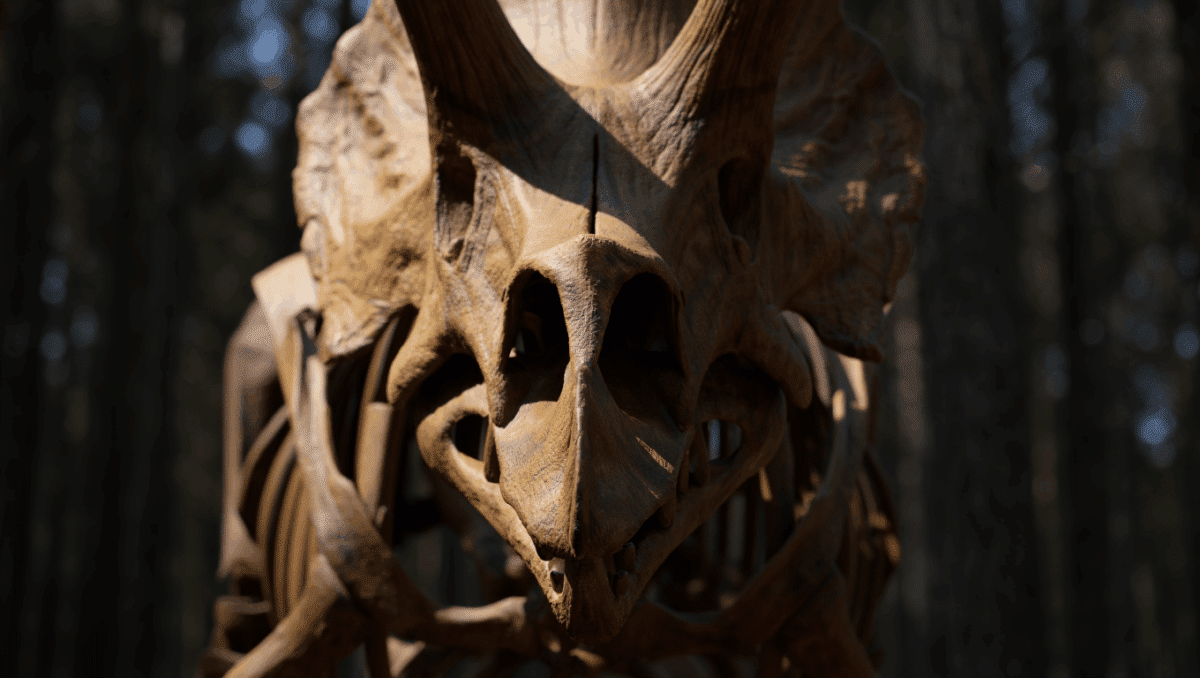
For decades, paleontologists and casual fans alike have puzzled over one of the Triceratops’ most striking features: a disproportionately large nasal region that looks almost out of scale with the rest of the skull. A recent study using modern imaging techniques offers a compelling explanation — the triple-horned giant may have relied on its oversized snout to help manage heat and moisture in its massive head.
Researchers combined fossil CT scans with comparisons to living birds and reptiles to rebuild the soft-tissue layout inside Triceratops skulls. Their work suggests the dinosaur’s nose was much more than a scent organ; it was an anatomical solution to a very practical problem of thermoregulation.
Peering inside fossils: CT technology reveals hidden anatomy
The Growing Demand for Data-Driven Decision Making in Silicon Valley
He quit, ran out of money, and begged to come back — here’s how his boss reacted
Scientists turned to high-resolution X-ray CT scans to see past the stone and bone. These scans allowed the team to visualize cavities, canal systems, and attachment points that hint at where nerves, blood vessels, and soft tissues once sat.
How the team reconstructed the snout
- CT imaging of well-preserved Triceratops skulls provided detailed internal maps.
- Comparative anatomy with extant animals — especially birds and crocodilians — helped translate bone shapes into probable soft-tissue arrangements.
- Researchers created physical 3D-printed pieces of skulls to test how nerves and blood vessels could have threaded through the complex nasal space.
By combining digital scans with hands-on reconstruction, the authors produced the first comprehensive model of the horned dinosaur’s internal nasal architecture.
Odd “wiring” in the nose: rerouted nerves and blood vessels
One surprising discovery was a rerouting of the usual paths for nerves and blood vessels. In most reptiles, channels supplying the nostrils come through the jaw, but Triceratops’ skull geometry obstructed that route.
To compensate, the nasal passages appear to have adopted an alternate supply line. In other words, the soft tissues evolved a different layout — a unique internal “wiring” that supported a much larger nasal chamber than seen in relatives and modern reptiles.
That reorganization would have been necessary to support an oversized nose without compromising sensation, blood flow, or respiratory function. The lead researcher, Project Research Associate Dr. Seishiro Tada from the University of Tokyo Museum, described piecing together the anatomy as a puzzle that revealed an evolutionary workaround to the skull’s constraints.
Respiratory turbinates: evidence of a heat- and moisture-control system
Perhaps the most intriguing finding was anatomical evidence consistent with respiratory turbinates — thin, curled structures inside the nose that increase internal surface area. These structures are familiar in modern birds and mammals, where they play key roles in warming, humidifying, and reclaiming moisture from incoming and outgoing air.
Most non-avian dinosaurs have not shown clear evidence of turbinates, but the study identifies a ridge in the nasal cavity of horned dinosaurs that aligns with where a turbinate would attach in birds. While the researchers stop short of declaring a definitive turbinate fossil, the combination of CT-derived features and comparative anatomy makes a strong case.
Why turbinates matter for a giant-headed herbivore
- Turbinates increase surface area for heat exchange between blood and airflow.
- They help conserve moisture by reclaiming water from exhaled breath — useful for animals with large respiratory volumes.
- For a dinosaur with a heavy skull and limited surface area for passive cooling, nasal turbinates could have been a critical adaptation.
The presence of such structures would explain how Triceratops could control cranial temperature and prevent dangerous water loss while breathing and foraging. The researchers suggest the animal may not have been fully warm-blooded in the mammalian sense, but it likely possessed specialized nasal anatomy to handle the thermal demands of a huge head.
Implications for behavior and physiology
A better picture of Triceratops’ nasal system reshapes ideas about daily life for this famously armored herbivore. Thermoregulatory control in the head would influence feeding, social display, and activity patterns, especially in warm climates or during exertion.
Understanding how nostril structure, vascular networks, and potential turbinates worked together offers testable predictions for future studies. For example, researchers can examine whether other large-headed ceratopsians show the same nasal ridge or whether environmental factors correlate with nasal complexity across species.
Where the research stands and what’s next
The findings were published in the peer-reviewed journal The Anatomical Record, and they represent a step forward in reconstructing soft tissues that rarely survive fossilization. By integrating CT data, comparative anatomy, and physical reconstruction, the team has opened a pathway to ask new questions about dinosaur physiology.
Ongoing work will look for similar nasal indicators in other horned dinosaurs and refine models of airflow, blood flow, and thermal exchange. Such studies could help determine how widespread nasal thermoregulatory adaptations were among large dinosaurs and what that tells us about their ecology and evolution.
You might also like:
- Pachycephalosaur skull upends understanding of dome-headed dinosaurs
- 289-million-year-old fossil reveals earliest known lung function, mummified skin, scales, proteins
- 90-million-year-old missing link fossil of tiny bird-like dinosaur discovered
- Ancient snake found in London museum: what we know
- Megaraptor fossil found with ancient crocodile in its mouth

Michael Thompson is an experienced journalist covering U.S. and global news. With ten years on the front lines, he breaks down political and economic stories that matter. His precise writing and keen attention to detail help you grasp the real‑world impact of every event.


Man, imagine if we had noses like Triceratops, huh? CT scans revealing their hidden anatomy is mind-blowing. Rerouted nerves and blood vessels? Nature is wild, bro. Who needs sci-fi when you got prehistoric beasts?
Man, who wouldve thought that the Triceratops was rocking a massive nose to regulate its body temp? CT scans revealing hidden anatomy, rerouted nerves, and crazy respiratory turbinates? Natures full of surprises, aint it?
Dang, talk about a prehistoric makeover! Triceratops out here setting trends with its snazzy nose job. Who knew Mother Nature was into avant-garde accessories? Next thing you know, T-Rex will be sporting a top hat and monocle. Natures the OG fashionista, aint it?
I remember when I first heard about dino noses – mind-blowing stuff! Triceratops with its giant schnozz regulating body temp? Nature, you wild! Can you imagine rocking a nose that big? Talk about a statement piece!
Dude, right? Those dino schnozzes are next level! Triceratops keeping cool with that massive nose is straight-up genius. Can you imagine strolling around with a sniffer that grand? Talk about a head-turner! Nature sure knows how to show off with style.
Man, who wouldve thought that a Triceratops had such a massive schnoz, right? Like, imagine having a nose so big it helps you stay cool! Natures wild, man. Dinosaurs really out here with the ultimate AC system.
Dude, for sure! That Triceratops be rockin that mega schnoz like its no big deal. Mustve been the OG cool kid in the Cretaceous period, keepin it chill with that oversized nose. Mother Nature really out here droppin surprises left and right. Bet T-Rex was lowkey jealous of that built-in AC system!
Man, I always thought Triceratops was all about the horns, but now theyre telling me its all about the nose? Thats wild! Natures full of surprises, aint it? Who knows what other dino secrets are waiting to be uncovered!
Man, who wouldve thought a Triceratops had such a snazzy nose, huh? Bet it was the envy of the dino kingdom. Can you imagine if we had noses like that? Talk about a conversation starter!
Man, who knew Triceratops were so fancy with their sophisticated nose system? I can barely remember to put on matching socks in the morning, and these dinos were out here with built-in AC units. Nature is wild, dude.
Man, imagine havin a nose like that! Bet ol Triceratops was rockin some next-level air conditioning with that heat-control system. And here I am struggling with a stupid stuffy nose every winter. Lifes unfair, man.
Dang, who knew Triceratops had such a fancy nose job, right? Bet they were the talk of the dino town with their heat- and moisture-control system! Natures original trendsetters, I tell ya.
I used to think Triceratops was all about the horns, but now their huge nose is stealing the spotlight! Its like finding out your fave actor has a hidden talent. Cant wait for the next dino reveal!
Man, I feel you! Triceratops used to be all about those epic horns, but now its like, BAM, check out the schnoz! Its like when your buddy whos known for cracking jokes suddenly busts out a killer dance move. Totally unexpected, but kinda cool! Cant wait for the next dino to drop the mic!
Man, who knew Triceratops had such a fancy nose job back in the day? CT scans revealing hidden anatomy, rerouted nerves, and all that jazz. Natures original heat-and-moisture-control system, huh? Prehistoric air conditioning at its finest!
Dang, whod have thought ol Triceratops was rockin the fancy nose job before it was cool, huh? Natures OG HVAC system, keepin it cool way before A/C was a thing. Prehistoric chill vibes, man!
Man, that Triceratops was one cool dude with that massive nose! Its wild how they figured out it helped with body temp. Natures full of surprises, aint it? Makes you wonder what other secrets those fossils are hiding!
Man, who wouldve thought a dinos nose could be so complex? Triceratops, you sneaky genius! Bet they rocked the Cretaceous with that heat-and-moisture control system. Natures OG air conditioner, right there.
I always knew Triceratops was a trendsetter! Who wouldve thought that huge nose was actually a high-tech body temperature regulator? Talk about prehistoric swag! Dinosaurs really had it all figured out, huh?
Man, who wouldve thought a Triceratops had a big nose for more than just looks? Natures full of surprises, aint it? Bet that dino couldve used some tissues in the prehistoric times!
Man, imagine having a nose the size of a triceratops! Bet they never got a cold with that monster! Makes you wonder what other cool tricks these ancient creatures had up their sleeves… or should I say, up their snouts!
Man, who knew Triceratops were so extra with their noses? Its like they were rockin the OG air conditioning system way before humans even thought about it! Natures original innovators, I guess.
I remember watching that movie where the Triceratops was all about the horns, but now theyre saying its all about the nose? Who knew dinosaurs were into fashion trends? Science, man, always keeping us on our toes!