
Show summary Hide summary
- Why a Jeweler Would Put a Diamond in an Artificial Eye
- How Artificial Eyes Are Made and How a Diamond Might Be Added
- Potential Risks and Medical Concerns
- Public Reaction and Ethical Questions About Body Modification
- Practicalities: Cost, Maintenance, and Longevity
- What Professionals Recommend Before Altering a Prosthetic Eye
- Similar Customizations and Cultural Context
- What to Watch Next
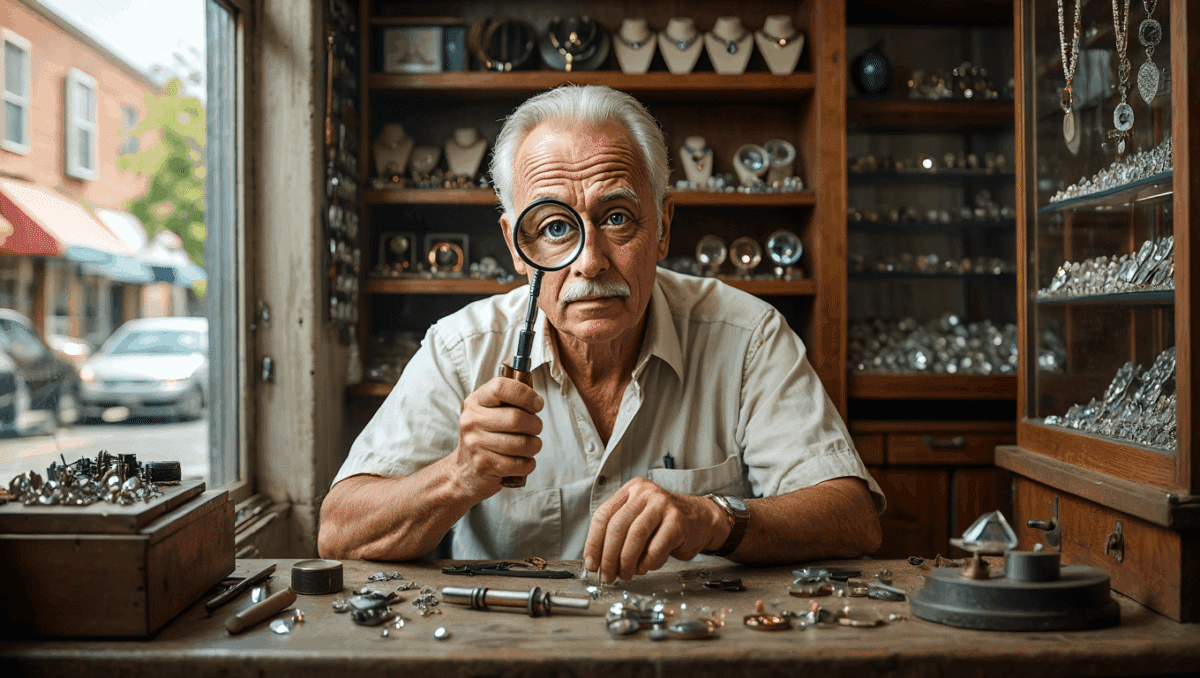
A small jewelry shop in a quiet neighborhood became the center of an unusual conversation after its owner fitted a 2-carat diamond into his own artificial eye. The move—part personal statement, part technical experiment—has drawn curiosity from customers, medical professionals, and online audiences alike, prompting questions about safety, craft, and the line between body modification and wearable art.
The story touches on craftsmanship and risk, but it also opens a wider discussion about customization in medical prosthetics. From the technical steps required to embed a gem to the ethical and medical considerations that come with altering a prosthetic eye, this is a look at what happens when high-end jewelry meets biomedical devices.
Why a Jeweler Would Put a Diamond in an Artificial Eye
People modify their appearance for many reasons: self-expression, reclaiming control after injury, or simply as a bold fashion statement. For a jeweler, the impulse to combine precious materials with personal identity is natural. In this case, the decision to place a 2-carat diamond in an ocular prosthesis blends the shop owner’s trade with a form of wearable artistry.
The Growing Demand for Data-Driven Decision Making in Silicon Valley
He quit, ran out of money, and begged to come back — here’s how his boss reacted
- Personal identity: Transforming a prosthetic into a piece of signature jewelry can be empowering and symbolic.
- Publicity and brand story: Unusual projects often draw attention to small businesses and their craftsmanship.
- Experimentation with materials: Jewelers are uniquely positioned to test how gems behave in unconventional settings.
How Artificial Eyes Are Made and How a Diamond Might Be Added
Artificial eyes, also called ocular prostheses, are typically crafted by ocularists from acrylic or medical-grade plastics to match a patient’s opposite eye in color, shape, and reflection. They are not implants inside the eyeball itself but removable prosthetics that sit in the eye socket or conformer.
Typical prosthesis construction
- Base shape is molded to fit the socket comfortably.
- Color and iris pattern are painted or printed to match the natural eye.
- Acrylic or resin is polished to create a realistic sheen and smooth surface.
Where a gemstone can be integrated
Adding a stone is possible in the outer surface or embedded under a protective layer. The process generally involves:
- Designing a placement that preserves the look and balance of the prosthesis.
- Securing the gemstone in a socket or recess so it doesn’t shift.
- Encasing the gem in a clear acrylic overlay to protect it and create a smooth surface.
Critical considerations involve weight distribution, the durability of adhesives, and maintaining a non-irritating, biocompatible surface against delicate eyelid tissues.
Potential Risks and Medical Concerns
While a decorative gem can be captivating, medical professionals warn of several risks when altering prosthetics without clinical oversight.
- Irritation and abrasion: Any rough edge or protrusion may rub against the eyelid and socket, causing pain or sores.
- Infection risk: Foreign materials and compromised sealing can trap bacteria or make cleaning more difficult.
- Dislodgement hazard: A loosely attached stone could fall out and pose a choking risk or become lost.
- Allergic reactions: Adhesives or metal settings might provoke skin or mucosal reactions in sensitive individuals.
Ocularists and ophthalmologists typically recommend that modifications to prostheses be planned and executed by professionals trained in eye socket anatomy and prosthetic materials to minimize complications.
Public Reaction and Ethical Questions About Body Modification
The public response to the jeweler’s decision has been mixed—some applaud the ingenuity, others express concern about safety and the example it might set.
- Supporters praise the move as a creative reclaiming of appearance and a unique form of self-expression.
- Critics worry about glamorizing risky behavior without clear medical oversight.
- Observers debate where the line falls between cosmetic customization and responsible health practice.
The ethical angle also raises questions: Should jewelers or other artisans be free to modify medical devices used on the body without consulting healthcare professionals? Is there a duty to ensure that decorative alterations don’t compromise safety?
Practicalities: Cost, Maintenance, and Longevity
Embedding a 2-carat diamond changes the practical profile of a prosthetic eye. Diamonds are light relative to size—2 carats equals about 0.4 grams—but even small weight changes can affect how a prosthetic sits in the socket.
- Cost implications: A 2-carat diamond’s retail value can vary widely depending on cut, color, and clarity, potentially adding significant expense to the prosthesis.
- Maintenance: Regular cleaning and inspection become more important to ensure the stone remains secure and the surface remains smooth and hygienic.
- Repairability: If the gem or setting becomes damaged, repairs may require a skilled ocularist working with a jeweler.
Users modifying prostheses should expect more frequent follow-ups and possibly customized cleaning protocols to protect both eye health and the gemstone.
What Professionals Recommend Before Altering a Prosthetic Eye
Most eye-care and prosthetics professionals advise a cautious approach. If someone is considering a jeweled or otherwise modified prosthetic, these steps are commonly recommended:
- Consult an ocularist and an ophthalmologist about materials and placement.
- Use medical-grade, biocompatible materials and adhesives.
- Design the modification to be sealed under acrylic or another smooth overlay to prevent irritation.
- Schedule follow-up visits to monitor for irritation, infection, or changes in socket anatomy.
Similar Customizations and Cultural Context
This is not the first time prosthetics or medical devices have been personalized. From painted prosthetic limbs to decorative dental work, people adapt medical aids into personal statements.
- Custom prosthetic limbs with artistic finishes and embedded LEDs are increasingly common.
- Dental and orthodontic jewelry has a long history, though not without controversy.
- Body modification communities sometimes share techniques and precautions for safer customization.
These trends sit at the intersection of craftsmanship, identity, and medical care, illustrating how aesthetic choices can influence and complicate device function.
What to Watch Next
The jeweler’s decision has sparked a lot of curiosity and debate but also serves as a prompt for clearer guidance. Expect professionals in ocular prosthetics and medical ethics to weigh in on safety standards for cosmetic modifications. Meanwhile, anyone considering a similar alteration should proceed under clinical supervision and with a clear plan for maintenance and follow-up care.
You might also like:
- Prosthetic leg found after 10 months at sea: woman thrilled
- Kentucky teacher of the year builds prosthetic hand for student in school 3D printing lab
- Tooth implanted in 34-year-old’s eye restores vision after 20 years
- Royal jewels hidden for 100 years by empress who defied Hitler go on public display
- Recycled glass earrings: woman turns broken windows into jewelry to keep glass out of landfills

William Anderson is a multimedia producer specializing in videos, podcasts, and interactive galleries. With five years of immersive content creation, he turns information into a rich audio‑visual experience. His storytelling skills draw you directly into the heart of every story, on any platform.


Wait, what? A jeweler putting a 2-carat diamond in an artificial eye? Thats some next-level bling! Wonder if it gives a whole new meaning to eye-catching or if its just a flashy gimmick. Curious, but kind of wild, dont you think?
Aint that a sight for sore eyes! Imagine wakin up with a bling in your artificial peeper. Bet folks wont be starin at your missing eye anymore, but at that 2-carat sparkler! Talk about eye-catchin bling, huh?
Well, aint that a fancy upgrade! Imagine rollin outta bed with a shiny gem in your glass eye. People wont be gawkin at your empty socket anymore, theyll be blinded by that 2-carat dazzler! Talk about stealin the show, right?
Yo, imagine the bling on that artificial eye! Bet its blinding in more ways than one. Like, Oh, excuse me, I seem to have a 2-carat diamond in my eye! Talk about eye-catching!
Aint that a plot twist! Imagine waking up from surgery, and boom, youre blingin with a 2-carat diamond in your artificial eye. I mean, why not spice up that prosthetic eye game, right? Talk about next-level accessorizing!
I mean, talk about flashy eye for an eye, am I right? *laughs* Seriously though, who wouldve thought a diamond in an artificial eye, thats some next-level bling! Wonder if it gives you a sparkling vision or just a fancy wink!
I swear, talk about bling thatll make your eyes pop! *chuckles* Who wouldve guessed, right? A diamond in an artificial eye sounds like something straight out of a sci-fi flick. Imagine catching someones eye and all you see is that shimmer! Wonder if its like having a disco ball in your head or just a fancy twinkle. What a wild thought, huh?
Wait, hold up! A diamond in an artificial eye? Thats some next-level bling, huh? Wonder if its blinding in the sunlight or something. On a serious note, mustve cost an arm and a leg, no pun intended!
Man, talk about bling bling! Imagine the reactions when someone pops in for an eye exam and walks out with a sparkly new accessory. I bet that jewelers shop is gonna be the talk of the town for weeks!
I once heard about a jeweler who implanted a 2-carat diamond in an artificial eye. Talk about bling thatll catch everyones eye! Wonder if its a trend or just a one-off sparkle in the eye.
Oh man, thats wild! Imagine winking with that bling, talk about making a statement. I bet that jeweler had folks seeing eye to eye with that flashy move. Wonder if theyll start a trend or if its just a one-off dazzle in the eye. Whats next, diamond-studded contact lenses? Gotta keep an eye on that trend!
I once heard about a jeweler who put a 2-carat diamond in an artificial eye. Sounds like a plot twist from a soap opera! Wonder if the eye sparkles in the sun. Talk about bling with a blink!
Oh man, that jeweler mustve been on some next-level creativity! Can you imagine rocking an eye that shines brighter than the sun? Bling with a blink, indeed! Bet that artificial eye could give any diamond ring a run for its money. Talk about a true eye-catcher!
Man, that jeweler is really taking eye-catching jewelry to a whole new level, huh? Wonder if that diamond helps with their vision… or if it’s just for bling. Talk about making a spectacle!
Man, talk about blingin out your eye socket! This jeweler aint playin around, puttin a 2-carat diamond in an artificial eye. Cant decide if its genius or just plain extra. Either way, thats one way to sparkle, I guess.
Man, that jeweler must be living in 3021! Talk about bling that literally catches the eye. Wonder if it affects the vision, though. Imagine seeing sparkles every time you blink!
Yo, that jewelers definitely on another level! I bet they got diamonds that shine brighter than my future, haha. But for real, imagine having those sparkles follow you everywhere. Youd be your own personal disco ball! Wonder if they do discounts for eye strain.
Man, talk about bling! That jewelers on another level, mixin tech and luxury like its NBD. Wonder if its comfy or just for show? Bet folks are lining up for that upgrade!
Dang, that bling is straight fire! Mixing tech and luxury like its NBD? Thats some next-level flex right there. But real talk, is it comfy or just for the gram? Bet peeps are lining up for that upgrade like its Black Friday at the tech store!
No way, man! That jeweler is next level with that 2-carat diamond in an artificial eye. Talk about bling that catches everyones attention! Wonder if it enhances vision… or if it’s just for the sparkle!
A conspiracy nut: That jeweler must be hiding some secret messages in those diamonds, man. Its not just about making things shiny anymore. What if the artificial eyes are actually spy gadgets? Time to wear my tinfoil hat!
Aint that a sight for sore eyes! I mean, who needs Lasik when you can bling out your peeper with a 2-carat diamond? Talk about eye-catching fashion, literally! Wonder if it comes with a blingy eyepatch for swanky occasions?
A jewelry store owner implanting a 2-carat diamond in an artificial eye? Thats some next-level bling! Wonder if it blinks sparkles. Talk about eye-catching fashion, literally. Bet theyll have a gem of a time winking at people!
A jewelry store owner implanting a 2-carat diamond in an artificial eye? Thats some wild fashion statement! Imagine winking and sparkling like a disco ball – talk about a bling overload! Must be a sight to see, literally. Wonder if theyll have to wear sunglasses indoors to avoid dazzling everyone!