
Show summary Hide summary
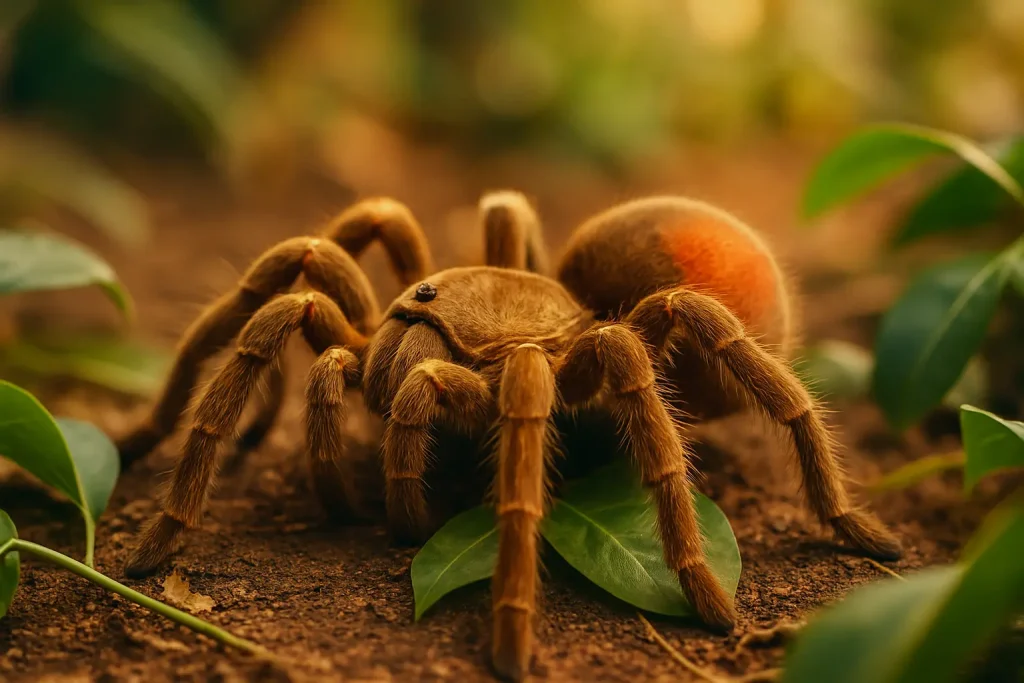
Spiders: some people love them, some people keep their shoes ready for emergencies, and then there’s Theraphosa blondi — a spider so impressive that even your fearless cat would think twice before batting at it. This giant of the arachnid world, also fittingly known as the Goliath birdeater, is the largest spider species known to science and one that can literally make your arm hair stand up (should you be lucky or unlucky enough to meet it).
The Biggest, Heaviest Arachnid You Might Ever Encounter
Let’s start with the stats that keep arachnophobes awake at night. The body of Theraphosa blondi alone can reach up to 12 centimeters in length — about the size of a generous croissant. Stretch out all eight of its legs, and we’re looking at an astonishing 30 centimeters across, which, for the visual thinkers among us, is roughly the length of a human forearm. No, it doesn’t come with a warning sign, but perhaps it should.
The Growing Demand for Data-Driven Decision Making in Silicon Valley
He quit, ran out of money, and begged to come back — here’s how his boss reacted
It’s not just its size that sets this spider apart. It is also one of the heaviest tarantulas out there. The largest individuals tip the scales at 170 grams, making comparisons with other tarantula species like comparing, as entomologist and Harvard Museum photographer Piotr Naskrecki says, “a giraffe and an elephant.” A little dramatic? Perhaps. But once you see one, you might agree.
From Amazonian Nights to Local Cuisine
This spider calls the heart of the Amazon rainforest in South America its home. Despite being the ultimate heavyweight champion among arachnids, the Goliath birdeater is far from an unknown local: Indigenous peoples have known about—and shared their habitats with—this species for millennia. Not only have they lived alongside the spider, but some even eat it. Yes, you read that correctly. Cooked, the spider reportedly tastes like shrimp. I’ll leave you to decide if that’s appetizing or not.
But wait, the culinary creativity doesn’t stop at eating the spider. According to spider expert Rick West, locals have also reportedly used the spider’s fangs as toothpicks once the meal is over. Resourcefulness at its finest—or proof that every part really is put to use. In nature, nothing is wasted; everything is transformed.
Ferocious Hunter By Night, But Not Lethal to Humans
Terrifying as it may look (especially to those who firmly believe that eight legs are about six too many), the Theraphosa blondi is not deadly to humans. Sure, it’s armed with two-centimeter fangs capable of shredding flesh and delivering an extremely painful bite, but the venom it injects contains a neurotoxin only potent enough to paralyze its prey, not to seriously threaten a person. The pain is real—think of it as nature’s reminder not to get too close—but medical emergencies are exceedingly rare.
This nocturnal hunter does not bother with weaving webs to trap its victims. Instead, it spends its days hiding in burrows and springs into action once darkness falls, on the lookout for insects and worms. Given its size, however, it doesn’t shy away from going after larger animals if the opportunity arises—frogs and lizards are both fair game, should they wander a step too close.
That said, like all spiders, Theraphosa blondi is not entirely web-averse. Although the webs it spins remain hidden from our view inside its burrow, these silk structures serve vital purposes: reinforcing its den and wrapping its eggs to protect them from would-be predators.
Secrets of Longevity and a Final Thought
The mysterious Theraphosa blondi continues to surprise researchers: despite being a ‘celebrity’ in the Amazon, scientists still understand relatively little about its full lifestyle, thanks to its elusive nocturnal habits. What we do know is that female Goliath birdeaters can live between 12 and 15 years—an impressive span for an arachnid. Males, on the other hand, follow a more tragic arc: as is often the case in the animal world, they die not long after reproduction, living around three to five years in total.
So, whether you’re an arachnid enthusiast, a culinary daredevil, or someone double-checking your shoes tonight, Theraphosa blondi is a reminder that nature never ceases to astonish. And if you ever find yourself in the Amazon, remember: not everything that crawls is out to get you, but some things are definitely bigger—and perhaps tastier—than you’d expect.
You might also like:
- Pearl necklace spider discovered: what scientists know about the new species
- Spiders build fake bodies to fool predators
- Bolivia protects 660 square miles of biodiverse forest
- Meet Finn, the Gentle Maine Coon Cat as Long as a Nine-Year-Old
- 112-million-year-old amber preserves a snapshot of a Cretaceous forest

David Miller is an entertainment expert with a passion for film, music, and series. With eight years in cultural criticism, he takes you behind the scenes of productions and studios. His energetic style guides you to the next big releases and trending sensations.


I aint messin with no 170-gram spider, no sir. But hey, props to the locals who chow down on em! Imagine the dinner conversations they have after a spider feast, huh? Wild stuff.
Man, that spiders big as my worst nightmares! Cant believe folks chow down on it. Wonder if it tastes like chicken, or, yknow, like a creepier version of crab legs. Ever tried exotic eats?
Man, that spider be wildin! Can you imagine stumbling upon that giant critter in the Amazon? Bet some locals make a mean spider stew outta that beast! Nature never fails to shock, huh?
Yo, for real! That spider in the Amazon is straight-up outta a horror flick. Imagine coming face-to-face with that eight-legged nightmare? Locals probably turn it into a gourmet dish, spider stew anyone? Nature be wildin with its surprises, man!
Yo, I heard about this massive spider, like, bigger than my hand, man! Locals chow down on it? No way, Id run a mile! Imagine seeing that beast on your plate… *shudders*.
Whoa, hold up! 170 grams for a spider? Thats like carrying around a whole bag of chips! And 30 centimeters wide? Thats bigger than my laptop! Nature really be out there breaking all the records, huh?
This spiders like a mini monster truck! Can you imagine stumbling upon this beast in the wild? Id probably drop dead from a heart attack before it even got close. Nature really out there flexin on us, huh?
Man, I thought my last camping trip was wild until I read about this giant spider! 30 centimeters wide and 170 grams? Thats like something out of a horror movie. Can you imagine stumbling upon that in the Amazon? Holy smokes!
Man, I remember stumbling upon one of those giants in the Amazon. Almost dropped my machete! Cant believe locals eat those monsters. Survival of the fittest, I guess.
Oh man, I swear, those Amazonian spiders are on a whole other level. I once saw one the size of a dinner plate – nearly dropped my sandwich! Cant imagine chowing down on that, though. No thank you!
I once visited the Amazon and saw a spider the size of my hand! Locals said they feasted on it. Can you imagine? Ill stick to my regular-sized snacks, thank you very much.
Dude, imagine stumbling upon that monster spider in the wild! Thats the stuff of nightmares, man. Bet the locals have some wild stories to tell about those Amazonian nights. Natures full of surprises, aint it?
I once saw a bug so big, I thought it was a toy spider on steroids! But nope, turns out its the worlds largest spider. Eating spiders? Nah, Ill stick to my usual snacks, thanks.
Dang, that spider sounds like it could be cast in a monster movie! I feel you, bro, snacks over spiders any day. Who needs all those extra legs crawlin around? Stick to the good ol munchies, am I right?
Oh man, I thought my neighbors cat was huge, but now were talkin spiders?! 30 centimeters wide and 170 grams, thats like a mini dinner plate with legs! Hope these locals know what theyre chewin on!