
Show summary Hide summary
- How scientists found Dianjunus rex in Yunnan’s mixed forests
- What makes Dianjunus rex physically remarkable
- Genetic evidence: a new family and an ancient origin
- Ascomycota: the influential fungal phylum that includes D. rex
- Ecological implications: why grow so big?
- What this discovery means for fungal biodiversity in East Asia
- Next steps: research directions and conservation concerns
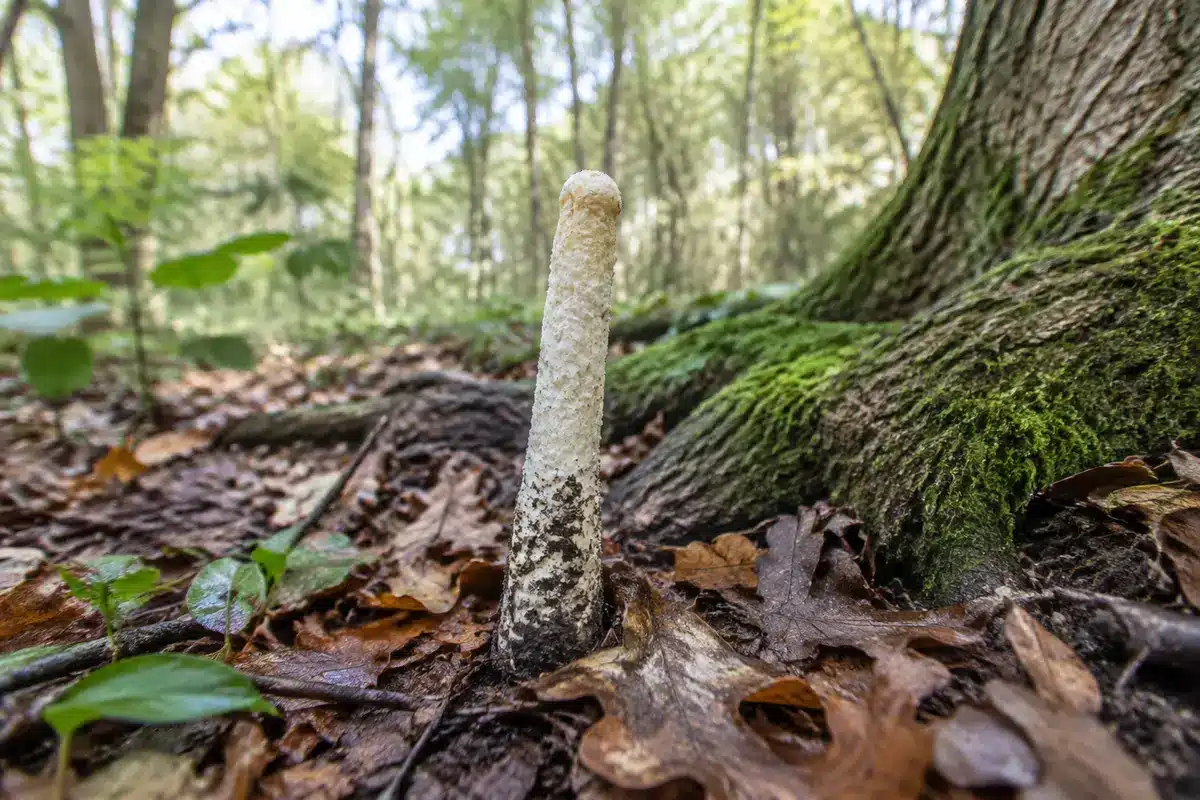
Deep in the tangled forests of southwest China, researchers have uncovered a fungal behemoth that upends expectations about how large ascomycete fungi can grow. The species, newly named Dianjunus rex — “King of Dian” — erupts from woody roots with towering, ivory-colored fruiting bodies that can reach roughly 20 inches in height and weigh as much as five pounds, making it one of the largest known members of its group.
An international team working across China, Thailand and Mexico has determined that this organism is not only a new species but represents an entirely new genus and family within the Ascomycota. Genome sequencing and morphological study suggest the lineage emerged about 65 million years ago, shortly after the mass extinction that ended the age of dinosaurs — a timing that raises intriguing questions about how forest ecosystems and wood-decomposing fungi rebounded after that global upheaval.
How scientists found Dianjunus rex in Yunnan’s mixed forests
Field teams from the Kunming Institute of Botany and partner institutions encountered the unusual fungi during surveys in Yunnan province, where temperate conifer stands blend into subtropical rainforest. The specimens appeared as conspicuous vertical stromata growing on the roots of Chinese cork oak, standing out in the leaf litter and understory debris.
The Growing Demand for Data-Driven Decision Making in Silicon Valley
He quit, ran out of money, and begged to come back — here’s how his boss reacted
The discovery involved:
- Targeted field searches across varied forest types in Yunnan.
- Collection of intact fruiting bodies for lab-based study.
- Isolation of spores and cultivation on nutrient media to observe growth and microscopic features.
Lab work revealed a stable, distinctive morphology that did not match known families in the order Xylariales, prompting genomic sequencing and broader taxonomic comparisons.

What makes Dianjunus rex physically remarkable
This fungus stands out for its sheer scale and structure. Unlike typical ascomycetes, which release spores from small sack-like asci embedded in their fruiting tissues, D. rex develops large, upright stromata — a growth form that allows it to tower above surrounding detritus.
Key physical traits:
- Fruiting bodies up to ~20 inches (about 50 cm) tall.
- Individual specimens weighing up to approximately 5 pounds.
- Whitish, robust stromata attached to woody roots, especially of Chinese cork oak.
- Spores and microscopic features consistent with placement in Ascomycota, but distinct enough to warrant a new family.
Such a large, energy-intensive fruiting structure is rare among ascomycetes; prior record-holders typically measured 20–30 centimeters tall, making D. rex roughly twice as tall as the largest previously known relatives.
Genetic evidence: a new family and an ancient origin
Genomic sequencing and phylogenetic analysis established that D. rex belongs to a previously undescribed lineage now named Dianjunaceae. Comparative DNA work placed this family within the Xylariales order, with Graphostroma platystoma appearing as its closest known relative.
Researchers applied molecular clock methods to estimate when Dianjunaceae separated from other xylariaceous fungi. By comparing sequences to hundreds of fungi with known divergence dates, they inferred an origin of roughly 65 million years ago — notably soon after the Cretaceous–Paleogene (K–Pg) extinction event.
Why the timing matters
The post-extinction interval saw dramatic changes in plant communities and the rapid accumulation of dead woody material as ecosystems reorganized. That surplus of substrate could have created new ecological opportunities for wood-decaying fungi, potentially favoring traits like large fruiting bodies that improve spore dispersal in dense, recovering forests.
As one of the study’s lead authors noted, the lineage provides “a rare window into the evolution of extreme fungal body forms,” highlighting how environmental upheaval may spur dramatic morphological innovation.
Ascomycota: the influential fungal phylum that includes D. rex
Ascomycota is the largest fungal phylum, with more than 64,000 described species. Members of this group don’t form classic gilled mushrooms; instead they bear spores in microscopic sacs (asci) within or on their fruiting tissues. Despite that technical difference, ascomycetes are central to human life and ecosystems.
Examples of Ascomycota’s roles:
- Food and fermentation: yeasts and molds used in bread, beer, wine, soy sauce and many cheeses.
- Medicine: production of antibiotics like penicillin and immunosuppressants such as ciclosporin.
- Culinary delicacies: prized fungi such as morels and truffles are ascomycetes.
- Pathogens and pests: species that cause Dutch elm disease, chestnut blight, powdery mildew and human infections.
Within this vast phylum, D. rex stands out not just for size but for its potential to reveal how extreme morphological strategies evolve in fungi.
Ecological implications: why grow so big?
Producing a large, upright fruiting body likely reflects a trade-off between reproductive payoff and metabolic cost. In dense forest understories, a tall stromata might reach air currents above the low vegetation, enhancing wind-borne spore dispersal. At the same time, constructing such a structure demands significant nutrient and energy investment — something only sustainable if the ecological benefits compensate.
Researchers propose several reasons D. rex might have evolved gigantism:
- Enhanced spore release and dispersal in cluttered forest environments.
- Adaptation to abundant woody substrates following large-scale vegetation turnover.
- Niche specialization on root-associated wood decomposition where larger stromata confer a competitive advantage.
What this discovery means for fungal biodiversity in East Asia
The find underscores that subtropical and temperate forests in southwest China remain hotbeds of undescribed fungal diversity. The region’s climate stability, habitat variety and complex ecological networks foster speciation, but field obstacles have historically limited surveys.
Challenges that have slowed fungal discovery here include:
- Difficult terrain and seasonal accessibility of remote forest sites.
- Short, unpredictable fruiting seasons that hide many species most of the year.
- Past scientific focus on economically important fungi, leaving ecological specialists under-sampled.
The authors expect more unusual and taxonomically significant fungi to emerge from expanded fieldwork and genomic screening in the region, especially as molecular tools make it easier to place enigmatic specimens in an evolutionary context.
Next steps: research directions and conservation concerns
Moving forward, scientists plan to:
- Survey broader geographic ranges to determine the distribution of Dianjunaceae.
- Study the species’ life cycle, substrate preferences and ecological interactions in situ.
- Use population genomics to understand diversity within the new family and its evolutionary history.
Protecting the habitats where such fungi are found will be essential if researchers hope to document and preserve these unique lineages, since forest loss and climate change could erase species before they are described.
You might also like:
- Underground fungal networks cover 62 quadrillion miles, scientists find
- Nonphotosynthetic plant discovered: species abandoned photosynthesis entirely
- New bird species discovered in Ecuador could reshape conservation
- Butternut trees resistant to deadly canker mapped by scientists to boost reforestation
- Marsupials discovered after 6,000 years presumed extinct

Michael Thompson is an experienced journalist covering U.S. and global news. With ten years on the front lines, he breaks down political and economic stories that matter. His precise writing and keen attention to detail help you grasp the real‑world impact of every event.


Yo, did yall hear bout that 65-million-year-old giant fungus they found in China, callin it D-rex? Dang, natures got jokes! Can you imagine a fungus the size of a T-Rex? Wild stuff, man.
Man, a 65-million-year-old giant fungus, D-rex, found in China? Thats like straight out of a sci-fi flick! Can you imagine stumbling upon that in the woods? Nature is wild, yall.
A nature nerd here, and lemme tell ya, this D-rex fungus thing is wild! Like, a 65-million-year-old giant fungus?! Nature always keeps us on our toes with its surprises. Cant wait to see what else Mother Earths hiding!
Man, a 65-million-year-old giant fungus in China? Aint that wild! Imagine stumbling upon that in the forest. Wonder if its got any ancient secrets to spill. Nature never ceases to amaze, huh?
No way, dude! That giant fungus is like natures own little time capsule, holdin secrets from way back. Imagine the stories it could tell if it could talk! Natures full of surprises, man. Bet theres more crazy stuff hidden out there just waiting to be found.
Whoa, a 65-million-year-old giant fungus named D-rex? Thats like Jurassic Park meets Mushroom Kingdom! Can you imagine a fungus the size of a T-Rex roaming the forest? Nature is wild, man.
Man, D-rex sounds like something out of a sci-fi flick! A 65-million-year-old giant fungus? In the Chinese forests? I mean, talk about a blast from the past! Wonder what else is hiding in those woods…
Whoa, a fungus as old as the dinosaurs? Thats wild! Can you imagine if this D-rex thing could talk? Bet itd have some crazy stories to tell about the good ol days!
Yo, can you imagine if that fungus had a chitchat with a T-Rex? Itd be like a Jurassic gossip session! Bet D-rex would be like, Back in my day, plants were wild, man! Ha, those two would break the internet with their stories!
Yo, can you imagine stumblin on a 65-million-year-old giant fungus in the woods, I mean, what?! D-rex is like a prehistoric mushroom rockstar. Natures full of surprises, man.
Yo, no joke, that giant fungus is like Mother Natures hidden gem, man! D-rex couldve totally jammed out with that funky mushroom back in the day. Can you imagine the Jurassic rave vibes? Natures just flexing its wild side, bro.
Whoa, hold up! A 65-million-year-old giant fungus? Is this some sci-fi movie plot twist or what? D-rex lurking in Chinese forests, thats wild. Nature never fails to surprise, huh? Wonder what other prehistoric surprises are hiding out there.
Yo, did you hear bout that 65-million-year-old giant fungus found in China? They call it D-rex, sounds like a funky dinosaur! Nature never stops surprising us, man. Can you imagine what else is hidden out there?
Oh man, a 65-million-year-old giant fungus? Thats wild! Imagine stumbling upon that in the woods. Bet its seen some stuff, like the original forest raver!
Whoa, a 65-million-year-old giant fungus, D-rex, sounds like something out of a sci-fi flick! Can you imagine stumbling upon that in the Chinese forests? Nature always has a way of surprising us with its ancient wonders.
I remember when I stumbled on fossilized tree-sized mushrooms in a sci-fi book. Now, a 65-million-year-old giant fungus named D-rex? Sounds like Mother Nature had a blast playing Jurassic Park! Wonder what else shes hiding in those forests.
D-rex, huh? Mother Natures really flexing her creative muscles there! Can you imagine stumbling on that giant fungus in the wild? Id probably think Id stepped into a sci-fi flick myself! Who knows, maybe next well uncover a forest full of dancing trees or rock formations that sing… Natures got more surprises up her sleeve than well ever know!
Man, talk about ancient surprises! D-rex, the 65-million-year-old giant fungus, sounds like a character straight out of a sci-fi flick. Bet it has some wild stories to tell. Wonder what other prehistoric oddities are hidden in those forests!
Man, a giant fungus from the dinosaur era? Thats wild! Imagine a fungus the size of a T-Rex chilling in the forest. Nature always surprises us, huh? Makes you wonder what else is hidden out there.
A curious hiker: Whoa, a T-Rex-sized fungus? Thats some Jumanji-level stuff right there! Natures like a never-ending treasure hunt, innit? Always pulling surprises out of its sleeve. Makes me wonder what other crazy creatures are lurking in the shadows, waiting for their big reveal. Wonder if Ill stumble upon a mushroom the size of my car next time Im out there!
No way, a 65-million-year-old giant fungus? Sounds like something out of a sci-fi flick! D-rex, the new superstar in the forest. Wonder if its more of a fun guy or a fierce competitor in the ecosystem!
I mean, a 65-million-year-old giant fungus? Thats like finding your grandparents secret recipe but times a million, right? D-rex, you sneaky fungus, what other surprises you hiding down there?
I remember when I was a kid, and all we had were regular-sized mushrooms in the yard. Now theyre out there finding 65-million-year-old giant fungus? Imagine tripping over that thing on a hike!
Man, a 65-million-year-old giant fungus? D-rex sounds like a character from a sci-fi flick! Nature never fails to amaze. Wonder if it tasted like mushrooms or had some hidden powers? Intriguing, huh?