
Show summary Hide summary
- Forest preservation reveals an intact Roman footprint
- Kapersburg’s place on Rome’s northern frontier (the Limes)
- The vicus: village life beside the fort
- A small temple dedicated to Mars: architecture and artifacts
- Who lived here: units, population, and connections to Nida
- Signs of changing use and the 3rd-century abandonment
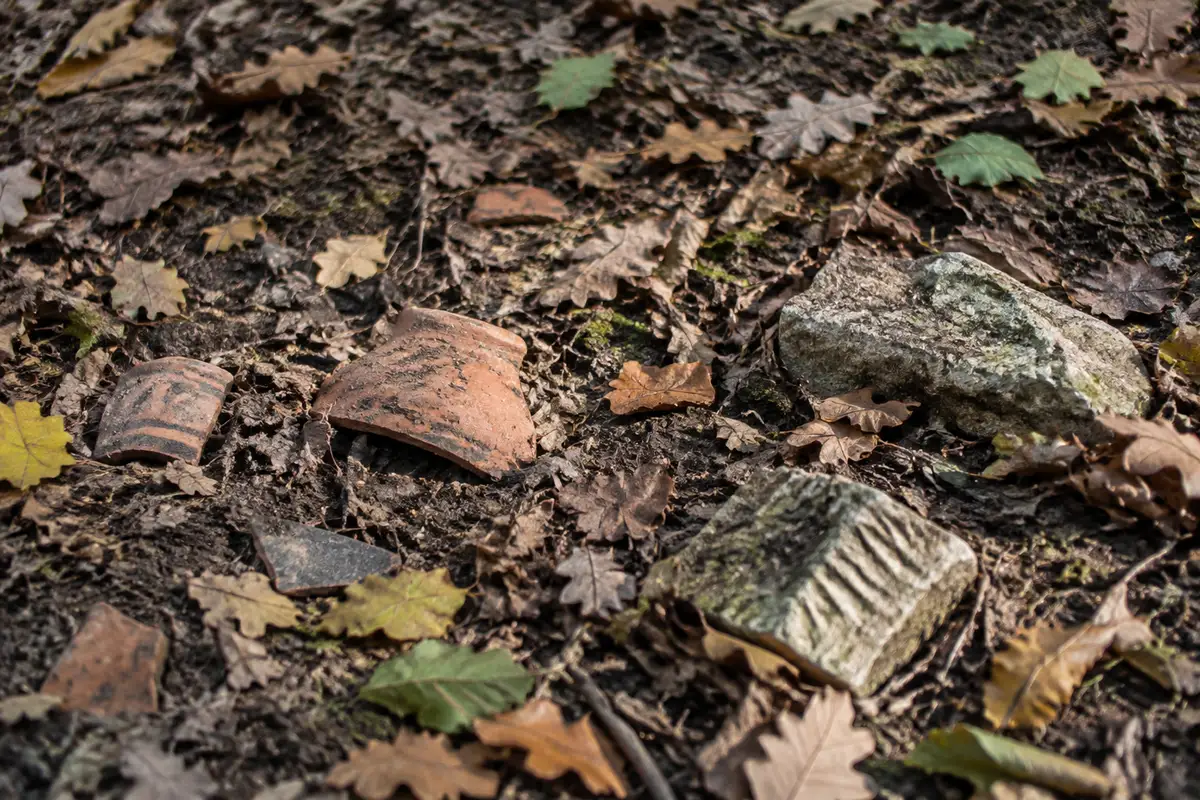
Archaeologists working in a forested stretch north of Frankfurt have peeled back centuries of soil to reveal an unexpected slice of Roman frontier life: building footprints for a fort settlement, a workshop quarter, and a small temple that appears to honor Mars, the Roman god of war. The finds sit just inches beneath the leaf litter and humus, preserved by the woodland itself, offering a rare, detailed look at how soldiers and civilians lived and worshiped along Rome’s northern border.
The excavation at Kapersburg has steadily rewritten assumptions about day-to-day activity on the Upper Germanic-Rhaetian Limes. What emerges from the trenches is not only military architecture but also traces of industry, domestic space, and religious practice — all frozen in place by the forest’s long protection.
Forest preservation reveals an intact Roman footprint
Dr. Kai Mückenberger, the state archaeologist overseeing the project, emphasizes that the wooded terrain around Kapersburg acted like a time capsule. Because the area avoided centuries of plowing and large-scale agriculture, multiple occupation layers survived in situ. These conservation layers are unusually complete for Hesse, allowing researchers to read the site much more clearly than comparable open-field sites.
The Growing Demand for Data-Driven Decision Making in Silicon Valley
He quit, ran out of money, and begged to come back — here’s how his boss reacted
Key aspects of the preservation:
- Organic and structural layers remained undisturbed beneath the forest floor.
- Multiple building plans survived as soil stains and foundation remains.
- Artifacts and fragments maintain their relative positions, aiding interpretation of function.
Kapersburg’s place on Rome’s northern frontier (the Limes)
Kapersburg sits along the Upper Germanic-Rhaetian Limes, the fortified boundary that once stretched roughly 342 miles from the Rhine to the Danube. This line of forts, watchtowers and military roads marked the edge of Roman control in central Europe and was declared a UNESCO World Heritage Site in 2005. Excavations along the limes have yielded dozens of important discoveries; Kapersburg is now adding unusually complete domestic and religious evidence to that record.
The vicus: village life beside the fort
Archaeologists uncovered the layout of a vicus — the civilian settlement that accompanied the military installation. Far from being a simple row of huts, the vicus shows differentiated zones for housing, production, and worship, reflecting a complex, interdependent community.
Findings inside the vicus include:
- Floor plans of dwellings that suggest multi-room domestic units.
- Evidence of craft production, including a blacksmith’s area with associated waste and tools.
- Signs that parts of the settlement were intentionally leveled and rebuilt during its occupation.
A small temple dedicated to Mars: architecture and artifacts
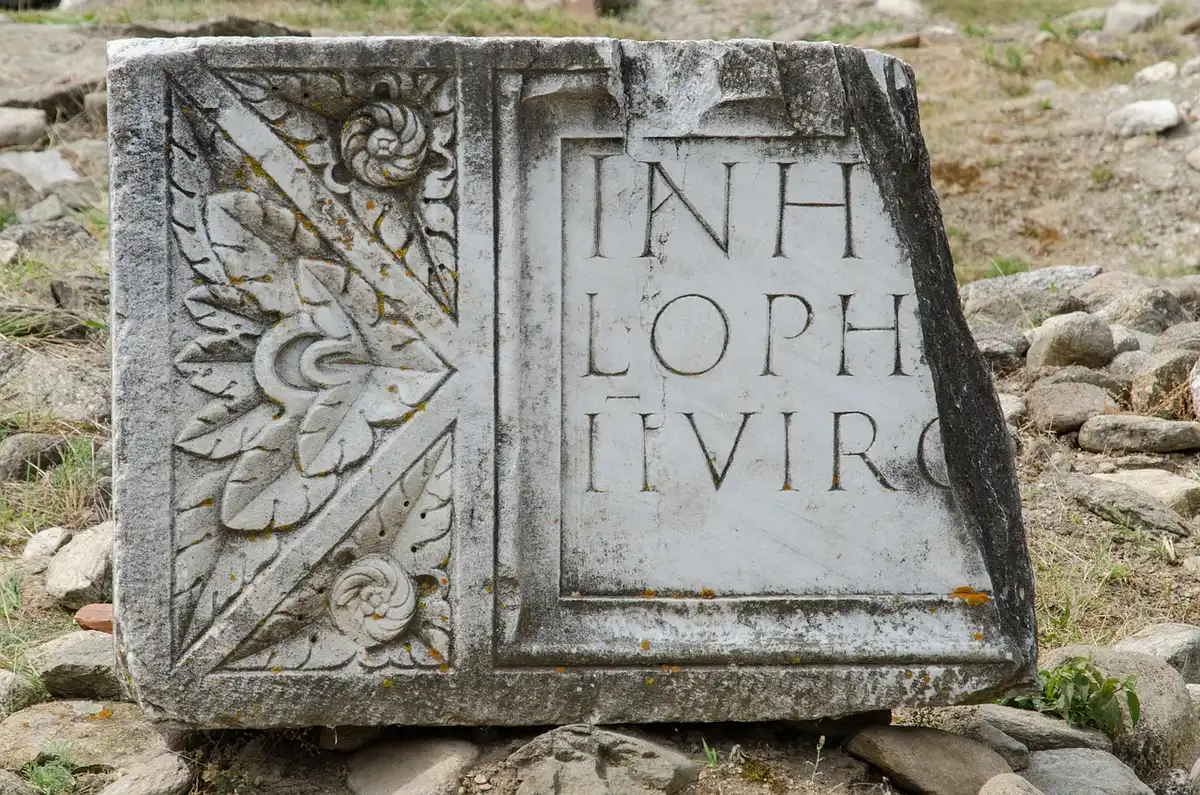
Among the most striking discoveries is a compact rectangular temple roughly 16 feet long. At its core stood a smaller, three-sided inner chamber — the focal point for ritual activity. Inscriptions unearthed in and around the structure mention Mars directly, and the team recovered fragments of a statue of Victoria, the winged goddess personifying victory.
Why these finds matter:
- Inscriptions tie the worship at Kapersburg directly to Mars, linking local cult practice to military ideology.
- Victoria’s statue fragments (including parts of her wings and laurel wreath) imply ceremonial linkages between victory, divine favor, and the garrison’s identity.
- The temple’s modest size fits the scale of a frontier outpost temple, where space and resources were constrained but ritual remained important.
Religion and the military: Mars and Victoria together
Mars and Victoria were commonly venerated side by side, especially in military contexts. The presence of both dedications illustrates how soldiers and supporting civilians sought protection, success in battle, and divine approval. The modest temple and its votive material show that formalized religious practice was an integral part of life at Kapersburg, not merely an imported formality.
Who lived here: units, population, and connections to Nida
Evidence suggests the fortress was occupied during the reigns of Trajan or Hadrian and maintained a long presence — roughly 150 years on the frontier. The primary garrison is believed to have been the Numerus Nidensium, a unit named after the nearby settlement of Nida. Nida later evolved into the Roman quarter that became present-day Heddernheim in Frankfurt.
Estimated population and roles:
- Numerus Nidensium: around 160 soldiers.
- Vicus inhabitants, including artisans, service providers, families and camp followers: possibly up to 700 people.
- A mixed economy of military provisioning, crafts, and local trade linked the fort to regional settlements.
Signs of changing use and the 3rd-century abandonment
Archaeologists also documented later episodes of modification that hint at changing needs and priorities before the site was finally abandoned in the 3rd century. Parts of the vicus were deliberately leveled and recast as residential areas, while workshops continued to operate in close proximity to living quarters.
Notable late-phase observations:
- Evidence for intensive craft production, including metalworking residues.
- Reconfiguration of building plots — some older structures were torn down and replaced.
- Final abandonment corresponds with broader regional shifts in the late Roman frontier system.
Work at Kapersburg continues to unfold layer by layer, as teams from the Hessian state archaeology office and the University of Frankfurt piece together how this corner of the limes functioned — militarily, economically, and spiritually. The forest that hid the site for centuries has proven to be an exceptional conservator, leaving researchers with a rare, vivid snapshot of life at Rome’s edge.
You might also like:
- Roman stone-lined basin discovered predates concrete, reveals advanced engineering
- 2,000-year-old shipwreck artifacts found in Swiss lake include Roman chariot parts
- Egypt sun temple uncovered: 4,500-year-old site reveals ancient sun worship
- In 2011, a collector bought a Moroccan meteorite—it turned out to be proof of thermal water on Mars
- Rome’s self-healing concrete leads scientist to launch Roman-style concrete business

Michael Thompson is an experienced journalist covering U.S. and global news. With ten years on the front lines, he breaks down political and economic stories that matter. His precise writing and keen attention to detail help you grasp the real‑world impact of every event.


Imagine stumbling upon an ancient temple while taking a peaceful forest stroll! Bet the trees have some stories to tell. Makes you wonder what other secrets are hiding under our feet, right?
Dude, totally! Imagine the tales those old trees could spin. Bet theyve seen some wild stuff over the centuries. Makes you wonder what other secrets are kickin it underground, huh? Like, are we even scratching the surface of all the crazy happenings out there?
Man, stumbling upon a Roman temple while hiking in a German forest? Must be like finding a hidden level in a video game! Wonder what secrets it holds… Hope they find some epic loot in there!
Oh, Mars making a surprise appearance in Germany? Bet hes enjoying the forest vibes after all those Roman conquests. Cant wait to see what artifacts they dig up next – historys full of surprises, aint it?
Man, finding a Roman temple in a German forest is like stumbling upon a hidden treasure chest in a video game. Can you imagine the stories those stones could tell? History really knows how to surprise us.
Wait, a Roman temple under a forest in Germany? Thats some Indiana Jones stuff right there! Imagine stumbling upon ancient artifacts while hiking. Now I want to explore every forest for hidden temples.
Man, finding a Roman temple under a German forest is like digging up a history mixtape! Bet Mars is like, Finally, my cribs getting some airtime, yo! Wonder what other ancient gems are chilling beneath our feet…
I remember reading about Roman temples in history class, but finding one inches below a forest floor in Germany? Thats like a real-life treasure hunt! Imagine the stories those ancient stones could tell… fascinating!
I once visited a Roman fort in Germany, and lemme tell ya, those ancient vibes hit different. Unearthing a temple dedicated to Mars is like finding a hidden gem in a forest. Historys full of surprises, man.
Oh man, stumbling upon a Roman temple in a German forest? Thats like finding a hidden level in a video game! Imagine the ancient vibes, the artifacts… Makes you wonder what other secrets are hiding beneath our feet, huh?
Dang, thats like stumbling into a boss fight in a Mario game but instead of a fire-breathing turtle, its a Roman temple! Imagine the power-up hidden in there… or maybe a secret passageway to a whole new level! Who knows what other historic goodies are chilling underground waiting to be found, right? Time to grab a shovel and start digging, whos in?
Man, stumbling upon ancient Roman ruins in a forest? Thats like finding a hidden level in a video game! Imagine the stories those old stones could tell, like time travelers whispering their tales through the centuries.
Oh man, stumbled on this while hiking. Imagine the Romans chillin in the forest, building a temple for Mars. Mustve been like Yo Mars, protect our fort yo! Wild times back then!
Oh man, just when you think you know all about ancient Rome, they drop this bombshell! A Roman temple dedicated to Mars hiding under the German forest? Talk about history peeking out from unexpected places!
Whoa, a Roman temple in a German forest? Thats like finding a hidden level in a video game! Imagine stumbling upon ancient artifacts while hiking. Makes you wonder what other secrets are lurking beneath our feet.
Man, stumbling upon a Roman temple randomly in a German forest? Thats like finding a unicorn at a bus stop! Historys got some real surprises up its sleeve, huh? Wonder what else those trees are hiding.
Dang, stumbling upon a Roman temple in a German forest? Thats like uncovering a secret level in a video game or finding a hidden treasure chest in the attic! History sure knows how to keep us on our toes, right? Makes you wonder what other surprises those trees are keeping to themselves…
Man, finding a Roman temple dedicated to Mars in a German forest is like stumbling upon a hidden level in a video game! Its crazy to think about the history beneath our feet. Can you imagine what else is waiting to be discovered?
Man, uncoverin a Roman temple to Mars in Germany? Thats like findin a hidden level in a video game! Imagine the battles, rituals, and stories those ancient stones could tell. Historys full of surprises, huh?
A history buff who loves to delve into ancient mysteries.
Who wouldve thought a Roman temple to Mars was hidden beneath German forests? Imagine the stories those ancient stones could tell! Cant wait to learn more about this fascinating discovery.
Man, finding a Roman temple buried under a German forest? Thats like uncovering a hidden level in a video game! Imagine stumbling upon ancient artifacts while hiking. Talk about stepping into history!
I remember stumbling upon some ruins in the woods once. Can you imagine finding a whole Roman temple dedicated to Mars just under the trees in Germany? Talk about history hitting close to home!
Man, finding a Roman temple under a German forest? Thats like stumbling upon a hidden level in a video game! Imagine the stories those old stones could tell. Historys full of surprises, innit?
Mate, discovering a Roman temple under a German forest is like unlocking a secret level in real life! Those ancient stones mustve seen it all, innit? History never fails to surprise us with its hidden gems. Makes you wonder what other treasures are lurking beneath our feet, doesnt it?
Man, finding a Roman temple dedicated to Mars? Thats like a real-life history mystery unfolding right under our feet. Imagine the stories those ancient stones could tell if they could talk! History lovers, rejoice!