
Show summary Hide summary
- How likely is an impact and what changed after initial readings?
- What an impact would look and feel like from Earth
- Energy release, crater effects, and debris estimates
- What observers on Earth could expect to see
- How scientists are simulating and monitoring 2024 YR4
- Follow-up: what to watch for and where to get updates
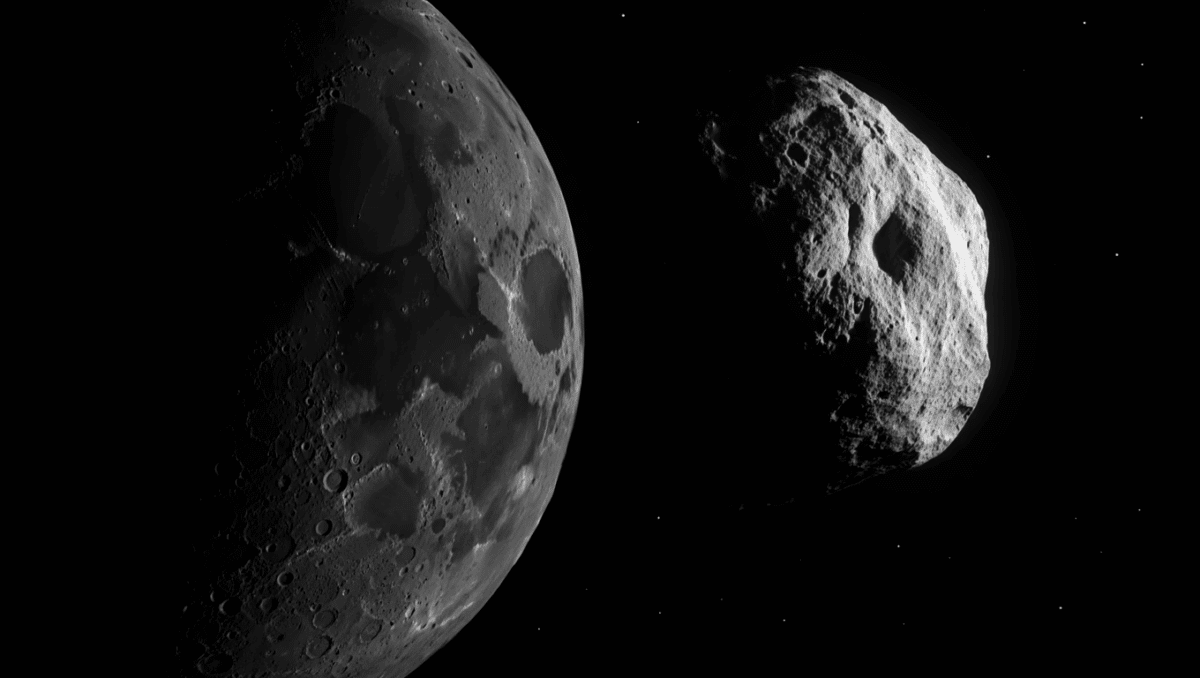
A rocky visitor named 2024 YR4 is on a trajectory that could bring it uncomfortably close to our neighborhood in 2032 — and there’s a non-negligible chance it will collide with the Moon. Scientists now estimate a roughly four percent probability that this asteroid will strike the lunar surface on December 22, 2032. If it does, the impact would be visible from Earth and might spark an unusual, multi-night meteor display.
Early observations briefly raised concern about a possible Earth impact, but follow-up measurements removed that threat. Still, astronomers are treating the Moon encounter as a real event to watch: it could become one of the brightest lunar impacts ever recorded, and it offers a rare opportunity to study impact physics up close.
How likely is an impact and what changed after initial readings?
The Growing Demand for Data-Driven Decision Making in Silicon Valley
He quit, ran out of money, and begged to come back — here’s how his boss reacted
When 2024 YR4 was first tracked, rapid updates to its orbit produced shifting odds, briefly showing a small chance of an Earth strike. Continued observations refined its path and ruled out a terrestrial collision. The focus then turned to the Moon, where newer orbital fits place a collision probability at about 4.3 percent for the night of December 22, 2032.
What scientists did to refine the risk
- Teams collected additional telescope observations to tighten the asteroid’s orbit.
- Researchers ran thousands of simulated trajectories to map where fragments might land.
- Probability estimates were updated as new positional data reduced uncertainty.
What an impact would look and feel like from Earth
Modeling of possible collision scenarios indicates that a strike by 2024 YR4 could create a very bright, short-lived flash on the lunar surface. Observers on Earth could see a burst of light lasting several minutes, followed by a thermal glow detectable in infrared wavelengths for hours afterward.
- Predicted visible brightness: roughly -2.5 to -3 magnitude, bright enough to be seen without optical aid under dark skies.
- Infrared afterglow: the impact site would likely remain hotter than the surroundings and show up in infrared instruments for an extended period.
Energy release, crater effects, and debris estimates
If an impact occurs, the energy liberated is expected to be on the order of megatons of TNT. Current simulations place that figure near 8 megatons, which would make it one of the most energetic lunar impacts ever observed by people on Earth.
The collision could send a plume of lunar material into space. Estimates suggest up to tens of millions of pounds of ejecta might be lofted, some portion of which would enter Earth’s atmosphere as tiny particles and produce shooting stars.
Key physical outcomes modeled
- Energy release strong enough to excavate a fresh crater and launch heated debris.
- Material ejected into orbits crossing Earth would burn up harmlessly, creating meteor streaks.
- Local lunar terrain changes at the impact site could be mapped by orbiters if timed correctly.
What observers on Earth could expect to see
From a human perspective, the event would be dramatic but not dangerous. Debris reaching Earth’s atmosphere would largely burn up as meteors, producing a potential meteor shower that could last several days depending on how much ejecta enters Earth-intersecting trajectories.
Observational opportunities include:
- Naked-eye viewing of the initial flash from many regions on the night side of Earth.
- Photographic and video records from backyard telescopes and smartphones for brighter bursts.
- Infrared monitoring and high-resolution imaging from professional observatories and lunar orbiters to study the crater and thermal afterglow.
How scientists are simulating and monitoring 2024 YR4
Researchers generated a large ensemble of possible orbits — tens of thousands of simulated futures — to estimate impact probabilities and map potential strike locations on the Moon. These Monte Carlo-style simulations help quantify uncertainty and show how future observations can tighten predictions.
Space agencies and survey teams are prioritizing further tracking to refine the asteroid’s path. Each new set of observations reduces positional uncertainty, which in turn updates the collision probability and narrows down where an impact would occur if it happens at all.
Follow-up: what to watch for and where to get updates
Because the situation can change as new data arrive, the best way to stay informed is to follow announcements from major planetary defense groups and professional observatories. Amateur astronomy networks and social platforms devoted to space news will also share alerts and viewing tips as the date approaches.
- Look for official updates from national space agencies and planetary defense coordination offices.
- Watch astronomical forums and observer groups for real-time sighting reports and images.
- If you plan to observe, check local sky conditions and time windows for when the Moon is visible in your area.
You might also like:
- NASA may nuke an asteroid to save the moon
- Blood moon eclipse: when and how to see the rare lunar event
- Mysterious “Second Moon” Revealed: Hidden for 60 Years, Now Uncovered!
- asteroid collision observed: astronomers see debris cloud and brightness changes
- NASA moon mission 2026: first crewed lunar mission in 50 years

William Anderson is a multimedia producer specializing in videos, podcasts, and interactive galleries. With five years of immersive content creation, he turns information into a rich audio‑visual experience. His storytelling skills draw you directly into the heart of every story, on any platform.


Oh, great, just what we need, more drama in 2032! Can you imagine if the moon gets a little cosmic love tap? Hope the scientists are ready to bust out their telescopes and popcorn for this asteroid show!
I remember watching a sci-fi flick where the moon got smacked by an asteroid. Thought it was pure fiction, but now? 2032 might bring us some real moon drama! Time to grab the popcorn and wait for the cosmic show!
Man, if an asteroid hits the moon in 2032, thats some next-level cosmic drama! Imagine the moon getting a celestial black eye, like, whoa. Hope the scientists got their telescopes ready for this lunar showdown!
I remember watchin movies bout asteroids hittin Earth, now they sayin one might hit the moon? Crazy stuff, man. Wonder what itd look like from here. Hope they figure it out fore 2032.
Asteroid hitting the moon? Man, thats some sci-fi movie stuff right there! Imagine the lunar fireworks show. But for real, hope those scientists figure it out before 2032. Wouldnt want our moon getting a cosmic makeover, you know?
I remember watching those sci-fi movies with asteroids smashing into the moon. Now, hearing about a real one heading that way in 2032? Thats some next-level plot twist! Guess well be waiting with bated breath for this celestial showdown.
I remember watchin Armageddon with my buddies back in the day. Now, hearin bout an asteroid hittin the moon in 2032? Thats some real-life sci-fi stuff. Wonder if Bruce Willis is ready for round two!
Man, 2032s gonna be one heck of a year, huh? Asteroid playing cosmic bowling with the moon? Hope they dont knock it outta orbit or mess with the tides. Like, can you imagine the moon getting a black eye? Crazy stuff, dude.
Man, I remember watching those sci-fi flicks with asteroid impacts on the moon. Now, its like realitys catching up! Wonder if Bruce Willis is ready to save us yet. Hope scientists figure out a plan or something, cause this aint no movie!