
Show summary Hide summary
- First-ever full mating sequence of New Caledonian leopard sharks recorded
- Understanding the leopard shark: names, life stages, and behavior
- What the threesome reveals about mating systems and genetics
- How sperm storage and timing matter for shark reproduction
- Why this discovery matters for conservation planning
- How the team captured the footage and what comes next
- Key takeaways for scientists, media, and the public
A rare, intimate moment on the ocean floor has given researchers an unprecedented glimpse into the private life of an endangered shark species. Underwater footage shows New Caledonian leopard sharks engaging in a simultaneous mating event — a brief, intense encounter that scientists had long hoped to observe in the wild.
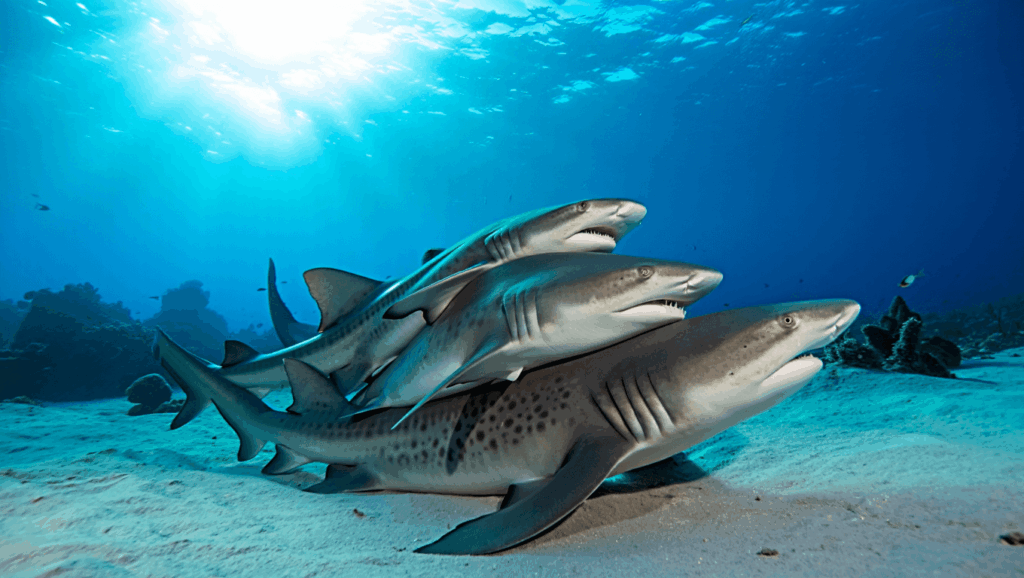
The video, captured after years of patient monitoring, documents a female shark restrained between two males as each male completed a fast mating attempt. The scene is not just sensational — it offers fresh data on reproductive strategies that could inform conservation efforts for a species facing population pressures.
First-ever full mating sequence of New Caledonian leopard sharks recorded
The Growing Demand for Data-Driven Decision Making in Silicon Valley
He quit, ran out of money, and begged to come back — here’s how his boss reacted
Marine biologists have never before recorded a complete leopard shark mating sequence in its natural habitat — until this footage surfaced. Dr. Hugo Lassauce, a researcher with the University of the Sunshine Coast, had been tracking this population for years with the explicit goal of documenting reproductive behavior.
During a routine survey of the seafloor population, Lassauce and his team observed a female held between two males. Each male took turns mating for about a minute before both rested on the sand, exhausted. The entire interaction lasted less than two minutes, underscoring how brief, high-intensity shark mating can be.
Understanding the leopard shark: names, life stages, and behavior
Commonly referred to as leopard sharks, these animals are scientifically known as Stegostoma tigrinum. Juveniles display prominent stripes that fade into the spotted adult pattern, which once led to the alternate common name “zebra sharks.” For clarity and search relevance, “leopard shark” will be used throughout.
Unique reproductive traits of leopard sharks
- They reproduce sexually under normal conditions.
- Females can also reproduce asexually through parthenogenesis when males are absent — a rare ability among vertebrates.
- Some females are capable of storing sperm internally for months or even years before using it to fertilize eggs.
These biological quirks make leopard sharks particularly interesting to evolutionary biologists and conservationists alike. Parthenogenesis and sperm storage both serve as reproductive insurance in low-density populations, which is especially relevant for endangered groups.
What the threesome reveals about mating systems and genetics
The recorded encounter suggests several things about leopard shark mating strategies. For one, females appear flexible: they can either accept mates or reproduce independently. When males are present, females may mate multiple times or with multiple partners in quick succession — a behavior that can increase the genetic diversity of offspring.
Multiple mating events can boost genetic diversity in small or fragmented populations by mixing genetic material across different males. For endangered populations, that can improve resilience to disease, environmental change, and inbreeding depression. Observing multi-male mating in the wild helps validate theories that such behaviors serve as natural mechanisms for maintaining healthier gene pools.
How sperm storage and timing matter for shark reproduction
One of the most intriguing aspects of leopard shark biology is the female’s ability to store sperm. This gives females a degree of reproductive control: they can delay fertilization until conditions are favorable, or until stored sperm is used in combination with sperm from recent mates.
Researchers hope the footage and associated sampling will shed light on:
- How often females use stored sperm versus fresh insemination
- Whether females mix stored and new sperm when producing litters
- The typical duration of sperm viability inside a female shark
Why this discovery matters for conservation planning
Behavioral observations like this one are more than curiosities — they feed directly into conservation strategies. Understanding mating patterns, sperm use, and the potential for asexual reproduction helps biologists estimate effective population size and genetic variability.
Accurate reproductive data improves management decisions, from designing protected areas to timing interventions such as captive breeding or translocations. For an endangered species, every bit of reproductive knowledge can alter how managers prioritize actions and allocate resources.
How the team captured the footage and what comes next
The video is the product of systematic monitoring: long-term fieldwork spent observing known individuals on the seafloor, combined with underwater cameras and patient, repeated dives. That methodology highlights how sustained observation — rather than opportunistic encounters — is often required to document rare behaviors.
Next steps for the research team include genetic analysis of tissue samples, continued behavioral monitoring, and comparing these observations to other leopard shark populations. The goal is to determine how widespread multi-male mating and sperm storage are across the species and to quantify their roles in maintaining healthy genetic diversity.
Key takeaways for scientists, media, and the public
- Rare footage shows a female leopard shark mating with two males in quick succession — the first full sequence filmed in the wild.
- Leopard sharks can reproduce both sexually and asexually (parthenogenesis), and females can store sperm long-term.
- Multi-male mating may help endangered populations by increasing genetic diversity.
- Long-term monitoring and genetic testing are essential to translate behavioral discoveries into conservation action.

You might also like:
- Older male whales’ singing boosts mating success, study finds
- Greenland sharks study upends scientists’ assumptions about lifespan and behavior
- Great White Sharks Swarm Maine Beaches: What’s Drawing Them Closer?
- Dolphin health revealed by seawater eDNA sampling in a conservation first
- Neon orange shark found in Costa Rica: what scientists know

William Anderson is a multimedia producer specializing in videos, podcasts, and interactive galleries. With five years of immersive content creation, he turns information into a rich audio‑visual experience. His storytelling skills draw you directly into the heart of every story, on any platform.


Man, these sharks are wildin! Three-way shark shenanigans, who wouldve thought? Natures full of surprises, I guess. Bet theyre having a fintastic time. Keep on keepin on, sharkies!
Yo, lemme get this straight. Sharks out here having threesomes now? Nature really be wildin! Cant even get a text back, but these sharks out here living their best lives. Respect.
Man, these leopard sharks are out there living their best lives, huh? Three-way mating encounters? Talk about breaking the mold! Nature always keeps us on our toes. Wonder what other surprises are hidden beneath the waves.
Whoa, hold up, I thought my love life was complicated! These leopard sharks are really out here living their best life. Nature never ceases to amaze me, I guess we humans have a lot to learn about relationships from the animal kingdom, huh?
Man, talk about unexpected plot twists in the ocean! Three-way shark mating? Natures full of surprises, huh? Just when you think youve seen it all, boom, sharks out here breaking all the rules. Nature, you wild!
Man, nature is wild! Three-way shark action, who wouldve thought? Makes you wonder what else is happening under the sea that we dont know about. Natures full of surprises, aint it?
Whoa, did I just stumble into a shark-themed soap opera? Three-way shark mating, huh? Nature sure knows how to keep things spicy. I wonder if they have relationship drama too. Shark Maury, anyone?
Man, these leopard sharks be getting more action than me! Three-way shark love, who wouldve thought? Maybe I should take some tips from these underwater Casanovas. Wild stuff, nature, wild stuff.
Whoa, talk about underwater drama! Sharks know how to keep it spicy, huh? Natures full of surprises, and this three-way shark rendezvous is the ultimate plot twist. Cant wait for the next episode!
Yo, check this out – sharks getting more action than me! Three-way shark love, man, who knew they were into that kinda stuff? Nature never fails to surprise, huh? Wonder what else is going on under the sea!
Mate, who knew sharks could be so wild? Three-way shark romance? Thats some serious drama under the sea! Nature always keeps us on our toes, eh? Wonder what other surprises are lurking down there…
I mean, who knew sharks were out there having more fun than me? Three-way shark dates? Guess Ive been living under a rock… or should I say, under a fin? Natures full of surprises, huh?
Well, well, well, aint that a surprise! Three-way shark love, huh? Guess theyre not so different from us after all. Nature always findin new ways to keep us on our toes, I tell ya.