
Show summary Hide summary
- Where the bright shark was found and how it drew attention
- What the color might mean: the leading scientific possibilities
- How scientists are investigating the sighting
- Conservation relevance and why scientists care
- Public interest, misinformation risk, and how experts are responding
- What to watch for next in this ongoing story
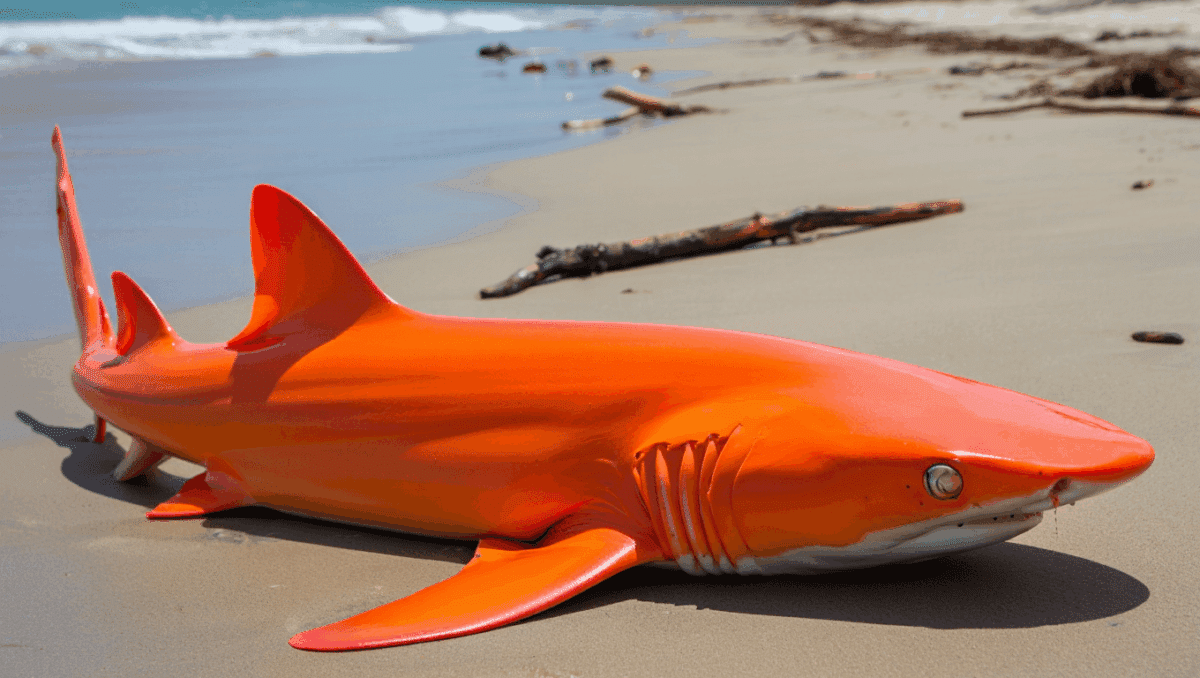
A striking neon-orange shark washed up in Costa Rica this week, and photos of the fish have ignited a wave of curiosity from scientists, divers, and social media users alike. The vivid color is unlike anything typically seen in sharks, prompting questions about whether this is a rare genetic mutation, a dietary effect, or something else entirely.
Local divers and fishers who first spotted the unusual animal alerted marine biologists, and images quickly spread online. Experts urge caution: while the sight is sensational, careful study is needed before drawing firm conclusions about the shark’s identity or the reason for its bright pigmentation.
Where the bright shark was found and how it drew attention
The Growing Demand for Data-Driven Decision Making in Silicon Valley
He quit, ran out of money, and begged to come back — here’s how his boss reacted
The animal was reported off Costa Rica’s Pacific coast by recreational divers and coastal communities. Photographs circulated on social networks and were shared with marine researchers, who then inspected the images for clues.
- Location: coastal Pacific waters near popular diving areas (reported by witnesses).
- Initial observers: recreational divers, small-boat fishers, and bystanders on nearby beaches.
- Public reaction: images went viral, sparking both scientific interest and widespread speculation.
What the color might mean: the leading scientific possibilities
Scientists studying unusual pigmentation in animals point to several plausible explanations. Each hypothesis carries different implications for the shark’s health, origin, and how common such coloration might be.
- Genetic conditions: Albinism and leucism can alter pigmentation, though they typically produce pale or white animals rather than bright orange.
- Dietary pigments: Some marine species take on intense hues from food rich in carotenoids (for example, shrimp or certain algae). That pigment can tint skin or tissues.
- Parasitic or bacterial infections: In rare cases, infections or symbiotic bacteria can change skin tone or produce pigments that alter appearance.
- Post-mortem changes: If the specimen was already dead when documented, chemical shifts in tissues can create unusual colors.
Why pigmentation alone doesn’t identify the species
Color is rarely a reliable diagnostic trait for sharks because many species vary naturally and environmental factors can obscure typical markings. Researchers rely on body shape, fin placement, dentition, and genetic analysis to confirm species identity. Until specialists examine the specimen or high-quality images closely, the species remains uncertain.
How scientists are investigating the sighting
Marine biologists typically follow a stepwise approach when unusual animals are reported:
- Verify the photos and video for authenticity and context (time, place, and scale).
- Collect physical samples if the animal is recovered—tissue for DNA, stomach contents, and any parasites.
- Compare the specimen’s morphology with known species to rule out misidentification.
- Run genetic tests to detect mutations, hybridization, or markers linked to pigmentation.
Fieldwork and lab analysis together provide the best chance of explaining a phenomenon like neon-orange coloration.
Conservation relevance and why scientists care
This discovery matters beyond its novelty. Sharks are sensitive indicators of ocean health, and unusual specimens can reveal new information about genetics, disease, and ecosystem change.
- Tracking rare individuals can help scientists understand population health and genetic diversity.
- Diet-driven pigmentation would hint at dietary shifts or unusual foraging behavior in local waters.
- If a disease or toxin is responsible, the finding could signal environmental stressors affecting more animals.
Public interest, misinformation risk, and how experts are responding
Viral images generate excitement but also misinformation. Experts and local authorities have stressed restraint while investigations proceed. Scientists are asking people who encounter unusual wildlife to:
- Document the sighting with clear photos or video and note the exact location and time.
- Avoid touching or moving the animal; disturbing specimens can damage evidence.
- Share observations with local marine research groups or conservation organizations.
Responsible reporting and careful sampling are essential to turn a viral curiosity into reliable data.
What to watch for next in this ongoing story
Follow-up reports are likely to cover the results of any genetic tests, confirmation of species identity, and analyses of tissue or stomach contents. Local research groups may publish preliminary findings or request public assistance if they need more observations.
- Announcements about DNA or lab results.
- Official statements from marine biologists operating in the region.
- Requests for additional photographs or eyewitness reports from divers and fishers.
You might also like:
- White abalone found alive after 5 years in Channel Islands survey sparks hope for recovery
- Endangered sharks caught on video mating in three-way encounter
- Night dive reveals new fish-anemone relationship
- Rare fisher spotted on trail cam in Cleveland area, first seen since 1800s
- Endangered whale spotted in Ireland migrates to US, baffling scientists

William Anderson is a multimedia producer specializing in videos, podcasts, and interactive galleries. With five years of immersive content creation, he turns information into a rich audio‑visual experience. His storytelling skills draw you directly into the heart of every story, on any platform.


Aint that the craziest thing? A neon orange shark? Bet that fella stands out in the deep blue sea like a…well, neon orange shark! Nature always throwin surprises, huh?
Man, that neon orange shark in Costa Rica is like something out of a sci-fi flick! Got me thinking, maybe its the shark version of a tropical vacay, you know? Wonder what other surprises lurk beneath those waves…
Dude, imagine stumbling upon a neon orange shark while chillin in Costa Rica! Thats like finding a unicorn at a music festival, man. Natures wild, for real. Wonder what other rainbow creatures are out there.
Man, I remember catchin a bright orange fish in Costa Rica once, thought I was seein things! Now theyre sayin theres neon orange sharks there? Natures really showin off, huh?
Dude, talk about a neon disco party under the sea! That orange shark in Costa Rica is like the cool kid in school. Wonder if it listens to neon 80s hits while cruising the waves.
A conspiracy nut: Man, imagine a whole neon orange shark swimmin around! What if its a secret government experiment gone wrong, huh? Theyre probably out there, tryna control the oceans now! Better watch out for them fluorescent fins, folks!
Dang, a neon orange shark? That’s wild! Reminds me of that fluorescent fish tank I had in college. Wonder if it’s just a fashion statement or some sneaky underwater strategy. Fishy business, man!
I once saw a neon orange shark in Costa Rica while surfing. Thought it was a hallucination from the sun. Now, scientists find its real? Wild. Natures full of surprises, huh?
Dang, that neon orange shark be lookin like a tropical popsicle! Cant blame folks for gettin all hyped up bout it. Natures full of surprises, aint it? Wonder what other rainbow critters are chillin in the deep!
I once thought neon orange sharks were just a joke from a cartoon, man! Costa Ricas out here making it real! Can you imagine swimming with one of those bad boys? Thats a sight to see!
Man, I remember watchin Shark Week and thinkin, Whats next, neon sharks? Guess Costa Ricas makin it happen! Neon orange sharks? Thats one way to stand out at the underwater party!