
Show summary Hide summary
- From East Village closet to international headlines: the backstory
- About the work: Near Abiquiu, New Mexico I and why it matters
- How scholars and auction houses confirmed the find
- What Christie’s and experts are saying about the auction
- Why rediscoveries of major artworks still excite the public and collectors
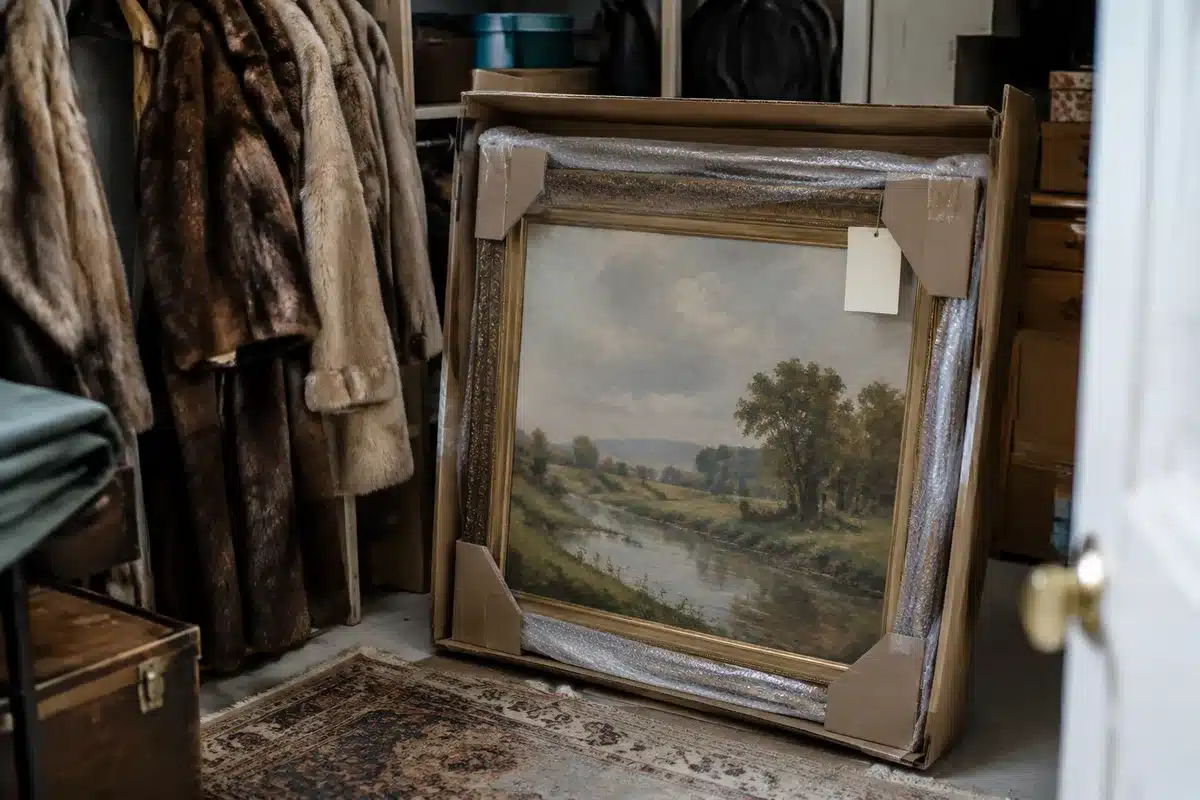
“Oh, by the way, there’s a Georgia O’Keeffe in the closet.” Those words, dropped casually by an elderly aunt during a cleanup of her East Village apartment, sounded like the setup to a joke. Instead they launched an art-world revelation: hidden among mink coats and packing material was a flowering landscape by one of America’s most celebrated modernists.
Four years after that offhand remark, her niece — who identified herself only as Betsy — opened the closet and pulled out an oil painting that would be authenticated as Near Abiquiu, New Mexico I, painted by Georgia O’Keeffe in 1930. The discovery has lit up museums, collectors and dealers ahead of the work’s sale at Christie’s, where specialists expect it to fetch around $3 million.
From East Village closet to international headlines: the backstory
The Growing Demand for Data-Driven Decision Making in Silicon Valley
He quit, ran out of money, and begged to come back — here’s how his boss reacted
The painting’s journey began decades earlier. Betsy’s aunt, a former foreign service officer described as extremely bright, received the canvas in 1963 as a gift from O’Keeffe’s Manhattan dealer after graduating from college. At the time it reportedly cost just $3,800.
She treasured the work and displayed it for years, until one evening at a bridge game she noticed a fellow player staring at the canvas a little too long. Seeking privacy and to avoid attention at future gatherings, she tucked the painting into a closet. It stayed boxed and largely forgotten — even when Betsy returned to help clear the apartment in 2022 as her aunt prepared for hospice care. The painting only resurfaced after her aunt’s death, still contained in its original box labeled "The Downtown Gallery, 51st St.".
About the work: Near Abiquiu, New Mexico I and why it matters
Experts say this canvas belongs to a small group of O’Keeffe’s early New Mexico landscapes. Painted in 1930, it captures the rolling, sun-washed hills near Abiquiú — a place that profoundly influenced the artist after her first trip there in 1929.
- Historical importance: The painting is thought to be the earliest in a probable series of three hill studies that helped define O’Keeffe’s lifelong engagement with the New Mexico landscape.
- Stylistic features: Earthy tones and sinuous, body-like forms echo the artist’s interest in abstracting natural shapes while maintaining a strong sense of place.
- Condition: Specialists have described the canvas as well-preserved and skillfully executed, adding to its rarity on the market.
How scholars and auction houses confirmed the find
Authentication relied on several pieces of corroborating evidence rather than a single decisive proof. Christie’s and independent researchers referenced the painting’s original packing, the artist’s handwriting, and period photographs to build a secure provenance.
Key elements used in authentication
- Original box stamped with the gallery name where O’Keeffe’s Manhattan dealer operated.
- O’Keeffe’s signature on the reverse of the panel or canvas backing.
- A 1931 photograph taken by Alfred Stieglitz, O’Keeffe’s husband, that documents the work in situ.
What Christie’s and experts are saying about the auction
Tylee Abbott, Christie’s Senior Specialist and International Director of American Art, called the rediscovery “a once-in-a-lifetime moment,” emphasizing the painting’s importance within O’Keeffe’s career. The house has scheduled the lot for sale on November 17, with pre-sale expectations in the neighborhood of $3 million.
Market commentators note that finds like this are uncommon given the deep scholarship and collector attention surrounding canonical American artists. For museums and private collectors alike, an authenticated early O’Keeffe with fresh provenance is both an aesthetic and institutional opportunity.
Why rediscoveries of major artworks still excite the public and collectors
Even in a thoroughly researched market, lost paintings occasionally re-emerge. When they do, they capture imaginations for several reasons:
- Historical insight: Newly surfaced works can fill gaps in an artist’s timeline and reveal developmental stages of their practice.
- Cultural narrative: Stories of concealment, family lore and chance recovery make headlines and broaden public interest in art history.
- Market dynamics: Freshly authenticated pieces can recalibrate prices and motivate institutions to reassess collections and priorities.
Christie’s viewing and catalog will likely offer more detail on the painting’s measurements, materials and exhibition history as the November sale approaches, and specialists expect the lot to draw attention from American art collectors and museums around the world.
You might also like:
- Gertrude Abercrombie long-lost painting bought for $30 could fetch $250,000
- Lost Renaissance painting surfaces in North Carolina after 100 years
- Streetside painting returned after honest man discovers enormous value
- Stolen 18th-century St. Francis painting returned to Mexican church
- Rembrandt etchings: 35 found in Dutch home in rare discovery

Michael Thompson is an experienced journalist covering U.S. and global news. With ten years on the front lines, he breaks down political and economic stories that matter. His precise writing and keen attention to detail help you grasp the real‑world impact of every event.

